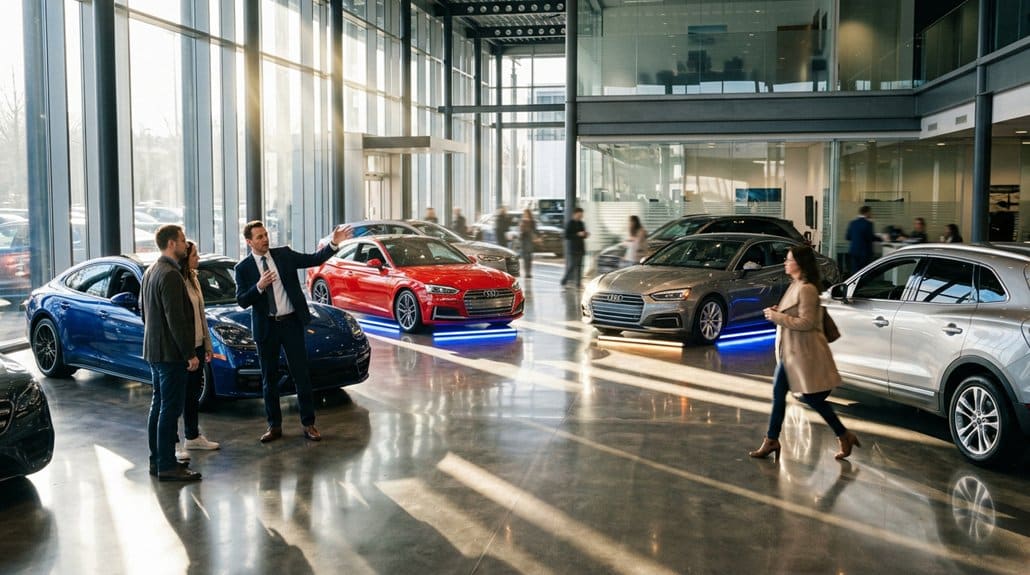
If your showroom feels like a lot instead of a destination, you’re leaking sales—convert walk‑ins with targeted LED lighting, clear branded signage, and live inventory to boost conversion rates over 20%. Track dwell time, interactions with AR/VR or kiosks, and real‑time stock accuracy to quantify impact; aim for >30 minute average visits and NPS ≥70. Small, sub-$1,000 refreshes often move perception and foot traffic. Keep going to get a practical 30‑day plan and KPIs.
Key Takeaways
- Audit the customer journey and signage to ensure clear wayfinding and interactive touchpoints that spark exploration, not confusion.
- Use strategic LED lighting and focused illumination to highlight vehicles and create an energetic, premium atmosphere.
- Integrate AR/VR and interactive kiosks linked to live inventory to boost engagement and reduce wasted visits.
- Measure engagement via dwell time, display interactions, and conversion rates, targeting >30-minute dwell and >20% walk-in conversion.
- Implement small, cost-effective refreshes (LEDs, illuminated signage, maintenance) and track ROI through leads per visit and perceived quality scores.
How to Turn Your Showroom Into an Experience : A 30‑Day Plan
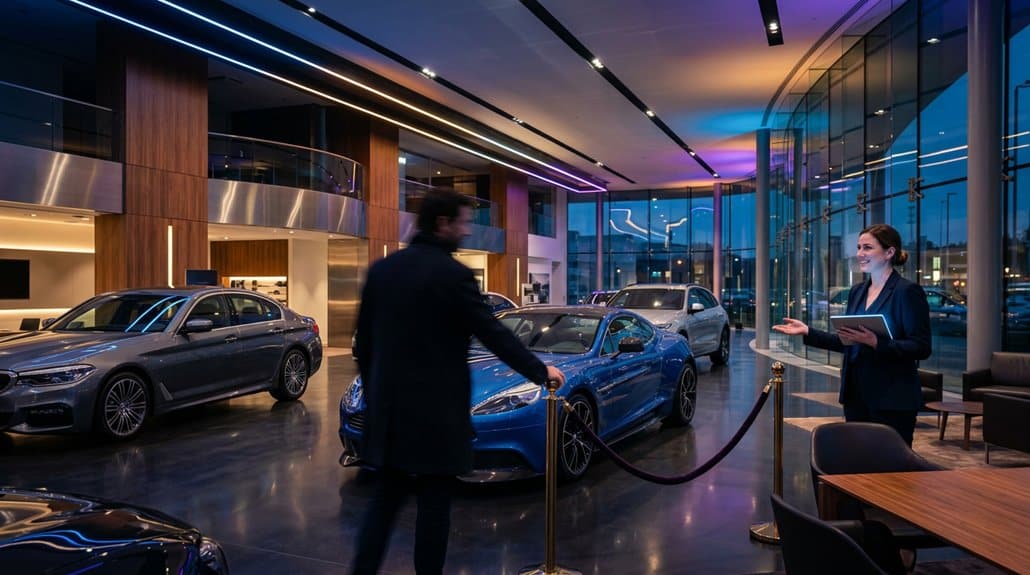
Start by auditing your space and customer journey: map touchpoints, note lighting, signage, digital sync, and where interactive displays or VR would fit, since upgrades like LED lighting and quality signage can shift perceptions and interactive tech can raise sales per salesperson from about 10.8 to 16 units; this 30‑day plan prioritizes quick, measurable wins—lighting and signage fixes, inventory-system updates for real-time accuracy, and a pilot VR/interactive station—so you can track lift in engagement and conversion week by week. In days 1–7, correct lighting and install clear, branded signage; days 8–15, align digital inventory and update your management system for real-time accuracy; days 16–30, deploy an immersive experiences pilot, train staff, measure KPIs, iterate.
Decode Shoppers: 5 Signals That Drive Showroom Behavior
Watch customers’ body language, because posture and eye contact predict interest levels and buying intent more reliably than scripted greetings. Track browsing duration—short visits often signal confusion or weak signage, while longer, focused stops correlate with higher purchase probability. Measure interactions with displays (touches, brochure picks, demo requests) to quantify engagement and sharpen your brand positioning.
Body Language Cues
Body language is a silent data stream you can read to prioritize leads and tailor your pitch: relaxed posture and uncrossed arms usually signal openness, steady eye contact and nodding show engagement, pauses or repeated stops at specific vehicles indicate stronger consideration, while fidgeting or crossed arms flag discomfort or skepticism—smiles and leaning in often predict emotional buy-in and a higher purchase probability. Use body language cues to sharpen customer engagement: assign staff quickly to open postures, deepen technical dialogue when customers maintain eye contact, and present targeted features to those who pause repeatedly. If shoppers fidget or cross arms, switch to questions that surface concerns and reduce pressure. Track these signals to optimize follow-ups and sales outcomes.
Browsing Duration Patterns
How long do shoppers linger, and what does that tell you about converting interest into sales? You’ll note shoppers spend about 60% of visit time browsing vehicles, so browsing behavior is a primary conversion lever. When your showroom boosts customer engagement—through lighting, signage, and welcoming staff—visitors stay longer; effective design can lift engagement by up to 30% and welcomed customers are 50% likelier to explore more. Since 76% come because of signage quality, presentation directly affects dwell time and perceived vehicle value. Use these metrics to prioritize layout and visual cues that extend visits and create sales opportunities.
| Metric | Impact on Time | Actionable Insight |
|---|---|---|
| Signage Quality | +76% visitation | Improve clarity, branding |
| Design Appeal | +30% engagement | Refresh visuals, lighting |
| Welcoming Staff | +50% dwell | Train for warm approaches |
Interaction With Displays
When displays are thoughtfully lit, signed, and interactive, they’ll do more than look good—they’ll shape emotions and perceptions that predict buying intent. You’ll drive customer engagement by combining high-gloss presentation with clear signage: 76% of consumers say signage quality motivates visits, so brand-consistent messages matter. Interactive displays — VR tours, touchscreens, configurators — let shoppers explore features and linger, converting curiosity into measurable intent. Bright, clean environments boost perceived vehicle quality, raising consideration rates. Monitor behavioral signals: time spent, touchpoints, and repeated interactions reveal preferences you can act on with targeted messaging or demos. Measure engagement metrics and tie them to sales outcomes so your showroom becomes an active selling tool, not just attractive inventory theater.
Design for Energy: Lighting, Layout, and Customer Flow
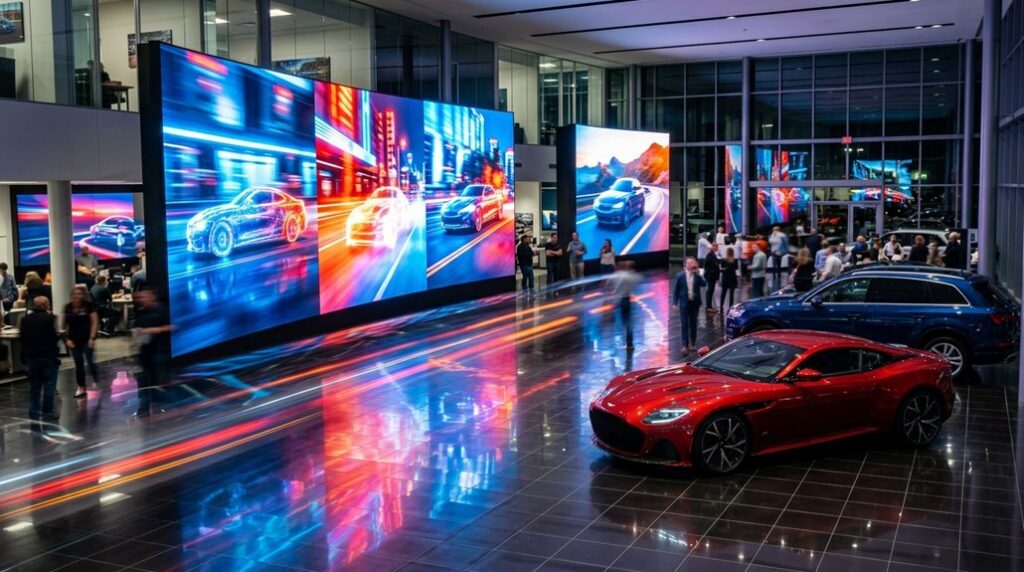
You’ll want strategic lighting placement that highlights key vehicles and brand moments—bright LEDs improve perceived quality and guide attention. Pair that with an optimized showroom flow so customers can move intuitively between displays, cutting navigation time and boosting engagement. Together, clear signage, focused illumination, and deliberate pathways translate into stronger impressions and measurable increases in foot traffic and conversions.
Strategic Lighting Placement
Lighting placement is a strategic tool that makes vehicles look shinier and higher-quality while cutting energy costs through bright, efficient LEDs; by directing illumination to focal cars and signage you’ll boost perceived brand quality (68% of consumers link lighting/signage to brand value), guide customer flow, and create safer, longer visits that increase sales opportunity. You’ll apply lighting psychology to emphasize contours, color depth, and finish, using contrast and focal beams to create strong illumination effects that elevate perceived value. Specify high-CRI LEDs, adjustable track fixtures, and zoned controls to balance energy use with visual impact. Measure lux levels at vehicle planes, prioritize feature zones, and integrate dimming schedules. The result: a brand-forward showroom that reduces costs, builds trust, and drives engagement.
Optimized Showroom Flow
Building on strategic fixture placement, optimized showroom flow aligns lighting, layout, and signage to steer customers toward high-demand vehicles and reduce energy use. You’ll use spatial design to create clear sightlines and pathways that shorten the customer journey, lower dwell-time confusion, and cut ambient lighting needs. Bright, vivid LED accents make cars look shinier, raising engagement while letting overall luminance drop. Illuminated, on-brand signage and wayfinding reduce staff interventions and improve perceived service speed. Integrate interactive displays and digital retail tools to convert interest into sales—average unit sales per salesperson can rise from 10.8 to 16 units when these elements are present. The result: streamlined searches, reduced wait times, stronger brand perception, and measurable energy savings.
Use AR, VR, and Live Inventory to Invite Interaction
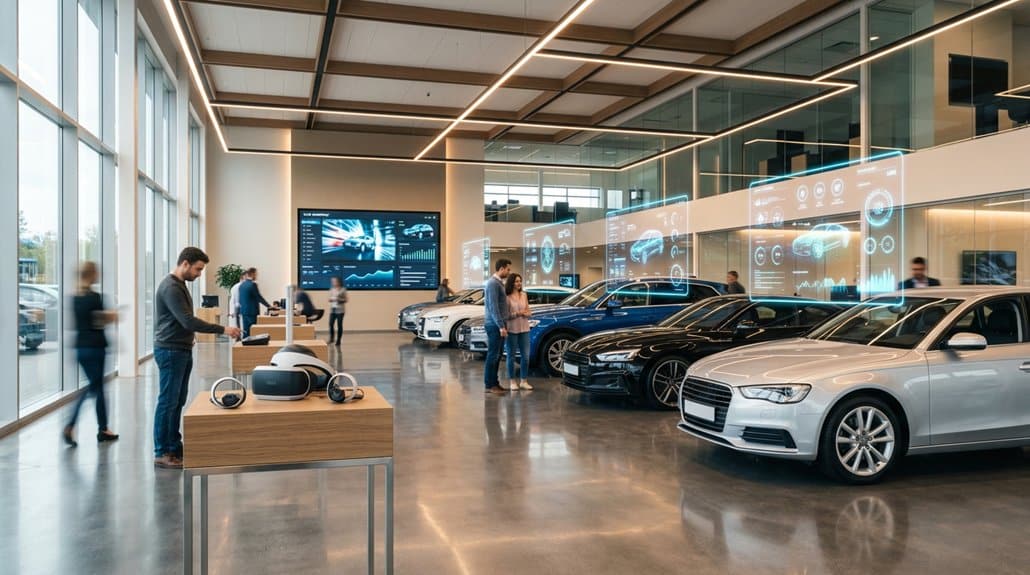
When customers can virtually walk around, customize, and inspect vehicles through AR and VR, engagement and conversions rise—dealers using digital retailing report measurable sales uplifts as interactive displays and VR stations turn browsing into informed buying. You should prioritize AR Innovations and VR Engagement to create Interactive Experiences that reinforce your brand promise and drive Customer Immersion. Pair Digital Displays with live inventory feeds so shoppers see real-time availability and avoid wasted visits. Technology Integration should simplify discovery, let buyers compare trims, and visualize options instantly.
When shoppers can virtually explore and customize cars via AR/VR, engagement, confidence, and conversions rise.
- Offer VR test drives and configurators linked to live stock
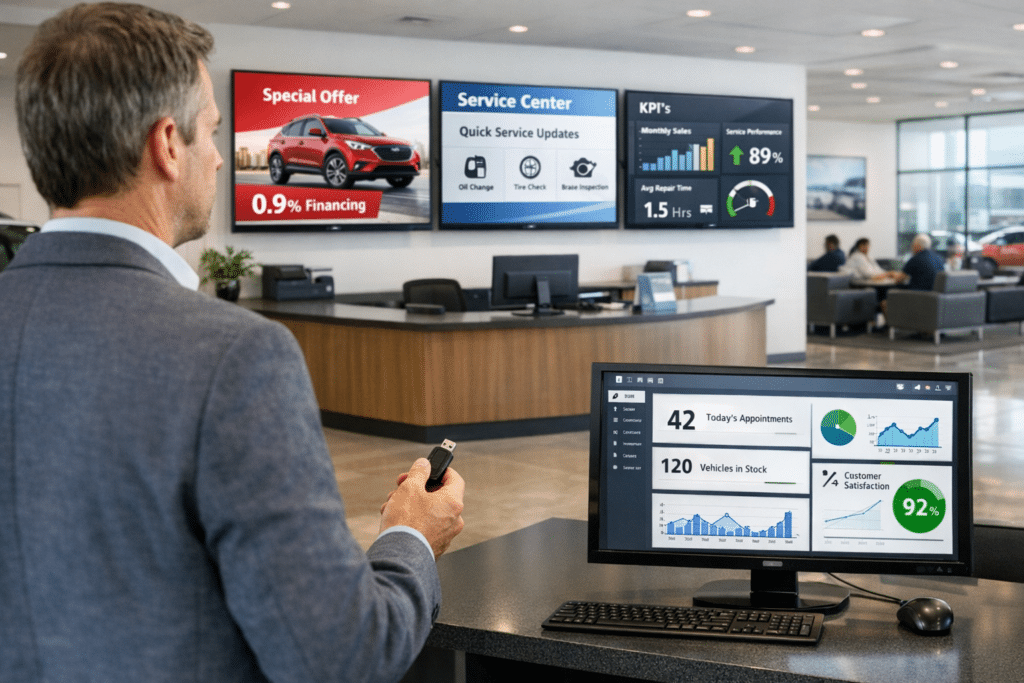
- Display real-time inventory on interactive kiosks and screens
- Use AR for feature demos and service diagnostics visibility
- Integrate CRM touchpoints to capture interaction data and follow-up
Train Your Team to Sell the Story : Not Just Specs
Interactive tech makes cars tangible, but your team still seals the deal—stories sell where specs alone fall short. You’ll train staff in storytelling techniques that convert: use anecdotes to show real-world feature use, tie data from interactions to buyer segments, and prioritize emotional connections that increase loyalty. Measure adoption through role-play scores and customer feedback loops. Keep scripts brand-aligned, concise, and repeatable so every rep delivers a consistent experience that’s personalized.
| Skill Focus | Example Prompt | Metric |
|---|---|---|
| Anecdote Use | “Tell a quick ownership story” | Conversion lift |
| Data Tailoring | Match story to demo profile | Repeat visits |
| Brand Voice | Short, consistent scripts | NPS change |
3 KPIs to Prove Your Showroom Is Converting Walk‑Ins
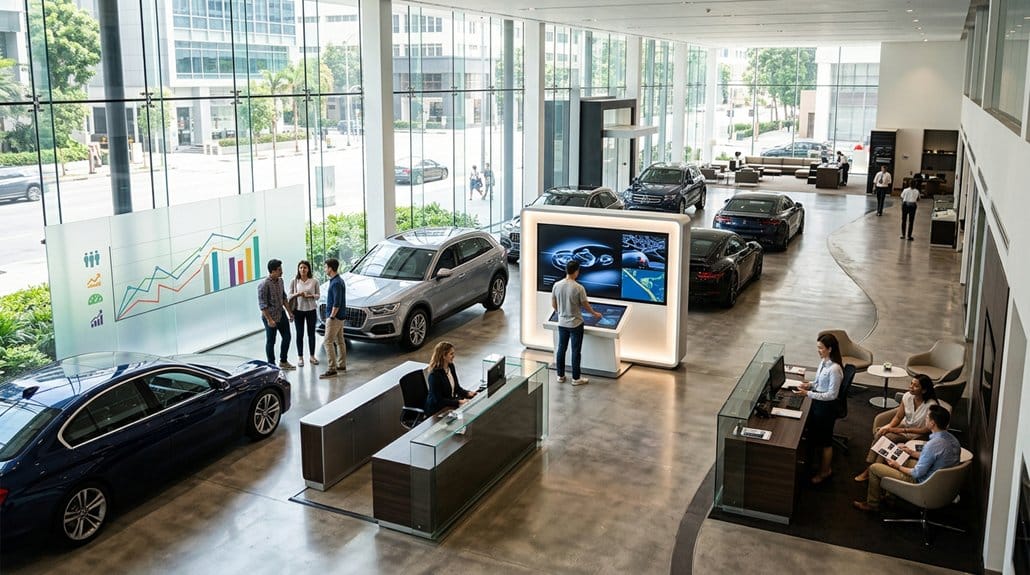
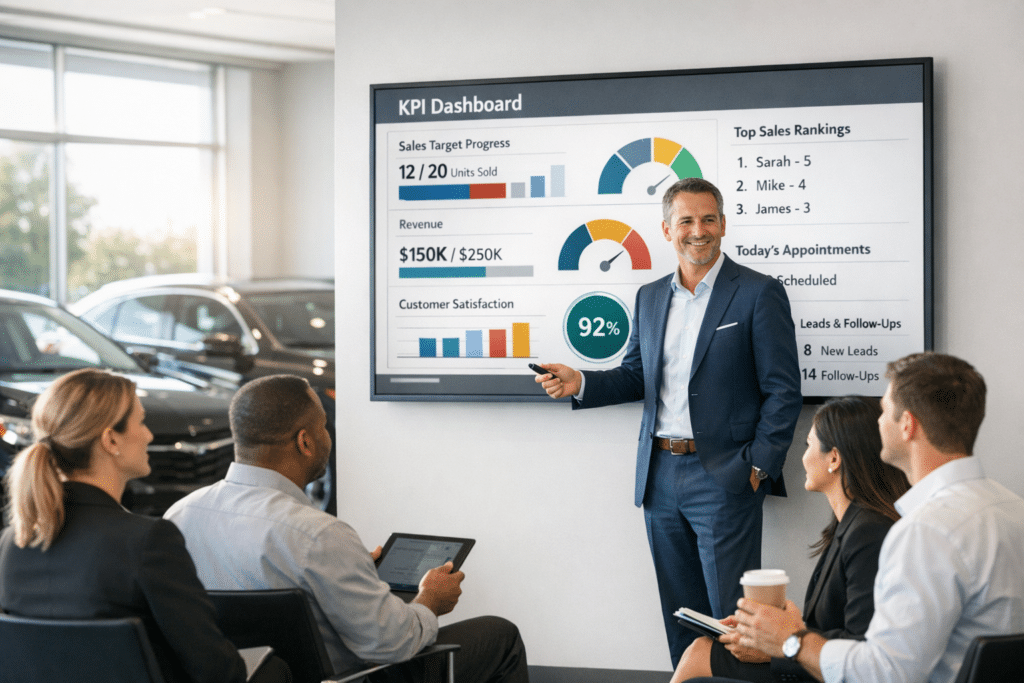
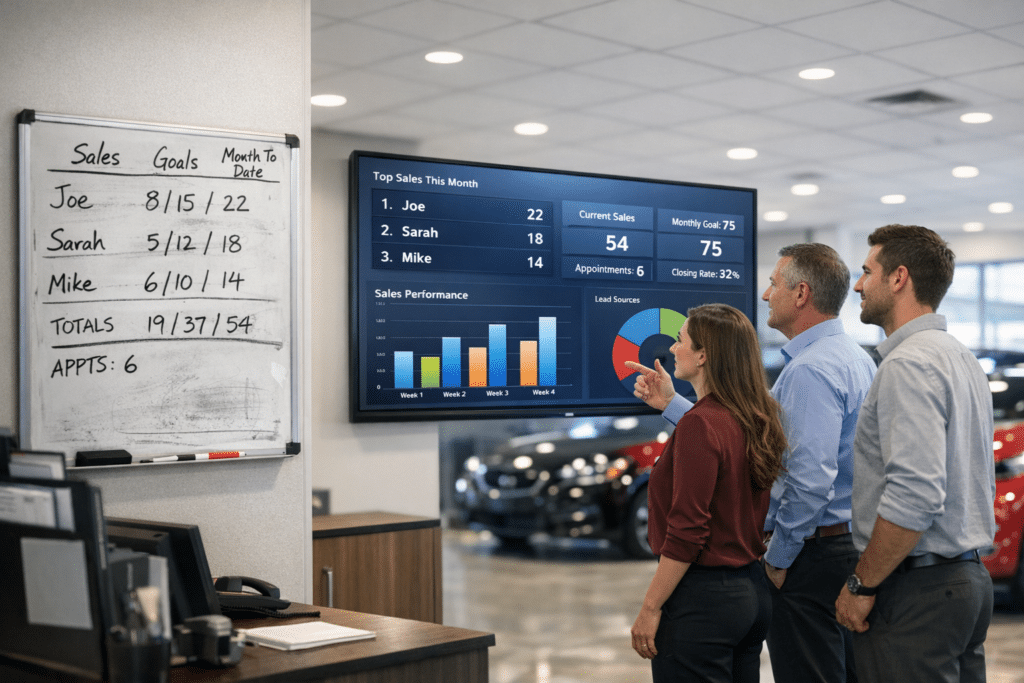
How do you prove your showroom’s impact on walk‑ins? You measure KPIs that tie customer journey moments to sales psychology signals. Focus on three concrete metrics that show conversion strength and brand experience.
- Walk‑in conversion rate: target >20% to validate your showroom storytelling and staff influence.
- Average dwell time: >30 minutes correlates with higher purchase probability and deeper engagement.
- Real‑time inventory accuracy uplift: track sales increase (up to 25%) when availability is reliable.
- Customer satisfaction / NPS: aim for NPS ≥70 using in‑showroom feedback to confirm emotional resonance.
Track these consistently, benchmark by month, and align incentives with behaviors that move prospects through the customer journey toward purchase.
Quick Showroom Refreshes That Cost Less Than $1,000
Although you don’t need a big budget to shift perception, small, targeted investments under $1,000—like switching to LED fixtures, adding illuminated signage, or installing a few digital screens—can measurably boost vehicle visibility, dwell time, and perceived brand quality. You’ll prioritize Showroom Aesthetics and Customer Engagement with focused moves: LED retrofits improve color accuracy and lower energy spend; illuminated signage drives foot traffic (76% influence); simple interactive screens increase time on vehicle content.
| Upgrade | Impact |
|---|---|
| LED lighting | Better visibility, lower energy |
| Illuminated signage | Higher walk-in rates |
| Digital screens / décor | Increased dwell time |
Measure lift via dwell time, leads per visit, and perceived brand quality scores to validate ROI quickly.
Roll Out This Showroom Playbook Across Multiple Locations
When you scale this showroom playbook across locations, prioritize standardized LED lighting, illuminated signage, and integrated digital-physical touchpoints so you can replicate the lift in engagement and sales—think rising foot traffic from clearer signage (76% influence) and the documented jump in units sold per salesperson when AR and interactive displays are deployed (from 10.8 to 16). You’ll want a repeatable showroom layout that supports a consistent customer journey and reinforces brand identity. Standardize specs, maintenance schedules, and vendor partners so each location delivers the same modern, trustworthy experience. Track KPIs like foot traffic, units per salesperson, and dwell time to validate ROI. Key rollout elements:
- LED lighting and illuminated signage standards
- AR/interactive display deployments
- Maintenance and placement protocols
- KPI tracking and continuous optimization
Frequently Asked Questions
What Is the $3000 Rule for Cars?
The $3000 rule says you should buy a car priced about three times your monthly income (pricing strategies), so if you earn $4,000 monthly aim for ~$12,000; this supports customer engagement and long-term financial health.
What Is the Red Flag Rule for Auto Dealers?
Think of your showroom as a lighthouse: the Red Flag Rule makes you spot wrecks before they hit. You’re required to implement a written program, train staff, monitor transactions—boosting customer engagement and informing a compliant sales strategy.
How Much Does a Car Salesman Make on a $30k Car?
You’d typically earn about $400–$800 on a $30K car under common commission structure, sometimes a flat $300–$500; bonuses and sales tactics can boost pay, so results vary by dealership, incentives, and individual performance.
What Is the 30-60-90 Rule for Cars?
The 30-60-90 rule for cars says you should sell vehicles within 30 days to maximize profit; after 60 days you’ll likely need markdowns, and at 90 days aggressive pricing’s required—apply car sales strategies and inventory management.
Conclusion
Think of your showroom like a magnet: you want it pulling people in, not just holding stock. In 30 days you’ll test shopper signals, tweak lighting and flow, add AR/VR touches, and coach staff to sell stories, not specs. Track visit-to-test-drive, engagement rate, and conversion lift to prove ROI. Use low-cost refreshes, then scale the playbook across locations. Measure, iterate, and brand consistently to keep the energy converting.