If your lounge TVs pull generic feeds, you’re likely letting rival dealers sell to your customers while they wait, which erodes trust and cuts upsell and repeat-service revenue. Run a quick audit: note channels, capture timestamps, and block third-party streams during peak hours. Then switch to centralized, branded content with automated rules and engagement metrics so you can protect offers and prove ROI. Keep going to see exact audit steps, controls, and provider questions.
Key Takeaways
- Audit lounge TV sources and capture screenshots/timestamps to identify any competitor ads playing.
- Check scheduled channel feeds and peak-hour slots for unauthorized third-party commercials.
- Implement blocklists/whitelists or centralized signage to prevent competitor playback.
- Require content partners to confirm brand-safe programming and allow custom video uploads.
- Track engagement and promotion redemptions to measure competitor-ad impact on customer behavior.
How Competitor Ads Appear on Dealership Lounge TVs
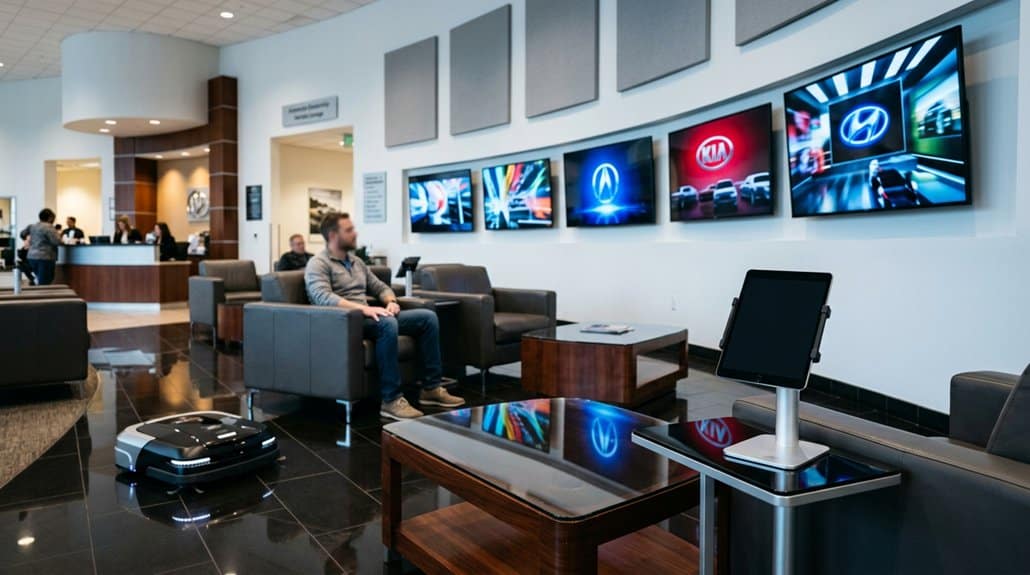
One common reason competitor ads show up on your dealership lounge TVs is that those screens are treated as passive background rather than strategic assets, so they run generic cable or streaming feeds that include rival commercials. You’re likely leaving lounge environment programming unmonitored, so competitor spots slip through and dilute your messaging. That unintentional promotion undermines brand consistency, like letting rival banners hang in service areas. You can replace those ads with tailored, engaging content that reinforces your services and reduces perceived wait times by up to 33%. For a minimal investment—about $99/month—you’ll convert those displays into controlled marketing assets. Act now to reclaim that real estate, protect customer perception, and keep attention focused on your dealership.
How Competitor Ads Harm Customer Perception and Upsells
When competitor commercials run in your service lounge, they don’t just interrupt the ambiance—they actively erode customer trust and distract from your sales opportunities. You risk degrading brand perception when visitors see rivals promoted on your screens; it signals lack of control over the customer experience and weakens customer loyalty. Irrelevant or rival messages pull attention away from your offers, reducing engagement strategies you’ve invested in and cutting into upsell opportunities during the visit. Studies link such exposure to lower satisfaction and less willingness to buy add-ons. Replace competitor content with tailored programming that reinforces your value, highlights timely promotions, and employs proven engagement strategies to shorten perceived wait times and protect both loyalty and revenue per customer.
Quick Audit: Is Your Dealership Lounge TV Showing Competitors?
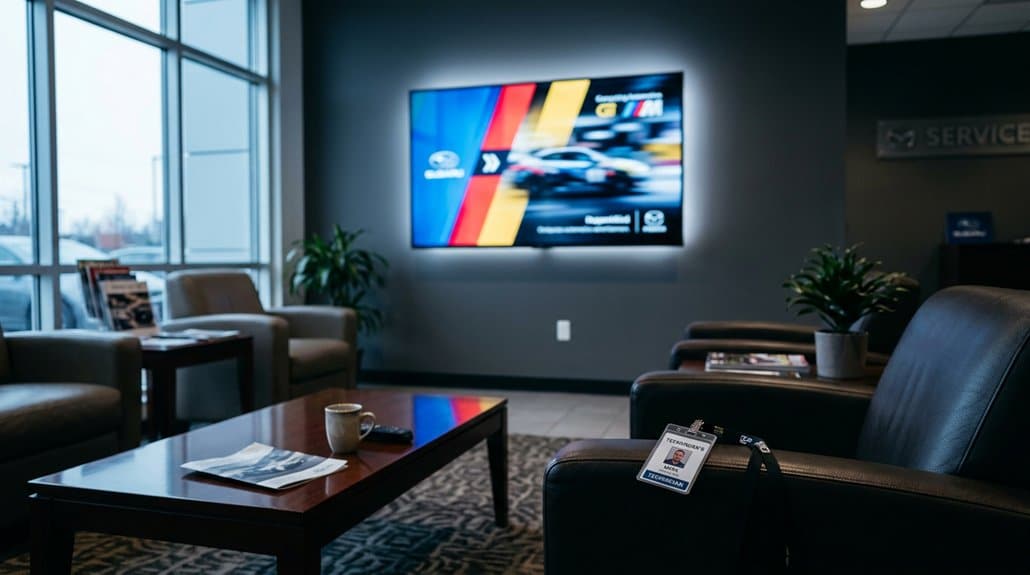
Start by checking your lounge TV channel sources to see whether you’re unintentionally airing third‑party feeds. Scan recent playback for competitor spots and confirm your scheduling and ad blocks are locked to approved content only. Fixing these three items can immediately protect your brand and turn wait time into a marketing moment.
Check Lounge Channel Sources
Although it’s easy to overlook, a quick scan of your lounge TV can tell you immediately if competitor ads are airing and undermining the customer experience. You should perform a targeted programming review: note channels, time slots, and any repeat spots that clash with your brand. Check lounge content sources—cable packages, streaming apps, OTA channels, or third-party ad services—and confirm who controls ad insertion. If automated feeds permit third-party commercials, they’re a risk. A concise content review lets you prioritize fixes: swap to ad-free feeds, lock to curated streams, or subscribe to branded solutions (often about $99/month) that promote services and reduce perceived wait times. Treat channel sourcing as a strategic touchpoint that protects customer perception and reinforces your message.
Scan For Competitor Spots
One quick sweep can tell you if your lounge TV is quietly promoting the competition: scan channels for brand mentions, note time slots and repeat spots, and capture screenshots or timestamps of any rival ads. You’ll quickly build competitor awareness and see how unmonitored screens dilute your messaging and erode customer trust. Treat this as a short, repeatable audit: log frequency, peak exposure times, and which networks carry those spots. Use the data to justify switching feeds or investing in a focused content strategy that replaces competitor messaging with branded promotions and helpful service content. At roughly $99/month, tailored lounge programming not only removes rival ads but can boost engagement and reduce perceived wait times—protecting your brand where customers decide.
Verify Scheduling And Blocks
Do a quick block-by-block sweep of your lounge TV schedule to confirm you’re not running competitor spots during peak customer hours; noting channel, time, and frequency takes less than 15 minutes and gives you the evidence you need to make changes. Use scheduling strategies that prioritize your own content blocks during mornings, lunch, and early evenings when service customers sit in the lounge. Map each content block to owner-focused messaging or dynamic promotions — replace irrelevant feeds with $99/month branded loops if needed. Track repeat occurrences and set automated rules to prevent competitor playback. This audit protects your brand, reduces perceived wait times, and converts idle attention into sales opportunities. Consistent oversight keeps your lounge TVs working for you, not rivals.
Five Dealership Content Controls to Block Competitor Ads
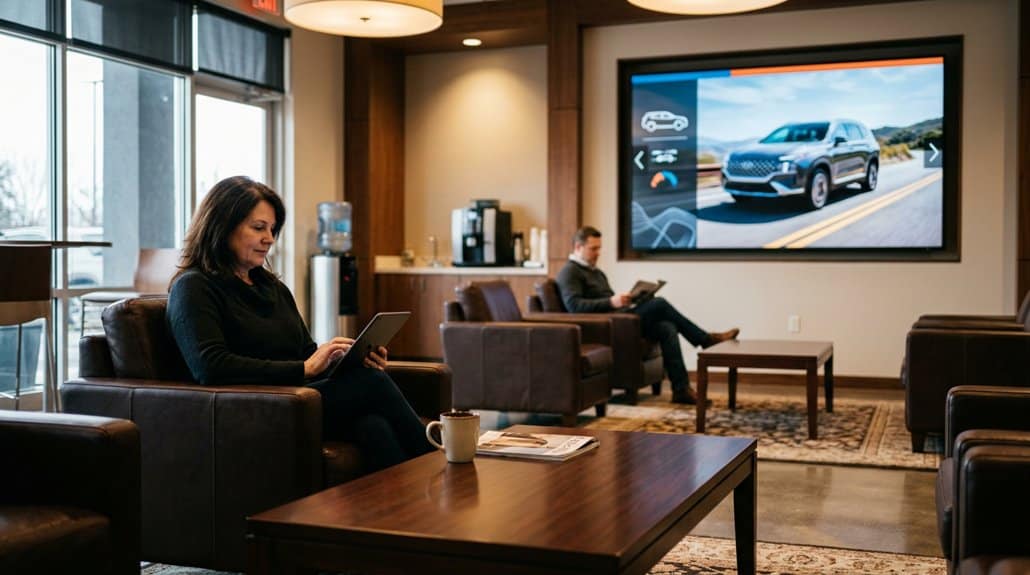
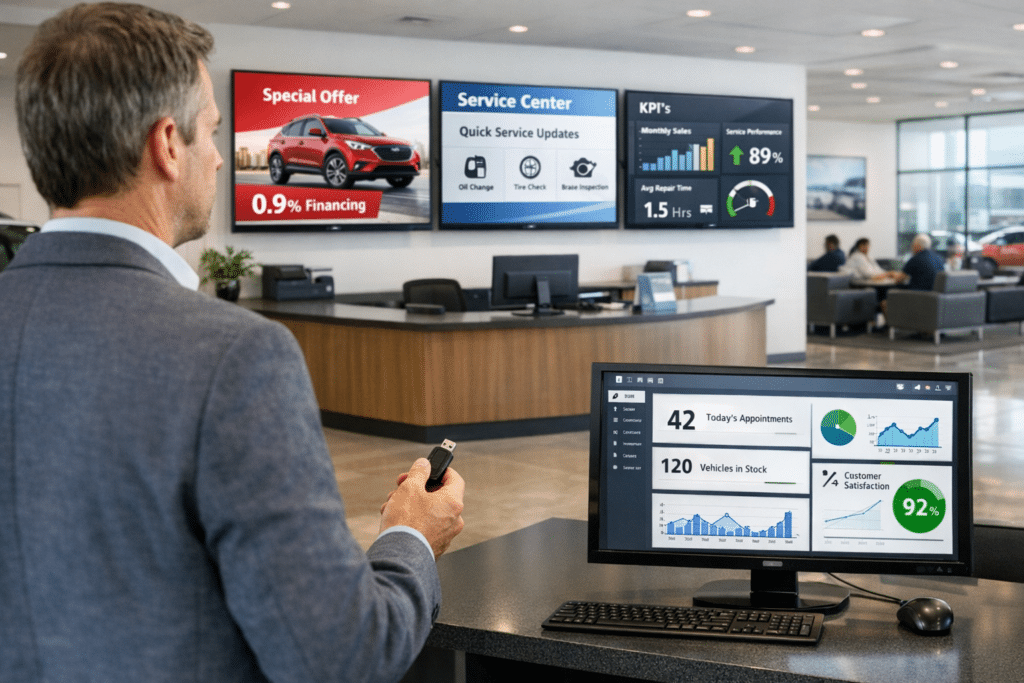
When you want to protect your brand and keep customers focused, implement five clear content controls that stop competitor ads from appearing in your service lounge: a tailored content strategy, centralized digital signage management, scheduled content refreshes, viewer-engagement monitoring, and a vetted content partner—each designed to reinforce your promotions, prevent ad bleed, and maintain a consistent, trust-building experience. Start with a tailored content strategy that prioritizes dealership branding to shape lounge atmosphere and maximize content engagement. Use centralized digital signage to enforce blocklists and whitelist approved assets. Schedule frequent content refreshes so stale feeds don’t default to third-party ads. Monitor viewer engagement analytics to validate what resonates and catch anomalies. Finally, work with a vetted automotive content partner that filters competitor spots and guarantees brand-safe playback.
Costs, KPIs, and ROI for Dealership Lounge-TV Programs
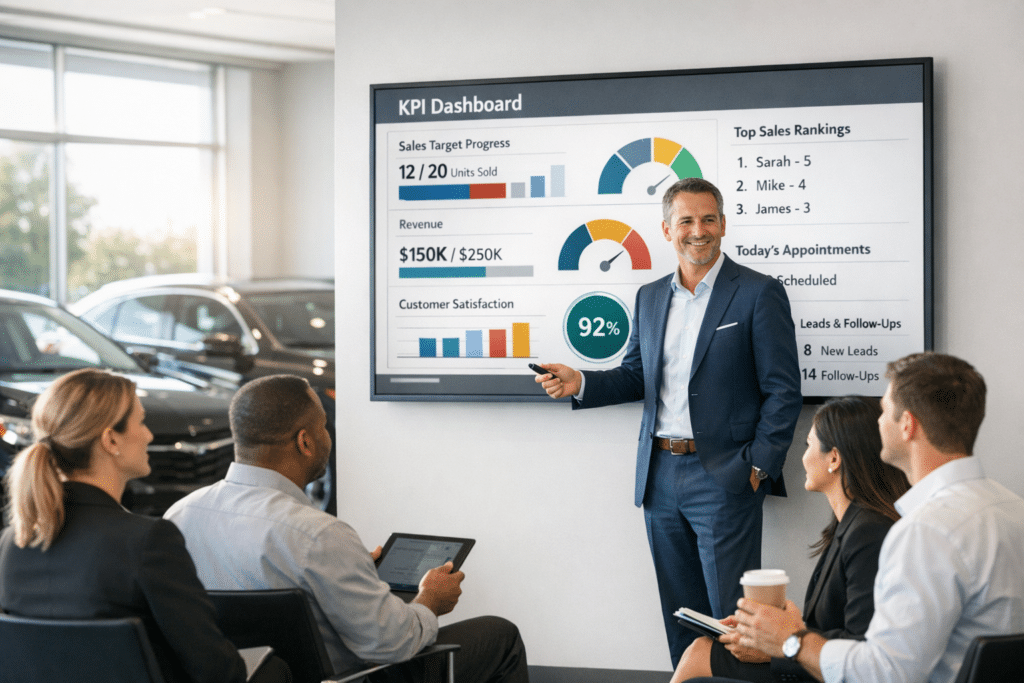
Having solid content controls in place sets you up to measure real business outcomes: lounge-TV programs can start at around $99/month—often less than a single oil change—so you can test impact without a big capital outlay. You’ll get cost efficiency immediately versus traditional media, and you can scale spend as results justify. Track KPIs like viewer engagement, promotion redemption rates, and perceived wait-time reduction (which can fall up to 33%) to quantify lift. Tie those metrics to repeat-service bookings and service-department revenue to calculate ROI. By blocking competitor ads and running targeted branded content, you boost brand awareness and customer retention, turning a modest monthly investment into measurable loyalty and incremental profit for your dealership.
Seven Questions to Ask Providers Before Paying $99/Month
Curious how a $99/month lounge-TV service will actually move the needle for your dealership? Ask these seven sharp questions to guide provider selection and your content strategy so every minute in the lounge sells.
| Question | Why it matters | Expected answer |
|---|---|---|
| Can we block competitor ads? | Protects your brand | Yes, full control |
| Can we upload custom videos? | Tailor promotions | Yes, easy upload |
| What engagement metrics exist? | Measure impact | Detailed analytics |
| Is content varied and licensed? | Keeps customers engaged | Family-friendly library |
| How easy is management? | Fast updates anywhere | Web-based control |
Prioritize providers who give content control, customization options, and clear engagement metrics so $99 actually drives satisfaction and revenue.
Frequently Asked Questions
Can a Dealership Get in Trouble for False Advertising?
Yes — you can get in trouble for false advertising; if you make false claims you’ll face legal consequences like FTC actions, state penalties, fines or lawsuits, so you should be truthful, substantiated, and cautious in all promotions.
Where Do Most Dealerships Advertise?
About 60% of dealerships advertise primarily online; you’ll see emphasis on digital marketing and social media, complemented by local TV, radio, and community events—so you’ll focus resources where measurable engagement and lead generation are strongest.
Do Dealers Have to Honor Advertised Prices?
No, dealers usually don’t have to honor advertised prices unless tied to a contract or deemed misleading. You’ll want to invoke advertising regulations and protect your consumer rights, so insist on written terms before committing.
What Kind of Advertising Does a Local Car Dealership Use?
About 72% of buyers research online first, so you’ll mix local promotions like radio, print, events and email with digital strategies—SEO, Google Ads, social targeting and retargeting—to drive showroom traffic and service loyalty.
Conclusion
If competitor ads are running in your service lounge, you’re literally handing leads to rivals. One study found 62% of customers notice in-store TV content—so every irrelevant or rival spot undercuts trust and upsell revenue. Do a quick audit, demand content control, and insist your provider blocks competitors, measures viewership, and ties outcomes to ROI. Protecting that captive audience isn’t optional; it’s a measurable revenue play you can’t afford to ignore.