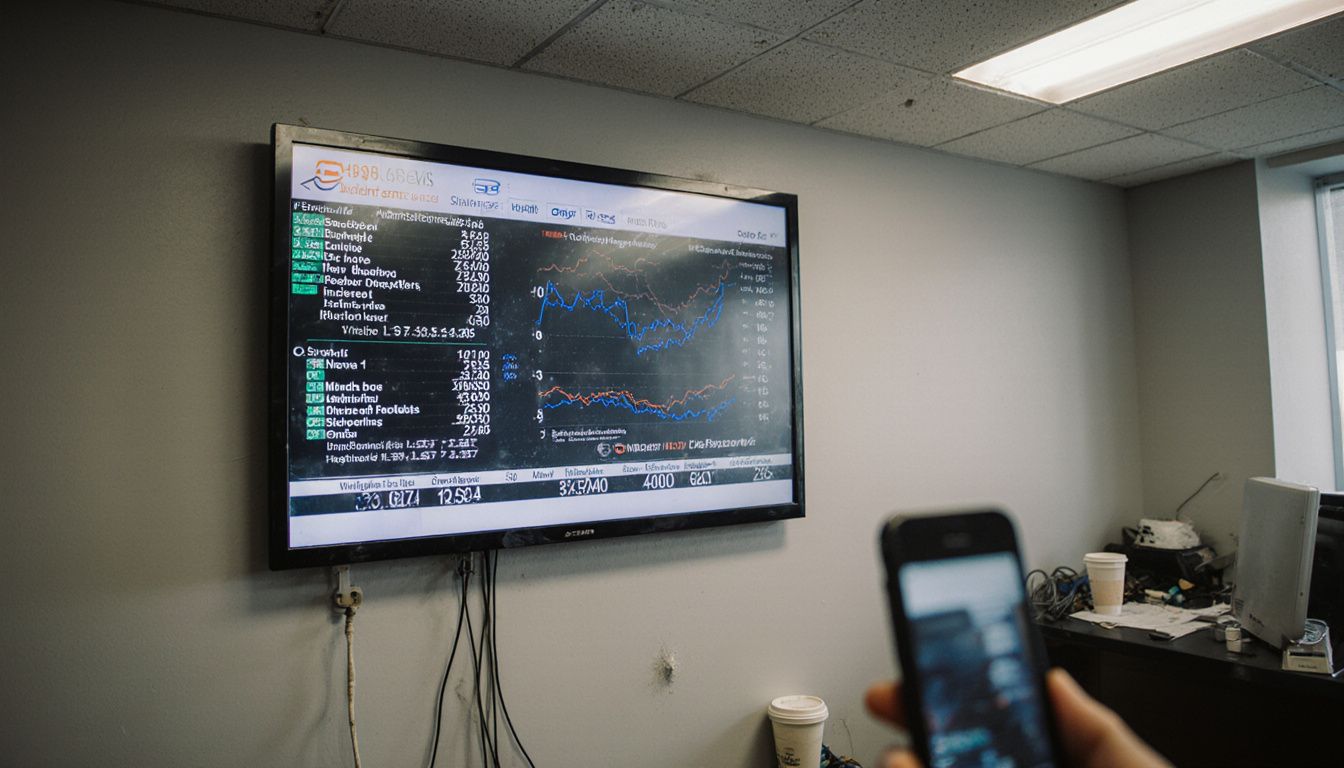
You’ll feel the difference between a true modern platform and legacy tools the moment your team starts using Digital Dealership System. Instead of waiting on static reports, manual exports, and outdated dashboards, you get real-time KPI leaderboards for Sales, Service, and BDC that show exactly what’s happening right now. Seamless DMS/CRM sync means deals, ROs, and appointments flow automatically into live dashboards and digital signs—no spreadsheet gymnastics required. A unified, intuitive UI reduces errors and “where do I click?” confusion, while AI-driven forecasts help you stock smarter, schedule better, and focus on customers most likely to convert. Technician and BDC performance is visible at a glance, and managed content with enterprise-grade uptime keeps your messaging current on every screen. Because the platform is modular and deployment is flexible, you get a smarter system that fits your store instead of forcing you to work around a legacy one.
Key Takeaways
Real-time KPI dashboards and PULSE leaderboards give Sales, Service, and BDC immediate visibility into results, enabling faster coaching and tactical decisions.
Seamless DMS/CRM integrations replace manual entry and exports, keeping data synchronized and accurate across departments and rooftops.
AI-powered predictive analytics forecast demand, parts needs, and high-value opportunities so you can allocate inventory, labor, and outreach with confidence.
Centralized content management and automated digital signage keep promotions, service boards, and lounge TV programming fresh—with 99.999% uptime that legacy systems rarely match.
Unified interaction timelines and omnichannel tracking give you a single view of each customer’s journey, making outreach more relevant and improving engagement and retention.
Real-Time KPI Leaderboards for Sales and Service

Legacy systems tend to bury critical metrics in static reports that show up once a day—or once a week. Digital Dealership System’s PULSE KPI Leaderboard flips that model by giving you real-time visibility into Sales, Service, Finance, and BDC performance while the day is still in motion.
You see live numbers for calls, appointments, show rates, deals, ROs, hours, gross, and CSI on boards that update automatically from the DMS and CRM. Managers can spot trends before they become problems, shift attention to underperforming segments, and coach specific people on specific behaviors using today’s data, not last month’s recap.
Because leaderboards are visible on TVs, desktops, and mobile devices, performance is no longer tucked away in a back-office report. Targets become tangible, progress is obvious, and healthy competition becomes part of the culture—something legacy tools simply don’t deliver without a lot of manual effort.
Seamless DMS and CRM Integrations
Older platforms typically bolt onto a single system and expect your team to bridge the gaps. DDS is built around the idea that your DMS and CRM need to behave like one continuous system if you want accurate, real-time views of the business.
Real-Time Data Sync
Digital Dealership System syncs Sales, Service, and BDC activity in real time, so everyone works from a single, up-to-date set of facts. When a deal is closed, an appointment is set, or an RO is updated, the change flows into dashboards, leaderboards, and signage within minutes.
That unified stream:
Reduces manual data entry and duplicate work.
Eliminates the “which report is right?” tug-of-war.
Speeds responses to leads, walk-ins, and service customers.
Legacy platforms often rely on batch exports and nightly jobs; DDS turns that lag into a live feed your team can trust.
| Benefit | Result |
|---|---|
| Instant updates | Faster responses to leads |
| Unified records | Reduced reconciliation time |
| Single interface | Less app toggling |
Because integrations are approved and secure, you can trust the synchronized feed for reporting and decision-making. The result is a streamlined workflow that boosts productivity and minimizes risk across departments.
Broad DMS Compatibility
Instead of forcing a rip-and-replace, DDS plugs into the major automotive DMS and CRM systems you already use. That broad compatibility means you can modernize your reporting, leaderboards, and signage without reengineering every process in the store.
You keep your core tools. DDS adds:
Real-time synchronization instead of spreadsheet imports.
Clean, normalized data for performance tracking.
A consistent layer of KPIs across departments and rooftops.
It’s a smarter choice than legacy systems that only play well with one stack or require heavy IT intervention to stay in sync.
Secure API Connections
Under the hood, DDS uses secure API connections and governed data flows to keep customer and operational data protected while it moves between systems. Access controls, encryption, and permissioning keep you aligned with compliance requirements while still giving managers and staff the visibility they need to act quickly.
Legacy setups often involve insecure exports, emailed reports, and shared passwords. DDS gives you speed without sacrificing security.
Automated Digital Signage and Lounge TV Programming
Where legacy signage systems treat screens like glorified USB slideshows, Digital Dealership System turns them into live communication tools connected to your data.
DDS centralizes content for:
Video walls in the showroom
Lounge TVs and service status boards
Sales tower boards and lobby displays
Because content is tied to DMS feeds and a managed content library, you can keep:
Service status and wait times accurate in the lounge.
Offers and promos aligned to current inventory and OEM programs.
Brand messaging consistent across all your locations.
Managed, commercial-free playlists keep the focus on your dealership—not on cable ads from competitors—and automated updates remove the constant overhead of editing slides and printing posters. Legacy platforms can’t keep pace with this kind of real-time, data-driven content without a lot of manual labor.
Unified, Intuitive User Interface
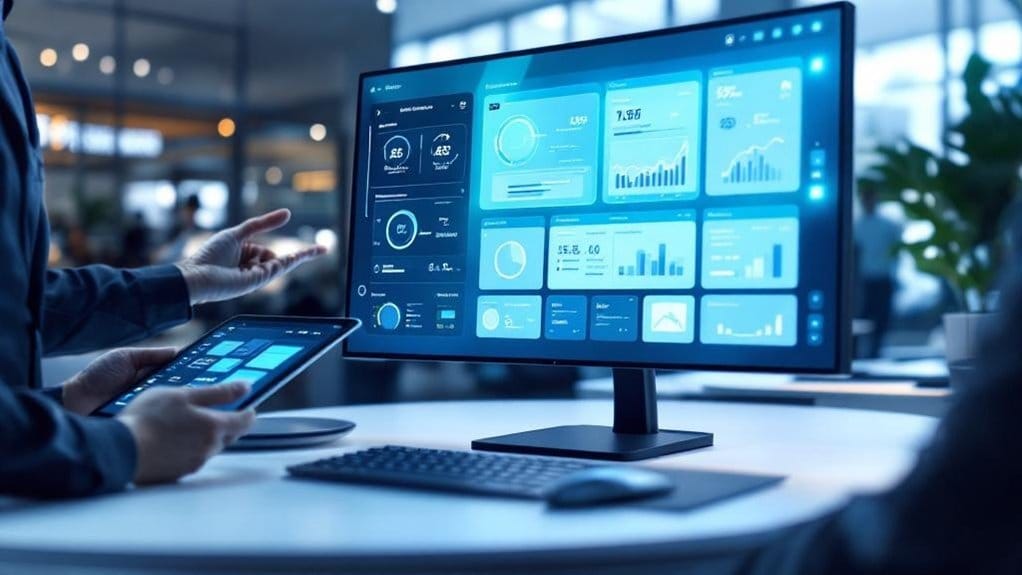
Legacy platforms often grow into a maze of bolt-on modules, each with its own look, feel, and quirks. DDS takes the opposite approach: one unified, intuitive interface across leaderboards, dashboards, and signage configuration.
Your team gets:
Clear navigation, consistent icons, and familiar workflows.
Less “where do I find that?” and more “let’s act on this.”
Faster onboarding for new hires, because they’re learning one environment instead of three or four.
Because DMS and CRM data flow into a single DDS experience, users avoid constant app-toggling and duplicate tasks. The result is fewer mistakes, less frustration, and more time spent on customers instead of on screens.
AI-Powered Sales and Service Insights
Legacy tools can show you what happened; DDS helps you see what’s likely to happen next.
AI-powered analytics surface:
High-propensity buyers based on behavior and history.
Vehicles and trims likely to move fastest in your market.
Service opportunities and maintenance windows that should be proactively scheduled.
The platform doesn’t just give you charts—it flags patterns and recommendations so managers can prioritize the next actions that matter most. You shift from chasing every lead to focusing on the ones with the highest likelihood and value. Your inventory decisions move from intuition to data-backed forecasts. And service can plan staffing and parts for predictable, profitable work instead of living in firefighting mode.
Legacy platforms rarely offer this level of predictive insight without layering on a separate analytics product—and often force you back into exports and manual analysis.
Omnichannel Customer Journey Tracking

You’ll get a unified interaction timeline that stitches web, showroom, and service touchpoints together so every customer’s path is visible and actionable. Cross‑channel journey mapping highlights where prospects drop off or accelerate, letting you prioritize high‑impact interventions. With AI scoring layered onto that map, you’ll target personalized messages to the right stage and measure lift in engagement and conversions.
Cross‑Channel Journey Mapping
When dealerships map cross‑channel journeys, they get a single, data‑driven view of every customer interaction—online searches, showroom visits, chat transcripts, test drives and service appointments—so you can spot behavioral patterns, tailor messages in real time, and close gaps that cause drop‑offs. Cross‑channel journey mapping ties customer engagement to actionable insights by unifying digital and physical touchpoints through robust data integration. You’ll see where prospects stall, which messaging converts, and how service visits influence repeat purchases. That clarity helps you personalize outreach, reduce friction, and lift conversion rates with measurable ROI. Feel the impact:
- Relief — stop guessing and fix real drop‑offs.
- Confidence — make decisions backed by unified data.
- Loyalty — build consistent, relevant experiences that keep customers coming back.
Unified Interaction Timeline
Cross-channel journey maps show where customers stall and which messages work — the Unified Interaction Timeline turns that intelligence into a single, chronological record of every touchpoint so your team can act on it in real time. You get a complete omnichannel customer journey tracking system that consolidates online and offline interactions, reducing friction in the buying experience and ensuring consistent messaging. Real-time updates surface behavioral cues and a 0–100 customer engagement score, so you can prioritize follow-up on high-propensity prospects. That data-driven visibility enables personalized outreach based on preferences and past actions, improving conversion rates. Ultimately, the timeline aligns marketing, sales, and service around one authoritative view, fostering loyalty through a seamless, measurable customer engagement strategy.
Technician and BDC Performance Monitoring
Legacy reporting often treats Fixed Ops and BDC as afterthoughts, measured only by a few end-of-month numbers. DDS brings both into the same real-time, KPI-driven environment as Sales.
For technicians, you can track:
Hours flagged vs. hours available
Efficiency and productivity
RO count and job mix
For BDC, you can monitor:
Call volume and connection rates
Appointments set, shown, and sold
Lead response times and workflows
Live dashboards and reports make performance transparent without endless spreadsheet work. Managers can see who needs coaching, where processes are breaking down, and which reps are driving the most revenue—not just the most activity. That level of visibility is a clear step up from legacy tools where you’re lucky to get one static “performance” report per department.
Predictive Inventory and Service Management

You’ll use VIN-level demand forecasting to spot which specific vehicles will move fastest and align buying decisions to real market signals. Predictive maintenance scheduling will automatically prompt service appointments before issues escalate, keeping customers happier and reducing shop downtime. Combined with parts inventory optimization, these insights cut excess stock and boost service margin by ensuring the right parts are available when they’re needed.
VIN-level Demand Forecasting
One clear advantage of VIN-level demand forecasting is that it uses advanced AI to predict exactly which vehicles and services your dealership will need, when you’ll need them, and why. You’ll get VIN analytics tied to demand trends so you can cut holding costs, reduce excess stock, and free up working capital. Forecasts let you target high-probability sales and avoid missed opportunities by matching inventory to customer intent. Service forecasting at the VIN level helps you plan capacity without waiting for reactive spikes. You’ll adapt faster to emerging preferences and improve margins through data-driven sourcing.
- You feel confident knowing stock matches real demand.
- You gain peace of mind from fewer missed sales.
- You see measurable profit and efficiency gains.
Predictive Maintenance Scheduling
Predictive maintenance scheduling uses AI to analyze vehicle performance and service histories so you can anticipate issues before they become costly repairs, keep the right parts on hand, and schedule technicians for planned work instead of firefighting. You’ll use maintenance analytics to spot patterns—failure likelihood, wear rates, and ideal service windows—so you can shift from reactive fixes to proactive care. That data-driven shift cuts unexpected repairs, trims service labor by about 30%, and boosts technician productivity through predictable workloads. Service optimization here means higher revenue per bay, better utilization of skilled labor, and a smoother customer experience that builds loyalty. By integrating predictive scheduling into your workflow, you’ll reduce downtime, improve profitability, and deliver consistently timely, proactive service.
Parts Inventory Optimization
Inventory intelligence ties together VIN-level tracking, real-time demand forecasts, and automated ordering so you’ve got the right parts at the right time without overstocking. You’ll benefit from AI-driven predictive analytics that improves parts tracking and inventory accuracy, reducing carrying costs while boosting service throughput. Predictive maintenance links anticipated repairs to automated parts ordering and appointment scheduling, so technicians aren’t waiting and customers return satisfied. Integrated sales-service communication guarantees visibility across departments, minimizing downtime and markup errors. Real-time reporting gives you actionable insights to adjust purchasing and stocking dynamically.
- Reduce waste — feel relief as excess inventory falls.
- Cut delays — gain confidence when repairs finish on time.
- Improve retention — watch customer loyalty rise.
Managed Content Updates With High Uptime

Because your showroom content needs to stay timely and relevant, the Digital Dealership System automates managed content updates and pairs them with 99.999% uptime so promotions, service alerts and lounge programming are displayed without interruption. You get content automation that refreshes promotional messages, dynamic lounge TV programming and real-time service status from your DMS, keeping customers informed and engaged. Uptime reliability minimizes downtime and protects revenue opportunities tied to timely offers. Automated KPI dashboards cut manual reporting, freeing your team to act on data and improve conversion. The result is a strategic, measurable experience: fewer missed promotions, faster service communications, and consistent showroom energy that’s maintained by data-driven updates and enterprise-grade reliability.
Scalable Full-Store Installation Options
Those managed updates and near-perfect uptime set the stage for a full-store rollout that scales to your dealership’s size and goals. You’ll get customization options and installation flexibility so tech integrates across sales, service, and parts without disrupting operations. Competitive Basic, Pro, and Full-Store tiers let you match budget to impact, and quick setup means measurable benefits in days. Real-time KPIs and promotional digital signage boost engagement while seamless DMS/CRM integration guarantees reporting accuracy and cohesive workflows. Consider what matters most and choose the scope that delivers measurable ROI:
- Faster customer engagement that feels modern and reliable.
- Accurate, unified reporting that drives smarter decisions.
- Scalable deployment that grows with your dealership.
Frequently Asked Questions
What is one way dealerships can use technology to enhance sales with DDS?
Use DDS’s PULSE leaderboards and real-time dashboards to track lead response times, close rates, and gross by source. Then coach directly off those live metrics, reassigning leads or adjusting scripts where results lag. You get faster feedback loops and measurable improvement instead of waiting on end-of-month reporting.
What is a “digital dealership” in this context?
In this context, a digital dealership is one where core operations—Sales, Service, BDC, and customer communication—are driven by live data from integrated systems, displayed on leaderboards, dashboards, and signage that everyone can see and act on. Digital Dealership System is the platform that ties those pieces together.
Which technology can streamline customer communications and automate responses across channels?
DDS integrates with your CRM, messaging tools, and digital signage so your follow-ups, in-store messaging, and status updates all pull from the same live data. That gives you consistent, timely communication by email, SMS, in-store screens, and phone, rather than a patchwork of disconnected tools.
Who leads Digital Dealership System?
Digital Dealership System is led by founder and CEO Todd Katcher, whose focus has been on building real-time, in-your-face accountability tools—like PULSE leaderboards and data-driven signage—that stores actually use every day, not just once a quarter.
Conclusion
Legacy platforms can show you what happened. Digital Dealership System shows you what’s happening—and helps you do something about it right now. With real-time KPI leaderboards, seamless DMS/CRM sync, AI-powered forecasting, omnichannel journey tracking, and managed content running on high-uptime digital signage, DDS doesn’t just modernize your tech stack—it changes how your store operates day to day.
If you want the smarter option over legacy tools, choose the system that unifies your data, motivates your people, and turns every screen into a working part of the business, not just another piece of hardware on the wall.