You’re leaving nearly half your dealership’s revenue on the table by treating the service drive like a cost center instead of a revenue engine. Service-loyal customers are over twice as likely to repurchase, yet only 30% return for maintenance and 33% of dealers misroute service leads to sales. Fixable issues—poor communication, pricing opacity, long waits—erode trust and push customers to competitors. Automating segmented reminders, multi‑channel outreach, and attribution lets you convert routine visits into measurable profit; keep going to see a 90‑day playbook.
Key Takeaways
- Service drives generate nearly half of dealership revenue but receive less strategic marketing investment than new-car sales.
- Only 30% of customers return for maintenance, leaving large retention and revenue gains untapped.
- Poor service experiences and weak communication push customers to competitors and erode loyalty.
- Automated, segmented reminders and AI personalization can convert routine service visits into sales opportunities.
- Lack of robust attribution and measurement conceals missed ROI, causing underinvestment in service marketing.
Why Service Drive Marketing Is the Low‑Hanging Revenue Opportunity
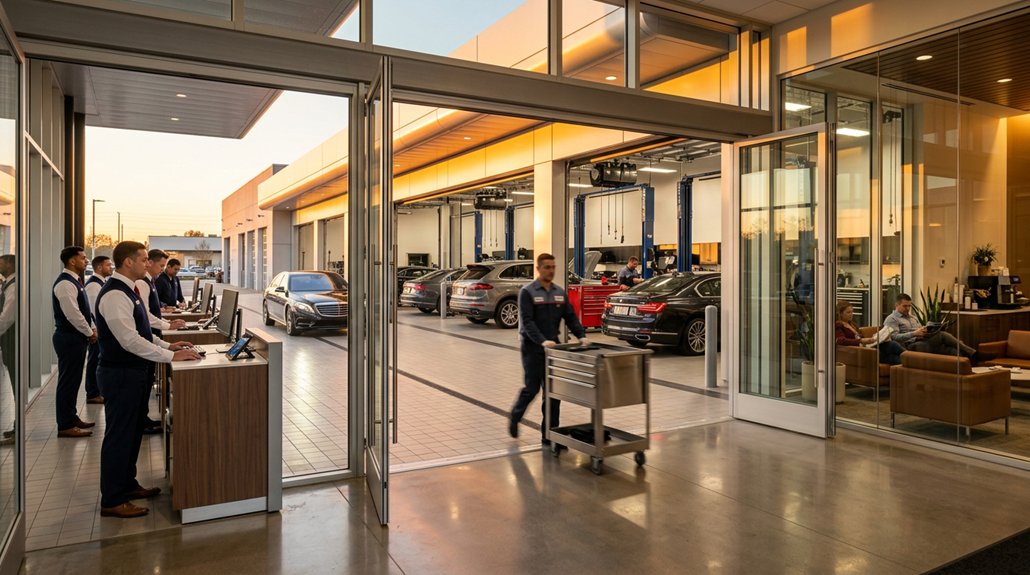
Because the service drive already produces nearly half of a dealership’s revenue, you can’t afford to ignore it as a growth channel. You’ve got measurable revenue potential in every bay: service-loyal customers are more than twice as likely to buy their next vehicle from you, and vehicles staying on the road longer raise lifetime service spend. Yet only 30% return for maintenance and just 33% of dealers transfer service leads to sales. By prioritizing proactive engagement—regular maintenance reminders, personalized offers, and systematic lead handoffs—you’ll convert routine visits into sales conversations and higher retention. Invest in targeted service drive marketing to capture this low-hanging revenue opportunity and turn underused service touchpoints into predictable, scalable income.
How Bad Service Drives Customers: And Profit: Away
You’ve seen how much revenue sits in the service drive, but that opportunity evaporates fast when service fails. Poor service destroys customer trust and directly cuts profit: 76% of customers doubt pricing honesty, and one bad experience means only 30% return. Time wastage pushes 35% to competitors, and weak communication strategies amplify dissatisfaction.
- Restore pricing transparency and capture feedback to rebuild trust and reduce defection.
- Improve service efficiency and use customer feedback to shorten cycle times and reclaim lost visits.
- Link loyalty programs to clear communication strategies so service visits convert to sales and lift revenue.
Fix these areas and you’ll stop leaking customers and recover the high-margin opportunities in the service drive.
The Numbers That Prove Service Retention Beats New‑Car Volume
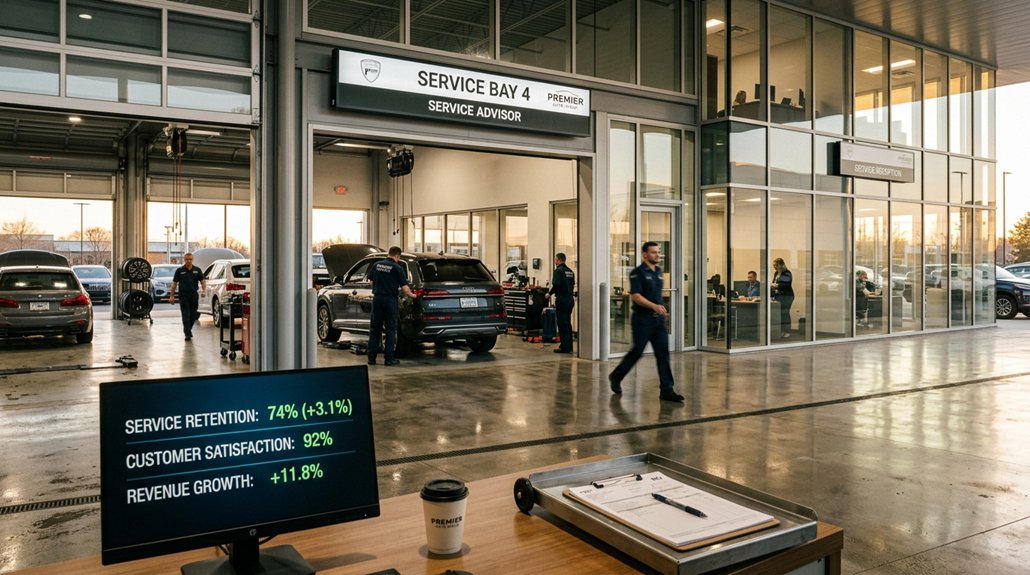
You’re sitting on numbers that prove service retention outperforms chasing new-car volume: loyal service customers are more than twice as likely to buy from you, and service visits occur far more frequently than vehicle purchases. With only 30% returning after an initial visit, boosting that retention rate is a direct lever to increase both service revenue and future trade-in sales. Focus on transparency and proactive engagement during service to convert repeat visits into predictable, higher-margin vehicle sales.
Retention Drives Greater Revenue
Retention pays: customers who regularly use your dealership’s service drive are more than twice as likely to buy their next vehicle from you, yet only about 30% actually return for maintenance—an underused revenue channel that, when optimized, boosts lifetime value through repeat service, additional repairs and accessory sales, and higher vehicle‑purchase conversion; conversely, a single bad service experience can trigger defection, so prioritizing targeted service marketing and experience improvements turns the service department into a reliable profit center that outperforms relying solely on new‑car volume.
You should treat service loyalty as a core retention metric tied directly to revenue growth. Focus on measurable tactics that reduce churn and increase wallet share.
- Track retention rates and spend per retained customer
- Implement targeted service marketing and experience KPIs
- Monetize repeat visits with preventive packages and accessories
Service Visits Outpace Sales
Because service visits happen far more often than new‑car purchases, they’re the steady revenue engine your dealership can’t afford to ignore: you can leverage service loyalty and customer engagement to multiply lifetime value. Only 30% return after purchase, so focused marketing must lift retention. Service departments already outpace new‑car sales—service‑loyal customers are over twice as likely to buy their next vehicle from you. Longer ownership cycles mean more visits, more touchpoints, and more chances to sell. Proactive engagement during service turns visits into sales opportunities and recurring revenue. Use targeted offers, reminders, and upsells to convert maintenance into loyalty and profit.
| Metric | Insight | Action |
|---|---|---|
| Return Rate | 30% baseline | Improve retention campaigns |
| Loyalty Lift | >2x repurchase | Prioritize service loyalty |
| Visits | Increasing | Drive customer engagement |
| Revenue | Recurring | Optimize service marketing |
5 Service Drive Failures That Lose Customers (And How to Fix Them)
While a shaky service drive experience can quietly erode loyalty, data show five specific failures that cost dealers customers and revenue: you lose trust when pricing and timelines aren’t clear—76% doubt dealership honesty—so prioritize service transparency and trust building through proactive communication strategies and technology integration. Long waits and clumsy check‑ins push 35% away; implement process improvement and engagement tactics to shorten cycles. Only 30% return for maintenance, so use feedback loops and personalized reminders to boost customer loyalty. Upsell failures from undertrained advisors leave revenue on the table, and poor cross‑department handoffs (only 33% have transfer processes) kill opportunities.
- Clear pricing and timeline communication
- Streamlined check‑in and tech-enabled updates
- Proactive outreach and advisor training
Find Where Your Service Marketing Is Leaking Revenue
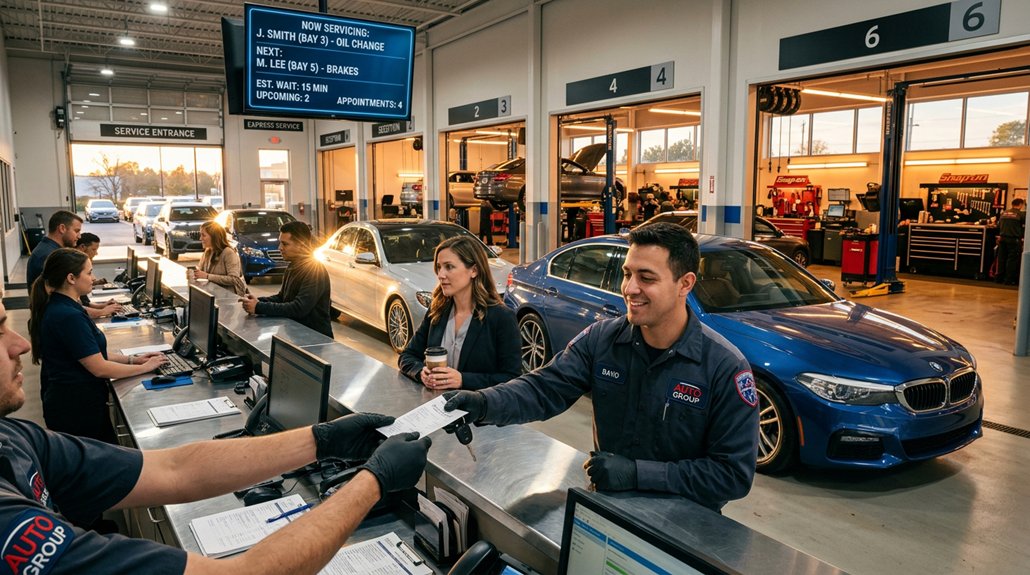
You could be losing up to 30% of service revenue from missed service reminders and poor upsell follow-up—start by quantifying appointment no-shows and declined recommended work. Segment your audience by vehicle age, service history, and lifetime spend to target the right offers and lift retention. And make sure every campaign has tracked attribution so you can tie spend to booked jobs and stop pouring budget into channels that don’t convert.
Missed Service Reminders
How much revenue are you letting slip through missed service reminders? You’re losing customers—only 30% return for maintenance—so service reminder effectiveness must be measured and improved with customer engagement strategies that drive repeat visits and upsells. Automated, personalized reminders capture longer vehicle ownership trends and reduce defections.
- Automate timely, transparent reminders to boost retention and trust (76% doubt pricing honesty).
- Personalize messaging to increase engagement and encourage upsells, turning service into profit centers.
- Use data-driven cadence and reporting to optimize conversion and show ROI.
Focus on measurable uplift: higher retention rates, increased average repair order, and reduced churn. Missed reminders equal missed revenue—fix the leak.
Ineffective Audience Segmentation
Missed reminders are only the first leak; ineffective audience segmentation is where you lose the rest of your service revenue. You’re seeing only 30% return for maintenance because you aren’t using customer insights and data analytics to build accurate customer profiles and identify behavioral trends. Without segmentation strategies tied to vehicle type and service history, your target audience feels overlooked and won’t engage.
| Segment focus | Outcome |
|---|---|
| Vehicle type + history | Higher relevance |
| Behavioral trends | Better timing |
| Personalization techniques | Increased retention |
Implementing automation and AI for personalization techniques and engagement tactics improves outreach effectiveness. Multi-channel execution (email, SMS) and customer-centric messaging create market differentiation and convert neglected prospects into repeat customers.
Untracked Campaign Attribution
When dealerships don’t tie service campaigns to clear attribution metrics, up to 30% of your marketing budget can quietly drain away on channels that don’t drive retention or revenue. You’ll miss which touchpoints bring repeat service visits unless you adopt robust attribution strategies and regular campaign evaluation. Use data-driven audience segmentation and automated analytics to close gaps, attribute revenue, and reallocate spend toward high-performing channels.
- Implement automated attribution reporting to identify wasted ad spend.
- Segment service customers by behavior to target high-LTV owners.
- Run A/B tests and continual campaign evaluation to improve ROI.
With transparent attribution strategies you’ll stop leaking revenue, optimize service marketing, and increase retention-driven profits.
Segment Customers: Who to Target and the Exact Messages to Send
Who exactly should you target in your service-drive marketing, and what message will move them to book? You target demographics by vehicle type, age, and ownership cycle, using service history and customer preferences to build segments. Data analysis reveals high-potential groups—recent buyers, high-mileage drivers, lapsed customers—so you deploy tailored messaging that addresses specific needs (brakes, oil, recall). Use marketing automation to schedule personalized outreach and automated reminders timed to predicted service windows. Engagement strategies prioritize value-focused offers, maintenance education, and convenience (loaner cars, express bays) via appropriate communication channels. That combo boosts retention tactics and repeat revenue: precise segments + relevant messages = higher booking rates, improved spend per visit, and measurable ROI on service-drive efforts.
Multi‑Channel Service Drive Marketing: Mail, Email, SMS That Convert
You’ve mapped the right segments and crafted messages that move people to book — now you need the channels that actually deliver those messages and measure what works. Use direct mail, email, and SMS in coordinated campaigns so your targeted promotions hit customers where they engage most. Track conversions by channel, attribute bookings, and reallocate spend to the highest-ROI tactics.
- Direct mail: high-impact reminders for high-value customers
- Email: detailed offers, lifecycle messaging, measurable open/click rates
- SMS: instant confirmations and short-window incentives
Prioritize customer engagement by matching channel to preference and service history. Automation guarantees timely touchpoints and consistent follow-up, boosting appointment bookings and service retention. Transparent attribution reporting turns outreach into predictable revenue and optimizes your service drive marketing mix.
Service Drive Automations and AI for Personalized Outreach at Scale
You can use automated service reminders and AI-powered personalization to push the right message at the right time, lifting engagement and service visit frequency. Workflow automation for scheduling, follow-ups, and real-time SMS updates cuts wait times and boosts satisfaction, which correlates with higher retention. Dealerships that tie these systems to targeted campaigns typically see up to a 20% increase in service revenue.
Automated Service Reminders
Anyone looking to keep customers returning will want to deploy automated service reminders: you’ll use automated notifications grounded in vehicle data and service history to prompt timely maintenance, reducing churn and lifting service retention by about 30%. By automating outreach you streamline scheduling, cut no-shows, and provide real-time updates that lower customer anxiety. This drives fixed ops revenue because loyal service customers are over twice as likely to buy their next vehicle from you. Focus on measurable outcomes and efficient workflows, and track conversion and lifetime value to justify investment.
- Segment reminders by vehicle type and mileage for relevance
- Offer one-click online scheduling to simplify booking
- Measure return rate, revenue per customer, and engagement
Keywords: automated notifications, customer engagement
AI-Powered Personalization
1 approach that scales service retention is AI-powered personalization, where algorithms use vehicle data, service history, and behavior signals to send the right message to the right customer at the right time. You’ll use AI to segment audiences, deploy targeted messaging, and track transparent attribution so you can optimize spend and boost return visits. AI identifies at-risk customers and automates personalized outreach that improves customer engagement and converts service visits into sales. Data-driven insights let you prioritize high-value opportunities and measure lift in retention and revenue. Implementing these tools enhances the service experience while increasing lifetime value.
| Capability | Outcome |
|---|---|
| Segmentation | Higher engagement |
| Attribution | Better ROI |
Workflow Automation For Retention
Automate key touchpoints in your service drive to cut no-shows, boost repeat visits, and grow revenue: workflow automation—paired with AI-driven personalized outreach—streamlines appointment reminders and follow-ups (reducing no-shows by 15–20%), increases visit frequency by 20–30%, and helps recover up to 25% of lost service revenue by identifying at-risk customers and delivering tailored messaging that lifts engagement by as much as 50%.
You’ll use data-driven retention strategies to deliver timely SMS/email reminders, predictive scheduling to optimize bay utilization (raising revenue ~10%), and analytics to flag churn risk. This improves customer engagement while reducing idle capacity and recovery gaps.
- Automated reminders and follow-ups for lower no-shows
- AI-personalized outreach to lift engagement
- Analytics-driven retention strategies to recover revenue
Measure ROI: Attribution, KPIs, and How to Optimize Ad Spend
Some dealers don’t realize how tightly linked attribution, KPIs, and ad spend optimization are to service revenue, but precise tracking lets you tie marketing dollars to specific service visits and lifetime value. You should run attribution analysis against KPI benchmarks—service retention, engagement strategies, and conversion optimization—to get data insights that inform resource allocation. Use analytics to reallocate spend where customer targeting and engagement drive the highest ROI; studies show data-driven campaigns can boost returns ~30%. Regular marketing adjustments based on transparent tracking increase visit frequency and loyalty. Below is a quick performance snapshot to guide decisions.
| Metric | Goal | Action |
|---|---|---|
| Retention rate | 75% | Targeted recalls |
| Cost per visit | $50 | Shift budget to top channels |
| Conversion rate | 12% | Optimize creatives |
90‑Day Playbook to Convert Service Visits Into Measurable Profit
With attribution and KPIs mapped, you can move into a 90‑day playbook that turns each service visit into measurable profit by codifying actions, timelines, and revenue targets. You’ll deploy service optimization strategies that standardize touchpoints: check-in scripts, inspection upsell menus, and follow-up cadences tied to KPIs. Use data-driven marketing to boost the 30% return rate by personalizing reminders and offers, addressing the 76% pricing trust gap with transparent promotions. Proactive trade-in estimates and targeted recovery of declined services create immediate sales pathways. Tie every activity to revenue goals and measure lift weekly.
- Week 1–4: staff training, inspection scripts, loyalty enrollment.
- Week 5–8: targeted offers, follow-ups, analytics on declines.
- Week 9–12: optimize, scale winners, report ROI to stakeholders, expand customer loyalty programs.
Frequently Asked Questions
What Is the $3000 Rule for Cars?
The $3000 rule for cars says you’ll likely spend about $3,000 on repairs after 100,000 miles; you’ll need proactive maintenance schedules, check warranty coverage, and target service offers to boost retention and dealership revenue.
What Is the 30-60-90 Rule for Cars?
You should follow scheduled maintenance at 30k, 60k, 90k miles: oil, filters, inspections; it boosts reliability, enables service drive upsell strategies, improves customer retention, supports loyalty programs, and drives measurable, revenue-oriented, service-focused outcomes.
Do Dealerships Make the Most Money on Service?
Yes — you’ll often earn more from service: service revenue beats new-vehicle margins, so using marketing strategies, service promotions and loyalty programs boosts customer retention, creating a competitive advantage and driving higher, repeatable dealership profitability.
What Are the Unique Aspects of Service Marketing?
Like a tailored suit, you’ll focus on customer retention and service promotions using data-driven segmentation, multi-channel outreach, automation, and transparent attribution, so you’ll boost service revenue, personalize offers, and optimize campaigns for measurable profitability.
Conclusion
Think of your service drive as a leaking pipe beneath a goldmine: you see the surface value, but every drip is revenue lost. When you tighten that pipe with targeted, data-driven outreach—mail, email, SMS, automations and AI—you stop the waste and funnel predictable profit back into the dealership. Measure retention KPIs, attribute spend, and fix the five failure points, and you’ll turn routine visits into a steady stream of measurable, service-driven revenue.