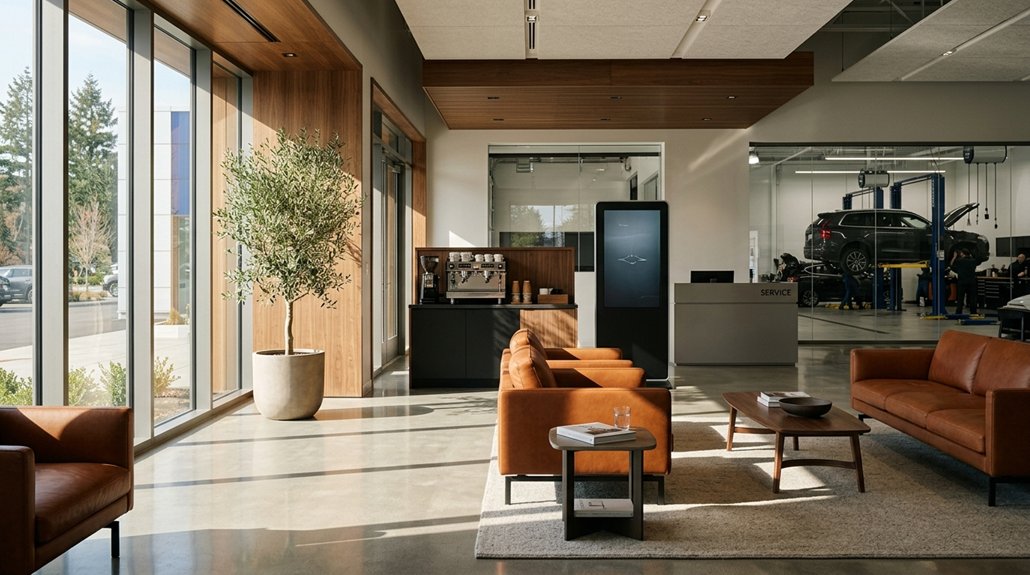
Your service lounge either keeps customers comfortable and productive or quietly drives them away. Check seating ergonomics, visible charging, and fast reliable Wi‑Fi; over half use wait time productively and comfort is nonnegotiable. Offer complimentary snacks and clear signage, keep surfaces spotless, and create inviting zones where staff can engage unobtrusively. Track CSI, workspace bookings, Wi‑Fi uptime, and refreshment replenishment to measure impact. Continue to the rest of this guide to learn actionable audits and pilots.
Key Takeaways
- Comfortable, ergonomic seating and varied layouts indicate the lounge supports customer wellbeing and longer, positive stays.
- Fast, reliable Wi‑Fi and visible charging stations show the lounge enables productivity rather than causing frustration.
- Cleanliness, stocked refreshments, and durable materials reflect operational care and boost perceived service quality.
- Measured metrics—CSI, lounge usage, Wi‑Fi uptime, and refreshment replenish rates—reveal whether upgrades improve satisfaction.
- Pilot-test results tied to KPIs and revenue impacts determine if the lounge investment drives loyalty or wastes resources.
What a Great Service Lounge Delivers: Comfort, Productivity, Loyalty
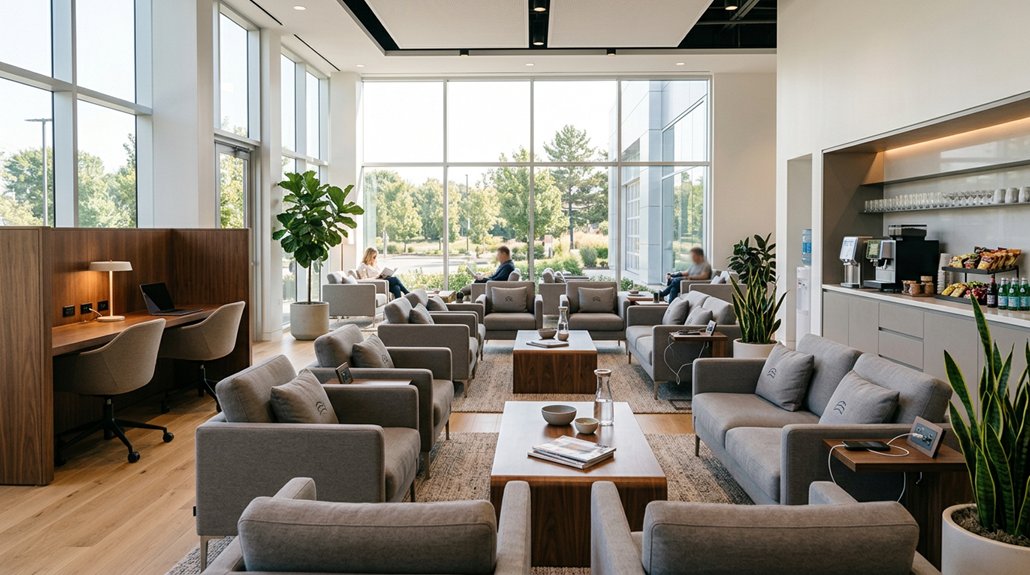
When you walk into a well-designed service lounge, you’ll immediately notice how comfort, productivity, and loyalty are deliberately balanced to improve the entire visit; you’ll sense purposeful lounge design that responds to customer feedback and operational goals. You expect comfortable seating because over 75% of patrons rate comfort as critical. You need reliable Wi‑Fi and dedicated workspaces—about half of customers use waiting time productively—so provide outlets and clear sightlines. Complimentary snacks and beverages meet basic expectations and boost satisfaction. Entertainment choices like large TVs and curated reading materials lower perceived wait times. Every element should foster emotional connection, because engaged customers return more often. Measure outcomes, act on customer feedback, and align physical layout with service objectives to secure repeat business.
10‑Minute Waiting‑Room Audit Checklist
Start your 10‑minute audit by checking seating comfort and layout—ensure cushions are intact, sightlines are clear, and designated work zones are available. Verify connectivity and power access: test Wi‑Fi performance at multiple seats and confirm chargers and outlets work. Finally, inspect refreshments and cleanliness—coffee pots full, snack stations stocked, and surfaces spotless.
Seating Comfort And Layout
Comfortable, well‑arranged seating is a core factor in how customers perceive your lounge during waits, so audit for supportive chairs, varied seating types (single seats, loveseats, stools), and clear sightlines that prevent crowding. You should prioritize seating arrangement and layout optimization to reflect that 75% of customers rate comfort as critical. Guarantee ergonomic options that promote healthy posture for longer waits and dedicated workspaces for the roughly 50% who want to stay productive. Ambient decor and a cool vibe amplify perceived comfort, while a stocked refreshment station signals attention to needs.
- Verify mixed seating types and ergonomic support for varied body types.
- Reserve compact work nooks that don’t disrupt traffic flow.
- Space seating to preserve sightlines and avoid congestion.
Connectivity And Power Access
Because downtime feels wasted without a reliable connection, prioritize fast, guest Wi‑Fi and plentiful, accessible power outlets so customers can work or stay connected during waits; you must audit network reliability regularly and fix dead zones—nearly 40% of dealerships initially fail this, causing frustration and lost time. Test speeds, concurrent-user capacity, and login simplicity; clear signage with password and support steps reduces confusion. Map charging accessibility across the lounge: integrate wall outlets, USB ports, and powered tables so no guest hunts for power. Track usage patterns and add capacity where 75% of customers expect comfortable, functional spaces. Poor connectivity drives 35% to leave or seek alternatives; demonstrating consistent power and network reliability signals a modern, customer-focused service experience.
Refreshments And Cleanliness
A simple, visible refreshments station that’s consistently stocked and spotless tells customers you’re attentive to their needs; audit it every hour to avoid empty coffee pots and depleted snack trays. You should use clear cleanliness standards and log checks so shortages and spills are corrected immediately. Since roughly half of customers expect complimentary options, maintain refreshment variety—coffee, water, healthy snacks plus indulgent choices—to meet preferences and signal care.
- Hourly checklist: stock levels, temps, waste removal, surface sanitization.
- Variety plan: rotate healthy and popular items, label allergens, restock midday.
- Presentation & branding: tidy dispensers, napkins, trash access; visible cleanliness standards and timestamped audits.
This disciplined approach improves satisfaction and reinforces professional brand perception.
Must‑Have Infrastructure: Seating, Wi‑Fi, Power
You’ll want comfortable, ergonomic seating that supports healthy posture and signals you value customers’ time. Make sure Wi‑Fi is fast and consistently reliable—over a third of dealerships fail on first test, and flaky service annoys younger guests. Provide ample, visible charging and power options so customers can stay productive while they wait.
Comfortable, Ergonomic Seating
Comfortable, ergonomic seating is a nonnegotiable element of any service lounge because it supports healthy posture during extended waits and directly boosts customer satisfaction. You’ll need seating that balances ergonomic benefits with varied seating styles to serve 75%+ of patrons who rate comfort as critical. Include power-equipped chairs and clear sightlines to staff desks; about half your guests want workspace-capable spots. Prioritize durable materials, adjustable lumbar support, and clustered arrangements that allow privacy or collaboration. Monitor wear and replace pieces proactively to maintain perceived quality.
- Choose chairs with adjustable lumbar support and varied seating styles for versatility.
- Integrate power access into seating clusters for device use and short-term work.
- Schedule inspection/replacement cycles to preserve comfort and hygiene.
Reliable High-Speed Wi‑Fi
Connectivity is the backbone of a modern service lounge, so make sure your high‑speed guest Wi‑Fi is fast, consistent, and easy to access. You can’t underestimate Wi Fi reliability: about 40% of dealerships fail on first test, and that breakdown directly drives frustration and negative impressions. Prioritize robust bandwidth, redundant backhaul, and clear SSID/passkey procedures so customers jump online without help. Reliable connectivity supports business tasks, entertainment, and productive use of dedicated workspaces, which over 75% of patrons expect as part of a comfortable lounge. Track uptime and speeds, log complaints, and tune capacity for peak service bays. Delivering seamless Wi‑Fi signals a commitment to modern convenience and measurably improves Customer engagement during every service visit.
Ample Charging And Power
Because customers rely on devices for work and entertainment while they wait, your lounge needs plentiful, well-distributed charging and power options that are simple to use. You can’t assume guests will bring adapters or find wall outlets; charging accessibility must be intentional, visible, and maintained. Combine convenient floor- and seat-level outlets, USB-A/C ports, and wireless charging pads to guarantee device compatibility across phones, tablets, and laptops. Monitor and repair outlets proactively so dead ports don’t undermine fast guest Wi-Fi and overall satisfaction.
- Floor and seat outlets: placed near seating clusters, with tamper-resistant covers.
- Universal ports: USB-A, USB-C, and Qi wireless hubs for cross-device charging.
- Maintenance plan: weekly checks, signage for use, and quick replacement protocol.
Snacks, Drinks, and Ambience That Boost Perceived Value
When customers wait for service, a consistently stocked lounge with complimentary drinks, diverse snacks — including healthier options — and comfortable seating tells them you value their time and elevates their perception of your brand; vending machines and a well-maintained ambiance further reinforce that commitment. You should prioritize snack variety and drink options, keeping refreshments replenished throughout the day to match expectations and dietary needs. Comfortable seating and controlled lighting reduce stress and increase perceived value. Vending machines provide instant access while signaling hospitality. Track consumption patterns to optimize offerings and avoid waste. Small details — cleanliness, scent control, and organized displays — matter as much as the menu itself.
| Feature | Benefit | KPI |
|---|---|---|
| Snack variety | Meets preferences | Selection uptake |
| Drink options | Hydration satisfaction | Refill frequency |
| Ambience | Comfort perception | Dwell time |
| Vending | Convenience image | Sales per visit |
| Cleanliness | Brand trust | Complaints/reviews |
Engage Wandering Customers Without Being Pushy
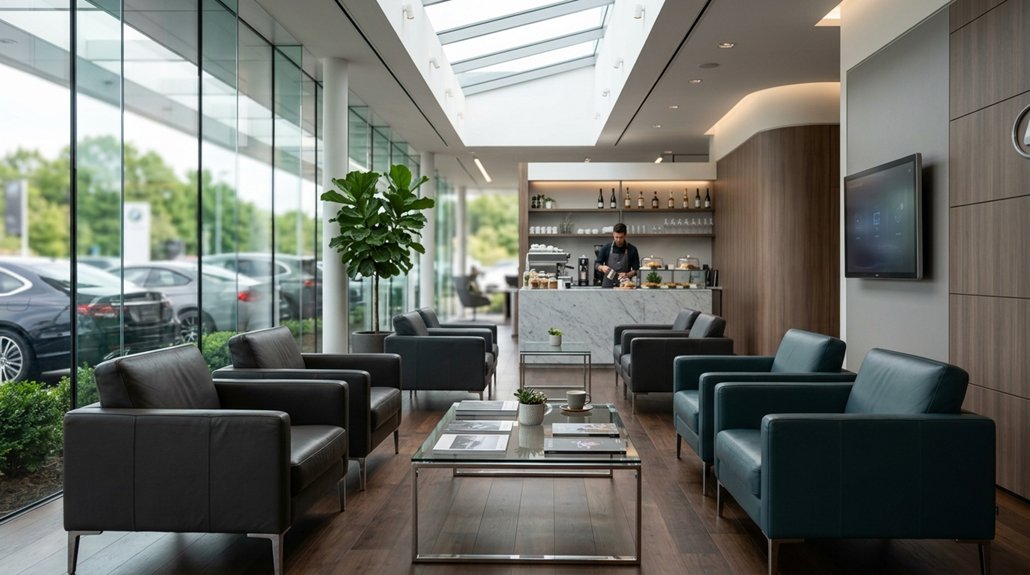
If you want to engage wandering customers without being pushy, train staff to offer brief, open-ended invitations—like “Feel free to look around; I’m nearby if you have questions”—and to read body language so they can step in or back off accordingly. You’ll create a welcoming atmosphere that supports customer engagement without pressure. Equip staff with quick scripts, cues for disengagement, and facts about lounge amenities so conversations stay relevant and helpful. Design the lounge to draw customers back—comfortable seating, workstations, complimentary snacks and drinks—and position staff where they’re visible but unobtrusive.
- Train: brief, polite approaches and body-language reading.
- Design: inviting zones that encourage lingering.
- Staff tools: short scripts and amenity knowledge.
KPIs That Link Lounge Upgrades to CSI and Revenue
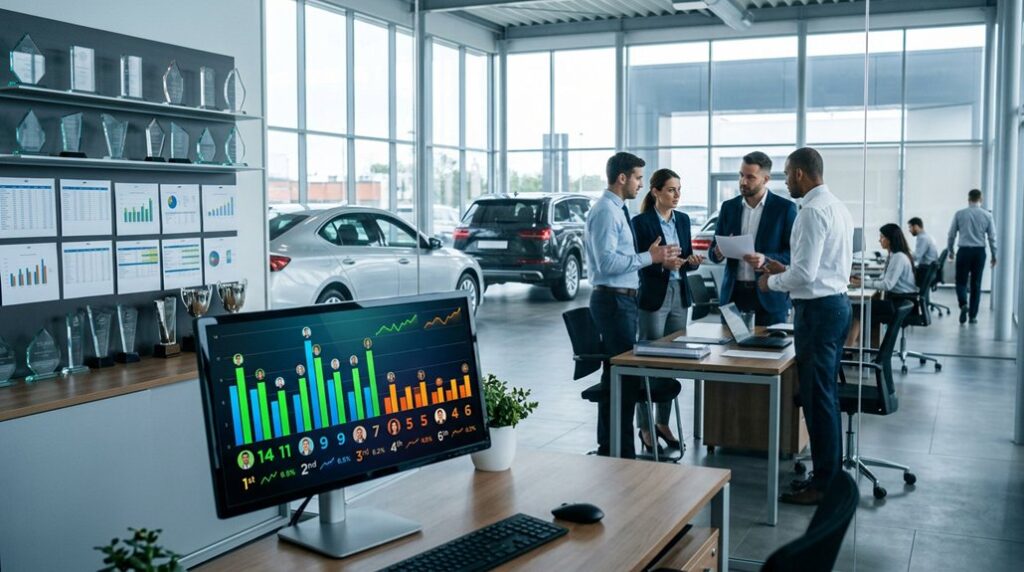
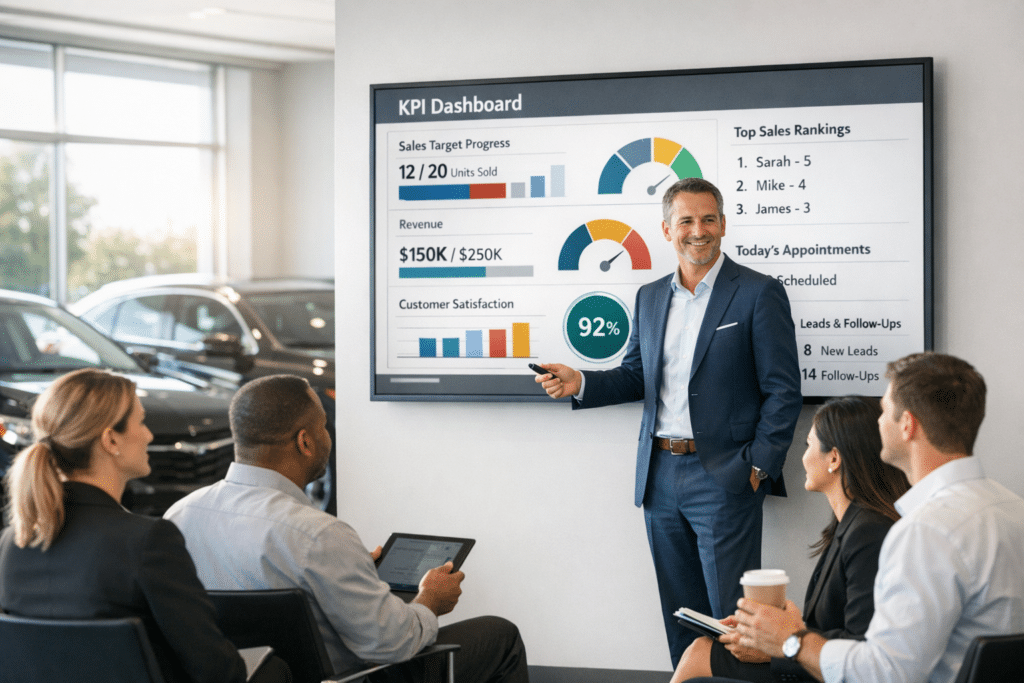
Now that staff and layout are set to engage customers without pressure, you’ll want measurable ways to prove lounge upgrades drive happier customers and higher revenue. Track CSI changes pre/post-upgrade — with over 75% prioritizing comfort, a measurable CSI lift validates lounge ambiance investments. Monitor usage rates of dedicated workspaces; converting even half of productivity-seeking customers boosts perceived value. Log Wi‑Fi uptime and charging-station availability; fixing the ~40% failure rate correlates directly with fewer complaints. Measure refreshment replenishment frequency against repeat-visit rates to quantify loyalty gains from complimentary snacks and beverages. Finally, capture engagement with real-time vehicle status displays and link viewing metrics to faster approvals, upsell conversion, and revenue per repair order. Tie each KPI to dollar impact for executive buy-in.
Three Low‑Cost Pilots to Test This Month
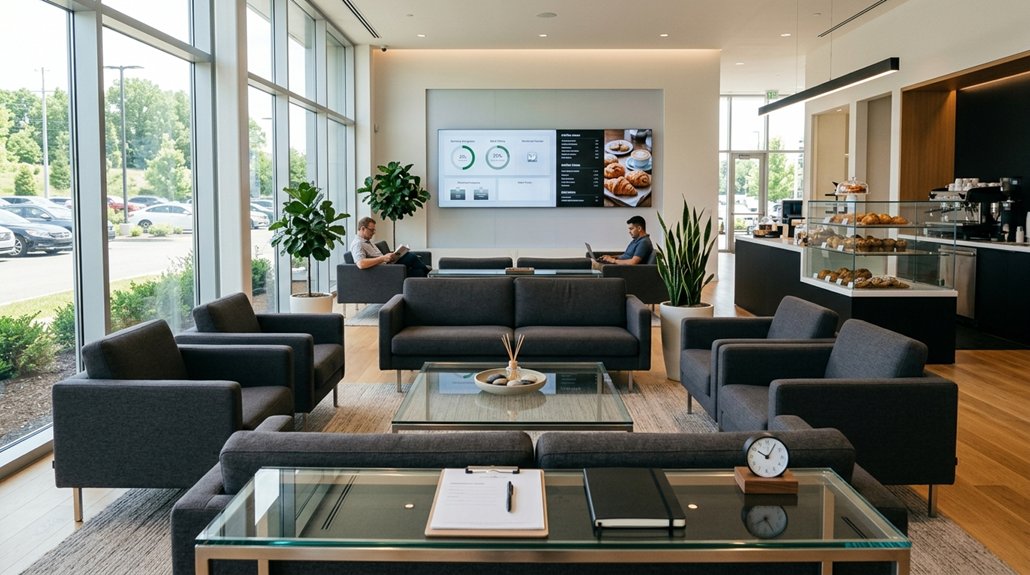
Start with three small, measurable pilots you can stand up this month to prove impact without big capital outlays. Use each pilot to capture customer feedback and quantify changes in lounge ambiance and satisfaction.
- Set up a seating cluster with charging points and fast Wi‑Fi; track uptake, dwell time, and satisfaction scores (75% cite comfort as critical).
- Install a snack/beverage station plus a vending machine; measure refill frequency, usage rates, and net promoter lift from customers who use refreshments (≈50% demand).
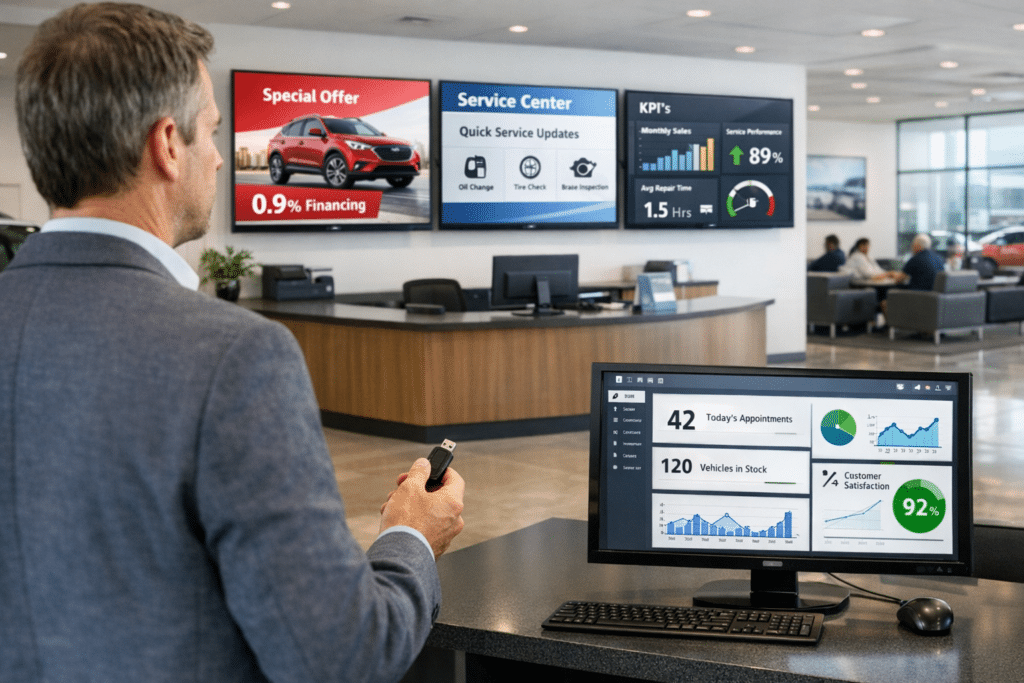
- Create two dedicated workspaces and mount screens showing real‑time vehicle status; log bookings, productivity mentions in feedback, and CSI delta tied to informed waits.
Run each pilot for 30 days and compare pre/post KPIs.
Frequently Asked Questions
What Should You Never Reveal to the Dealer When Negotiating?
Don’t reveal your max budget, trade-in expectations, urgency, credit details, or competing offers; don’t admit enthusiasm. Using clear negotiation strategies and spotting dealer tactics, you’ll preserve leverage, control timing, and force better, fairer outcomes.
Is It Worth Getting Service Done at the Dealership?
Yes—you’ll often choose dealership service for Service Benefits like trained technicians, warranty protection, and real-time vehicle updates, but weigh a Cost Analysis: dealerships can be pricier, so compare estimates, perks, and convenience before deciding.
What Is the Red Flag Rule for Car Dealers?
Picture a warning flag snapping in wind: the Red Flag Rule makes you spot red flag signs, verify customer identity and credit, and document concerns. It forces dealer transparency, preventing fraud and protecting both buyers and your dealership.
How Does Customer Service Impact the Customer Experience?
Customer service shapes your customer experience by meeting customer expectations and signaling service quality; when you provide clear communication, comfort, and timely updates, you build trust, reduce anxiety, and drive loyalty and repeat business.
Conclusion
A well‑designed customer lounge doesn’t just look nice — it improves productivity, loyalty, and your bottom line. Studies show 70% of customers rate waiting‑area comfort as a major factor in overall service satisfaction, so small upgrades pay off. Use the 10‑minute audit, prioritize seating, Wi‑Fi, and power, add tasteful snacks and ambience, engage customers subtly, and run one low‑cost pilot this month to measure CSI and revenue impact.