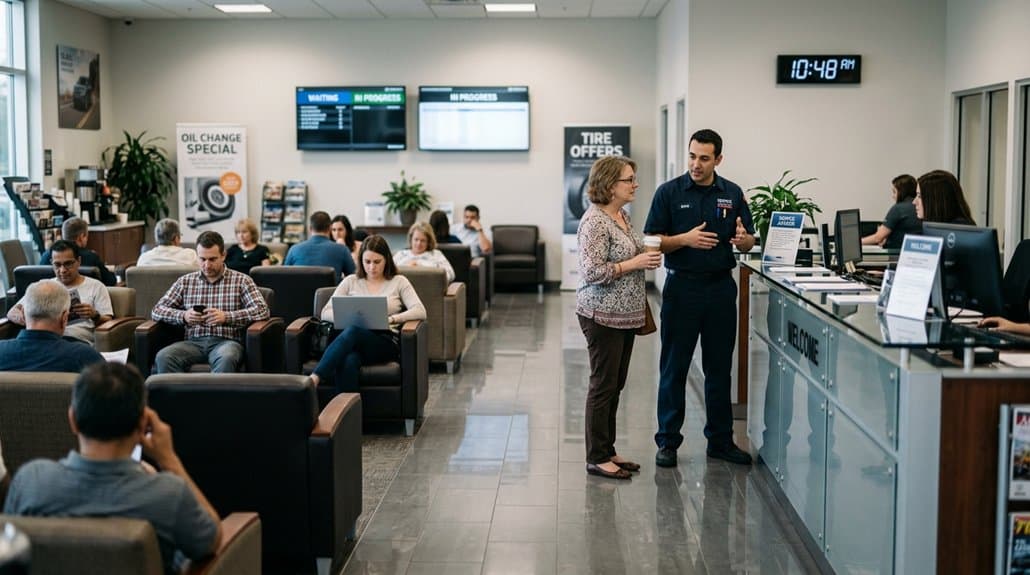
You’re sitting on a high-value audience: service customers are three times likelier to buy again and fixed ops deliver nearly half your gross profit. Segment by service frequency and vehicle age, unify CRM/DMS/service records, and automate reminders, reactivations and trade offers via email and text for quick ROI. Use low-pressure sales touchpoints, video in the lane, and weather-triggered promos to boost bookings and retention. Keep measuring conversion, no-shows and lifetime value—more tactics follow.
Key Takeaways
- Prioritize service customers with segmented outreach (frequency and vehicle age) to boost retention and repeat sales.
- Integrate CRM and DMS data to automate timely, personalized service reminders and reactivation campaigns.
- Use customers’ preferred channels (email 50%, SMS 32%) and behavior-prediction signals to optimize timing and response.
- Convert service visits into low-pressure sales with in-lane offers, live status screens, and targeted inventory promotions.
- Collect and act on feedback with close-loop surveys to improve service, loyalty, and marketing effectiveness.
Why Service Customers Are Your Highest-Value Audience : Quick Wins
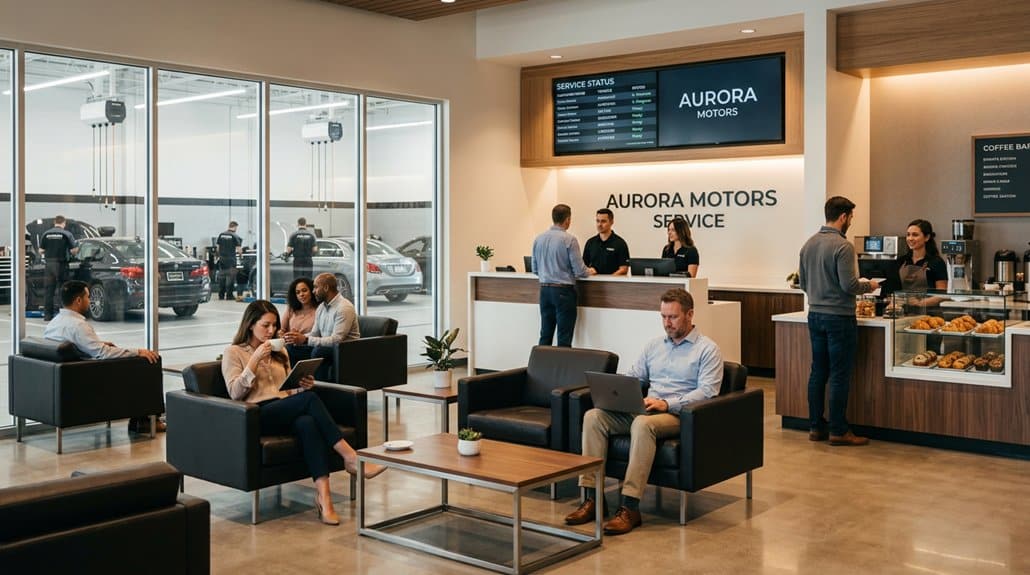
Think of your service lane as a goldmine: service customers are three times more likely to buy another vehicle from you, yet nearly half don’t even know about other dealership offerings—so targeted outreach delivers quick, measurable ROI. You’ll cut costs by focusing on retention, which is five to seven times cheaper than new acquisition, and boost fixed operations that drive 49% of gross profit. Prioritize customer engagement through timely, relevant messages that highlight trade-in options and financing when behavior prediction flags sales intent. Small, data-driven campaigns convert faster than broad branding pushes: personalized reminders, service-package upsells, and loyalty incentives lift repeat purchases. This is where service loyalty becomes measurable value—quick wins with high ROI.
Segment Service Customers: 5 Data-Driven Groups to Target
Start by grouping your service customers into clear service-frequency tiers and vehicle-age segments so you can prioritize outreach where it moves the needle. With clean, unified data you’ll target frequent-service owners with loyalty rewards and older-vehicle drivers with repair and safety offers that match their needs. This focused approach boosts engagement, lets you automate timely reminders by mileage/time, and identifies lapsed customers for reactivation campaigns.
Service Frequency Tiers
Segmenting your service customers into clear frequency tiers—such as frequent, regular, occasional, seasonal, and lapsed—lets you deploy targeted, data-driven campaigns that boost retention and revenue. Use service frequency to prioritize outreach: reward frequent visitors with loyalty offers that deepen customer loyalty and increase repeat purchases, nurture regulars with maintenance reminders, and send tailored incentives to occasional users to raise visit cadence. Identify lapsed customers via gap analysis and run reactivation campaigns with time-limited discounts. This segmentation sharpens your marketing spend by focusing on high-value cohorts and tailoring messages that resonate with each group’s needs. Measurable KPIs—return rate, average spend, reactivation lift—confirm which tiers drive the best ROI and where to invest.
Vehicle Age Segments
Five clear vehicle-age groups let you match offers to real needs: new (0–2 yrs) for warranty and retention, prime trade-in (3–5 yrs) where customers are most responsive to upgrade messages, mid-life (6–9 yrs) for preventive maintenance nudges, older (10+ yrs) for bundled repair packages, and classic/collector segments for specialty care. You should use vehicle longevity trends to prioritize outreach: data shows 3–5 year owners are highly receptive to trade-in incentives, while 10+ year owners generate steady service revenue. Apply behavioral prediction to flag segments nearing purchase windows and tailor customer retention strategies—warranty prompts, loyalty rewards, or package offers—accordingly. Segmenting by age reduces wasted spend, increases service visits, and turns timely offers into measurable retention and sales lift.
What Data You Need: CRM, DMS & Service Records
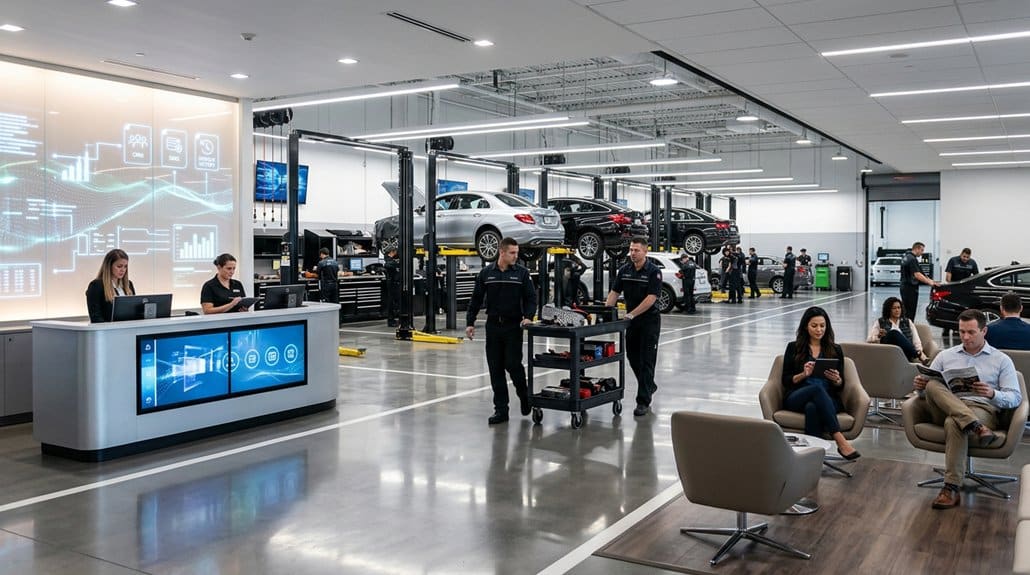
A unified data strategy is the backbone of effective service-to-sales marketing. You need data integration between CRM and DMS to combine contact info, service records and preferences, turning raw entries into actionable customer insights. Clean, reconciled data enables precise audience segmentation so you can send the right offer to the right owner at the right time.
Analyze service records to spot vehicles due for specific maintenance or upgrades; that intel fuels timely, personalized outreach. Use behavior prediction tools on combined datasets to flag service customers likely to enter the sales cycle, increasing conversion potential. Finally, enforce regular DMS updates and data hygiene so every campaign relies on accurate, current information—improving engagement rates and measurable ROI.
Unify Data and Build One Customer Profile
To get actionable insights you need a unified data source that merges CRM, DMS, and marketing tool records into a single customer view. With cross-system integration you’ll reduce duplicates and gaps, enabling precise segmentation by service frequency, vehicle age, and satisfaction. That single profile drives predictive outreach and personalized offers that measurably improve retention and engagement.
Unified Data Source
Whatever systems you’re using—CRM, DMS, scheduling, or marketing platforms—bringing them into a single, clean customer profile turns scattered signals into actionable insights; unified data lets you segment by service frequency, vehicle age, and satisfaction in real time so you can send precisely timed reminders and offers that measurably boost engagement and conversions. You’ll realize data integration benefits immediately: cleaner segments, faster campaign execution, and higher conversion lift. Use customer insight strategies to predict needs and trigger personalized outreach—service reminders, part recalls, timed promotions—based on actual vehicle history. Below is a compact view of key inputs and outcomes.
| Input Source | Metric | Outcome |
|---|---|---|
| CRM | Contact recency | Higher open rates |
| DMS | Service history | Relevant offers |
| Marketing | Engagement | Conversion lift |
Single Customer View
When you pull CRM, DMS, scheduling, and marketing signals into one clean customer profile, you get a Single Customer View that makes personalized outreach measurable and repeatable. You’ll centralize disparate sources through data integration to create a single, reliable record that drives segmentation and automation. With unified data, you gain customer insights into service frequency, purchase patterns, and preferred channels, letting you tailor messages that convert. That targeted approach supports multi-channel campaigns and predictable workflows, improving retention and service bookings. An effective SCV also feeds predictive analytics, so you can anticipate needs—timely recalls, maintenance prompts, or upsell opportunities—rather than react. Build and maintain that one profile, and your marketing becomes both efficient and measurable.
Cross-System Integration
Although it’s often overlooked, cross-system integration is the linchpin for building a true single customer profile by pulling CRM, DMS, scheduling, and marketing data into one consistent record. When you unify service history, vehicle details, and communication preferences, you can segment by service frequency, vehicle age, and satisfaction to create targeted campaigns that drive retention. Expect data synchronization challenges—duplicates, mismatched identifiers, and timing gaps—and address them with clear governance and validation rules. Evaluate integration tool options: ETL platforms, iPaaS, or vendor APIs, choosing one that supports real-time syncing and identity resolution. With a centralized profile, you’ll anticipate needs, automate multi-channel outreach, and deliver timely, personalized offers that measurably boost engagement and lifetime value.
Automate Service-Customer Outreach: Reminders, Reactivations, Trade Offers
Because timely, personalized outreach cuts no-shows and boosts repeat business, you should automate service reminders, reactivation campaigns, and trade offers across customers’ preferred channels—email (50%) and text (32%)—to maximize engagement. Use reminder effectiveness metrics and optimize campaign timing with behavior-prediction signals to flag vehicles likely to need service. Automate follow-ups after appointments to reinforce satisfaction and upsell opportunities. Reactivation sequences with time-sensitive incentives convert lapsed clients, while targeted trade offers during service capitalize on owners of in-demand models.
- Segment by service history and predicted need.
- Trigger reminders via preferred channel and schedule.
- Run timed reactivation offers for inactive windows.
- Surface trade candidates during service workflows.
Measure conversion rates, no-show reduction, and lifetime value uplift.
Personalize Messages That Convert: Offers, Channels, Timing
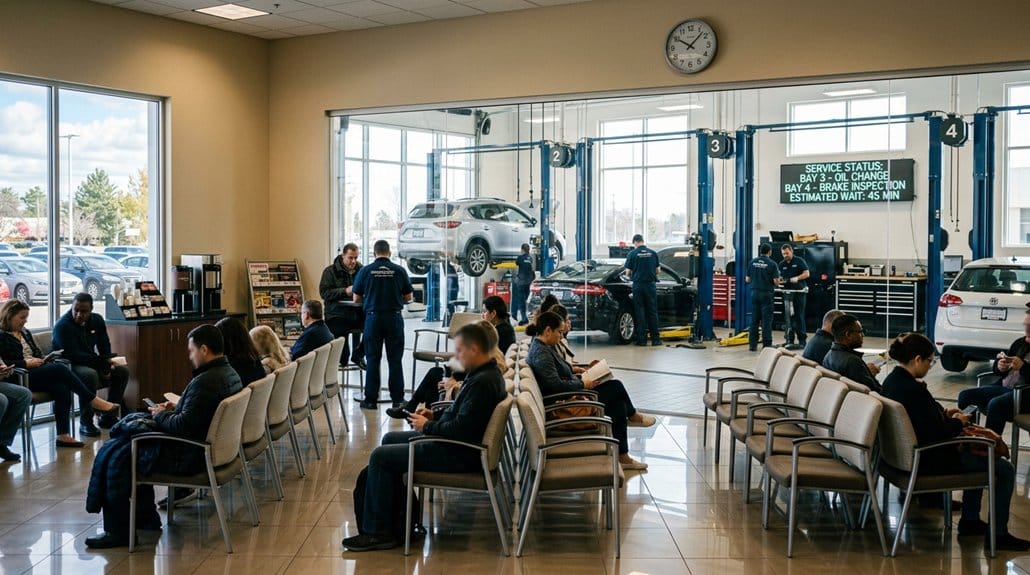
1 tactic beats blanket blasts: tailor offers to each customer’s vehicle needs, preferred channel, and likely timing so messages feel helpful, not spammy. You should use personalized offers tied to maintenance history and vehicle age to build trust—customers with aging cars respond better to targeted service promotions. Send via the channels they use: email reaches about 50% and text about 32%, so multi-channel sequencing increases response. Prioritize effective timing: deliver reminders shortly after prior visits or when predictive behavior signals a service or sales opportunity. Behavior-prediction tech flags high-value customers, letting you time messages that boost retention up to 15%. Measure lift by segment conversion and adjust offer magnitude, CTA, and channel mix for continuous improvement.
Turn the Service Drive Into Sales: Non-Pushy Touchpoints That Convert
You can turn routine service visits into low-pressure sales opportunities by combining service-driven inventory displays, gentle in-lane promotions, and targeted post-service follow-ups. Nearly half of service customers don’t know about other dealership offerings, so displaying live vehicle status and nearby older inventory, offering subtle in-lane financing or warranty options, and sending personalized reminder emails with promotions can boost purchase consideration. These non-pushy touchpoints are data-backed and can make service customers up to 3x more likely to return for a vehicle purchase.
Service-Driven Inventory Displays
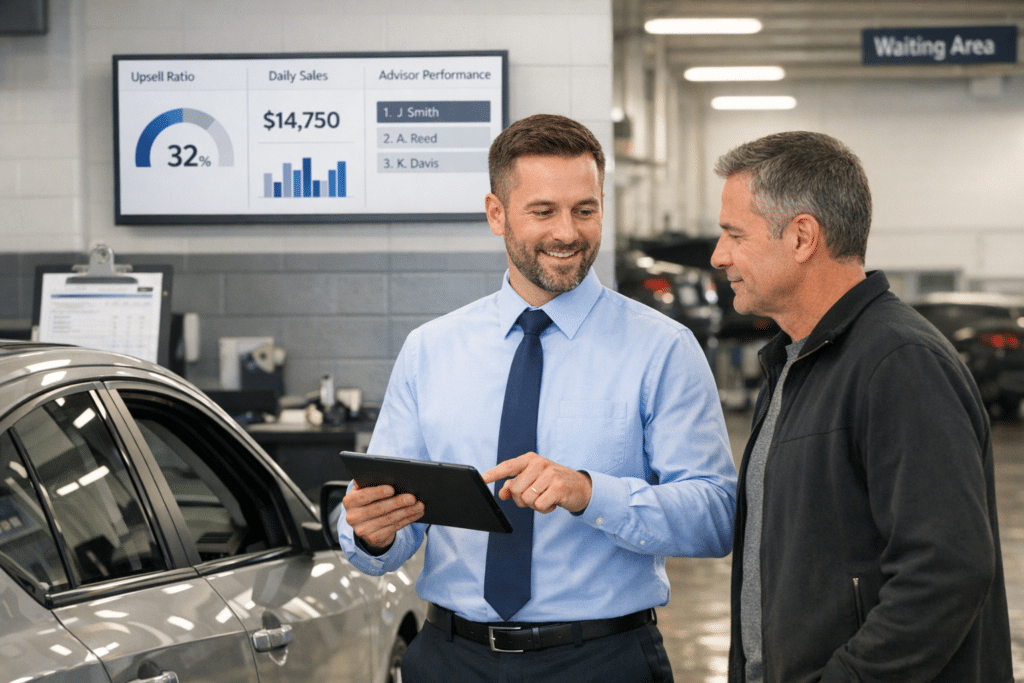
Capture attention in the service drive by turning it into a subtle sales channel: nearly half of service customers don’t realize the dealership offers other vehicles, so prominently displaying older inventory — paired with service specials tied to those models — can nudge consideration without pressure. Use service display strategies to combine topical service reminders, digital screens showing vehicle status plus inventory promos, and clear incentives like special financing or extended warranties. You’ll increase conversions by linking service needs to available stock and keeping customers informed.
- Feature older models near waiting areas with QR links to listings.
- Rotate promotions tied to recent service types.
- Show live bay updates alongside targeted ads.
- Include post-service emails with inventory CTAs.
These customer engagement techniques are measurable and low-pressure.
Gentle In-Lane Promotions
While customers wait for service, subtle in-lane promotions turn downtime into measurable sales opportunities by surfacing relevant inventory and offers without pressure; nearly half of service guests don’t realize you sell other vehicles, so linking service updates, targeted promos, and loyalty incentives in the lane boosts engagement and conversion with minimal interruption. You can drive in lane engagement by displaying live vehicle-status boards that include tailored inventory suggestions and time-limited service specials tied to older stock. Personalized reminders and promotions—based on vehicle history—raise trust and response rates, and loyalty rewards presented during visits increase repeat-business propensity threefold. These non-pushy touchpoints enable subtle upselling: low-friction, data-driven prompts that convert while preserving the service experience and long-term profitability.
Post-Service Follow-Up
Someone who felt well cared-for in the service bay is far likelier to return—and a brief, personalized post-service follow-up locks that goodwill into measurable results. You should deploy personalized outreach immediately after service: thank-you notes, repair summaries, and a short survey increase customer engagement and trust, driving repeat visits. Automated reminders tied to vehicle needs maintain timely contact without extra staff time. Reactivation campaigns with time-sensitive incentives bring lapsed clients back, improving retention. Measure opens, clicks, survey responses, and rebook rates to optimize messaging.
- Send personalized thank-you + repair summary within 24 hours.
- Include a 1-click survey for actionable feedback.
- Schedule automated maintenance reminders by mileage/date.
- Run segmented reactivation offers with clear expiry.
Use Video & Digital Content in the Service Lane
If you want to turn service visits into engagement opportunities, video and digital content are the most efficient tools—email campaigns with video get 4.5× higher click‑through rates than text and images, and in-lane presentations, customer testimonial videos, and real‑time vehicle-status displays all raise trust and reduce perceived wait times. You should prioritize video engagement and customer education: play short how-to and maintenance explainer videos in waiting areas, rotate inventory walkarounds, and share testimonial clips that build credibility. Link videos in follow-up emails and SMS to extend the touchpoint. Real-time status screens paired with short clips keep customers informed and reduce perceived delays. Measurable uplift in clicks, satisfaction scores, and service-to-sales conversion makes this a high-ROI tactic you can deploy immediately.
Seasonal and Weather-Triggered Campaigns That Fill Bays
Seasonal and weather-triggered campaigns are one of the fastest ways to fill bays because they target urgent, time-sensitive needs—like winter tire installs before the first freeze or A/C checks ahead of a heatwave—and deliver measurable lift when you act fast. You’ll use seasonal strategies and weather incentives to create targeted outreach: AI flags vehicles likely needing service, then email, SMS, and direct mail deliver timely offers with clear expirations that drive bookings. This approach converts necessity into appointments and improves bay utilization quickly. Prioritize automation, localized weather triggers, and short-window discounts to increase response rates and reduce idle capacity.
Target weather-driven needs—AI-pinpointed, multi-channel offers with short, urgent discounts—to quickly convert demand and fill bays.
- AI-driven identification
- Multi-channel delivery
- Weather-triggered timing
- Limited-time incentives
Track the 3 Metrics That Actually Move the Needle; Common Pitfalls
Because measuring the right things changes behavior, focus on three metrics that actually move the needle—confirmation rates, visit frequency, and attributable conversions—so you can turn outreach into reliable bookings and repeat business. Track appointment tracking via text confirmations to boost accountability and retention. Monitor visit frequency to spot loyal customers for targeted campaigns. Use transparent attribution reporting to measure opens and conversions and optimize email/text reminders (50% prefer email). Pair feedback analysis from post-service surveys with conversions to refine offers. Common pitfalls: tracking too many vanity metrics, ignoring survey signals, and poor attribution that hides true ROI. Prioritize these three metrics, fix data flows, and iterate weekly to increase bookings and lifetime value.
| Metric | Action |
|---|---|
| Confirmation rates | Automate text confirmations |
| Visit frequency | Segment loyal customers |
| Attributable conversions | Tie channels to sales |
| Feedback analysis | Close-loop surveys |
Frequently Asked Questions
What Is the 3-3-3 Rule in Marketing?
The 3-3-3 rule is a time-allocation method: you’ll spend three hours creating content, three promoting it, and three analyzing results to boost customer engagement and enable targeted outreach, improving ROI through data-driven optimization.
How Much Commission Does a Car Salesman Make on a $30,000 Car?
Like a sliding scale, you’ll typically earn $1,500–$4,500 on a $30,000 car, depending on commission structures and sales incentives; tiered percentages and bonuses can push annual pay from about $40,000 toward $100,000+.
What Is the $3000 Rule for Cars?
The $3000 rule says you should spend about $3000 on car maintenance over a vehicle’s life to preserve performance and resale; doing so boosts customer loyalty, reduces major repairs, and yields measurable long-term value.
What Is the Red Flag Rule for Auto Dealers?
You’re required to implement a written Red Flag Rule program to detect identity-theft warning signs—it’s non-negotiable. You’ll enforce customer privacy, data security, compliance measures and risk management via staff training, procedures, audits and documentable responses.
Conclusion
Don’t ignore service customers — they’re your quickest path to revenue. One dealer sent a single service reminder and saw sales leads jump 18% in 30 days, proving the bay is a conversion engine, not just a pit stop. Consolidate CRM/DMS data, automate tailored reminders and reactivation offers, and run seasonal/video touchpoints. Track retention, revenue per service visit, and conversion rate, and you’ll turn predictable service traffic into measurable, repeatable sales.