Service advisors often lose hours to simple status calls and updates. Every call breaks focus, slows repairs, and opens the door to mistakes. Automating Repair Order (RO) status updates changes that by moving updates to fast, digital tools.
With the Digital Dealership System, both staff and customers get real-time information. Advisors stop chasing updates and start managing the day. The result is a smoother workflow and fewer surprises.
This article shows how automation saves advisor time, lifts shop efficiency, and which features matter most in an RO automation system. Expect practical ideas that help the team spend less time on paperwork and more time helping customers.
Key Takeaways
- Automating Repair Order (RO) status updates with the Digital Dealership System cuts manual calls and data entry, saving advisors hours each week.
- Live KPI dashboards, KPI means key performance indicators, and digital signage help teams watch goals and fix issues before they grow.
- Customers get instant texts or emails about repair progress, meeting the expectations of 72% who want fast communication during repairs, satisfaction metrics study.
- Top features include secure data, smart alerts, easy software integration, and clear performance tracking that reduce errors and support compliance.
- With fewer routine tasks, advisors can focus on customers and complex work, which improves daily results and profits.
Why is automating Repair Order (RO) status updates important?
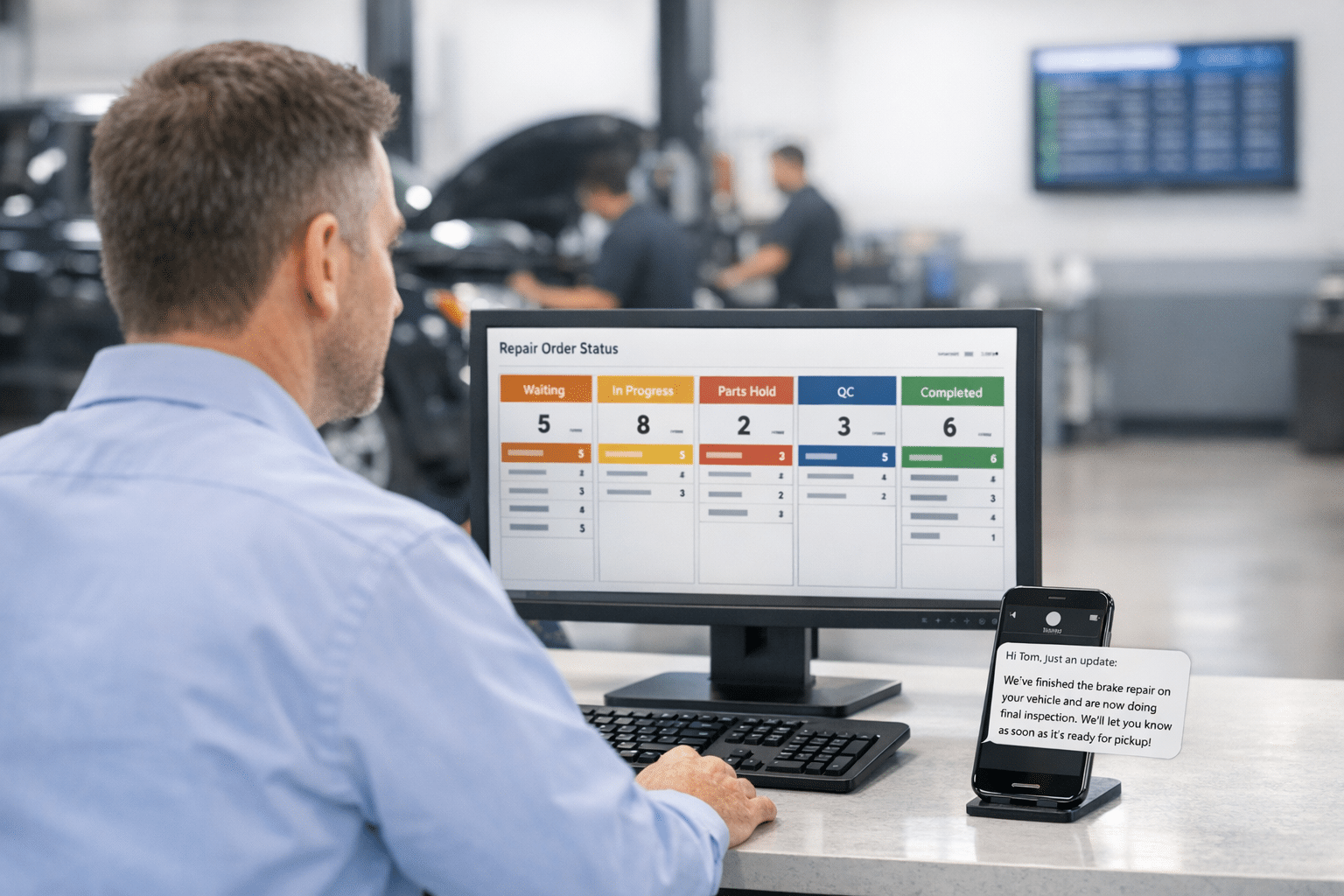
Automation keeps everyone in sync without constant back-and-forth. When a technician clocks a job or adds notes, the system updates the RO and can notify the customer right away. That steady flow cuts delays and keeps the bay schedule on track.
Advisors see repair progress in real time through clear KPI dashboards. KPI stands for key performance indicators, simple metrics like hours per RO, cycle time, and approvals waiting. Better visibility leads to faster decisions and fewer bottlenecks.
“72% of car owners value quick communication during repairs,” reports a recent satisfaction metrics study. Meeting that standard builds trust, reduces status calls, and lowers hold times at the counter.
Dealerships also gain stronger performance tracking. Leaders can spot slowdowns early, compare technician throughput, and adjust staffing. That kind of insight protects time, improves workflow, and supports happier customers.
How does automation save advisor time in repair shops?
The Digital Dealership System handles routine RO status work so advisors do not have to. Updates post automatically when a job starts, parts arrive, or an inspection is done. Fewer manual steps means fewer errors and less double entry.
Live KPI dashboards put vital metrics on one screen. Managers and advisors see approvals waiting, vehicles ready for pickup, and promised times that need attention. No more hunting for answers or repeating the same checks.
Automated digital signage in the waiting area shares progress and pickup alerts. Customers stay informed without extra visits to the counter. Leaderboards for managers and staff help teams track goals, celebrate wins, and fix gaps in the moment.
Custom tools let each shop set rules that match its process, from message timing to approval steps. With less time on routine communication, advisors can greet customers, explain findings, and keep work flowing.
Key features of an effective RO status automation system
A strong RO automation setup blends clear communication with smooth workflows. The features below help service advisors update, inform, and manage without extra steps.
What features should an RO automation system include?
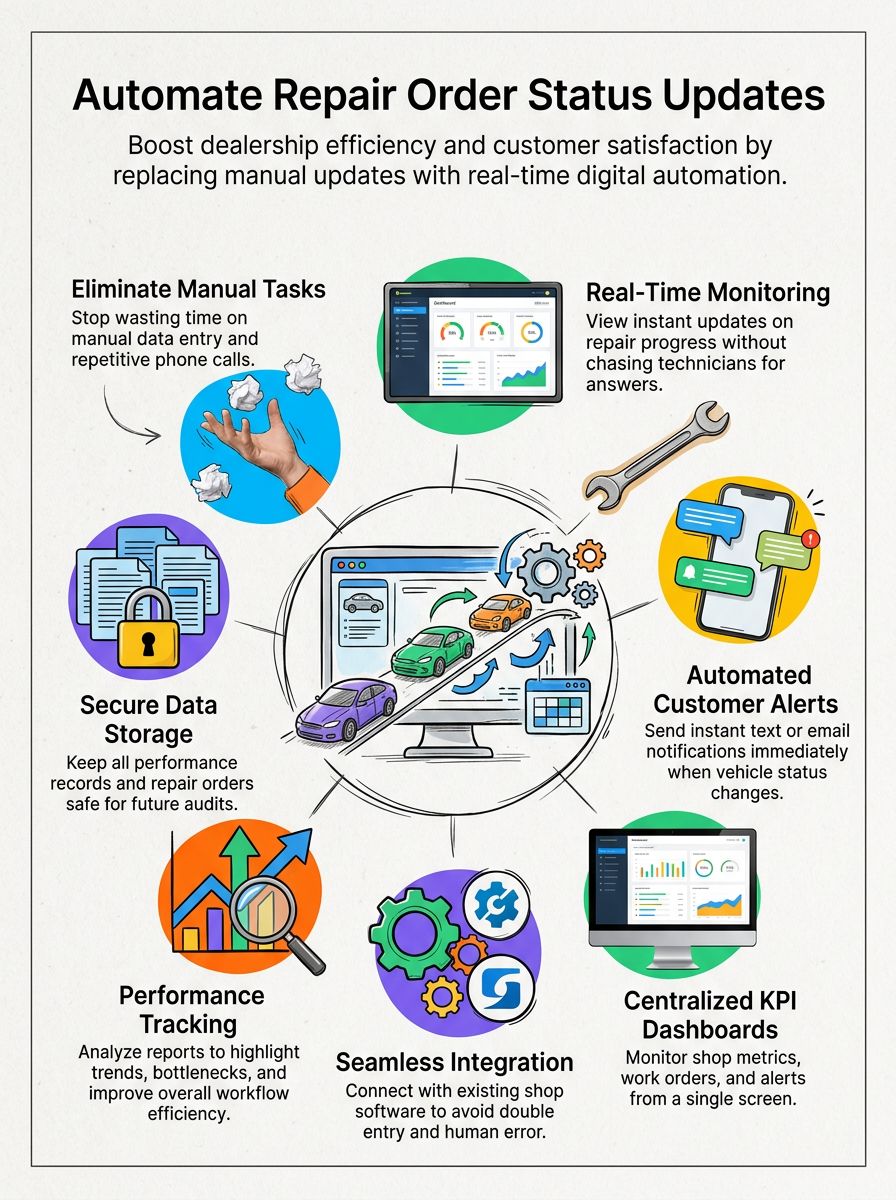
- Real-time Status Tracking: Automatic updates fire from technician time stamps, scan points, or job stages. Advisors see progress without extra calls or clicks.
- Digital Customer Updates: Text, email, or app alerts share repair steps, ETA changes, and pickup details with simple, branded templates.
- Centralized Dashboard: One screen shows status, alerts, parts holds, and promises due. Advisors manage the day from a single place.
- Digital Inspection Media: Photos and videos from the vehicle health report help customers approve work faster and with more confidence.
- Approval and Escalation Rules: Smart prompts nudge follow-ups on estimates, declines, or stalled ROs, which keeps vehicles moving.
- Performance Tracking: Reports surface cycle time, approvals rate, and comeback trends in real time. Teams learn from patterns and adjust quickly.
- Easy Integration: Connects with the DMS, scheduling, and parts to avoid retyping and reduce mistakes during busy hours.
- Secure Data Storage: Stores RO history, media, and messages with audit trails to support privacy and compliance needs.
Together, these features reduce busywork, improve accuracy, and make customer updates feel effortless.
How do these features improve workflow for advisors?
Real-time dashboards give instant clarity. Advisors can spot the next best action, like chasing one pending approval instead of calling five customers at random. That focus speeds up decisions and shortens cycle time.
Automated signage and messages replace many status calls. Customers know what is happening and when to expect pickup. That cuts phone traffic and eases lines at the counter.
Accountability tools like leaderboards motivate teams without extra meetings. When everyone sees the target, performance rises. Strong integrations keep data clean, which protects trust and customer relationships.
Conclusion
Automating Repair Order (RO) Status Updates saves service advisors time and reduces errors. With fast, digital communication and clear KPIs, shops move vehicles through the process with fewer delays.
Advisors can spend more time with customers and on complex repairs, not on manual updates. Customers get timely messages about their vehicle, which improves satisfaction and loyalty.
The Digital Dealership System brings these gains together with live dashboards, digital signage, and simple customer updates. Ready to save advisor time and boost efficiency across the shop? Contact Digital Dealership System today for a demo.
FAQs
1. How does automating Repair Order (RO) status updates save advisor time?
Automating RO status updates lets your service team focus on customer care and complex tasks, not repetitive calls or manual data entry. The system sends real-time progress alerts to customers, reducing the need for advisors to answer routine questions about repair stages.
2. What benefits do dealerships gain from automated RO status updates?
Dealerships see faster communication, fewer errors in order tracking, and improved customer satisfaction. Advisors spend less time updating clients and more time solving problems that matter most—like handling urgent repairs or upselling services.
3. Is it difficult to integrate automated RO status updates with existing systems?
Most modern solutions connect easily with dealership management software already in use at auto shops or service centers. Setup is quick; training is simple; your staff can start using the new process almost right away.
4. Why should I trust an automated solution for my repair order communications?
Trusted providers offer secure platforms built specifically for automotive environments, following industry standards for privacy and reliability. Automated systems keep records accurate while ensuring every update reaches the right person at the right moment—helping you deliver a professional experience every step of the way.
Ready to streamline your workflow? Contact us today or visit our website to learn how automation can transform your service department!