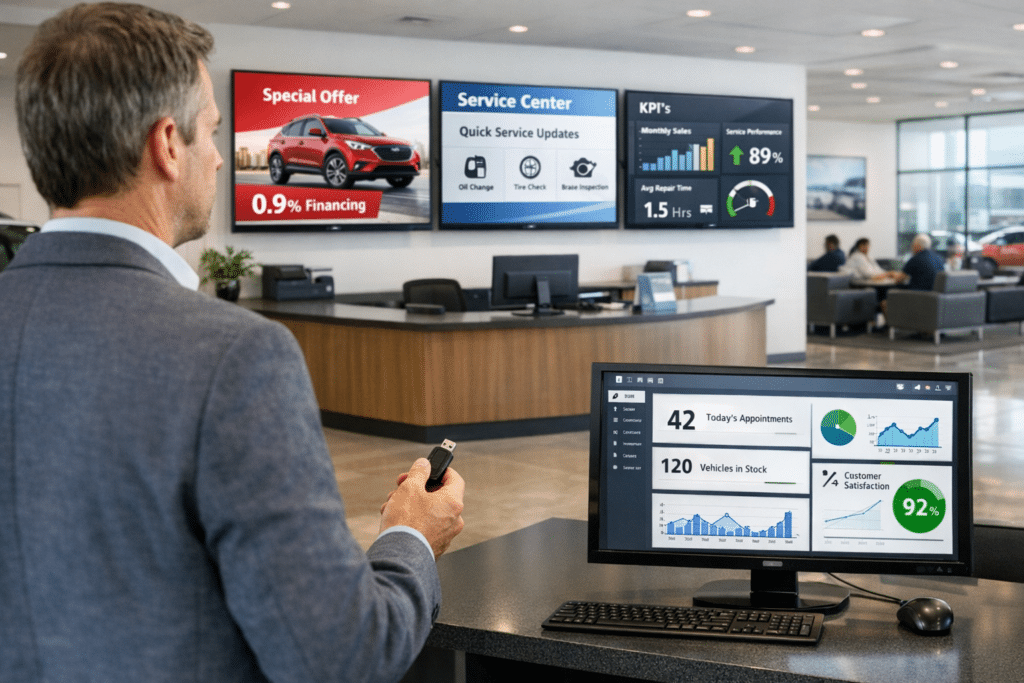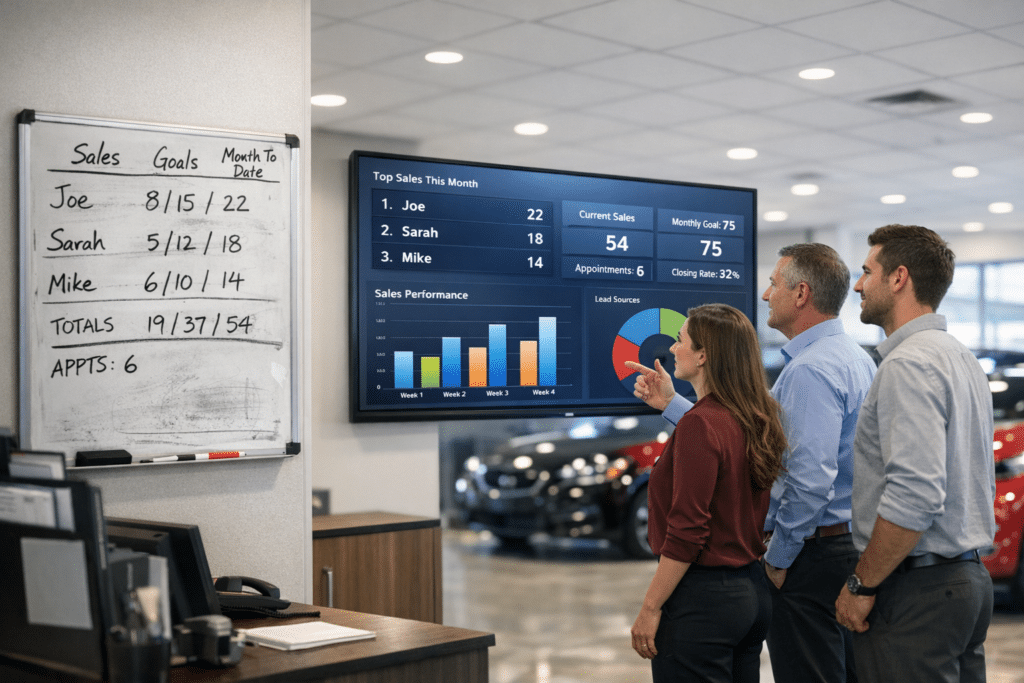

You should control every showroom screen because consistent, timely messaging builds trust, reduces confusion, and converts attention into sales. When your content is branded, relevant, and updated in real time, customers stay engaged—98% prefer appealing information—and you protect promotions, pricing, and service offers from mixed signals. A single-owner workflow, CMS tools, and SLAs let you push urgent changes and test what works. Keep this up and you’ll see measurable gains in engagement, dwell time, and closed deals—and there’s more on how to implement it.
Key Takeaways
- Consistent, branded messaging builds trust and shapes customers’ first impressions across the showroom.
- Real-time, controlled content prevents outdated or conflicting promotions that confuse buyers.
- Targeted screens deliver relevant inventory, specs, and offers, increasing engagement and conversion.
- Centralized control enables quick updates for limited-time deals and service transparency, driving urgency and upsells.
- Measurable content and SLAs allow data-driven improvements, linking screen interactions to sales performance.
Why Showroom Screens Shape Trust, Experience, and Sales

Because first impressions shape buying decisions, showroom screens that deliver consistent, branded content quickly build trust and guide customer behavior. You’ll increase customer engagement by presenting visually cohesive, data-backed messaging—98% of consumers prefer appealing, relevant information—so your displays become credibility engines rather than distractions. Use real-time updates (promotions, wait times) and personalized messages tied to prior interactions to boost transparency and make customers feel valued, which raises satisfaction and repeat visits. Showcasing high-impact visuals of new models converts attention into interest more effectively than static signs, driving potential sales. Finally, leverage analytics from screens to continually refine content, improving relevance, conversion rates, and long-term loyalty while reinforcing strong visual branding across the dealership.
How Inconsistent Screens Undermine Trust and Waste In-Store Marketing
When screens across your showroom send mixed messages—varying visuals, outdated promotions, or mismatched branding—theyn’t just confuse customers, they erode trust and dilute every marketing dollar you spend. You need screen coherence: inconsistent visual messaging creates customer confusion, harms customer perception, and accelerates trust erosion. Data shows aligned content improves marketing effectiveness and reduces friction during sales interactions. You’ll see fewer lost opportunities when content alignment matches actual offerings and staff messaging. Prioritize brand consistency to turn screens into trust-building assets, not liabilities. Below is a quick comparison to illustrate impact:
| Problem | Consequence |
|---|---|
| Mixed promotions | Customer confusion |
| Outdated content | Trust erosion |
| Mismatched branding | Poor customer perception |
| Disconnected offers | Lost sales, reduced marketing effectiveness |
What Showroom Screens Should Show: Entrance, Sales Floor, Service, and Waiting Areas
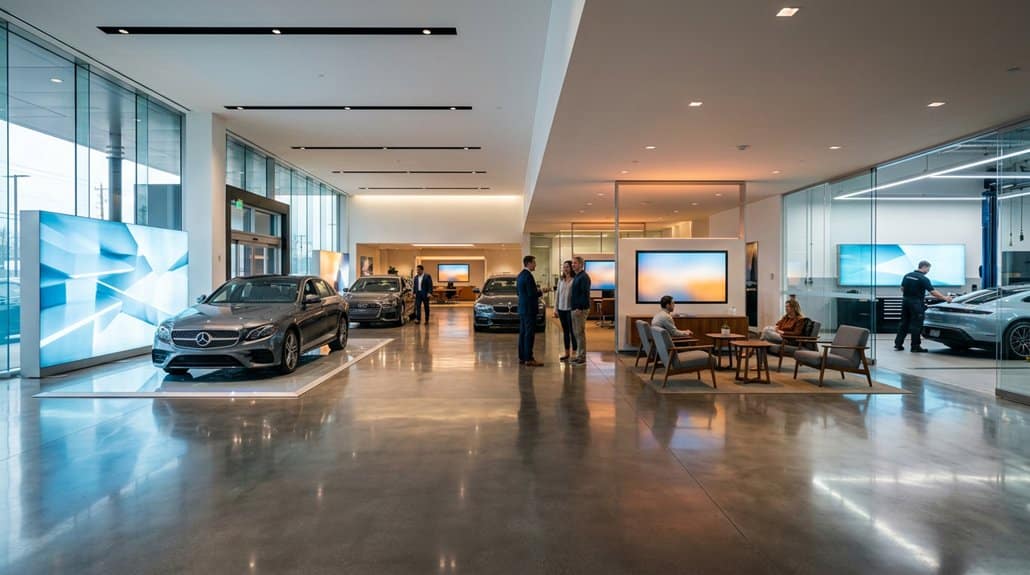
If your showroom screens are working right, they’ll guide customers from curb to contract by delivering the right message at each touchpoint: bold entrance displays grab attention and push timely promos, sales-floor screens surface model specs and live inventory to shorten decision cycles, service-area boards provide transparent wait updates and upsell opportunities, and waiting-area content builds trust with testimonials and maintenance tips. You should place entrance displays to create immediate relevance—limited-time offers, directional cues, and brand moments that lift conversion. On the sales floor, prioritize real-time inventory, financing snippets, and key comparisons to reduce shopper friction. In service, use clear service signage and live wait boards that reduce anxiety and sell add-ons. In waiting areas, run customer stories and maintenance tips to increase perceived value and future retention.
Set a Screen-Content Operations Plan: Owners, Workflow, Tech, and Quick Deployment
Start by naming a single owner for your screen-content program and map a clear, time-bound workflow that ties strategy to execution: assign who approves creative, who schedules campaigns, who monitors performance, and who handles emergency edits so updates ship in minutes rather than days. You’ll formalize content strategy around brand voice, promotion cadence, and channel rules so every display reinforces the dealership’s message. Specify tools—choose a CMS-enabled digital signage platform that supports templated creative, role-based permissions, and remote push updates. Define SLAs for routine and urgent changes, train staff on the workflow, and document fallback content. With clear ownership, streamlined processes, and the right tech, you’ll keep messaging consistent, current, and capable of driving better in-store engagement and sales outcomes.
Measure What Matters: KPIs, Analytics, and Fast Wins

Now that ownership, workflow, and tech are in place, you’ll need measurable goals and the analytics to prove your screens move customers down the funnel. Define KPIs like customer engagement rates, dwell time, and conversion from promotions so you can quantify impact. Use analytics tools to track interactions and content performance; data driven insights will tell you what resonates and where to cut underperforming creative. Prioritize fast wins: push real-time inventory and limited-time offers to increase interest and speed decision-making. Map interactions to sales to identify high-impact touchpoints, then iterate messaging to optimize the journey. With concise dashboards and A/B tests, you’ll make decisions on evidence, not guesswork, improving ROI and showroom effectiveness quickly.
Frequently Asked Questions
What Should You Never Reveal to the Dealer When Negotiating?
Never reveal your maximum budget, trade‑in value, pre‑approved financing, urgency, or depth of research. Using negotiation tactics and understanding dealer psychology, you’ll preserve leverage, prevent price anchoring, and drive a data-driven, strategic outcome.
How Much Does a Car Salesman Make off a $20,000 Car?
You’d typically earn about $500–$625 on a $20,000 car, depending on commission structure and sales tactics; bonuses or tiered fees can push that higher, so you’ll prioritize deals that maximize gross profit and targets.
What Are the Disadvantages of Car Touch Screens?
You’ll face poorer user experience, touchscreen reliability problems, frustrating interface design, and costly maintenance issues; studies show increased cognitive load and slower reactions, so you’ll want physical controls or simpler, safer software.
Do Car Dealerships Put Trackers on Cars?
Yes — dealers often use GPS tracking on inventory and sometimes offer customer-installed trackers; you’ll want consumer awareness, dealer transparency, and clear consent to address privacy concerns, boosting trust through data-driven benefits and strategic disclosure.
Conclusion
You’re betting reputation, leads, and upsell dollars on what every showroom screen says — or doesn’t. Control raises consistency, shortens decision time, and boosts service revenue; dealers using coordinated in-store messaging see up to a 15% lift in upsell conversion. Build a clear content ops plan, own workflows and tech, and measure KPIs daily. Do that, and you’ll turn passive displays into predictable revenue generators and a stronger, more trustworthy brand.