
Many Fixed Ops Directors face the same scene each morning. Long service lines build, customers get frustrated, and techs fall behind. Reducing service drive bottlenecks starts with sharper service management and practical tools.
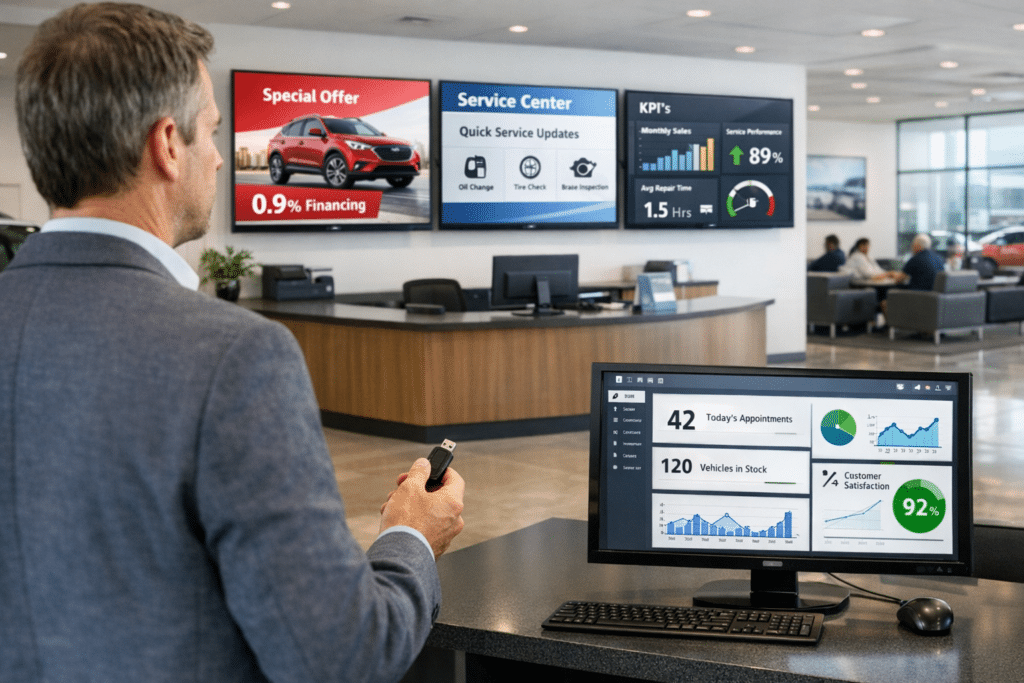
Small staffing gaps or slow workflows can back up the entire shop. Real-time KPI dashboards, KPI means key performance indicators, and clearer processes keep work moving. Digital Dealership System also offers automated digital signage that speeds check-in and improves communication between the lane, parts, and customers.
This guide shares simple ways to cut wait times, keep more technicians, and build stronger customer relationships, all while protecting margins. Ready to help the team run smoother? Keep reading.
Key Takeaways
- Staffing shortages, especially skilled techs, and parts delays are the biggest causes of service drive bottlenecks in dealerships.
- Keeping appointment lead times under three days raises customer satisfaction and helps prevent shop overload.
- Real-time KPI dashboards and digital inspections with Digital Dealership System speed workflow, track performance metrics, and lift first-time fix rates to 90 percent or higher.
- Service Lane Technology automates check-in, trims paperwork, improves customer updates, and balances workloads so the shop runs efficiently.
- Tech retention and steady advisor training increase productivity and strengthen relationships that support long-term profitability.
What causes service drive bottlenecks?
Staffing shortages limit how many vehicles a shop can handle. When skilled technicians are hard to find, repair times stretch and appointment lead time jumps past the three-day sweet spot.
Parts supply problems slow repairs even more. Vehicles sit on-site waiting for items, filling bays and parking spots and clogging the drive.
New vehicle electronics add complex diagnostics. Without clear test steps and updated software, workflows slow and rechecks rise.
Inefficient processes create avoidable delays. Unclear dispatching, repeat data entry, and poor handoffs between advisors, parts, and techs all steal time.
Weak customer communication sets the wrong expectations or leads to missed appointments. Late arrivals and no-shows disrupt a tight schedule and push work into overtime.
Inventory control issues make small problems big. One missing part can idle a bay for hours. Scheduling without true capacity rules overloads the team. Keeping lead times under three days protects satisfaction.
A streamlined process moves cars through faster while keeping customers happy, says industry consultant Jim Ellis.
Addressing these challenges means adopting new ways to streamline service drive operations…
How can service drive operations be streamlined?
Knowing the root causes makes it easier to build a smoother lane. Streamlining lifts operational efficiency, improves workflow optimization, and helps customer retention at every step.
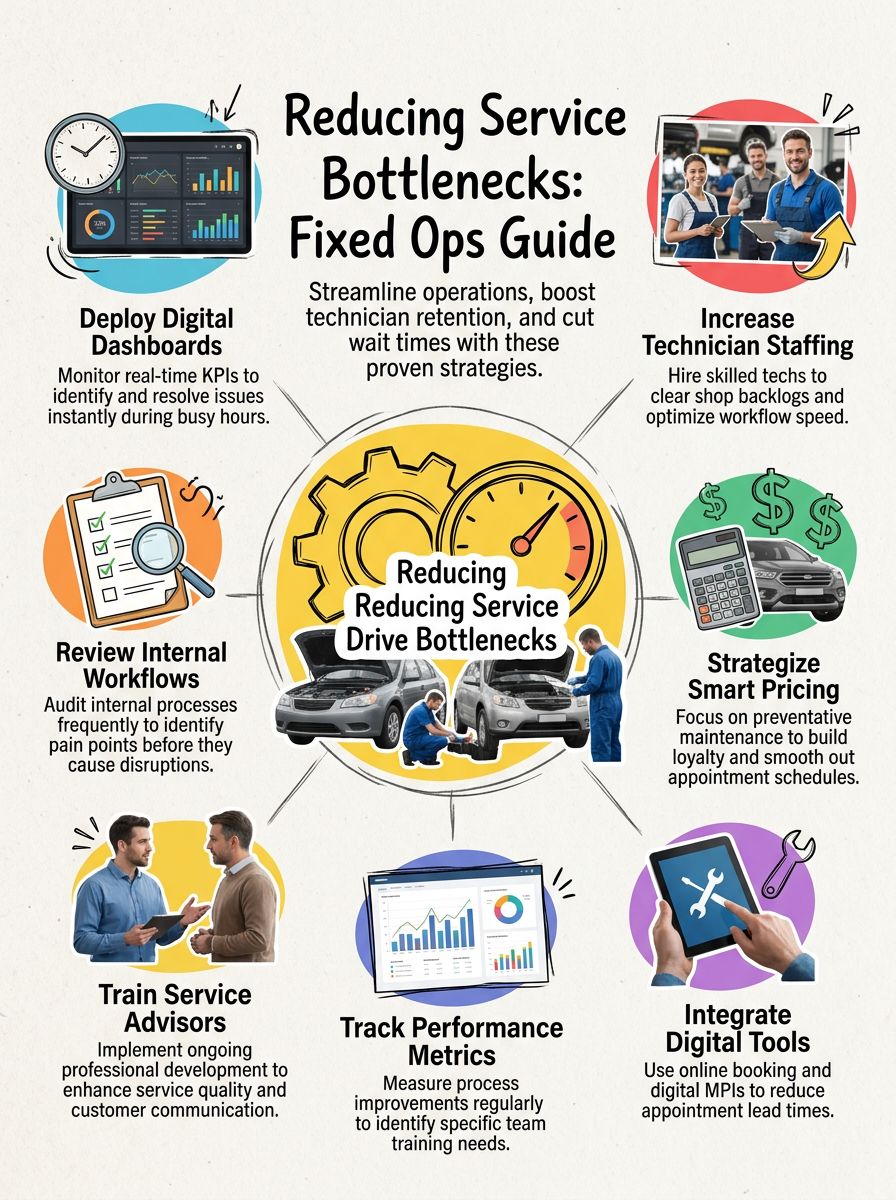
- Use Digital Dealership System for real-time KPI dashboards and automated signage. KPI means key performance indicators. Leaders can spot trouble early and guide staffing, parts, and dispatch in the moment.
- Hire and schedule the right mix of techs and service staff. A deeper bench cuts wait times and clears old backlogs faster.
- Adopt smart pricing that promotes preventative maintenance, routine care that avoids bigger repairs, for existing customers. This spreads work evenly and keeps loyal guests on the calendar.
- Strengthen technology with digital multi-point inspections, MPIs, and online booking. An MPI is a guided checklist with photos and video that speeds approvals. Aim for less than three days of lead time.
- Track performance metrics weekly. Include hours per repair order, RO, cycle time, return visits, and approval rates. Numbers show where coaching or process fixes are needed.
- Train advisors often. Focus on phone skills, clear walk-around steps, and simple menu presentations that build trust and improve service quality.
- Review internal workflows every month. Map each step from check-in to cashier, then remove delays fast so small issues do not become major bottlenecks.
A midsize store cut lead time from five days to two by moving quick services to a dedicated lane and posting live wait times on screens.
How does technology help reduce service drive bottlenecks?
Think of modern tools as switching on bright shop lights so everyone can see the work.
Real-time KPI dashboards give leaders instant visibility. At a glance, they can view technician load, parts status, and cycle time, then act before lines grow.
Digital MPIs speed inspections and increase repair approvals with clear photos and videos. Service Lane Technology, SLT, guides each vehicle through the process and can push first-time fix rates to 90 percent or more.
Communication tools lift the customer experience. Text updates, mobile pay, and easy online booking reduce calls and counters. Mobile check-in and pre-authorized menus shorten wait lines and paperwork for staff.
Smart scheduling balances skill sets and bay time so jobs start and finish on time. Digital parts tracking ties orders to repair orders, which prevents delays and keeps the lane moving.
Dealerships that pair these tools with tight processes often see shorter lines by mid-morning and fewer comebacks by month end.
Want to know how streamlined service operations create even greater results? The next section highlights valuable steps fixed ops directors can take right now…
Conclusion
Reducing service drive bottlenecks is realistic with clear leadership and steady habits. Fixed Ops Directors gain an edge by focusing on technician retention, operational efficiency, and ongoing workflow optimization.
Service Lane Technology speeds tasks and strengthens communication, which supports better performance metrics and higher customer satisfaction. Stronger relationships bring guests back for maintenance and repairs.
A workplace that values employees lowers turnover and avoids costly delays. For a fast start, use Digital Dealership System real-time KPI dashboards and simple digital signage. Get the data, act quickly, and grow profits while keeping the drive calm and steady.
FAQs
1. What causes service drive bottlenecks for fixed operations managers?
Service lane congestion often results from inefficient scheduling, lack of real-time communication, and outdated workflow processes. These issues can slow down vehicle intake, delay repairs, and frustrate both technicians and customers.
2. How can technology help reduce bottlenecks in the service department?
Advanced scheduling software streamlines appointments while digital inspection tools speed up diagnostics. Real-time updates keep everyone informed; this reduces wait times and improves overall shop efficiency.
3. Why should fixed ops directors focus on reducing these bottlenecks now?
Reducing delays boosts customer satisfaction scores, increases repeat business, and raises revenue per repair order. Fast turnaround builds trust with clients who expect quick service every visit.
4. What steps should a fixed operations manager take first to address these challenges?
Start by reviewing current workflows for gaps or slow points; invest in training staff on new systems that automate routine tasks like check-ins or parts ordering. Contact our team today to learn how our solutions deliver measurable improvements in your daily operations—call us or visit our website for more details!