You should swap ESPN for your own branded showroom content because targeted messaging builds emotional trust and drives measurable local sales lift. Use low‑cost digital signage, real‑time inventory feeds, and testimonial videos to boost engagement, speed inventory turnover, and grow fixed‑ops revenue. Track foot traffic, conversions, dwell time, and bookings to prove ROI and refine content with A/B tests. Start with 3–5 core messages and phased rollout—keep going to see practical steps, assets, and measurement tactics.
Key Takeaways
- Branded showroom content builds emotional connections and consistent messaging, increasing trust more than generic entertainment.
- Targeted displays showcase testimonials and local involvement, driving community engagement and higher intent customers.
- Interactive inventory and promotions speed turnover and lift conversions versus passive TV programming.
- Measurable content (clicks, bookings, dwell time) turns waiting-room minutes into trackable ROI.
- A/B testing and data-driven tweaks optimize messaging, improving sales lift and cost-effectiveness over time.
Why Replace ESPN With Showroom Brand Content

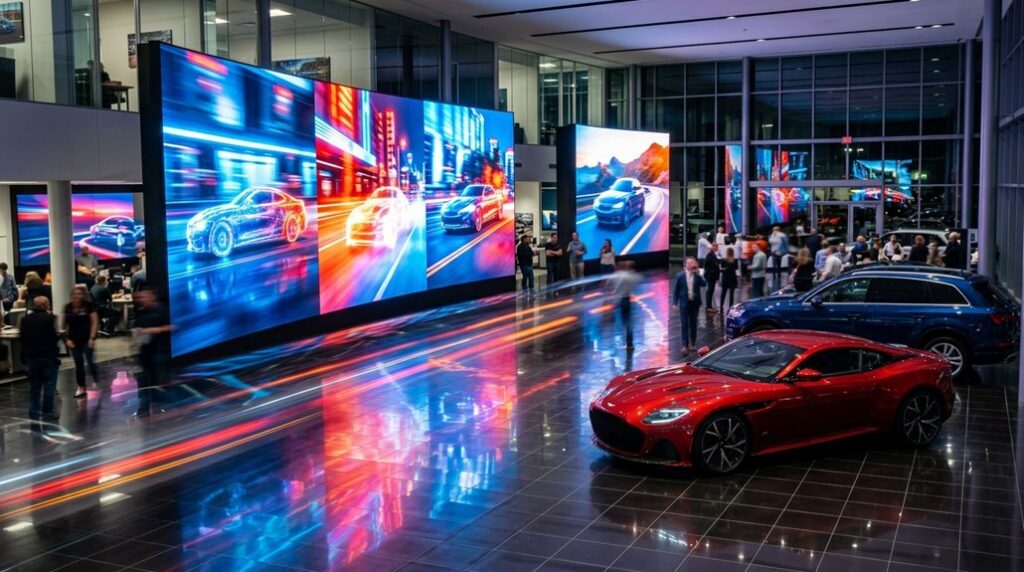
While ESPN might keep customers entertained, replacing it with showroom brand content gives you a strategic edge: targeted messaging that builds emotional connections, showcases customer testimonials and community involvement, and drives local engagement—factors that research links to stronger credibility and loyalty. You’ll strengthen customer engagement by delivering dealership-specific stories and promotions that resonate locally; 70% of consumers prefer businesses active in their community. Showroom branding boosts conversion rates—studies report up to a 22% increase versus passive entertainment—and reinforces consistent messaging across channels. Highlighting testimonials and civic involvement builds trust faster than third-party programming, cultivating measurable brand loyalty. By prioritizing tailored content, you make each showroom visit a branded touchpoint that contributes to long-term retention and sales.
Quick Wins: Low-Cost Tech & Workflows to Swap ESPN
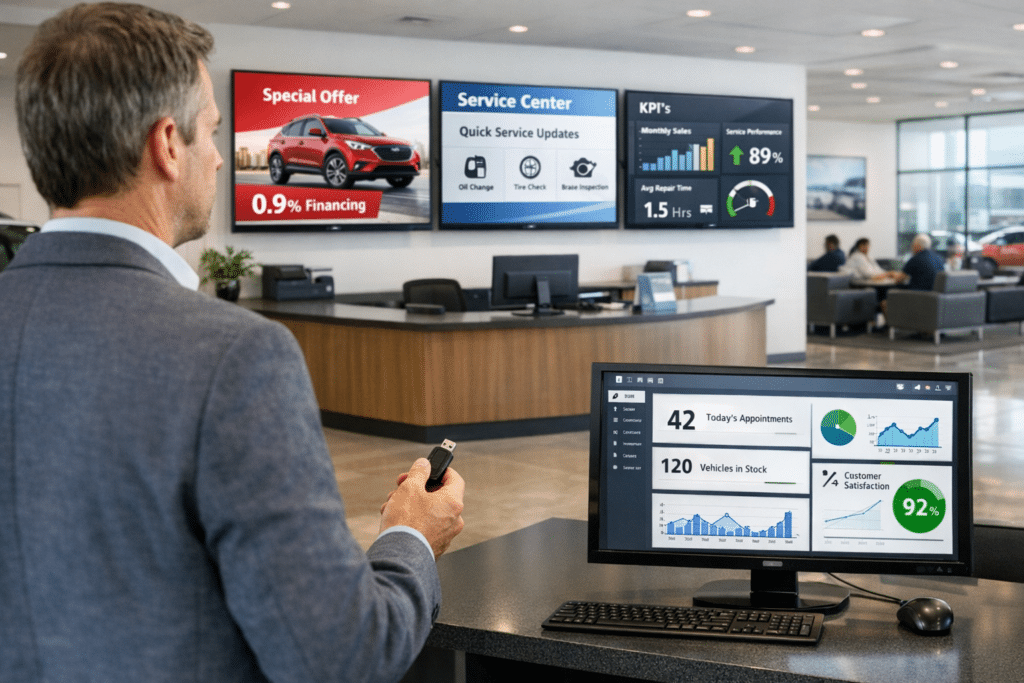
Now that you’ve seen why showroom-specific content outperforms generic sports programming, start with low-cost tech and simple workflows that deliver measurable impact. You can deploy digital signage and tablets as interactive displays to showcase inventory, service specials, and customer testimonials—tools that reinforce your brand without big capital. Design workflows that prioritize real-time inventory feeds and rotating promotion slots so every screen serves a sales or loyalty purpose. Integrate a lightweight CMS that pulls testimonial feeds and captures basic customer engagement metrics (dwell time, taps, content clicks) to refine what resonates. Use that data to iterate weekly. These quick wins boost perceived personalization, strengthen brand identity, and convert idle attention into actionable leads—turning waiting room minutes into measurable business outcomes.
Eight High-Impact Assets Your Showroom Screens Should Show
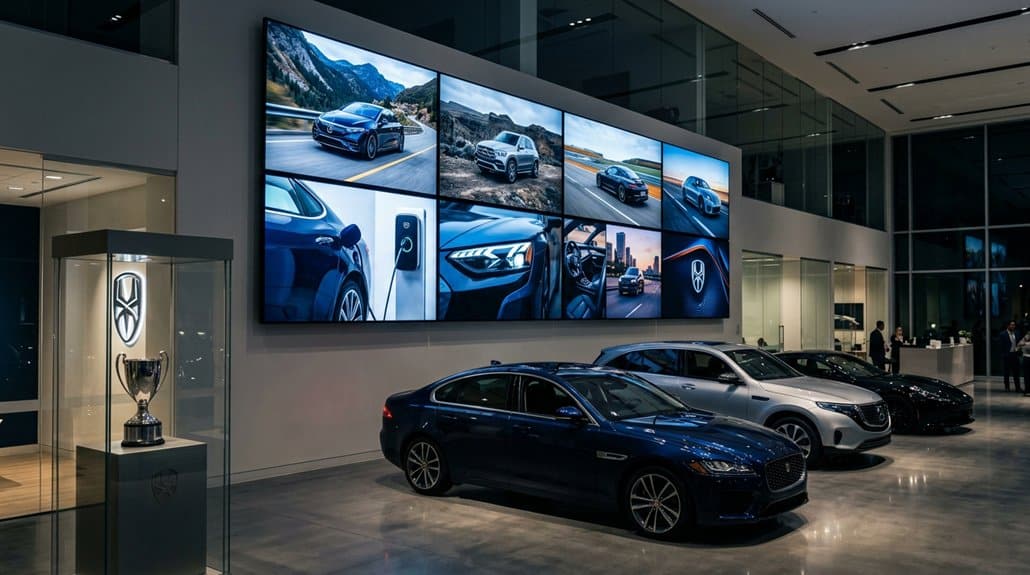
Think of eight focused screen assets that turn passive viewing into measurable brand and sales outcomes; each should map to a clear KPI—trust (testimonials), service revenue (promos), inventory velocity (virtual tours), or community reach (local events). You’ll prioritize Customer Engagement and Brand Differentiation by programming assets that influence behavior and track impact. Use video testimonials to build trust, service promotions to grow fixed-ops revenue, brand-story vignettes to reinforce values, interactive virtual tours to speed inventory turnover, and local event highlights to expand community reach. Measure clicks, service bookings, dwell time, and social shares to prove ROI. Curate sequencing so screens drive immediate actions and long-term affinity.
Turn passive screens into measurable ROI: testimonials, promos, virtual tours, and local events that drive clicks, bookings, dwell time, and shares.
- Video testimonials and micro-case studies
- Time-limited service promotions
- Interactive inventory demos and local event promos
How to Create or Source Branded Video, Testimonials, and Promos
You’ll want a concise brand video that communicates your dealership’s values, community ties, and key differentiators so screens consistently build recognition and trust. Capture authentic testimonials on camera—focus on specific results, emotional moments, and verifiable details to maximize social proof and conversion lift. Then plan targeted promo distribution across showroom screens, social channels, and influencer partnerships, measuring engagement and sales impact to optimize ROI.
Brand Video Essentials
Video is one of the fastest paths to building recognition and trust in your showroom, so start by defining 3–5 core messages that capture your dealership’s value proposition and distinct personality. Use brand storytelling to thread those messages through visuals, voice, and customer moments so your visual identity consistently signals credibility. Leverage AI-generated tools like Adwave to scale polished promos without blowing budgets, and integrate assets across social, ads, and in-store screens to boost recall metrics. Collect testimonial clips and community highlights to increase emotional resonance and conversion lift. Measure engagement, view-through rates, and visit attribution to prioritize formats that drive foot traffic and sales.
- Core message-driven promos
- Testimonial and community reels
- Cross-channel asset templates
Authentic Testimonial Capture
After you’ve mapped core messages and built short promos, capture authentic testimonials that reinforce those narratives and drive measurable trust. You’ll prioritize video—72% of consumers prefer it—so record concise customer stories that highlight emotional benefits and KPIs. Use incentives to boost acquisition (about +20%) and craft narratives that lift retention (up to 95%). Integrate clips via platforms like Adwave to scale reach while keeping a personal touch. Focus testimonial strategies that tie stories to brand promises and measure customer engagement through view rates and conversion lifts. Showcase across social and local TV to build credibility, and maintain a steady cadence so fresh, data-driven testimonials continuously support showroom branding.
| Asset | Purpose |
|---|---|
| Short video | Trust + retention |
| Incentivized ask | Increase volume |
| Platform integration | Scale reach |
Promo Distribution Strategies
Start with a clear channel map that ties each asset to a specific business goal—awareness, lead capture, or retention—and use AI tools like Adwave to produce polished, on-brand video and testimonial variations quickly and affordably. You’ll source testimonial clips with small incentives, then stitch them into short promos optimized for each channel. Deploy content via content syndication strategies across your site landing page, social feeds, and paid placements, using unique hashtags to unify the narrative. Track view-through, click, and conversion metrics to iterate creatives and placements.
- Landing page: centralized hub for promos and conversion.
- Social sequences: platform-specific edits with hashtag cohesion.
- Paid/syndicated: targeted amplification to measured segments.
Focus on audience engagement tactics and data-driven refinements to maximize trust and ROI.
Mapping Showroom Messages to Each Stage of the Customer Journey
Because customers move through distinct decision stages, your showroom messaging should be mapped strategically to match their mindset at each touchpoint; use awareness displays to broadcast unique brand values and testimonials that resonate with prospects. In consideration, present vehicles tied to documented customer pain points, showing how your brand outperforms competitors. At intent, deploy interactive kiosks and targeted content so shoppers can explore inventory and promotions while reinforcing brand identity. For purchase, highlight your digital retailing tools to streamline the transaction and reduce friction. Post-purchase, convert the showroom into a loyalty engine by promoting service offerings and retention programs. By aligning creative and placement with each phase of the customer journey, you’ll increase conversion efficiency and lifetime value.
How to Measure Showroom Content: KPIs, Attribution, and Lift
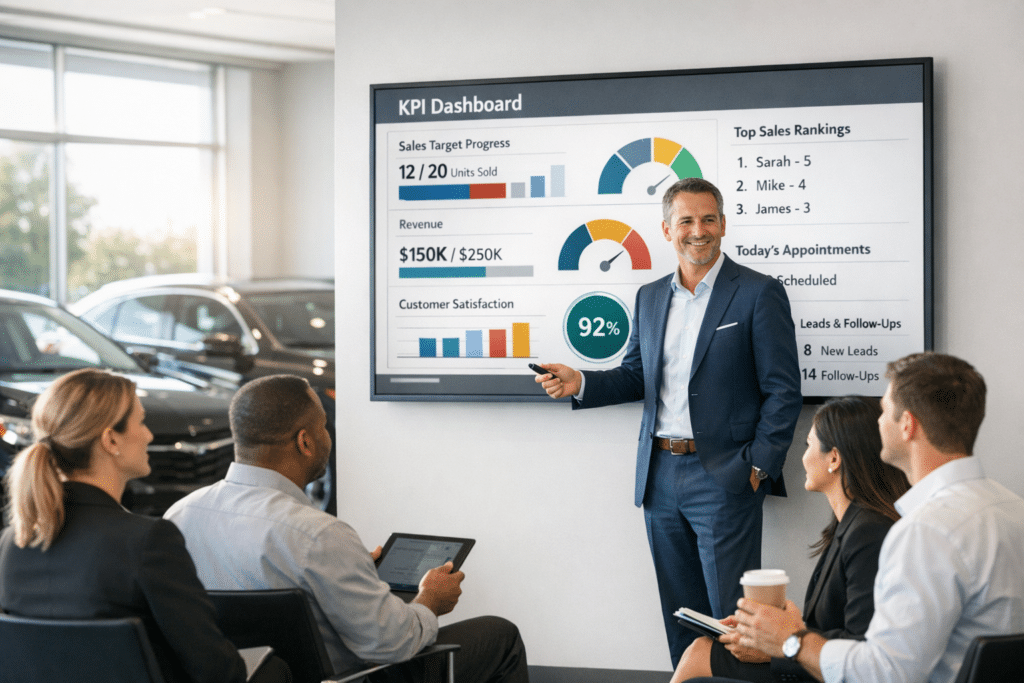
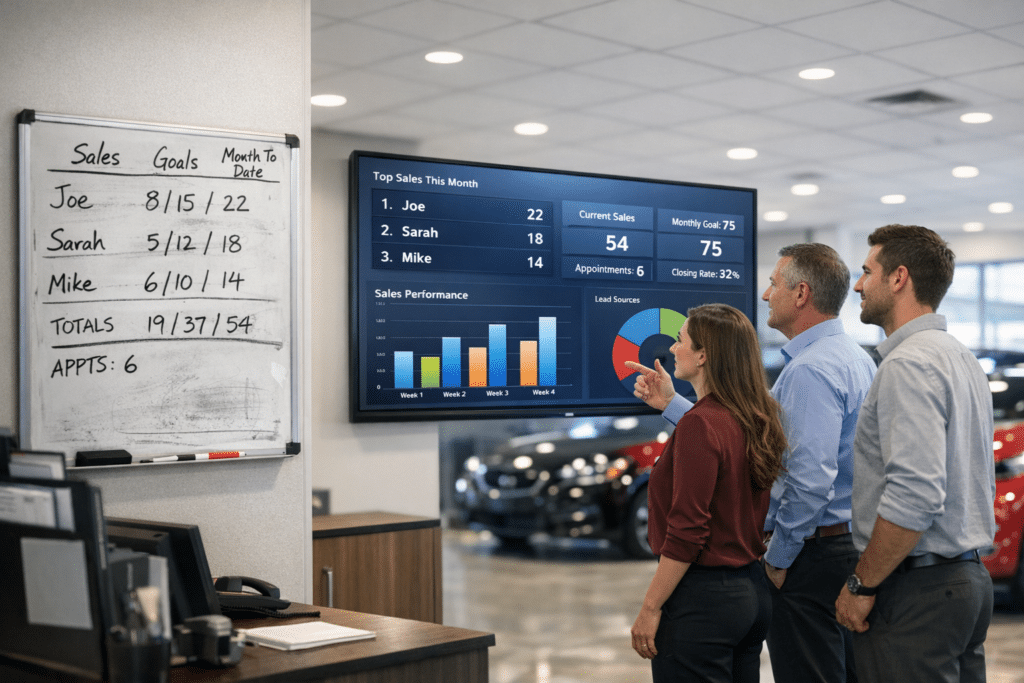
You’ve mapped messages to each stage of the customer journey to shape behavior—now you need to quantify whether those touchpoints actually move people and revenue. Use KPI benchmarks—foot traffic, engagement tracking, conversion rates tied to CRM—to set performance metrics and targets. Run Attribution analysis (multi-touch and last-click) to see which screens and campaigns drive showroom visits and sales. Measure Sales lift after promotions and correlate with customer feedback to validate qualitative impact. Implement A/B testing of content variation to isolate what increases dwell time and inquiries. Combine statistical lift with survey insights for a full picture. This data-driven, brand-focused approach lets you reallocate spend to the content that demonstrably builds preference and revenue.
- KPI benchmarks: foot traffic, conversion
- Attribution analysis methods
- A/B testing of content variation
30/60/90 Rollout Checklist to Launch Branded Showroom Screens
Map a clear 30/60/90 rollout to turn branded showroom screens from an idea into measurable impact: your first 30 days will lock down brand messaging, hardware placement, and baseline analytics; days 31–60 focus on curated content, A/B tests, and staff coaching; and days 61–90 finalize content mixes, optimize based on engagement and conversion data, and establish ongoing reporting and budget reallocation rules. In day 1–30, define your brand message, map screen locations, install hardware, and capture baseline viewer metrics. In day 31–60, deploy a content strategy emphasizing testimonials, promotions, and events, run A/B tests, and train staff to reinforce messaging. In day 61–90, use analytics to refine content, measure audience engagement and conversion lift, and lock in reporting cadence and budget for scale.
Frequently Asked Questions
What Is the 3-3-3 Rule in Marketing?
The 3-3-3 rule is a marketing framework where you deliver three core messages across three channels for three weeks, so you’ll strengthen brand identity, boost customer engagement, measure performance, and optimize campaigns using data-driven insights.
How Much Does a Car Salesman Make off a $20,000 Car?
You’d typically earn $600–$1,000 on a $20,000 car, depending on commission structure and sales tactics; tiered rates, bonuses, and target incentives can raise that, so align strategies with brand-focused, data-driven performance goals.
What Is the Marketing Strategy of a Car Dealership?
Your marketing strategy blends targeted audience segmentation, multi-channel campaigns, and data-driven attribution to boost customer engagement and brand loyalty; you’ll use authentic testimonials, localized branding, and measurable optimization to attract and convert qualified buyers efficiently.
Why Is Advertising Important in Promoting a Product?
Like a lighthouse guiding ships, advertising boosts brand visibility and reaches your target audience so you can drive conversions, build trust, and leverage data-driven targeting to increase traffic, optimize spend, and measure ROI for strategic brand growth.
Conclusion
You’re planting seeds, not just playing background noise: swapping ESPN for branded showroom content turns idle screens into revenue-growing ambassadors. With low-cost tech, targeted assets, and mapped messages across the buyer journey, you’ll collect measurable lift—more leads, higher conversion, clearer attribution. Start small with testimonials and promos, iterate using KPIs, then scale. Think of your showroom as fertile ground; tend it strategically, and your brand will take root and flourish.