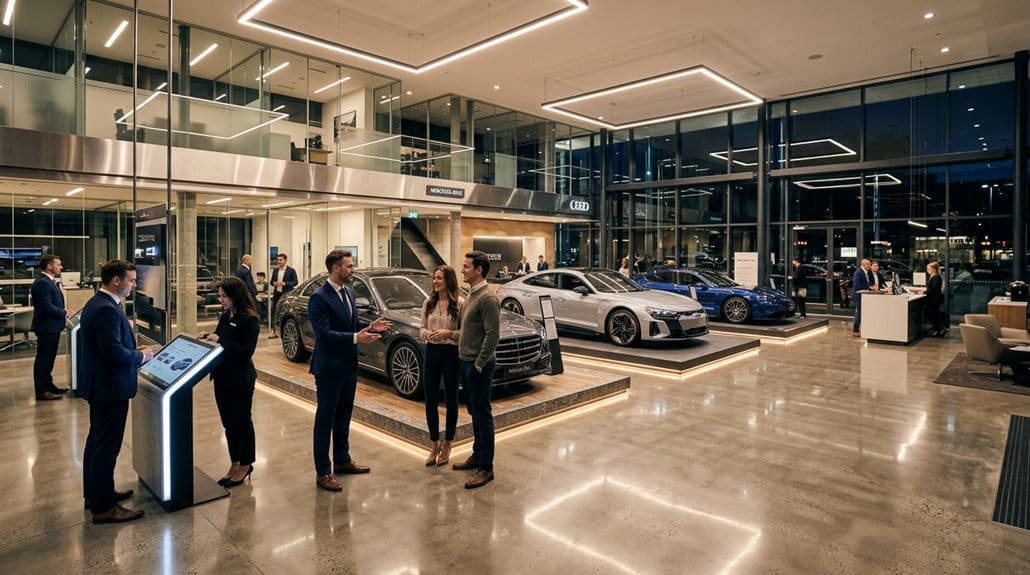
You need your showroom to sell comfort, transparency and trust—not just inventory. Visitors judge the experience: 44% say in-store feel is very important and 56% want clear pricing, so comfy seating, refreshments and visible posted prices drive longer visits and higher conversion. Train staff for consultative, low-pressure interactions, honor online prices, and measure dwell time and satisfaction to prove impact. Keep going to see actionable tactics, KPI ideas and quick tests that work.
Key Takeaways
- Comfortable waiting areas and hospitality increase dwell time and exploration, boosting conversion rates.
- Transparent, posted pricing builds trust and reduces buyer anxiety, leading to more purchases.
- Pressure-free, consultative sales flow fosters emotional connection and higher customer satisfaction.
- Seamless online–offline syncing personalizes visits and speeds staff interactions, improving conversion likelihood.
- Measurable showroom amenities (wait time, satisfaction, conversion) guide targeted A/B improvements.
Why Showroom Experience Beats Inventory
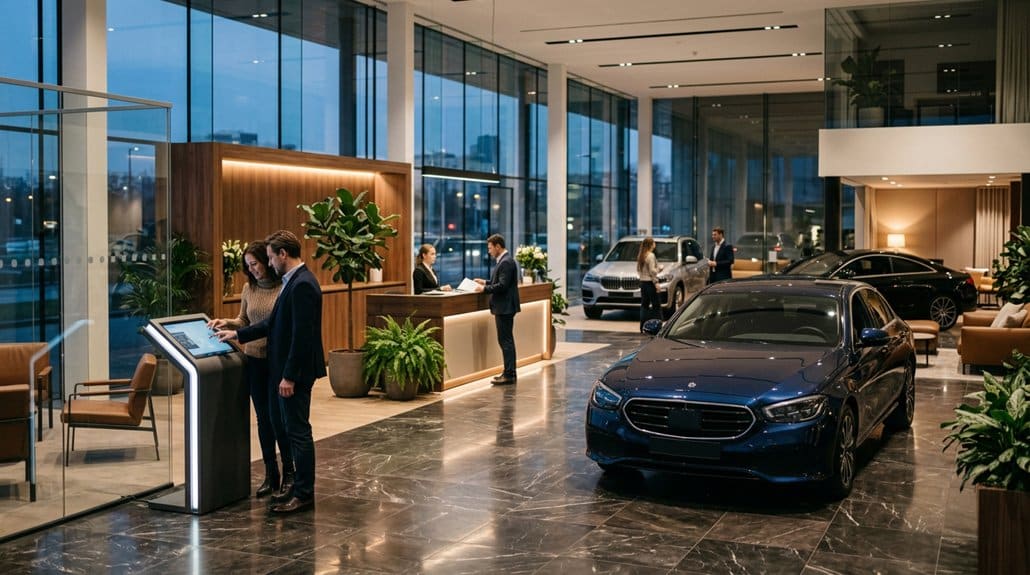
While a broad selection of cars matters, your showroom experience often seals the deal: 44% of recent visitors say the in-store experience is very important, and 34% explicitly value on-site hospitality like refreshments and waiting areas. You should prioritize customer engagement through knowledgeable staff, pressure-free interactions, and transparent pricing—56% cite clear pricing as a top motivator. When 54% appreciate absence of aggressive tactics, you see how process beats pitch. A comfortable environment lets buyers assess vehicles in ideal condition, building confidence and an emotional connection that inventory alone can’t create. Strategically, investing in experience raises satisfaction and conversion rates, turning casual browsers into committed buyers by addressing both rational concerns and subtle emotional drivers.
How to Improve Your Showroom: Quick Action Plan
Start by prioritizing the handful of changes that directly move conversion metrics: make pricing transparent (56% say it’s a top motivator), train staff to deliver expert, pressure-free guidance (46% value expertise; 54% reject hard-sell tactics), and upgrade hospitality—comfortable seating and refreshments, which 34% of visitors appreciate—to keep prospects engaged while they evaluate vehicles presented in ideal indoor conditions. Next, audit your showroom layout for clear sightlines, intuitive traffic flow, and staged vehicles that highlight key features; small shifts often raise perceived value. Solicit targeted customer feedback after visits to surface friction points and test one change at a time. Assign measurable goals—dwell time, follow-up rate, conversion—and track results weekly. Iterate quickly: data should drive prioritized, low-cost experiments that boost confidence and sales.
Design a Pressure-Free Sales Flow That Builds Trust
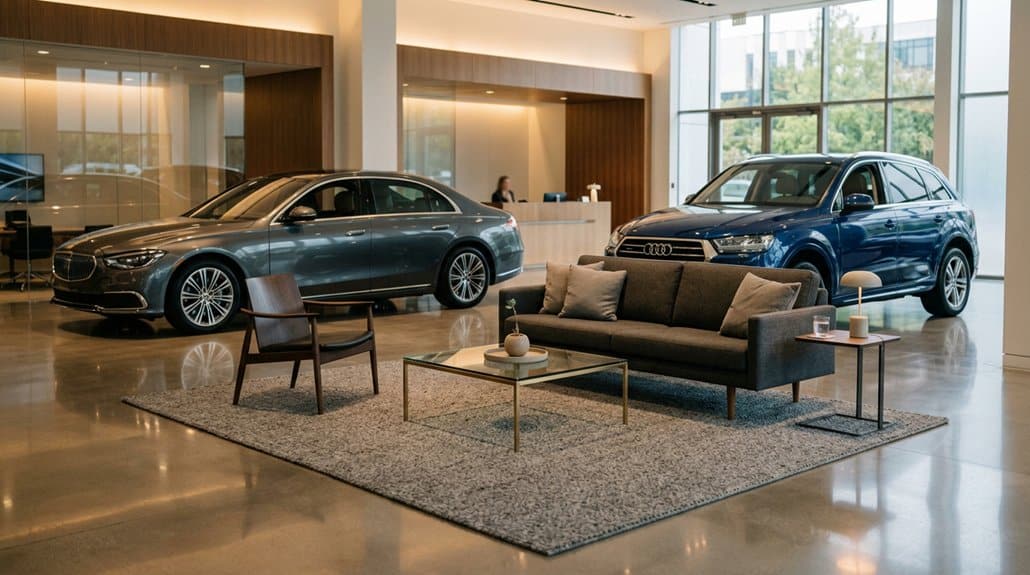
You should prioritize transparent, upfront pricing and make it easy for customers to see total costs—56% say that clarity is their top motivator for buying in person. Train staff to lead consultative, nonpressured conversations that focus on needs rather than quotas, since 54% of visitors value the absence of high-pressure tactics. Add small hospitality touches and a 48-hour return option to lower anxiety and convert more of the 72% who report positive in-store experiences.
Transparent, Upfront Pricing
Because clear pricing is what 56% of recent dealership visitors singled out as their top motivator, dealerships that publish consistent, easy-to-compare prices—and honor online quotes in-store—will immediately reduce friction and build credibility. You’ll strengthen customer trust by making costs obvious, avoiding surprise fees that turned off 40% of visitors. Honor online pricing for the 41% who expect consistency, and you’ll convert transparency into loyalty.
- Display all fees and incentives clearly online and on-site.
- Train staff to reference published prices, not ad-hoc quotes.
- Use price-match policies to reinforce credibility.
- Report and monitor pricing complaints to drive continuous improvement.
Transparent pricing isn’t just ethical—it’s a measurable driver of satisfaction and repeat business.
Consultative, Nonpressured Conversations
Clear, up-front pricing sets the stage—but consultative, nonpressured conversations seal the deal by turning transparency into trust. You should design a sales flow where advisors listen first, tailor questions to needs, and avoid hard closes—54% of recent visitors cite absence of high-pressure tactics as essential. Pair transparent pricing (56% motivator) with on-site hospitality—34% value a comfortable setting—to lower defenses and boost customer engagement. Offer extended or home test drives (18%) so buyers evaluate vehicles without sales pressure, reinforcing trust building. Measurably, 72% of positive in-store experiences align with consultative interactions, so train staff on listening metrics, respectful follow-ups, and soft-sell prompts. That data-driven shift increases conversions while protecting long-term reputation.
Show Prices Clearly : And Deliver Them In-Store
If shoppers see a price online, they expect that same number when they walk through your doors — and 41% will judge you on that consistency. You need transparent communication and pricing consistency to convert those visitors. Clear, matching tags and quoted offers reduce friction and build trust.
- Display the exact online price on every in-store listing to honor expectations.
- Break down fees and incentives plainly so 40% who worry about hidden costs feel reassured.
- Train staff to reference posted prices—this supports the 54% who value pressure-free buying.
- Track price-discrepancy complaints and aim to eliminate them; 56% say transparency drives in-person purchases.
Delivering the same honest price everywhere boosts the 72% likelihood of positive experiences and repeat business.
Showroom Staff: Service Touchpoints That Convert
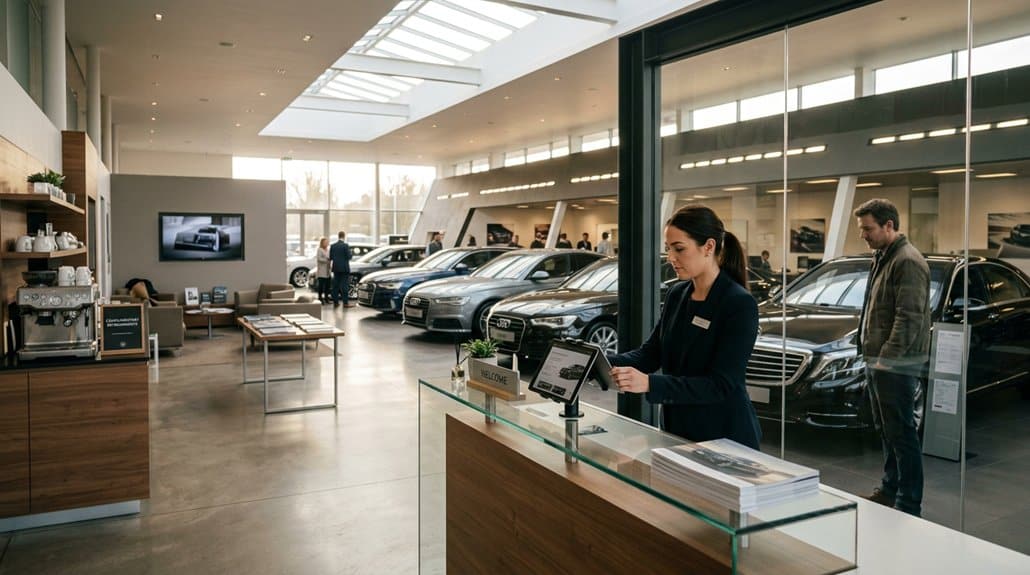
Honoring the price you advertise is only the start—how your showroom staff reinforces that promise determines whether visitors become buyers. You’ll boost customer engagement by deploying well-trained reps who deliver clear, accurate information; 46% of visitors cite staff knowledge as pivotal. Prioritize staff training to create pressure-free touchpoints: 54% value not feeling sold to, and personalized assistance helps drive the 72% positive experience rate. Trained staff also prevent confusion—40% flag unclear pricing as a problem—so equip teams with scripts and real-time pricing tools. Attentive interactions can convert the 20% who had neutral visits into satisfied customers, speeding transactions and improving closing rates. Make staff competence a measurable retail asset tied to conversion metrics.
Hospitality That Keeps Customers Comfortable and Buying
You’ll boost satisfaction and conversion by designing comfortable waiting areas and offering complimentary refreshments, since 72% of visitors say refreshments and a welcoming environment shape positive in-store experiences. With 34% specifically valuing comfort and 54% preferring a pressure-free setting, small hospitality investments directly reduce friction and keep customers engaged. Pair that atmosphere with transparent pricing—already a motivator for 56%—and you’ll turn comfort into measurable sales uplift.
Comfortable Waiting Areas
Because the showroom is often where impressions are made, investing in comfortable waiting areas pays measurable dividends: 34% of visitors say on-site hospitality (comfortable atmosphere, refreshments) matters, and 72% report better experiences when the space feels inviting. You’ll use waiting area design to reduce perceived wait times, boost customer comfort, and convert more visits into sales. Prioritize ergonomics, lighting, and layout so staff can engage guests without crowding them.
- Seating zones that balance privacy and visibility to sales staff.
- Clear sightlines and signage to streamline movement.
- Flexible layouts that support varied group sizes and purposes.
- Durable finishes that signal quality and reduce maintenance.
These choices raise satisfaction, extend dwell time, and improve conversion metrics.
Complimentary Refreshments
A well-appointed waiting area sets the stage, but offering complimentary refreshments amplifies that effect by turning passive comfort into active hospitality: 34% of visitors say on-site hospitality matters, 54% appreciate a pressure-free environment, and 72% link overall comfort to positive in-store experiences. You should use refreshment variety strategically — coffee, bottled water, and healthy snacks meet diverse expectations and signal care. That small investment boosts customer engagement, lengthening visits and increasing the chance shoppers explore more vehicles. In a crowded market, hospitable touches differentiate independent dealerships and reduce perceived sales pressure, aligning with data that comfort drives satisfaction. Measure outcomes via dwell time, conversion rates, and satisfaction surveys to iterate your offering and optimize ROI.
Use VR Test Drives & Configurators That Actually Sell
When shoppers can’t—or won’t—step into a showroom, VR test drives and smart configurators let you bring the experience to them, increasing engagement by simulating real-world handling and letting buyers tailor every option from color to trim. You’ll boost VR Engagement and provide meaningful Customization Options that match how 63% of consumers research cars remotely. Data shows immersive demos increase interest; configurators raise perceived transparency, addressing the 56% who want pressure-free pricing and options. Use these tools strategically to differentiate your dealership and capture attention earlier in the funnel.
- Reduce friction: virtual demos reach remote shoppers.
- Increase conversions: tailored builds align with buyer intent.
- Improve transparency: clear pricing in configurators.
- Gather insights: user choices refine sales strategy.
Make Online–Offline Buying Seamless for Showroom Shoppers
If you want showroom visits to close more sales, make the shift from online research to in-person buying effortless by honoring online prices, offering easy test-drive scheduling, and personalizing the in-store welcome based on what customers did online. You’ll tap a market where 37% already visit dealerships and 56% prioritize transparent pricing. Sync your website data with CRM so staff see configurations, recent virtual tours viewed, and booked online appointments before the customer arrives. Make test drives easy—36% expect that—and let customers lock slots online to reduce friction. Prioritize a pressure-free, tailored in-store experience: 44% value that highly, and personalized engagement will convert browsers into buyers while re-engaging the 63% who haven’t visited recently.
Showroom KPIs & Quick Tests to Prove Improvement
Because showroom tweaks should deliver measurable results, start by tracking a short list of high-impact KPIs—customer wait time, satisfaction scores, conversion rate, and transparent-pricing adoption—and run quick A/B tests (e.g., hospitality station vs. none, guided tour vs. self-browse) to prove what moves the needle. You’ll use customer feedback and objective metrics to prioritize changes that improve showroom ambiance and sales outcomes.
Track a few high-impact KPIs and run quick A/B tests to prioritize showroom tweaks that measurably boost ambiance and sales.
- Monitor wait time reductions and correlation with conversion.
- Track satisfaction uplift when transparent pricing is visible (56% higher).
- Test hospitality amenities impact on engagement (34% value hospitality).
- Measure conversion changes after staff training to reduce pressure (54% cite pressure-free experiences).
Use short test cycles, clear hypotheses, and statistical thresholds to scale winners fast.
Frequently Asked Questions
What Is the 30 60 90 Rule for Cars?
The 30-60-90 rule means you’ll aim to sell cars within 30 days, reassess pricing by 60 days, and take urgent action at 90 days; optimize car features and customer experience to boost turnover and protect margins.
How Much Does a Car Salesman Make on a $30,000 Car?
“Fortune favors the bold”: you’d typically earn about $1,500–$2,000 on a $30,000 car, assuming common sales commission rates and typical profit margins, though structures, bonuses, and tiers can shift that amount considerably.
What Are 10 Things Not to Say at a Car Dealership?
Don’t say: “I’m just looking,” “I’ll think about it,” “I saw a better price online,” “I don’t need financing,” “I’ll get back to you later,” or anything that undermines car buying, negotiation tactics, trade in tips, brand loyalty.
What Is the $3000 Rule for Cars?
Forty percent of buyers who overspend regret it; the $3000 rule says you shouldn’t put more than $3,000 down. It’s a budgeting strategy to protect car value, avoid negative equity, and keep payments sustainable.
Conclusion
You’re not just selling cars—you’re selling confidence, comfort and convenience—think showroom meets drawing room with a rotary phone charm. Prioritize experience over stock: clear pricing, pressure-free flows, trained service-minded staff, VR tests and seamless online-offline journeys. Measure conversion, dwell time and NPS to prove ROI, iterate quickly, and treat every touchpoint as a revenue engine. Do that, and your showroom becomes a strategic differentiator, not just a lot with lights.