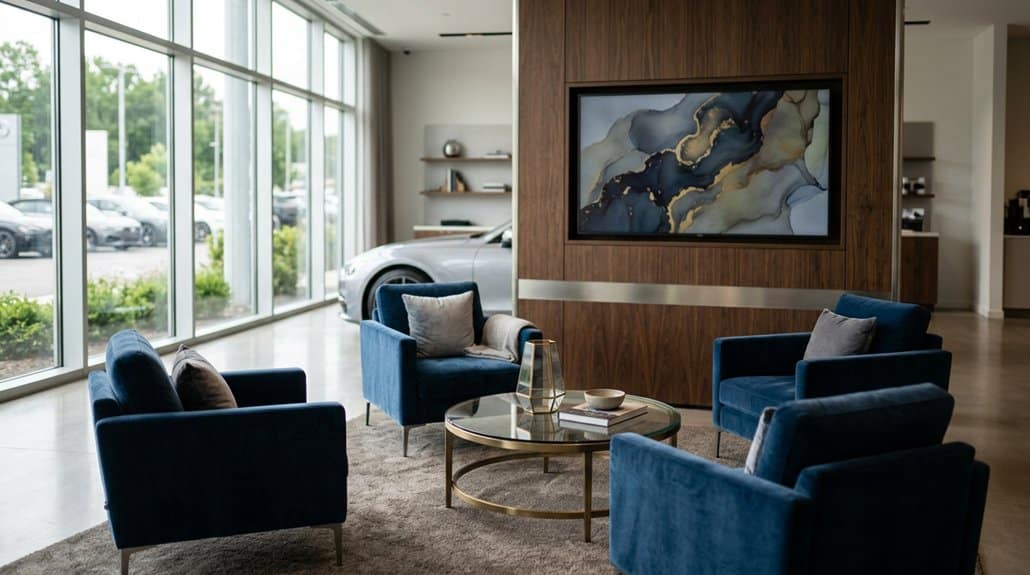
You should treat your lounge TV as a performance tool, not background décor—targeted, rotating content and 30–90 second clips cut perceived wait times by up to 33% while real-time service updates keep customers informed and reduce anxiety. Integrate manufacturer feeds, dynamic inventory promos, and topic-blocking to boost sales and protect messaging. Monetize with local sponsors and performance-based pricing to drive measurable revenue. Keep KPIs and quick A/B tests to prove ROI, and you’ll uncover practical steps to scale.
Key Takeaways
- Lounge TVs reduce perceived wait times and improve satisfaction by delivering short, engaging, informative content.
- Real-time service and vehicle status updates keep customers informed and reduce anxiety.
- Dynamic inventory and targeted promos drive showroom conversions and measurable sales lift.
- Sponsored, ad-blocked playlists monetize wait areas while protecting dealership messaging and ROI.
- Analytics and A/B testing optimize content, proving performance and enabling performance-based ad pricing.
What Dealership Lounge TVs Must Do for Customer Satisfaction
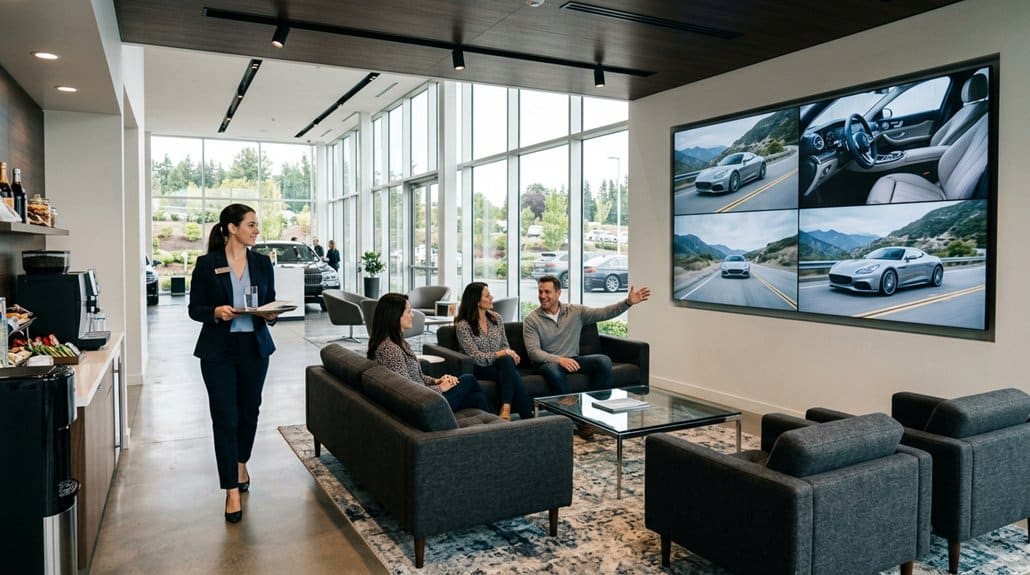
When customers walk into your service lounge, TVs need to do more than fill silence — they should engage, inform, and reinforce your brand so perceived wait times drop and satisfaction rises. You’ll want a content strategy that prioritizes customer engagement through entertaining visuals proven to reduce perceived wait by up to 33%. Use customizable programming to show dealership-specific commercials and educational automotive clips that build recognition and trust. Integrate vehicle status updates and service information so guests feel informed, not ignored. Keep playlists fresh with live social feeds and promotional videos to sustain attention. Finally, remove competitor ads with Competitive Ad Block to maintain focus on your messaging, boosting loyalty and perceived service quality.
Reduce Perceived Wait Times With Targeted Lounge TV Content
You can cut perceived wait times by up to a third by pairing short, engaging clips with timely service updates that keep customers informed and entertained. Use concise, dealership-specific videos to shift attention away from the clock while real-time status screens reduce uncertainty and perceived delay. Together, these tactics boost satisfaction and make customers more likely to return.
Short, Engaging Clips
A compact lineup of short, engaging clips can cut perceived wait times by as much as 33%, so curate content that’s both informative and entertaining to keep customers satisfied and attentive. You should design a rotation emphasizing clip variety—quick how-tos, maintenance tips, and family-friendly segments—to boost viewer engagement and make time feel shorter. Use targeted automotive education to reinforce your brand, reduce exposure to competitor messages, and increase perceived value during service visits. Keep clips concise (30–90 seconds) and update them regularly so content feels fresh and relevant. Measure engagement through dwell time and repeat views to refine programming. Strategically balanced, short clips turn passive waiting into productive brand interaction that lifts satisfaction and loyalty.
Real-Time Service Updates
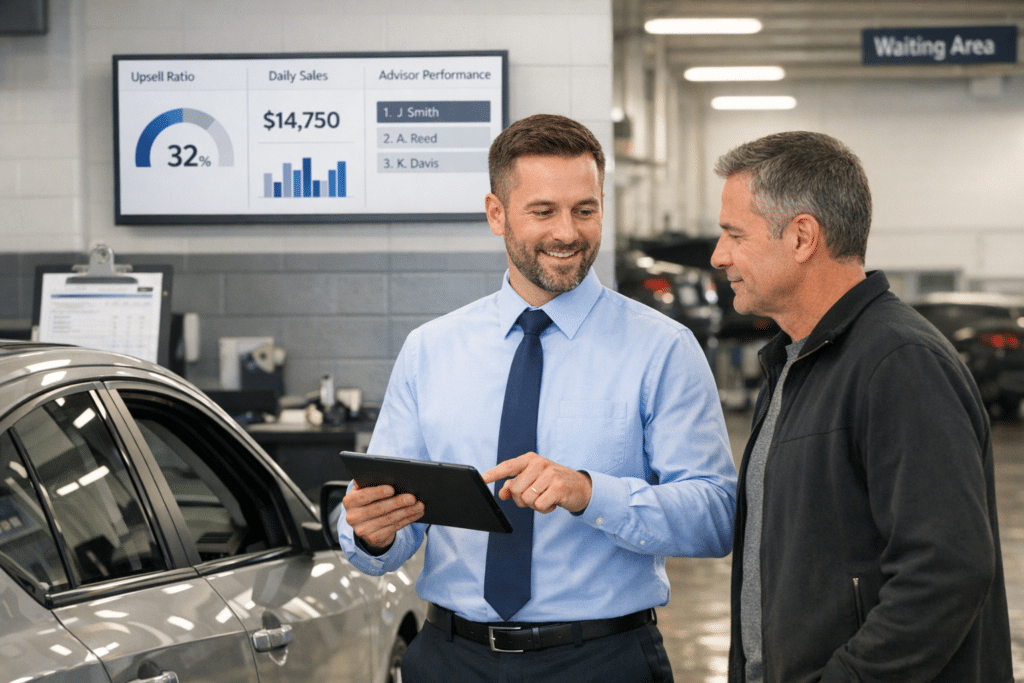
Short, engaging clips set the tone for your lounge, and pairing them with real-time service updates amps up perceived efficiency and trust. You can cut perceived wait times by up to 33% simply by displaying five-minute progress updates tied to your Digital Management System, delivering consistent, accurate status that keeps customers informed. This real time engagement reduces uncertainty, channels attention toward constructive content, and minimizes frustration. Presenting service milestones alongside dealership messaging creates a cohesive experience that reinforces professionalism and operational transparency. Measured improvements in satisfaction and repeat visits follow when guests perceive control and clarity. Implement targeted lounge TV templates that pull live DMS data, prioritize concise updates, and explicitly surface next steps—building customer trust and encouraging loyalty without disrupting your service workflow.
Must-Have Features: Service Status, Manufacturer Feeds, Inventory Promos
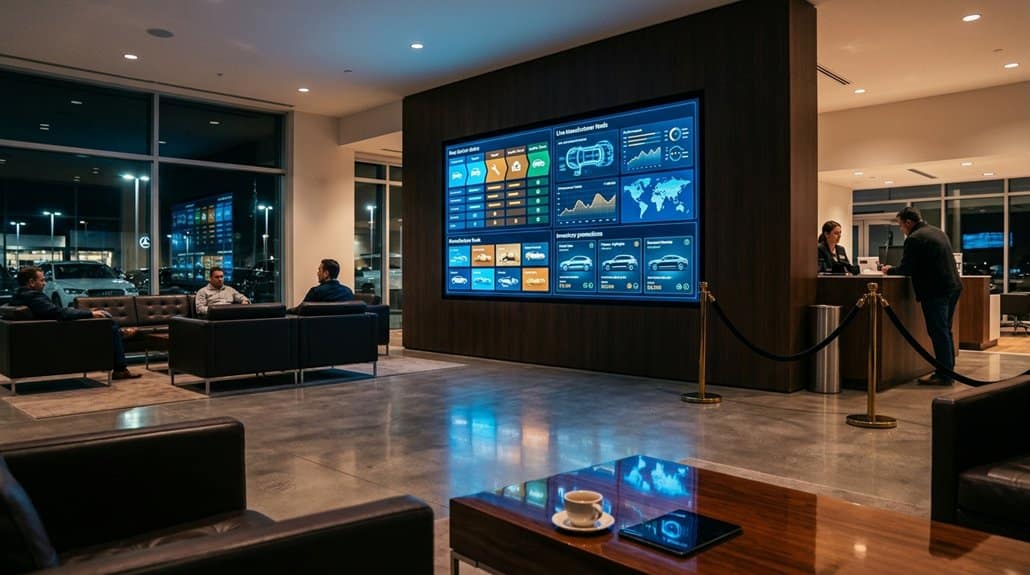
Because waiting time shapes perception, lounge TVs should deliver real-time service status, integrated manufacturer feeds, and targeted inventory promos to turn idle minutes into measurable engagement. You’ll boost customer engagement and upgrade the lounge atmosphere by showing service progress every five minutes, pulling manufacturer content automatically, and rotating inventory promos tailored to viewers. This combination reduces uncertainty, raises perceived value, and drives measurable conversions.
| Feature | Cadence | Impact |
|---|---|---|
| Service Status | Every 5 min | Lowers anxiety, increases trust |
| Manufacturer Feeds | Real-time | Educates, builds loyalty |
| Inventory Promos | Dynamic | Encourages purchases |
Deploying these features gives you clear KPIs—dwell time, promo click-throughs, and conversion lifts—so decisions stay data-driven and ROI-focused.
Customize Playlists and Block Competitor Ads : No Extra Staff Needed
When you set playlists to reflect your brand and schedule them to rotate automatically, lounge TVs become a hands-off sales channel that boosts engagement without hiring extra staff; blocking competitor ads and uploading your own videos guarantees every screen minute reinforces your inventory and service offers while keeping content fresh with minimal management. You’ll use playlist personalization to target service customers, highlight in-stock models, and sequence messages by time of day. Topic blocking and ad management remove distractions, increasing dwell-time recall and conversion likelihood. Automated updates cut manual work — you’ll schedule seasonal promos, priority inventory, and how-to clips to run consistently. Measurable boosts in engagement and perceived professionalism come with negligible labor cost, so ROI scales as you refine content.
Monetize Lounge TV: Local Sponsorships and Pricing Models for Dealers
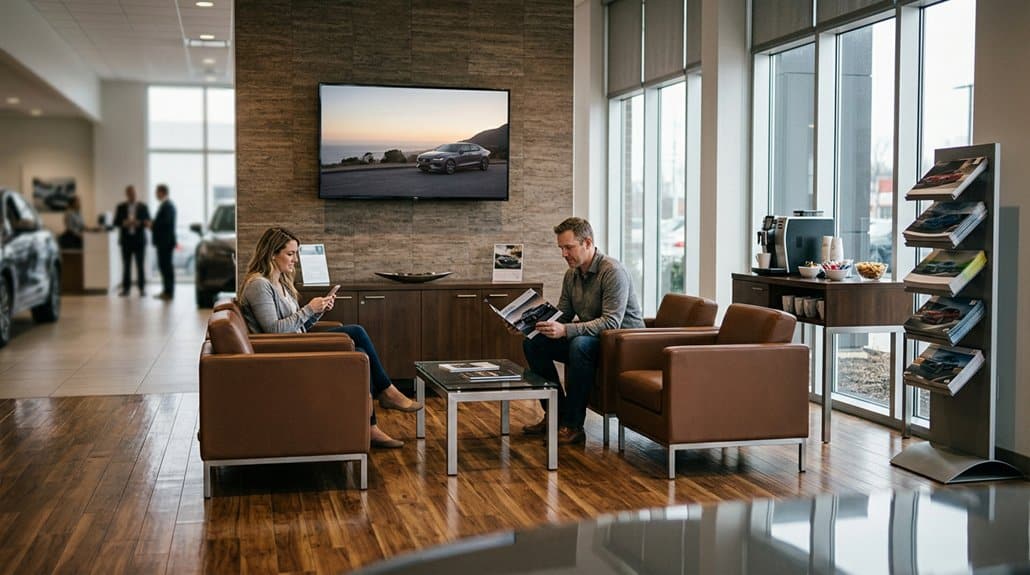
You can turn your lounge TV into a measurable revenue center by partnering with local businesses through tiered sponsorships that match exposure to spend. Charge higher rates for longer view durations and performance-based spots tied to click-through or QR-code scans, using engagement metrics to justify pricing. This approach keeps ads relevant to your customers while maximizing sponsorship value and foot-traffic reciprocity for partners.
Local Business Partnership Models
Although lounge TV is primarily meant to keep customers comfortable, it’s also a high-value ad inventory you can monetize by partnering with nearby businesses; pricing those sponsorships around measurable engagement—view time, impressions per visit, and click-throughs for interactive screens—lets you justify premium rates while proving ROI to advertisers. You’ll structure partnership models that blend community engagement and targeted advertising strategies: short-run promos for restaurants, rotating blocks for service providers, and co-branded event pushes. Use dashboards to present engagement metrics and conversion lifts, so partners see clear value. Offer creative packages—video spots, on-screen coupons, and QR-driven offers—that drive foot traffic to partners and incremental revenue to you. This approach diversifies income and cements your dealership as a local marketing hub.
Tiered Sponsorship Pricing
Because sponsorships perform differently across dayparts and audiences, tiered pricing gives you a precise way to match value to visibility and measurable engagement. You can sell sponsorship tiers that range from low-cost basic ads to premium placements during peak service and sales hours, letting local businesses pick packages that fit budgets and goals. Use viewer engagement metrics to justify each tier’s price and demonstrate advertising benefits with hard impressions and dwell-time data. Offer customizable, real-time content updates so sponsors optimize creative based on what’s working. This structure creates predictable revenue, strengthens community ties, and delivers transparent ROI to partners. When you price by visibility and measured engagement, sponsors see clear value and you scale lounge-TV income.
Performance-Based Ad Rates
When dealerships tie lounge-TV rates to measurable outcomes—like view duration, completed impressions and actions—they’re shifting from guesswork to a verifiable revenue stream that local advertisers will pay for. You can price sponsorships on advertising effectiveness metrics—view duration, completed views, click-through equivalents—so sponsors only pay for real viewer engagement. That reduces wasted spend, boosts perceived ROI for local partners, and turns your waiting area into a profit center. Keep content refreshed to sustain attention and feed analytics that validate performance. Use dashboards to show sponsors performance and adjust rates dynamically: premium pricing for high-engagement slots, discounts for experimental placements. By aligning sponsorship fees with tracked outcomes, you make your lounge TV a measurable marketing channel that local businesses trust and invest in.
Measure Impact: Lounge TV KPIs and Quick A/B Tests to Prove ROI
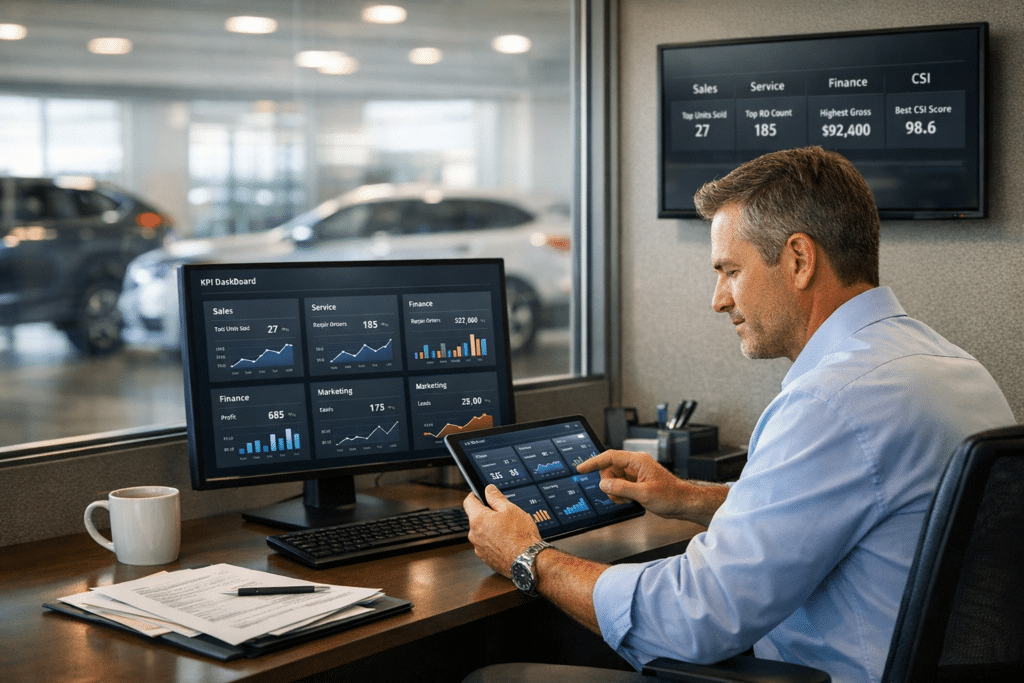
If you want to prove that your lounge TV is more than just background noise, start by defining a tight set of KPIs—viewer retention, perceived wait-time reduction, and conversion indicators tied to in-lounge prompts—and run fast A/B tests on content segments to see what actually moves those metrics. You’ll set KPI benchmarks and use A/B testing to iterate quickly. Track viewer retention, session length, and demographic segments; pair analytics with brief feedback surveys; report monthly to spot trends and optimize. Use results to justify performance-based ad rates and refine merchandising spots. Focus tests on measurable outcomes, then scale winners. Numeric roadmap:
- Define KPIs and benchmark.
- Run A/B tests weekly.
- Analyze by segment.
- Report monthly and act.
Frequently Asked Questions
How to Attract Customers to a Car Dealership?
You’ll attract customers by boosting Customer engagement with targeted Marketing strategies, optimizing your Online presence using CTV and social ads, leveraging data to personalize offers, and driving Community involvement through events and local partnerships to build trust.
What Is the Top Position at a Car Dealership?
Coincidentally, the top position is the General Manager — you’ll own Leadership Roles and drive Sales Strategies, using data-driven decisions, strategic oversight, and measurable KPIs to boost profitability, team performance, customer satisfaction, and operational efficiency.
Why Is It Safer for Most Consumers to Buy Automobiles From Dealerships?
It’s safer because you’re backed by consumer trust and dealership reputation: certified inspections, vehicle histories, warranties, regulated financing, recall support, and legal protections, so you’ll face fewer scams and enjoy clearer accountability and data-driven assurance.
How to Greet Customers at a Car Dealership?
Think of greeting like a handshake that speaks—you should promptly welcome customers by name, use customer engagement strategies, offer lounge amenities, ask needs, maintain eye contact, and create a welcoming atmosphere to boost satisfaction and conversions.
Conclusion
You should expect lounge TVs to do more than entertain: to inform service status, to highlight inventory, to block competitors, and to drive local revenue. You should reduce perceived wait times, increase satisfaction scores, and boost retention. You should measure KPIs, run quick A/B tests, and prove ROI. You should take control of content, seize sponsorships, and turn idle minutes into measurable profit — strategic, efficient, and undeniably impactful.