Many auto groups face a tough choice with digital signage and dealer management tools. Pick wrong, and it gets harder to manage vehicle inventory, connect with shoppers, or hit sales goals. This Raydiant vs Digital Dealership System for Auto Groups: Full Review gives a clear side-by-side look at Dealer Management Systems and Digital Signage built for car retailers.
Leaders often feel lost in a long list of automotive software. The best platform should fit daily dealership operations, not slow them down. Raydiant is a popular experience platform that helps retail brands manage screens across locations. Digital Dealership System focuses on real-time KPI dashboards, which are key performance indicators, plus automated signage built for car stores of any size.
This guide compares features, pricing, user experience, technology integration, and more. Readers will find plain answers about what delivers better customer engagement and vehicle sales. Get an honest review before committing to your next solution.
Key Takeaways
- Raydiant provides a simple, cloud-based digital signage platform with strong integration options and mobile-friendly controls for auto groups of any size.
- Digital Dealership System centers on real-time KPI dashboards, deeper dealership features, and automation that suit large or multi-location groups.
- Both vendors offer custom quotes and demos. Hardware and contract terms vary by package.
- Raydiant supports a wide range of third-party apps. Digital Dealership System connects mainly with DMS tools for focused automotive workflows.
- Auto groups should weigh scalability, integration needs, ease of use, and customer engagement tools before choosing a platform.
What are the main features of Raydiant?
Building on the intro, Raydiant stands out for easy digital signage and interactive displays. Teams can update screens with fresh content across many locations using a cloud dashboard. That helps auto groups highlight new arrivals, service offers, or brand messages right where shoppers look.
Content controls make it simple to set what plays on each screen in real time, all from one remote admin panel. This boosts brand engagement as clear visuals capture attention in showrooms and waiting areas. Analytics show how viewers interact with displays, giving leaders insight into what content works best.
Remote management is built in. Staff sign in from anywhere to add playlists, swap promotions, or pause content at any store. Updates take minutes, which keeps signage current without on-site visits.
What does the Digital Dealership System offer?
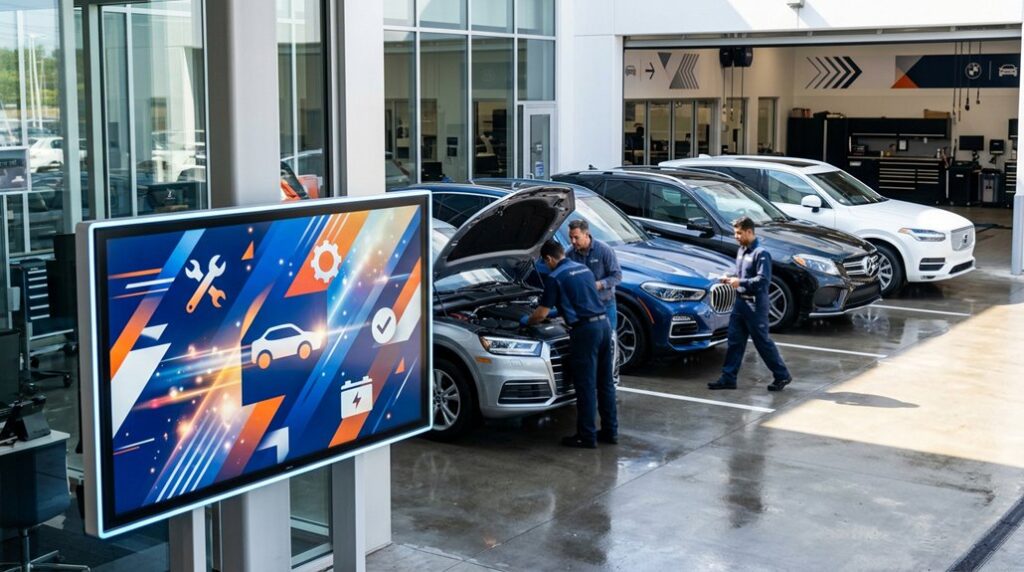
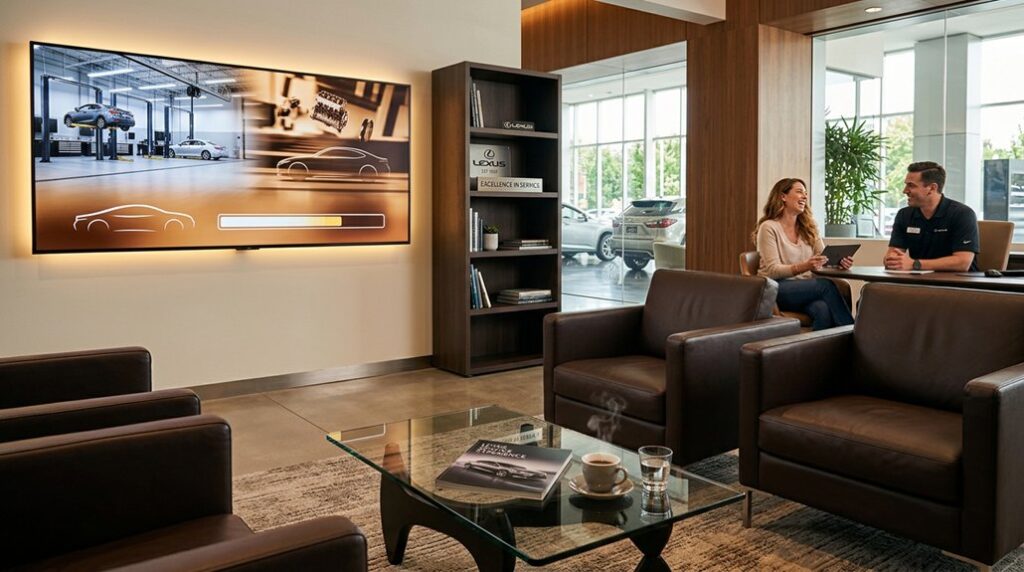
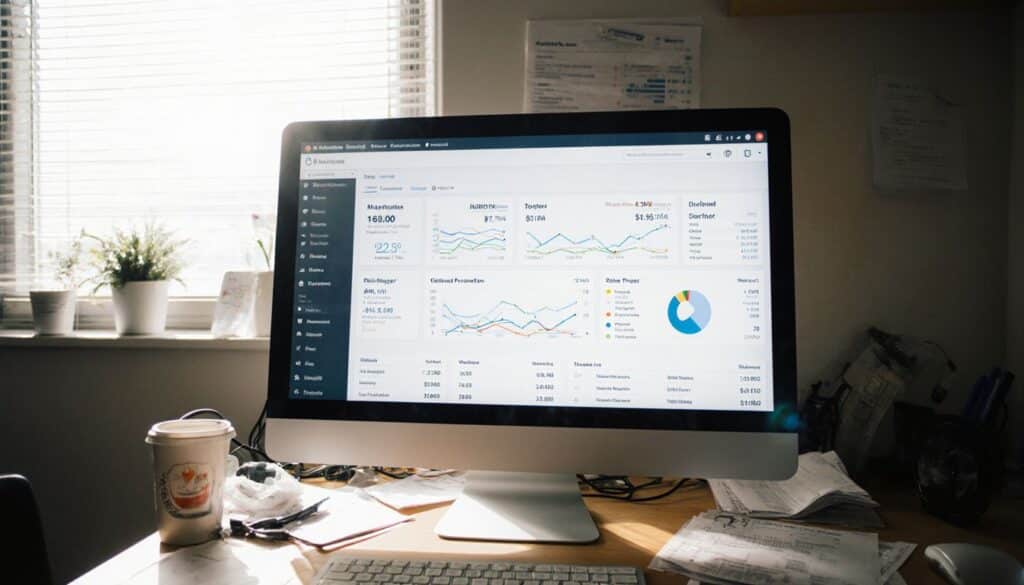
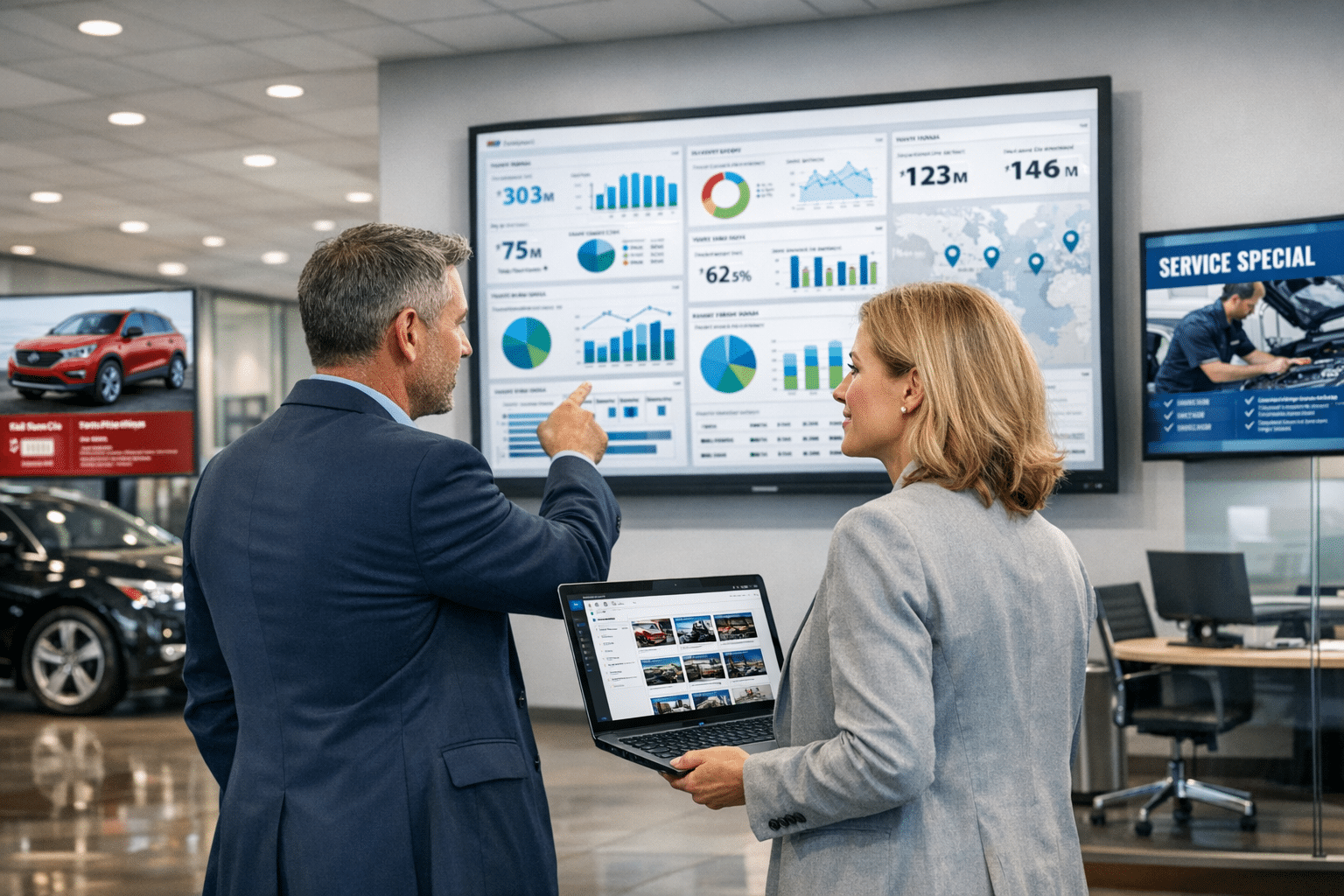
Real-time KPI dashboards give managers and staff instant views of performance data. Automated digital signage refreshes sales floors, lounges, and service bays with offers or messages that match the moment. This supports both sales growth and a better customer experience.
Leaderboards highlight top performers in real time, which adds motivation and friendly competition. Clear data visuals help users spot trends fast without digging through long reports. The system includes automation for tasks like appointment reminders or repair status updates, saving hours each week.
Customization options align with brand style and store goals, whether the location is small or large. Professional installers handle setup from single TVs to full multi-department systems. The platform fits dealerships across budgets, and scales as stores grow.
Digital Dealership System turns regular dealerships into high-performing hubs, says industry expert Michael Bennett.
Auto groups gain peace of mind knowing signage stays up, content stays fresh, and daily marketing gets consistent support.
Comparing Features and Capabilities
This section gives a simple side-by-side view to help readers see which dealer management software fits their needs. Keep reading to find what makes each platform stand out.
How do Raydiant and Digital Dealership System differ in user experience?
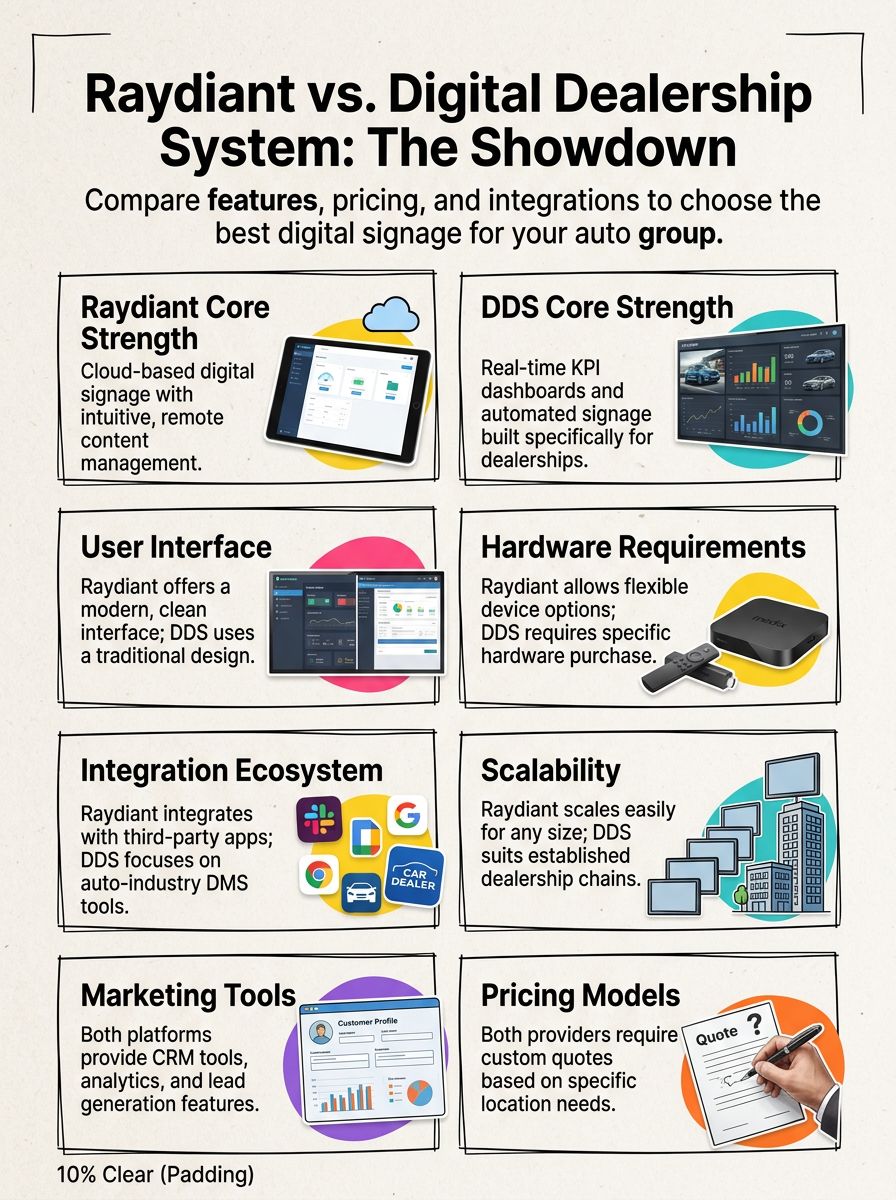
Visitors want a smooth and engaging platform that is easy to learn. Here is how Raydiant and Digital Dealership System compare on user experience:
| Aspect | Raydiant | Digital Dealership System |
|---|---|---|
| Interface Simplicity | Clean interface, intuitive navigation, minimal training for staff, modern feel | Practical layout, features may require longer onboarding, classic dashboard style |
| Ease of Setup | Quick deployment, cloud-based, remote management from any location | On-site installation often needed, some cloud features, more on-premise hardware |
| Customization | Flexible templates, drag-and-drop editing, broad library of pre-built options | Dealership-focused modules, fewer templates, deeper automotive widgets |
| Content Management | Centralized panel, schedule updates in real time, multi-location support | Built for showroom and service menus, more manual updating |
| Support Experience | Online help center, live chat, email, steady software updates | Specialized phone and email support, auto dealer expertise, update cycles may vary |
| Mobile Access | Mobile-friendly admin panel, manage screens on the go | Mobile access for select features, primary focus remains desktop |
| Scalability | Great for single stores or national groups, easily add or remove screens | Built for large dealerships with showroom and service areas, more hardware-dependent growth |
Next, see how pricing models compare and where costs can differ.
What are the pricing differences between Raydiant and Digital Dealership System?
Pricing clarity matters for every auto group. Here is a simple side-by-side view that can speed up your short list.
| Feature | Raydiant | Digital Dealership System |
|---|---|---|
| Pricing Transparency | Requires custom quote | Requires custom quote |
| Contract Length | Annual and multi-year agreements available | Usually annual contracts |
| Hardware Costs | Device purchase or lease options | Hardware purchase required |
| Setup Fees | May apply, varies by solution | May apply, contact for details |
| Monthly Subscription | Per-location, depends on features | Per-location, based on package |
| Hidden Costs | No published data | No published data |
| Scalability Discounts | Possible for multi-location groups | Possible for large dealership groups |
| Demo or Trial | Demo available upon request | Demo available upon request |
For exact pricing, contact each provider. Digital signage costs are custom by store, and both vendors work with growing auto groups. For a personalized quote, connect with a Raydiant or Digital Dealership System specialist.
Which platform offers better integration options for auto groups?
Strong integrations keep sales, service, and marketing in sync. API connections are software bridges, POS means point of sale, CRM means customer relationship management, and DMS means dealer management system.
| Integration Feature | Raydiant | Digital Dealership System |
|---|---|---|
| Third-Party App Compatibility |
|
|
| Partner Ecosystem |
|
|
| Customization |
|
|
| Auto Group Scalability |
|
|
| Ease of Setup |
|
|
Curious about upgrade paths or timelines? Request a live demo or schedule a consult with a solutions advisor to map your plan.
How do both systems support marketing and sales efforts?
Raydiant and Digital Dealership System include automation that helps run campaigns with less manual work. Built-in analytics track results, highlight trends, and show which sales efforts perform best. CRM tools, customer relationship management, help teams organize leads, send quick follow-ups, and build long-term relationships.
Both platforms support lead capture from in-store screens or online forms. Teams can launch targeted promotions or segment customers by interest. Clear reports help managers adjust strategies and coach teams. With strong technology integration, these systems connect with other software to streamline work across the entire group.
Conclusion
Choosing the right Dealer Management System shapes daily operations and customer experiences. Raydiant and Digital Dealership System both deliver strong Digital Signage and connected automotive technology for modern auto groups.
Each platform supports inventory management, digital marketing, sales, and customer engagement. Digital Dealership System stands out with real-time KPI dashboards and flexible solutions for stores of any size or budget. Raydiant focuses on retail-style experience management, which may suit smaller groups that want simple tools.
Weigh pricing, technology integration, and support before deciding what fits best. Ready to boost vehicle sales and improve the showroom experience? Contact a trusted provider for a quick test drive or software demo today.
FAQs
1. What are the main differences between Raydiant and Digital Dealership System for auto groups?
Raydiant offers a cloud-based platform designed to manage digital signage, interactive kiosks, and in-store experiences across multiple locations. Digital Dealership System specializes in automotive showroom displays, service boards, and customer engagement tools tailored for dealerships. Both solutions help auto groups improve communication with customers; however, Raydiant focuses on flexibility and scalability while Digital Dealership System delivers industry-specific features.
2. How do these platforms support marketing efforts for auto groups?
Raydiant enables real-time updates of promotions or inventory information across all screens at every location. This ensures consistent branding and messaging throughout your group’s network. Digital Dealership System provides targeted content like vehicle showcases or service specials that engage visitors directly inside the dealership environment.
3. Which system is easier to integrate with existing dealership technology?
Raydiant integrates smoothly with many third-party apps such as POS systems or CRM software using its open API structure; this makes it simple to connect current workflows without major changes. Digital Dealership System also supports integration but often requires more customization due to its focus on automotive-specific hardware.
4. Why should an auto group choose one solution over the other?
Auto groups seeking broad control over diverse retail environments may prefer Raydiant because of its centralized management tools and wide compatibility range. Those looking for specialized features built just for car dealerships will find value in the focused approach of Digital Dealership System—especially if they want custom showroom displays or advanced service tracking options tailored specifically to their needs.
Ready to see which fits your business best? Contact our team today or visit our website for a personalized demo!