Waiting for car service can feel stressful, especially with work, school, or family plans. Minutes seem slower in the service drive, and that hurts Customer Satisfaction. Reducing service drive perceived wait times raises the Customer Satisfaction Index (CSI), even if the actual clock time stays the same. This guide shares simple steps for Wait Time Management, clear Communication Strategies, and smart tools that boost Customer Experience and Service Efficiency. Keep reading to see how a few changes can make waiting feel lighter and more predictable.
Key Takeaways
- Shorter perceived waits lift CSI scores, even when real wait times are at industry averages.
- Real-time digital updates and clear, friendly communication keep customers informed and reduce stress.
- Automated KPI dashboards and staff leaderboards build accountability and speed up workflows.
- Custom digital tools, like those from Digital Dealership System, fit any budget or store size without interrupting daily work.
- Up-to-the-minute information creates transparency, builds trust, and drives higher CSI ratings.
How do perceived wait times affect customer satisfaction index (CSI)?
Perceived wait times have a big impact on CSI in the service drive. If guests feel the wait is longer than promised, CSI drops fast, even when the actual timing is average.
Sharing honest time estimates and posting real-time updates calms worry. Automated digital signage and text alerts help customers see progress. A Digital Dealership System can scale to any store size or budget. Leaderboards give visibility and encourage each advisor and technician to stay on pace.
Live monitoring helps managers spot slowdowns early and fix them. Custom digital signage solutions, similar to those from Digital Dealership System, keep guests informed from check-in to pickup.
Staff leaderboard displays raise accountability. Friendly competition helps teams clear bottlenecks and lift CSI through better perception management.
Reducing perceived wait times can lead to higher CSI scores.
Discover how simple strategies can decrease perceived delays in the next section…
Strategies to reduce perceived wait times in the service drive
Small actions can make the service drive feel faster. These ideas improve the Customer Experience and support Service Quality every day.
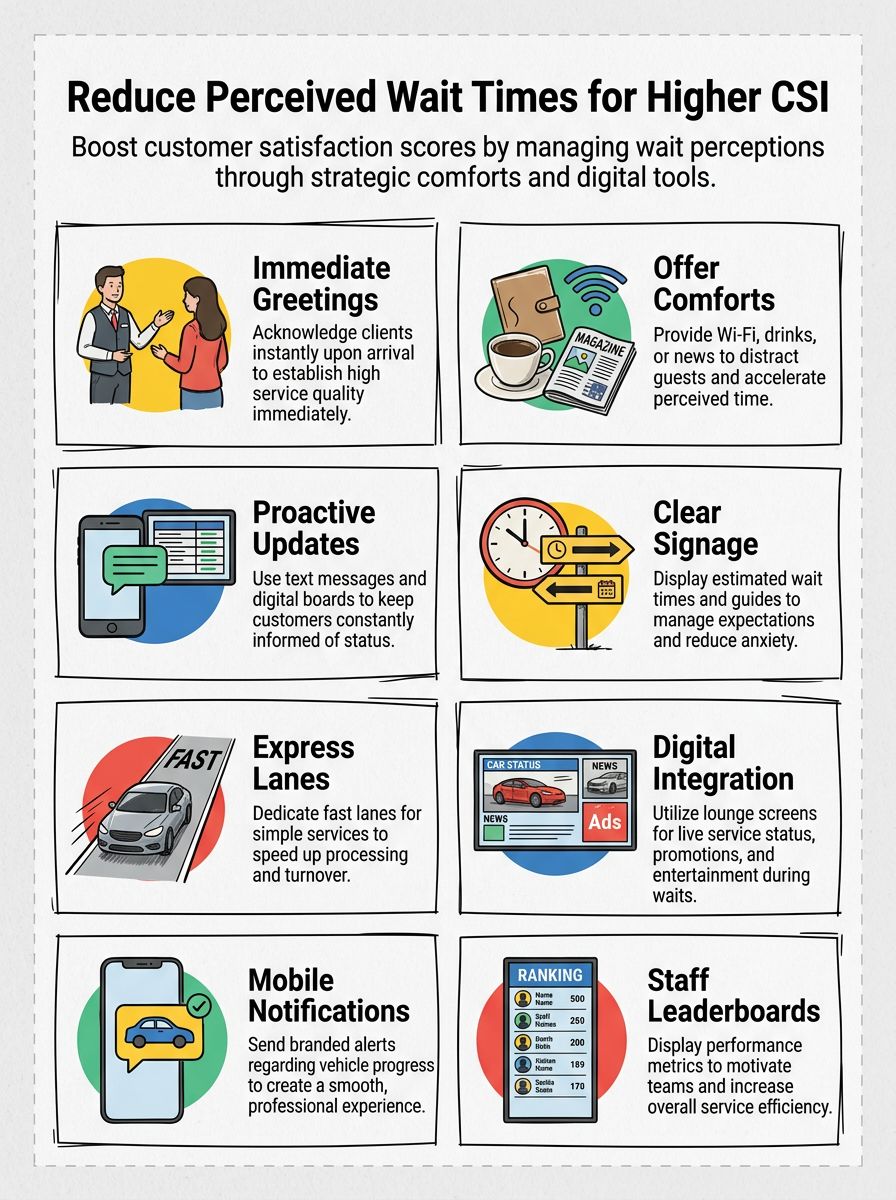
- Greet each guest within a minute of arrival, even if the team is tied up. A quick welcome sets a positive tone.
- Use clear signs and a simple queue board. Show steps in the visit so customers know what comes next.
- Offer comforts that pass the time, like Wi-Fi, charging ports, coffee, and water. A clean lounge with seating helps too.
- Send regular status updates by text or display them on digital boards. Steady updates shift focus away from the clock.
- Coach advisors to check in often with a smile and a short update. Friendly contact makes the wait feel shorter.
- Create an express lane for quick jobs, such as an oil and filter service or a tire rotation. Fast tracks move light work quickly.
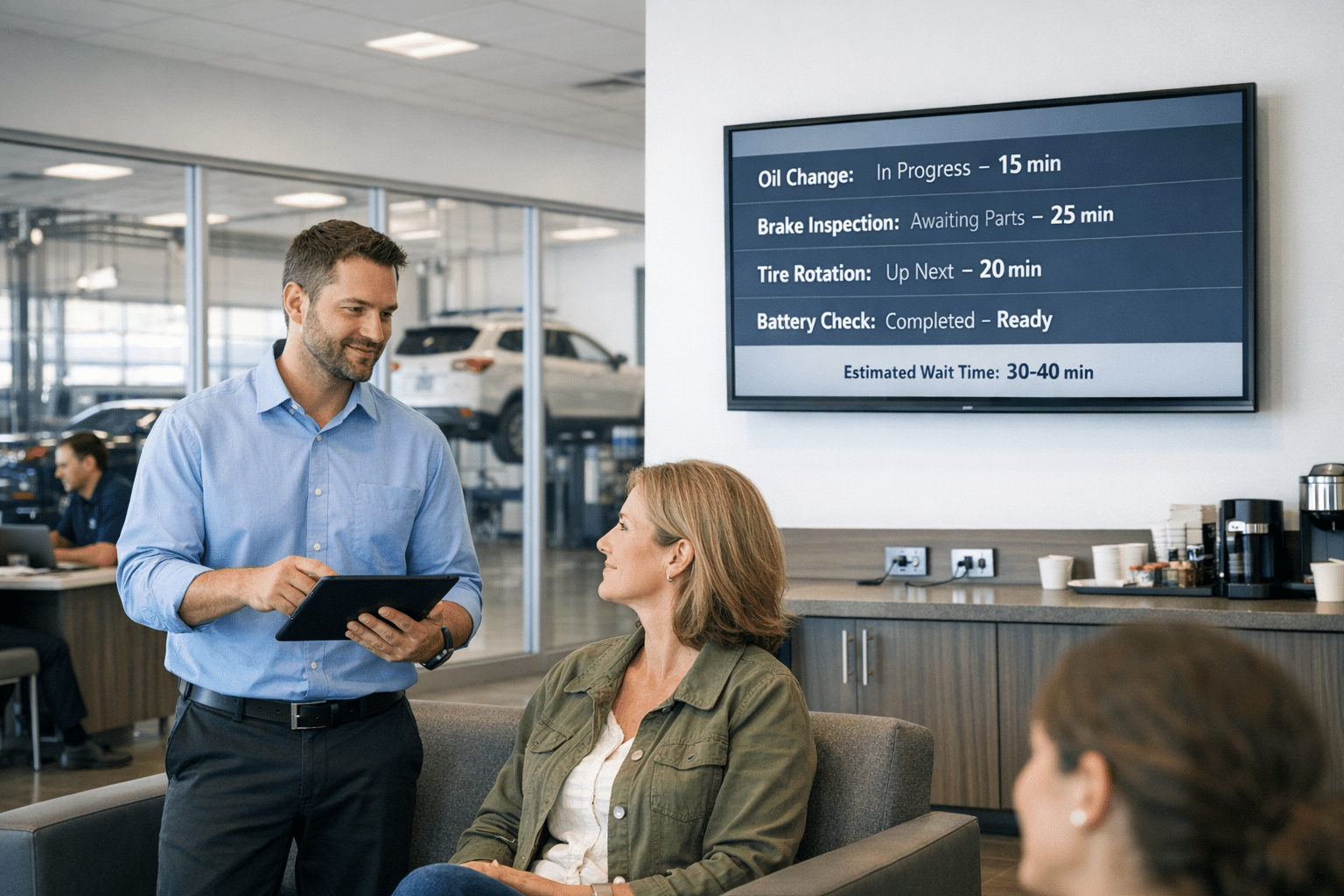
- Post honest estimated wait times at check-in on a tablet or screen. Clear Wait Time Management builds trust from the start.
Want to speed things up even more? Modern tools can amplify these steps and make waits feel shorter for everyone.
Using technology to enhance the waiting experience
Smart tools change how a wait feels. Real-time updates and digital check-ins keep guests in the loop and raise CSI without adding staff.
What technologies can shorten perceived wait times in service drives?
Modern dealerships use practical tech to reduce perceived waits and keep the service drive moving.
- Digital signage shows live status, current wait times, and timely offers in the lounge to keep guests engaged.
- Real-time analytics give managers a live view of flow so staffing and processes can be adjusted quickly.
- Automated KPI dashboards display goals and progress, motivating teams to hit targets and finish on time.
- Custom messages on screens match store needs, which eases frustration during longer jobs.
- Dealer-branded mobile notifications share vehicle progress and approvals so customers feel in control.
- Staff leaderboards highlight top performers, building friendly competition and faster turnarounds.
- In-store marketing screens promote services and maintenance bundles while guests wait, turning downtime into useful time.
- Performance dashboards refresh key stats each hour. Leaders act fast when delays start to stack up.
- Technology from Digital Dealership System fits any budget or location without major changes to daily routines.
Each tool improves the Customer Experience and helps raise CSI scores.
Here’s how digital updates keep customers happy as they wait.
How can digital updates improve customer wait perceptions?
Digital updates reshape the waiting experience in the service drive. The Digital Dealership System offers real-time KPI dashboards and automated digital signage for guests and staff.
These tools provide visibility with up-to-the-minute status and clear estimated times. That level of engagement eases anxiety and makes the wait feel shorter.
Dealers can adjust content for any store size or budget. Interactive displays share service progress, helpful tips, specials, or light entertainment, which keeps attention off the clock.
Real-time information builds trust and supports better planning. With quick access to updates, customers feel certain about next steps, and teams work with fewer surprises. The result is a smoother visit and higher CSI scores.
Conclusion
Shorter perceived waits lift Customer Satisfaction and help deliver Higher CSI. Real-time updates, clear Communication Strategies, and steady Wait Time Management change how every visit feels.
KPI dashboards keep teams focused on Performance Metrics. Automated signage keeps guests informed at each step. This level of transparency builds trust and strengthens Service Quality.
Small improvements add up from check-in to vehicle pickup. For dealers aiming to boost Customer Experience and reduce stress, focusing on reducing service drive perceived wait times is the fastest win. Schedule a demo today to see how these tools improve your Customer Experience right away!
FAQs
1. What does “perceived wait time” mean in a service drive, and why is it important for CSI?
Perceived wait time refers to how long customers feel they are waiting during their visit, not just the actual minutes on the clock. This perception shapes customer satisfaction scores, or CSI. When guests believe their wait is shorter, even if the real time stays constant, they rate your service higher.
2. How can dealerships reduce perceived wait times for better customer satisfaction?
Dealerships can use clear communication at every step of the process; offer comfortable lounges with amenities like Wi-Fi and refreshments; provide regular updates about vehicle status; and set honest expectations from check-in through pick-up. These steps help customers stay informed and relaxed.
3. What role does staff training play in lowering perceived wait times?
Well-trained team members know how to greet clients quickly, explain timelines clearly, answer questions with confidence, and handle concerns before frustration grows. Consistent professional interactions build trust while making each guest feel valued throughout their visit.
4. Why should my dealership invest in reducing perceived wait times now?
Improving this aspect leads directly to higher CSI scores which boost reputation and loyalty among drivers who rely on your expertise for maintenance or repairs. Satisfied clients return more often…and recommend your location to others looking for reliable automotive care—call us today or schedule online to see these benefits firsthand!