
Slow key-to-key cycle time drags down dealership efficiency. Customers wait, staff hurry, and old processes create delays. Digitalization offers a better path. Real-time tools like KPI dashboards and automated signs remove bottlenecks and keep work moving.
With clear tracking and simple displays, managers guide every step without guesswork. This guide explains key-to-key cycle time, why it matters, and how automation shortens it. Expect practical steps any store can use.
Key Takeaways
- Real-time KPI dashboards and automated signage speed the key-to-key cycle, which raises satisfaction.
- Cutting the cycle by even one day can lead to dozens of extra vehicle sales each year.
- Digital checklists, leaderboards, and instant messages boost accountability and reduce stalls in sales and service.
- Streamlined steps free parking spots, increase efficiency, and grow both revenue and loyalty.
- Professional setup and easy customization launch fast, so managers track performance daily without headaches.
What is Key-to-Key Cycle Time in Dealerships?
Key-to-Key Cycle Time in dealerships is the clock from drop-off to pick-up. It starts when a driver hands over the keys and ends when they receive the vehicle back.
This single metric shows true turnaround time. Managers see how long each step takes, from write-up to parts to final wash.
Lower cycle time signals smoother processes and shorter waits. That improves customer satisfaction and keeps teams focused on the next step.
Live tracking helps leaders spot delays early and fix them. Digital tools also improve communication across advisors, technicians, and parts. The result is stronger loyalty and more repeat visits.
How Can Digital Tools Reduce Key-to-Key Cycle Time?
Digital tools bring speed, structure, and clear ownership to daily work. Think of them as a shared playbook everyone can see.
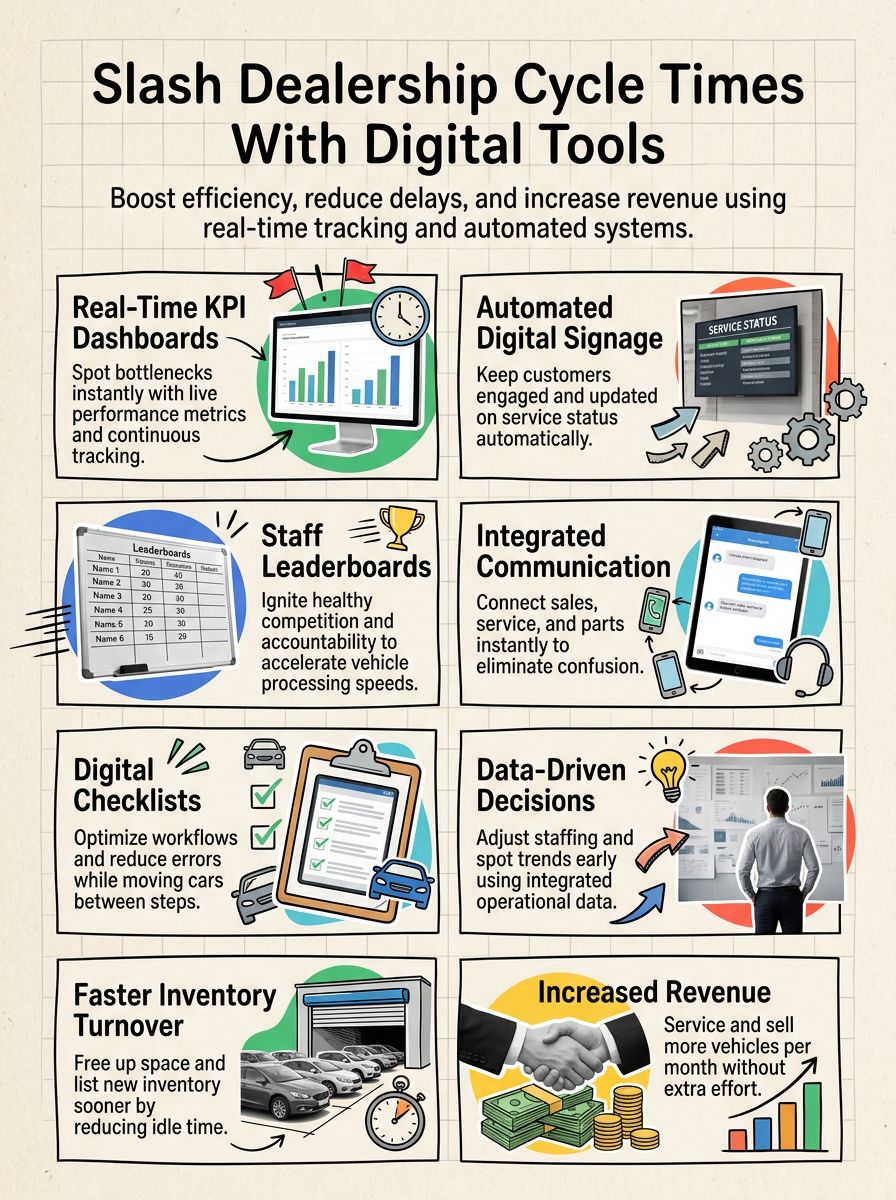
- Key Performance Indicator dashboards show live progress. They flag bottlenecks and let managers act fast.
- Automated digital signs update customers on status and offers. Clear info calms the lobby and makes the wait feel shorter.
- Leaderboards spark friendly competition and set clear goals. Teams move cars through stages faster.
- Connected chat and alerts link sales, service, and parts. Everyone knows the next step, with no guessing.
- Digital checklists guide each task so nothing gets missed. Fewer errors mean fewer reworks and delays.
- Professional installation sets up the system correctly on day one. That prevents downtime and gets results sooner.
Once the core tools are running, added features fine-tune the flow and strengthen efficiency.
- Custom signage layouts fit big groups and small stores. Each site shows only what it needs.
- Live data helps leaders balance workloads and improve scheduling. The shop stays smooth during the busiest hours.
- Trend reports highlight slow spots across days and weeks. Teams fix issues before they hurt satisfaction or sales goals.
What Are the Benefits of Faster Key-to-Key Cycle Time for Dealerships?
Streamlining key-to-key cycle time leads to clear wins for dealerships. Vehicles spend less time parked, which frees space for more sedans, SUVs, and trucks. Fresh inventory turns faster and supports higher sales.
Step-by-step tracking also improves inventory management and service speed. Guests get cars back sooner, and shoppers see new arrivals more often.
Cleaner workflows cut operational waste. Staff stay organized, which lifts efficiency across every department. With more cars sold or serviced each month, revenue grows without extra overhead.
Here is a quick example. A midsize store used digital checklists and trimmed idle time in the wash bay, winning back hours each week.
A dealership that cuts even one day off its key-to-key cycle can sell dozens more vehicles each year.
Conclusion
Digital tools make reducing dealership key-to-key cycle time simple and repeatable. Real-time KPI dashboards support quick monitoring. Automated signage keeps teams and customers informed with clear updates.
These solutions improve efficiency across sales and service. Stores see less operational waste, faster approval processes, stronger key control, and a better customer experience.
Every minute saved reduces cost and lifts satisfaction. Ready to run smoother? Connect with Digital Dealership System today to modernize your dealership. Streamline your workflow and see results fast.
FAQs
1. What does “key-to-key cycle time” mean for dealerships, and why is it important?
Key-to-key cycle time refers to the period from when a vehicle arrives at your lot until it is ready for sale or delivery. Reducing this time means faster inventory turnover, improved customer satisfaction, and increased revenue potential.
2. How do digital tools help reduce key-to-key cycle times in auto retail operations?
Digital platforms streamline communication between departments, automate repair order tracking, and provide real-time status updates on each vehicle. These features cut down delays and eliminate manual errors that slow the process.
3. Which dealership processes benefit most from digital solutions aimed at shortening key-to-key cycles?
Service intake, reconditioning management, parts ordering, inspection scheduling, and final quality checks all see major improvements with integrated software systems designed specifically for automotive retailers.
4. Why should dealerships invest in advanced digital tools instead of sticking with traditional methods?
Modern technology reduces labor costs by automating routine tasks; it also increases transparency across teams so everyone knows what needs attention next. This leads to fewer bottlenecks and higher throughput per month—giving you an edge over competitors still relying on outdated workflows… Ready to accelerate your operations? Contact our team today or visit our website for a demo tailored to your business needs!