Service managers feel the squeeze. Automating OEM CSI compliance means meeting strict rules, tracking details, and staying ready for audits. Manual work drains time that should go to customers and repairs.
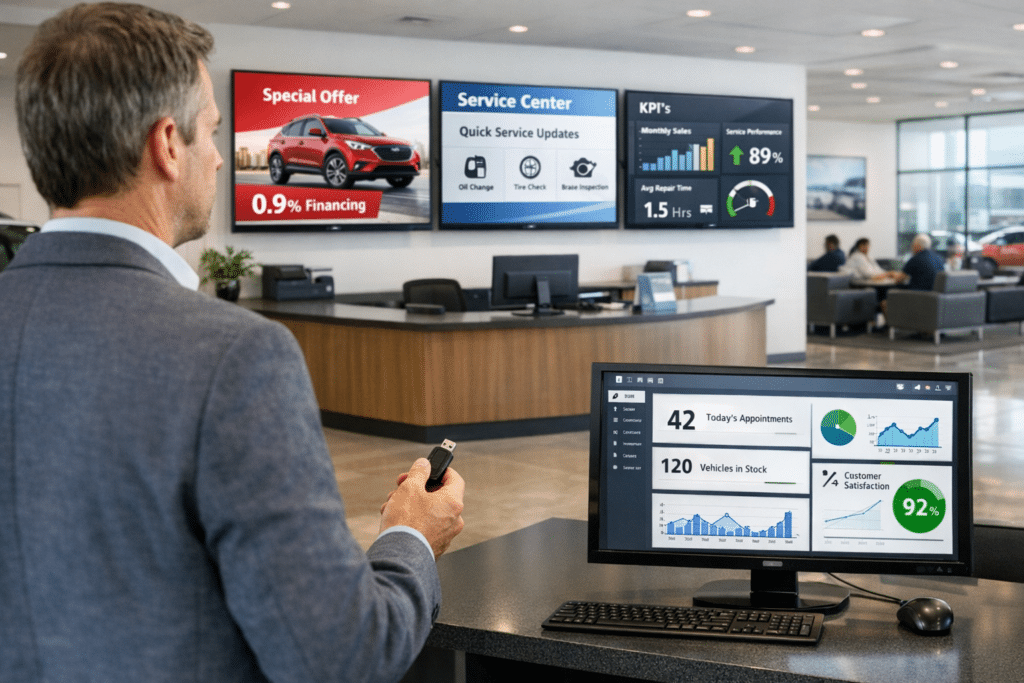
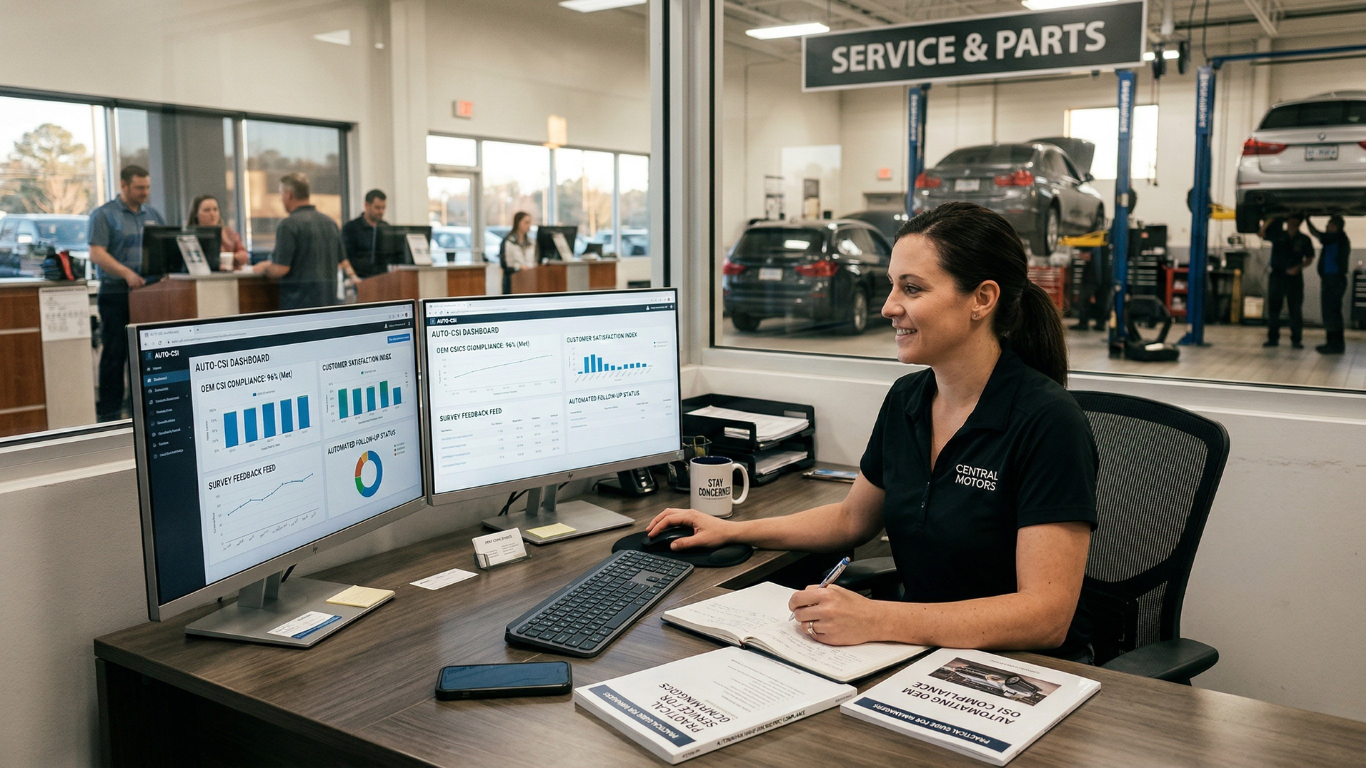
There is one clear win: automation boosts reporting efficiency and audit readiness, and it keeps teams focused on performance. Tools like Digital Dealership System show real-time dashboards and capture evidence in a few clicks.
This practical guide shows how to shift from slow manual tasks to smart automation. The goal is fewer headaches, stronger service results, and happier customers.
Ready to change how compliance gets handled? Keep reading; simple solutions are just ahead.
Key Takeaways
- Automating OEM CSI compliance with tools like Digital Dealership System, Scrut Automation, Drata, and Vanta increases audit readiness and reporting efficiency for 2025.
- Shops that use automation often reach Customer Satisfaction Index scores above 85, unlocking manufacturer incentives and strengthening customer loyalty.
- Automated systems collect evidence in real time and reduce mistakes by standardizing steps to meet ISO rules and other regulatory standards.
- Successful adoption needs clear goals, training, a pilot rollout, steady performance checks, and yearly updates based on new laws or OEM requirements.
- Keep improving by reviewing automated processes each quarter, using reports to spot risks and update strategy.
What is OEM CSI Compliance and What Challenges Does It Present?
OEM CSI Compliance means a dealership meets an automaker’s standards for customer experience. OEM stands for Original Equipment Manufacturer. CSI means Customer Satisfaction Index, a score that measures service quality and performance metrics.
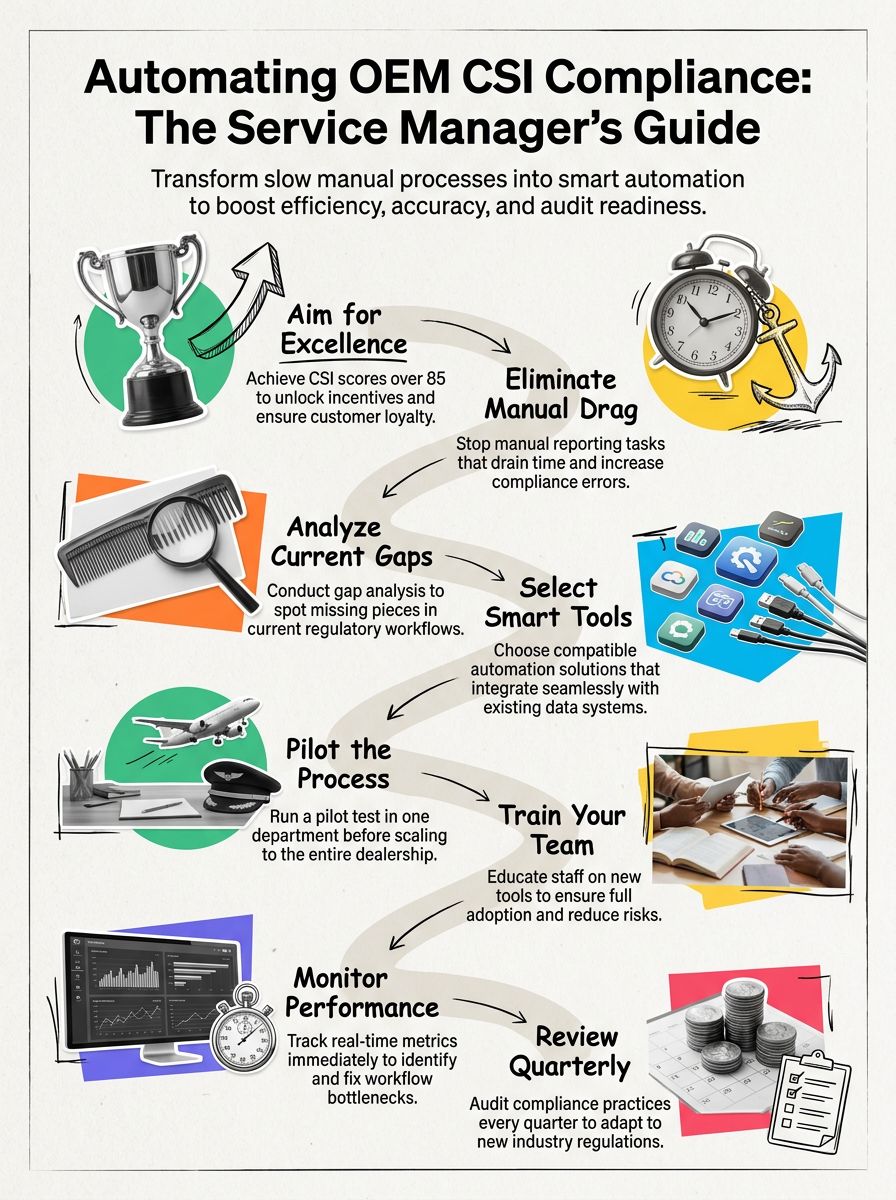
Hitting scores above 85 signals strong quality control. Those scores can also unlock incentive dollars from automakers. High marks build loyalty, which brings customers back for the next oil change or repair.
Real challenges show up fast. Manual steps slow down feedback collection and make it harder to improve month after month. Audits require proof of ongoing improvement and tight alignment with ISO standards, which are global rules from the International Organization for Standardization.
Collecting real-time data across service, parts, and cashier lines is tough without automation. Customer needs also shift quickly, which puts steady pressure on operations while targets keep rising.
How Can Automation Help Streamline Compliance Processes?
Automation makes compliance management simpler and faster. Teams can automate risk reviews, policy updates, evidence collection, and report building.
Platforms like Scrut Automation, Drata, and Vanta monitor controls in real time. Standardized workflows line up with ISO requirements and other regulatory standards, which cuts rework and missed steps.
Automated tracking reduces human error and improves data security across the shop. Audits move faster because the right proof is already connected to each requirement. With good training, staff use the tools well and keep skills current. Many stores then see stronger CSI scores, which supports loyalty and manufacturer incentives.
Want to see how this fits your team? Schedule a demo today or contact our team for more info.
Steps to Implement OEM CSI Compliance Automation
These steps make regulatory standards and audit readiness easier to manage. Use them to guide a smooth digital shift in service management.
What Are the Initial Steps to Automate OEM CSI Compliance?
Starting automation can feel big, but a clear plan makes it manageable. Service leaders gain quick wins by following these steps and using proven automation tools.
- Confirm requirements from your automaker to set a baseline. This shows what must be tracked and measured.
- Review current compliance management practices. Run a gap analysis to find missing controls and clunky workflows.
- Set specific targets for automation, like better customer experience, higher CSI, or more incentive dollars.
- Pick an automation solution that fits your store’s size and tech stack. For 2025, Scrut Automation, Drata, and Vanta are strong choices.
- Create an implementation plan with timelines and clear owners. Get team support to speed adoption.
- Start small, and run a pilot in one department to prove value before scaling to all workflows.
- Train staff on the selected tool. Everyone should know their role in the automated process.
- Track key performance metrics after launch. Use early data to spot issues and fix them fast.
- Refine workflows based on user feedback and real results. Keep tuning to reach peak efficiency.
Understanding the first steps makes the rest easier to manage. Next, connect the tools to systems already in place.
How Do You Integrate Automation Tools with Existing Systems?
Begin by reviewing your current systems and checking software compatibility. Map the workflow from appointment to cashier, then choose compliance automation tools that fit your data structure.
Many platforms include plug-and-play options that connect without stopping daily work. Keep data flowing smoothly by optimizing processes during the rollout. When needed, integration specialists can customize links for better performance and stronger compliance monitoring.
Streamlining operations means connecting every part of your business for faster results.
Quick setup brings fewer errors and more confidence in meeting OEM CSI requirements through smart system design. Reach out to discuss how simple integrations can improve your workflow overnight.
What Are Best Practices for Maintaining Automated Compliance?
Sustaining automated compliance calls for steady habits and clear ownership. These practices help teams stay audit ready.
- List all rules that apply to your store, from OEM standards to government regulations, before setting up automation.
- Define measurable goals for compliance and risk management so teams know what matters most.
- Train employees on new tools and updated steps. Make sure each person understands their role in monitoring.
- Commit to quarterly reviews. Update processes based on new standards, OEM changes, or audit findings.
- Use reporting features to spot risks early and build required reports with less effort.
- Share updates with stakeholders, including internal teams and outside partners, so everyone stays aligned.
- Reassess requirements at least once a year. Update systems as new laws or OEM rules arrive to close gaps.
With these habits in place, automated compliance stays accurate, current, and easier to manage.
Conclusion
Automating OEM CSI Compliance saves time and reduces errors. Using modern automation tools improves compliance management, reporting efficiency, audit readiness, and evidence collection.
Digital Dealership System helps with real-time dashboards and staff leaderboards, which makes daily tracking simple. Many service departments that automate reach CSI scores above 85. That can mean loyal customers and incentive dollars from automakers.
This kind of digital transformation lifts quality assurance at every touchpoint. Explore options like Scrut Automation, Drata, or Vanta for 2025 to strengthen audit readiness and data tracking. Contact Digital Dealership System today to move your dealership closer to peak performance. This article offers general information, not legal advice.
FAQs
1. What is OEM CSI compliance, and why does it matter for service managers?
OEM Customer Satisfaction Index (CSI) compliance means meeting the standards set by original equipment manufacturers to measure customer satisfaction in your dealership or repair shop. Service managers need to care about this because high CSI scores can lead to better manufacturer incentives, stronger customer loyalty, and a positive reputation in the industry.
2. How does automating OEM CSI compliance benefit my service department?
Automating these processes saves time and reduces manual errors. You get real-time tracking of key metrics, faster reporting, and consistent follow-up with customers after each visit. This leads to higher survey response rates and improved overall performance on manufacturer evaluations.
3. What features should I look for in an automated OEM CSI compliance solution?
Look for software that integrates with your current management systems; provides customizable alerts; tracks every step of the customer journey; generates detailed reports; and offers secure data storage that meets industry regulations. These features help you stay ahead of requirements while making daily operations smoother.
4. How do I start implementing automation for OEM CSI compliance in my business?
Begin by assessing your current workflow gaps related to manufacturer surveys or feedback collection. Next, research trusted providers who specialize in automotive service technology solutions with proven results—check their certifications too! Schedule a demo or consultation so you can see how their tools fit into your operation before committing fully… Ready to boost efficiency? Contact our team today for expert guidance tailored just for you!