
Empty waiting rooms, lost leads, and slow sales drain revenue fast. Many stores still run aging tools that hide real inventory and delay sales data. Dealers comparing top digital dealership system competitors want clear answers and quick wins.
Shoppers feel the lag when stores fall behind on automotive software. Teams guess, deals stall, and the competition pulls ahead with digital retailing and faster updates.
Digital Dealership System uses live dashboards and automated digital signage to cut waste and catch more sales. Real-time numbers guide decisions. Screens update specials in seconds, so offers match the moment.
This guide compares the strongest options for 2026, explains key features, and shows how smart dealership management improves results across sales and service.
See which platform helps sell more cars, and keeps service bays booked, starting today.
Key Takeaways
- Digital Dealership System leads 2026 with real-time dashboards, automated signage, and tight CRM integration that reduces missed opportunities.
- Top rivals like Competitor A, B, and C bring mobile tools, compliance features, third-party apps, and advanced analytics for different dealer needs.
- Stores leaving old software cite slow updates, weak integrations, high maintenance bills, manual errors, and a lack of industry automation.
- Must-have features include KPI dashboards, marketing automation, staff leaderboards, visual merchandising controls, and end-to-end workflow integration.
- Modern automotive software streamlines operations and lifts customer experience, helping retailers win in 2026’s competitive market.
What is a digital dealership system in 2026?

Many dealerships still juggle paper, spreadsheets, and disconnected apps. That mix creates slow workflows and missed sales. A digital dealership system pulls sales, service, and marketing into one hub.
Leaders get real-time analytics with KPI dashboards. These dashboards track sales, inventory, appointments, and top-performing staff in one view.
Automated digital signage updates every screen at once. Promotions, inventory, and service offers change instantly, without printing delays or manual edits.
Manager leaderboards show goals and progress, which helps teams compete in a healthy way. Targeted marketing tools run inside the platform, so messages reach the right shopper at the right time.
Options scale from a single store to a large group. Digital Dealership System also offers design and professional installation, so results arrive sooner with less hassle.
This focus on data, integration, and speed is why Digital Dealership System stands out. It aims at ROI, not workarounds.
Top competitors and alternatives in the market
More providers now serve dealers with cloud-based solutions built for speed and clarity. Curious which options are leading and which new choices might fit your store best? Here is a closer look.
Which companies lead the digital dealership system market?
Old, disconnected tools cause wasted effort and lost buyers. Modern leaders rely on automation, clean data, and integrated Customer Relationship Management, also called CRM. Digital Dealership built its platform to replace slow, fragmented systems with one connected workflow.
The table below highlights leading companies shaping the digital dealership system market in 2026:
| Company Name | Strengths | Key Services | Why Dealers Choose Them |
|---|---|---|---|
| Digital Dealership |
|
|
|
| Competitor A |
|
|
|
| Competitor B |
|
|
|
| Competitor C |
|
|
|
Dealers ready to move faster want cleaner reporting, quicker sales, and tools that work well together. Visit Digital Dealership today and see how your business can run smarter and more profitably.
What are the main alternatives to top digital dealership systems?
Disconnected software creates manual errors and slow growth. Many teams still rely on spreadsheets, basic inventory tools, or generic CRMs that do not fit auto sales. The options below explain common paths and why stores decide to switch.
| Alternative | Main Features | Typical Use Case | Limitations | Why Dealers Switch |
|---|---|---|---|---|
| Traditional Dealership Software |
|
|
|
|
| Generic CRM Platforms |
|
|
|
|
| Spreadsheet-Based Tracking |
|
|
|
|
| Generic Inventory Tools |
|
|
|
|
| Custom-Built In-House Systems |
|
|
|
|
Digital Dealership built its system to remove these roadblocks. Stores gain integrated workflows, real-time analytics, and automation built for auto retail in 2026. Schedule a demo today and see how Digital Dealership helps teams win while others play catch-up.
What key features should I consider when choosing a digital dealership system?
Outdated tools slow teams and raise costs. A smart platform should speed up sales and service while giving managers clear data.
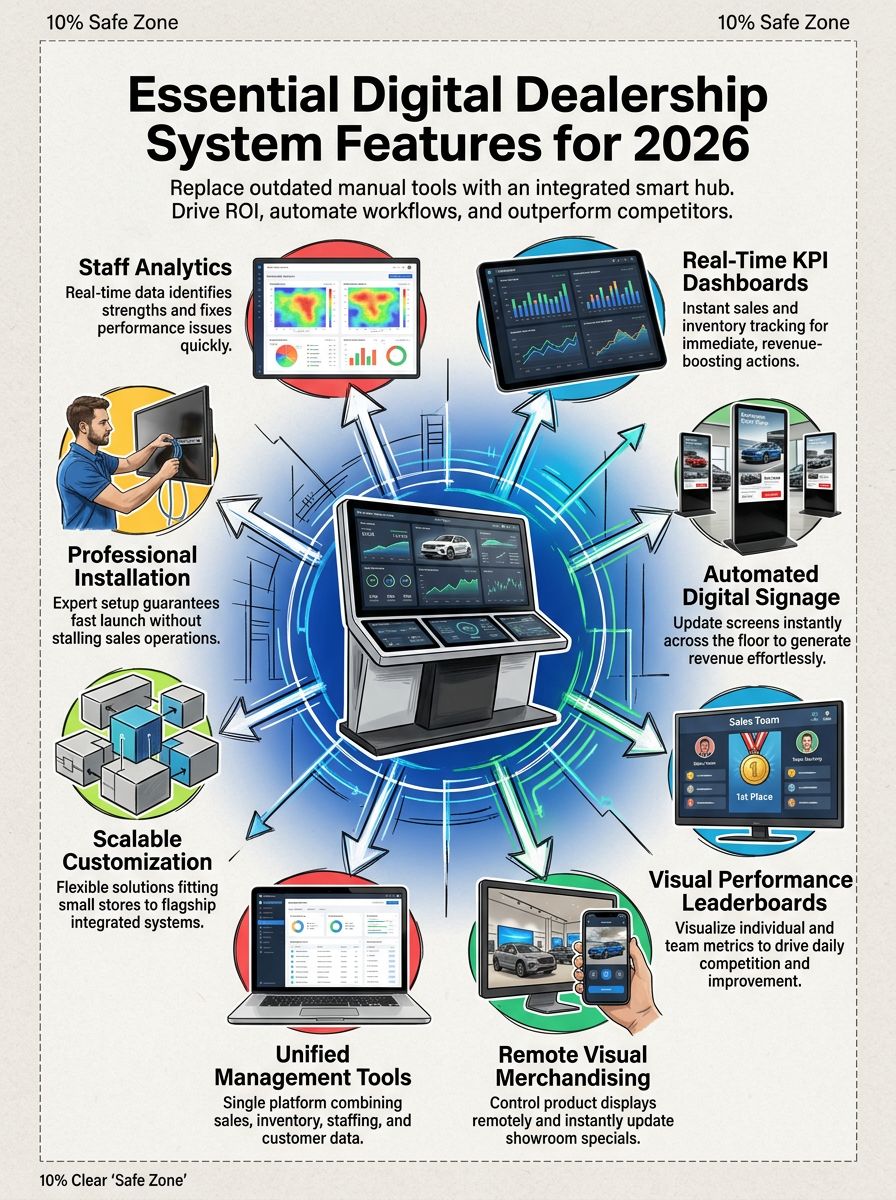
- Real-time KPI dashboards show sales, inventory, and staff results instantly, so leaders can act fast.
- Marketing automation controls digital signage across the store, turning every screen into a sales tool without constant manual work.
- Manager and staff leaderboards encourage steady improvement by tracking goals and results on clear displays.
- Visual merchandising tools let teams update specials in seconds, adjust layouts remotely, and keep the showroom fresh.
- Flexible packages fit small rooftops and large groups. Start simple, then add modules as needs grow.
- Professional installation speeds setup and reduces downtime, so selling continues without disruption.
- Dealer management tools connect sales tracking, parts inventory, staffing, and customer data in one place.
- Scalable pricing offers budget-friendly starts with room to expand when business grows.
- Performance tracking uses live analytics to spot strengths and fix gaps before they cost deals.
Use this list as a quick checkpoint while comparing platforms side by side.
Conclusion
Hanging on to old software risks empty showrooms and shrinking margins. Today’s leaders use connected systems with live data, CRM, and cloud-based solutions that speed every step.
Digital Dealership System brings dashboards, lead management, automated signage, and inventory control into one modern platform. It replaces scattered tools with a faster, smarter workflow built for dealer operations in 2026.
Do not let the competition set the pace. Explore leading digital dealership system competitors, then see why many stores choose Digital Dealership for clear data and consistent growth. Visit Digital Dealership now to get started.
FAQs
1. Who are the leading digital dealership system competitors and alternatives in 2026?
Major players include Dealertrack, Reynolds & Reynolds, CDK Global, AutoManager, and Frazer. Each offers unique features for inventory management, customer relationship tools, and sales automation. These platforms help dealerships streamline operations while boosting efficiency.
2. What benefits do top digital dealership systems offer over traditional methods?
Digital dealership systems provide real-time data access, automated reporting, integrated marketing solutions, and seamless customer communication channels. Dealers can manage leads faster and reduce manual errors; this means more time spent selling cars instead of handling paperwork.
3. How do I choose the best alternative to my current digital dealership platform?
Start by listing your business needs—inventory size, integration with accounting software like QuickBooks or Xero, user interface preferences—and compare those against each provider’s offerings. Look for certifications such as NADA compliance or SOC 2 Type II audits to ensure security standards meet industry requirements.
4. Why should I consider switching to a new digital dealership competitor in 2026?
Switching may unlock advanced analytics tools that predict buyer behavior or improve online retail experiences through mobile-friendly portals. Many providers now offer scalable pricing models so you only pay for what you use; this flexibility helps control costs while supporting growth goals… Ready to explore? Contact our team today for a tailored demo!