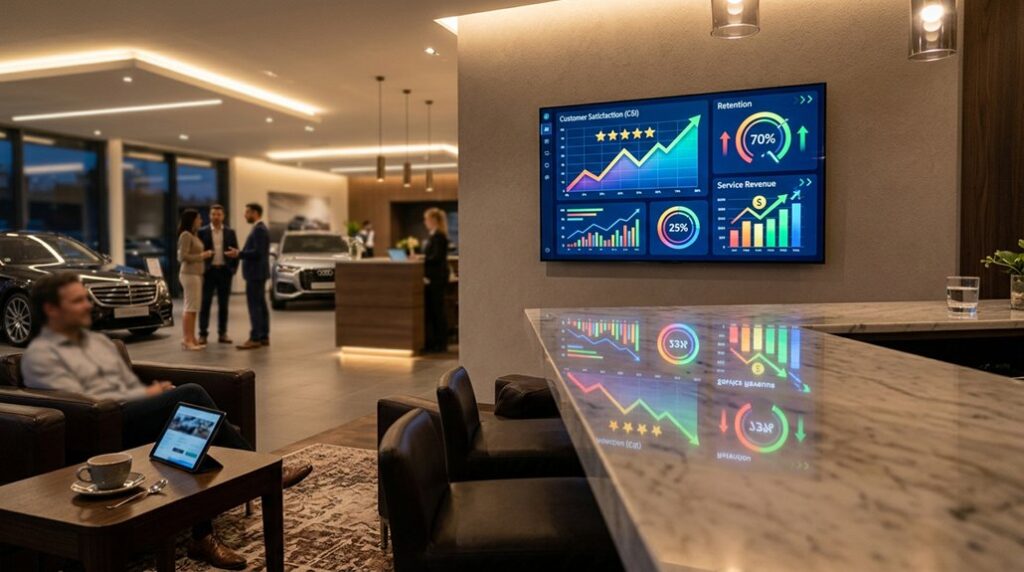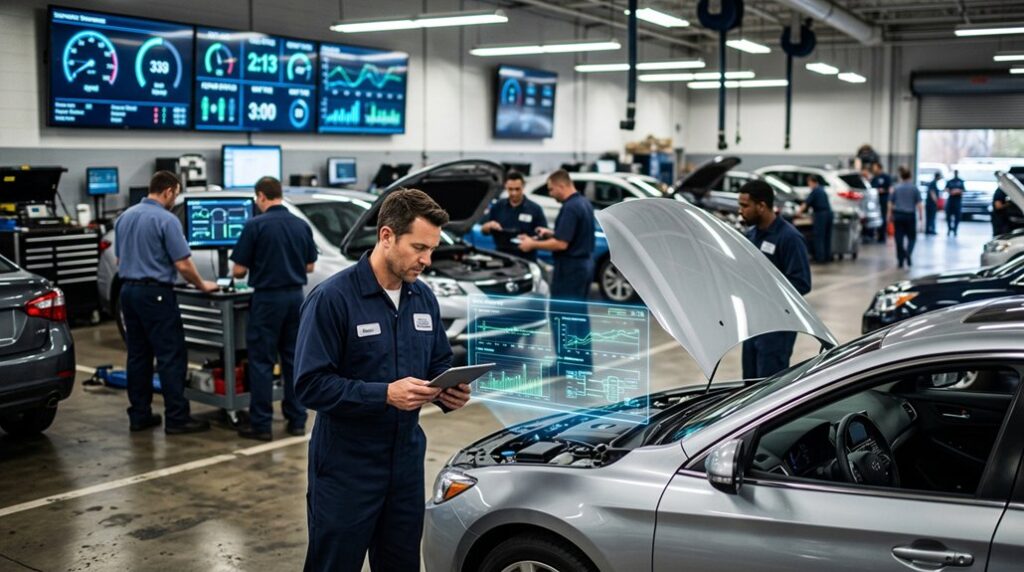
You should use showroom TVs to reinforce your dealership’s brand, not pull attention away from sales or service. Curated, short clips build trust, shorten perceived wait times, and spotlight warranties, testimonials, and maintenance tips that underscore your customer‑first promise. Keep visuals cohesive, CTAs subtle, and playlists themed by zone and time so messages feel helpful, not interruptive. With disciplined updates, analytics, and A/B tests you’ll boost engagement and conversions — keep going to see how to schedule and measure it.
Key Takeaways
- Reinforced branding keeps customers focused on dealership strengths, building trust and purchase intent rather than diverting attention.
- Curated, on-brand content transforms idle wait into productive engagement, shortening perceived wait times.
- Consistent visuals and messaging increase brand recognition and reinforce customer-first promises.
- Short, relevant clips (30–60s) deliver value without overwhelming or competing with sales interactions.
- Controlled playlists and analytics prevent mixed messages while optimizing conversions and showroom ambiance.
How Showroom TVs Change Customer Perception & Dwell Time
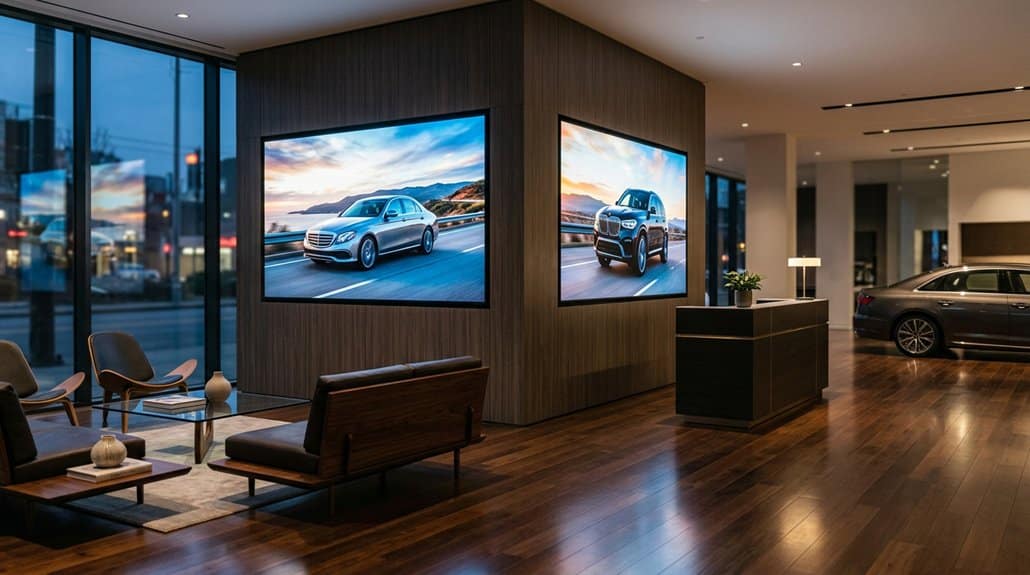
When customers step into your showroom, strategically programmed TVs can make their wait feel up to a third shorter, so they leave with a stronger sense of efficiency and satisfaction. You’ll use curated content to drive customer engagement, turning idle time into targeted brand moments that minimize distractions from competitor ads. This disciplined programming creates perception shifts: waiting feels productive, service seems faster, and value is reinforced through educational segments about features and maintenance. By aligning loops with dealership priorities, you control the narrative and encourage repeat visits without overt selling. The result is a cohesive environment where customers perceive competence and care, boosting loyalty and conversion rates. Keep content strategic, concise, and consistent to sustain those gains.
How Showroom TVs Express Your Dealership Brand
You can use showroom TVs to reinforce a consistent visual identity across logos, color palettes, and typography so every screen feels unmistakably yours. Create branded messaging moments—short, targeted spots that highlight warranties, promotions, or your customer-first promise—to shape perception without overwhelming visitors. And prioritize service-focused content like maintenance tips, appointment reminders, and tech features to position your dealership as reliable and customer-centric.
Consistent Visual Identity
Because people remember visuals faster than words, showroom TVs should carry a cohesive visual identity that mirrors your dealership’s brand—consistent logos, color palettes, and typography make your space feel intentional and memorable. You’ll achieve brand consistency and visual coherence by standardizing templates and motion guidelines so every screen reinforces the same look and tone. Use logos, approved palettes, and type hierarchy across promos, educational clips, and customer stories to humanize your brand without pulling focus from vehicles. Rotate fresh, on-brand assets regularly to keep the narrative current and reduce competitive distractions. Measure engagement and tweak visuals based on dwell time and feedback, ensuring screens strengthen recognition, build trust, and support sales rather than competing with the showroom experience.
Branded Messaging Moments
A few well-timed branded messaging moments on showroom TVs can anchor your dealership’s identity—clear, high-def visuals paired with concise, on-brand copy make the space feel purposeful and professional. You’ll use branded storytelling to turn short loops into signature moments: customer testimonials, mission lines, and product highlights that build trust and reduce distraction. High-definition content signals professionalism; tailored tips and relatable stories foster emotional engagement and loyalty. Update frequently to keep focus on you, not competitors. Below is a quick content matrix to plan moments.
| Moment Type | Purpose |
|---|---|
| Testimonial Clip | Social proof |
| Mission Tagline | Brand anchor |
| Feature Highlight | Product focus |
| Maintenance Tip | Value demonstration |
| Seasonal Offer | Timely conversion |
Service-Focused Content
Those short branded moments set the stage for service-focused content that reinforces your dealership’s expertise and care. You’ll use showroom TVs to deliver concise service education, showcase testimonials, and humanize your service team so customers see value before they even ask. Keep messaging practical, on-brand, and action-oriented to drive customer engagement and service uptake.
- Quick maintenance tips that build trust and demonstrate expertise
- Customer testimonials and ratings to reinforce credibility
- Behind-the-scenes service footage to personalize your staff and process
- Timely promotions and service event notices to stay top-of-mind
- Interactive QR prompts for easy online scheduling and offers
This approach turns passive screens into strategic touchpoints that enhance brand perception and service utilization.
High-Engagement Content Types for Dealership TVs
Engaging content on showroom TVs turns dwell time into a brand-building opportunity by delivering practical value and emotional connection. You should use engagement strategies that prioritize customer education—short vehicle maintenance tips, how-to clips, and infotainment that make waits feel productive. Mix in authentic customer testimonials and review highlights to build trust quickly; real voices strengthen credibility and nudge consideration without pressure. Behind-the-scenes footage humanizes your team and reinforces brand identity, fostering community and loyalty. Use dynamic signage to announce upcoming launches and dealership events so visitors stay informed and excited, but curate that content tightly to avoid competing messages. When every screen supports your value proposition, TVs become focused brand touchpoints that enhance experience and drive retention.
Balancing Promos and Helpful, Non‑Sales Content
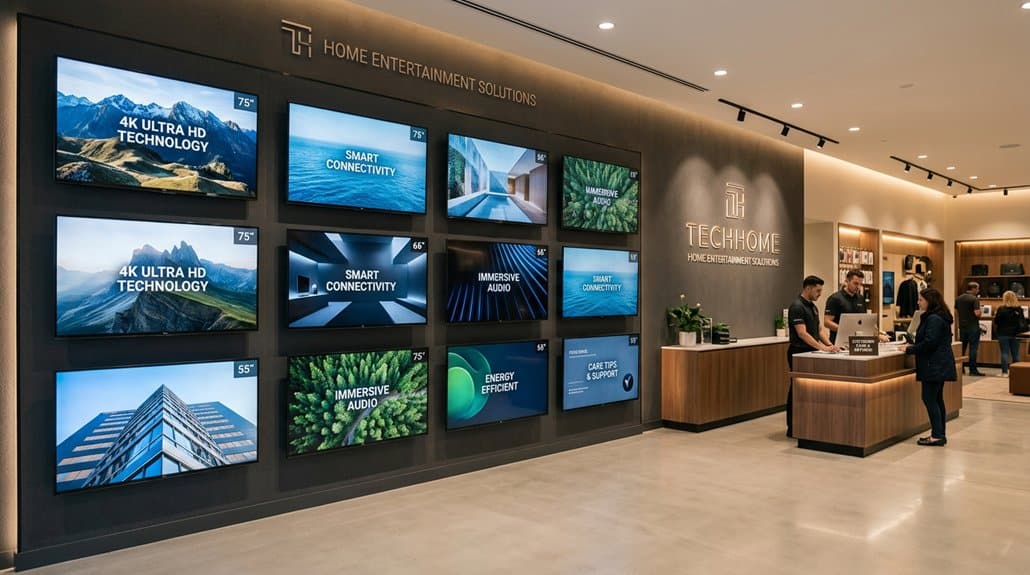
While promos can drive immediate action, you’ll get better long-term results when you mix them sparingly with helpful, non-sales content—think maintenance tips, customer stories, and local highlights that build trust and reduce perceived wait times. You should aim for a content strategy that prioritizes educational material to boost customer engagement and reinforce brand values without overwhelming visitors. Rotate short promo blocks with useful segments so visuals stay fresh and perceived waits drop. Update assets regularly and measure what keeps attention.
- Brief maintenance how-tos (oil, tire care)
- Genuine customer testimonials
- Local community events and partnerships
- Dealership history and team spotlights
- Service specials presented as helpful reminders
This balance strengthens loyalty and keeps branding front-and-center.
Showroom TV Playlist: Structure for Short Attention Spans
Keep each clip to 30–60 seconds so visitors get snackable info that holds attention and reduces perceived wait times. Rotate themed playlists—maintenance tips, testimonials, and behind‑the‑scenes—to reinforce brand pillars without overwhelming viewers. Update themes regularly to keep content fresh and aligned with current promotions and service messaging.
Short, Snackable Segments
Because customers’ attention is limited, short, snackable segments of 30–90 seconds should form the backbone of your showroom TV playlist, delivering focused messages that educate, reinforce your brand, and block competitor noise. You’ll use engagement strategies and content variety to keep clips fresh, informative, and easy to scan. Prioritize educational tips, quick vehicle highlights, and targeted offers that make wait time productive while strengthening perceived expertise. Update bite-sized pieces regularly to sustain retention and reduce perceived wait time. Keep visuals clean, logos present, and CTAs subtle so branding stays front and center without interrupting the customer journey.
- 30–90s maintenance tips
- Quick model spotlights
- Service promotions
- Customer testimonials
- Local community highlights
Rotate Themed Playlists
Short, snackable clips set the pace, but rotating themed playlists give your showroom TV structure and purpose—organizing content so guests see a cohesive, changing story rather than a random loop. You’ll design themed playlists that mix vehicle features, testimonials, service tips and seasonal promos to boost customer engagement without overwhelming viewers. Update rotations regularly to prevent content fatigue and shorten perceived wait times by up to a third. Keep each clip concise, brand-aligned and tied to a clear goal: inform, reassure, or prompt action. Measure performance and swap themes that underperform. Below is a simple rotation matrix you can use to plan weekly cycles.
| Theme | Purpose |
|---|---|
| Features | Educate |
| Testimonials | Trust |
| Maintenance Tips | Reassure |
| Promotions | Convert |
| Community | Connect |
On-Screen Design: Layout, Branding, and Legibility Rules
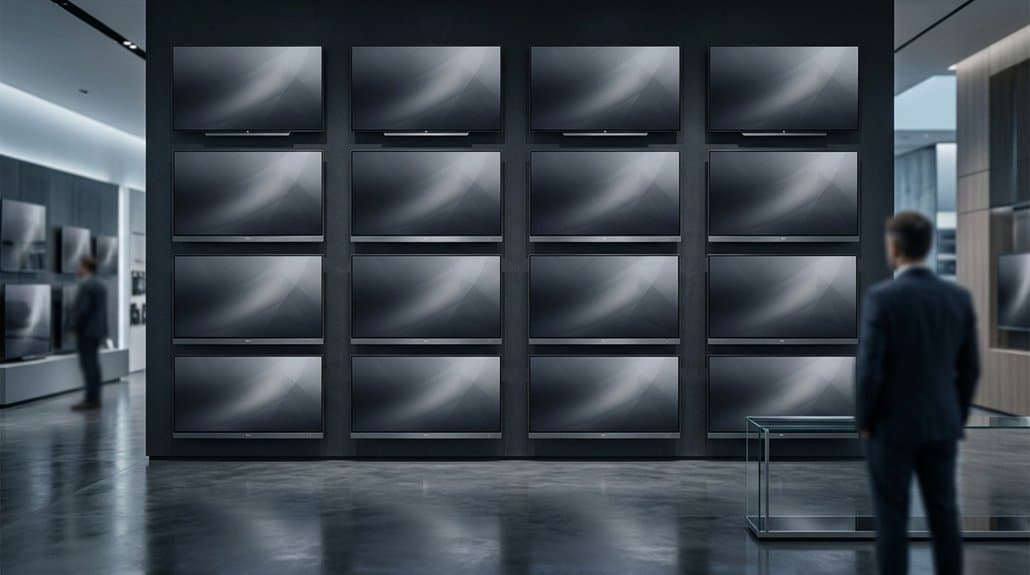
When you design on-screen content for showroom TVs, prioritize your dealership’s visual identity—use consistent logos, color palettes, and typefaces so every slide reinforces the brand. You’ll apply layout optimization and branding consistency to deliver clean, uncluttered screens that guide viewers to key messages. Use high-contrast palettes for legibility, concise segments (around 10 seconds) to maintain attention, and imagery or testimonials within the brand frame to build connection.
- Keep composition simple: clear hierarchy, ample whitespace.
- Choose fonts and sizes for distant readability.
- Use color contrast tests for every background/text pair.
- Limit copy per slide; lead with a single call-to-action.
- Integrate vehicle visuals and customer stories without breaking brand rules.
These rules keep screens supportive, not distracting.
Schedule & Zone Content by Time, Space, and Audience
You’ve set up clean, legible screens—now schedule and zone that content so the right message reaches the right customer at the right place and time. You’ll use content personalization and strategic placement to map promotions to peak hours, tailor service messages in waiting areas, and rotate offers for different demographics. Analytics guide audience segmentation so each zone reinforces your brand voice and drives relevant actions. Keep visuals consistent, update dynamically from feedback, and prioritize clarity over clutter. Below is a practical zoning snapshot you can adapt.
| Zone | Example Content |
|---|---|
| Entrance | Welcome + current offers |
| Vehicle Floor | Model highlights + specs |
| Service Waiting | ETA, amenities, maintenance tips |
| Sales Desk | Financing options, testimonials |
| Kids Area | Brand-safe, subtle branding visuals |
Quick Setup: Tools and Workflow to Manage Branded Content
Because time and consistency matter, start with a simple stack: high-def (1080p+) TVs, cloud-based digital-signage software, and a shared content library so you can push branded videos, playlists, and QR-enabled assets across zones with minimal training. You’ll set a disciplined content management routine: monthly updates, templated playlists, and QR calls-to-action that route customers to scheduling or inventory pages. That keeps screens focused on your offers and away from competitor messaging.
- Standardized templates for brand-safe playback
- Centralized asset tagging and version control
- Scheduled playlists by zone and time block
- QR-enabled promos linked to landing pages
- Simple role-based access for rapid edits
This digital workflow minimizes training, scales across rooftops, and protects brand consistency while driving showroom engagement.
Metrics, KPIs, and A/B Tests to Prove Impact
Although you’ll start with clean content and consistent templates, proving showroom-TV ROI depends on a focused metrics strategy: define KPIs like viewer retention, promo click-throughs, perceived wait-time reduction, and conversion lift; run A/B tests on messaging and CTAs; and segment results by customer type so you can iterate content that reinforces your brand and drives measurable actions. You’ll use viewer analytics to track engagement metrics and promotional effectiveness, tying clicks and conversions back to in-store behavior. A/B testing lets you compare messaging, CTAs, and pacing; customer segmentation reveals what resonates with shoppers, service guests, and VIPs. Combine feedback integration with retention strategies and content personalization to refine templates, boost perceived value, and prove measurable lift in satisfaction and sales.
Monetization & Local Partnerships Without Annoying Customers
You can monetize screens with sponsored local business slots that support the community while matching your dealership’s tone and visuals. Schedule these promos during natural pauses—service wait times or between test-drive videos—so they feel helpful, not interruptive. Track engagement and tweak timing to keep promotions relevant and unobtrusive.
Sponsored Local Business Slots
A few well-curated sponsored slots on your showroom TVs can turn idle screen time into steady local revenue while reinforcing your dealership’s community ties. You’ll leverage community collaborations to support nearby businesses without disrupting the sales environment, using disciplined content strategies that favor relevance and brand alignment. Rotate partners and refresh creative to sustain audience engagement and prevent ad fatigue. Measure viewer retention and engagement metrics to optimize slot timing, pricing, and partner mix. Curated sponsorships also let you block competitor ads, keeping attention on your inventory while building local goodwill.
- Vet partners for brand fit and customer value
- Limit frequency to preserve showroom ambiance
- Update creative on a predictable cadence
- Use metrics to refine pricing and placement
- Offer bundled packages with promotional benefits
Nonintrusive Promotional Timing
When timed around natural lulls—like check-in, vehicle drop-off, or service wait windows—short, targeted promotions can monetize showroom screens without annoying customers, because they feel helpful rather than intrusive. You should apply clear timing strategies that align ad slots with average wait windows, reducing perceived wait by up to 33% while boosting retention. Prioritize content relevance: rotate sponsored local-business spots that complement your services and reinforce dealership branding. Keep segments concise, limited in frequency, and sequenced so your own messaging dominates. Use analytics to refine schedules and avoid over-saturation; if viewers tune out, monetization and brand equity both suffer. Thoughtful cadence plus regularly updated, tailored promos lets you monetize responsibly and strengthen community ties.
Frequently Asked Questions
How Do Showroom TVS Affect Staff Workflow and Daily Tasks?
Showroom TVs streamline your staff workflow by boosting customer engagement and guiding inquiries, so you’ll spend less time explaining basics. They’ll also enhance staff communication with consistent messaging, improving efficiency and reinforcing your brand focus throughout the day.
What Hardware Maintenance Is Required for Multiple In-Showroom Screens?
About 70% of displays fail from dust-related issues, so you’ll schedule regular screen cleaning, monitor hardware upgrades cycles, maintain cables and mounts, run firmware updates, and keep spares to guarantee consistent, brand-focused showroom uptime.
Are There Accessibility Features for Visually or Hearing-Impaired Customers?
Yes — you’ll provide accessibility technology like captions, audio descriptions, hearing-loop integration and adjustable contrast/zoom. Using inclusive design guarantees branded content’s clear, navigable and legally compliant, reinforcing trust while serving visually or hearing-impaired customers.
How Do We Ensure Content Compliance With Automotive Advertising Laws?
Contrast bold claims with quiet evidence: you’ll follow advertising regulations by auditing scripts, vetting imagery, documenting disclosures, and training staff. Compliance strategies include legal review, version control, and scheduled audits to protect brand trust and reduce risk.
Can Showroom TVS Integrate With CRM and Lead-Capture Systems?
Yes — you can integrate showroom TVs with CRM and lead-capture systems; they’ll boost customer engagement, enable real-time data synchronization, capture leads from touchscreens or QR codes, and feed branded campaigns into your sales workflow efficiently.
Conclusion
Think of your showroom like a well-tended garden: TVs are the trellises that guide attention toward the blooms — your brand, staff, and inventory — not weeds of distraction. When you prune content to useful, on‑brand clips and schedule by zone and time, customers linger, trust grows, and walkouts turn into test drives. Keep playlists strategic, measurable, and locally tuned so every screen cultivates value, not noise, for your dealership.