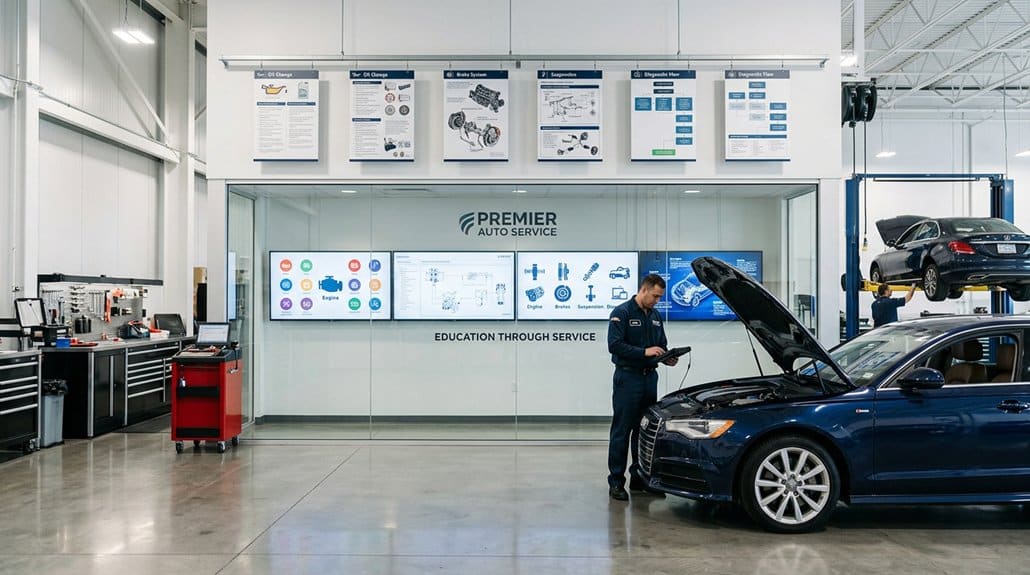
Your dealership service drive is prime teaching ground because it puts you face-to-face with customers when technicians, diagnostics, and attention converge. You can translate live service histories into clear advice, show quick demos or videos, and remove pricing and timeline uncertainty. Targeted, visual education builds trust, boosts upsells, and increases repeat visits. Measure impact with retention, ARO, and surveys, and train teams with role-play and incentives—keep going to uncover practical scripts, tools, and KPIs.
Key Takeaways
- The service drive creates face-to-face moments where technicians can translate diagnostics into clear, actionable guidance.
- Real-time service histories at drop-off build credibility and make recommendations easier to accept.
- Tablets and kiosks enable short how-to videos and visuals that quickly educate and reduce customer uncertainty.
- Step-by-step inspection summaries and timelines clarify what’s inspected, why, and when to return.
- Measuring retention, upsell, and satisfaction ties education to revenue and improves continuous training.
Why the Service Drive Is the Best Place to Teach Customers
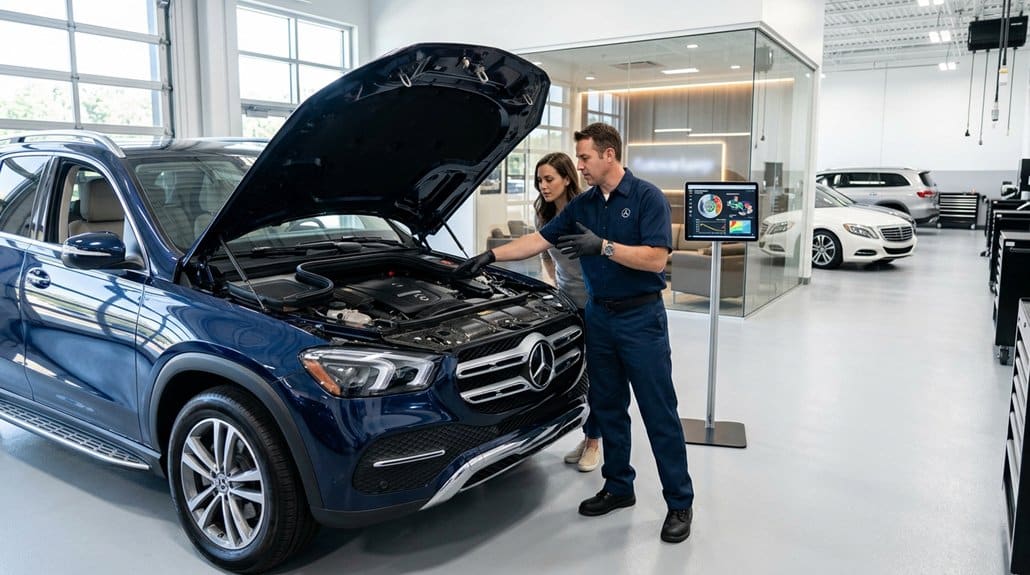
Because the service drive puts technicians and customers face-to-face at a moment of relevance, it’s the most effective place to teach—technicians can translate diagnostics into clear, actionable guidance while customers are already focused on their vehicle’s needs. You’ll use service drive education to convert technical findings into tailored recommendations, leveraging real-time service histories to make advice specific and credible. When you demonstrate repairs or play short how-to clips on-site, complex concepts become tangible, boosting understanding and trust. This targeted customer engagement reduces friction in decision-making and raises retention, since informed customers are likelier to approve necessary work. Strategically integrating demonstrations, data-driven talking points, and follow-up resources guarantees the service drive consistently delivers measurable educational value.
What Customers Expect: And How Teaching Fills Those Gaps
You expect clear explanations of the service steps, realistic timelines, and upfront pricing, and teaching is the fastest way to deliver that clarity. When you provide concise how-to guidance on maintenance and use transparent time-and-cost communications—via SMS, kiosks, or videos—you reduce uncertainty and boost trust. Aligning educational content with customer data lets you proactively address needs and turn routine service into a relationship-building opportunity.
Clear Service Process Expectations
1 clear, predictable service experience is often the difference between a satisfied customer and a frustrated one; customers expect transparent explanations of what’s being done to their vehicle, why it’s needed, and how much it will cost. You can close gaps through targeted education that reinforces service transparency and deliberate expectation management. Lay out a concise process overview at check-in, supplement with visual aids, and follow up with resources that validate recommendations. Use short how-to clips to build customer competence and trust.
- A step-by-step inspection summary so they know what’s inspected and why
- A maintenance timeline showing upcoming services and intervals
- Quick videos demonstrating basic care to demystify recommendations
This reduces anxiety, improves buy-in, and increases retention.
Transparent Time And Pricing
When customers know exactly what a service will cost and how long it’ll take, they’re far more likely to trust your recommendations and return; studies show 70% want detailed estimates up front and 78% report higher satisfaction with accurate time predictions. You should institutionalize transparent pricing and accurate timelines across touchpoints: intake, digital estimates, and technician updates. Train advisors to explain line-item costs and typical duration ranges, and use visual aids that map procedure steps to time and price. This reduces disputes—65% of customers value explanations of necessary repairs—and signals reliability: 82% are likelier to return when timelines and costs are clear. Measured education—workshops, brochures, real-time status tools—drives a quantifiable uptick in satisfaction and repeat business.
Proactive Maintenance Education
Because informed customers make better choices, proactive maintenance education should be treated as a strategic service line that closes knowledge gaps, reduces surprise repairs, and drives repeat visits. You’ll use customer engagement strategies and maintenance myth busting to shift behavior: show how routine care can extend vehicle life up to 60% and cut unexpected costs. Offer targeted content—how-to videos, workshops, one-on-one explanations—that 70% of customers prefer, and be transparent so satisfaction improves about 20%. Educated customers return more often; programs can boost visit frequency by 25% and retention by 85%. Visualize practical touchpoints that make learning easy and actionable:
- A quick workshop demonstrating oil, tire, and filter checks
- A short video library tied to service recommendations
- A one-page, personalized maintenance roadmap
6 In-Person Coaching Moments at Check-In & Valet
Start the check-in with a personalized vehicle walkaround that points out service history highlights and any immediate concerns so the customer sees the link between past care and future needs. Use that moment to deliver quick maintenance education—brief, actionable how-tos like checking oil or tire pressure—that empowers owners without taking extra time. These targeted coaching touches build trust and increase the likelihood customers follow recommended services.
Personalized Vehicle Walkaround
Although a brief, personalized vehicle walkaround might seem like a simple courtesy, it’s a strategic coaching moment where you can convert check-in and valet interactions into high-impact education: you’ll use interactive demonstrations and concise feature highlights to turn routine handoffs into trust-building, actionable exchanges. With a tablet showing real-time data, you’ll tailor points to the vehicle’s condition and service history, answer questions, and recommend priorities. These moments lift satisfaction and retention by making customers feel informed and valued.
- Point out dashboard alerts and safety features with a live demo
- Show wear indicators (tires, brakes) and relate urgency to service options
- Use service history on-screen to justify recommended work
Execute consistently; measure CSAT and retention gains.
Quick Maintenance Education
When you seize the brief moments at check-in and valet for targeted coaching, you turn routine handoffs into high-value maintenance education that reduces future breakdowns and builds trust; using a clear maintenance-chart visual and a quick demo (like showing how to check tire pressure or fluid levels) makes the advice tangible, personalized, and actionable. You’ll strategically correct maintenance myths and customer misconceptions by pairing concise explanations with a visual schedule that highlights intervals and consequences. Brief demonstrations during valet create durable learning through practice, while targeted questions about driving habits let you tailor recommendations to manufacturer guidance. This approach reduces repeat visits, increases perceived expertise, and converts fleeting interactions into measurable retention and loyalty outcomes for your service drive.
Digital Tools to Teach Customers at Drop-Off: Tablets, Videos, Displays
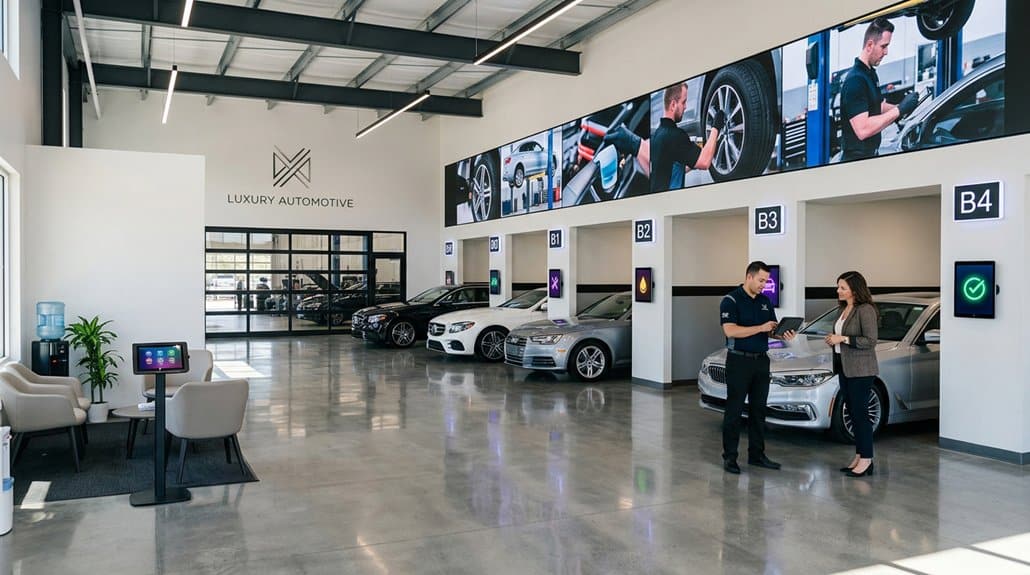
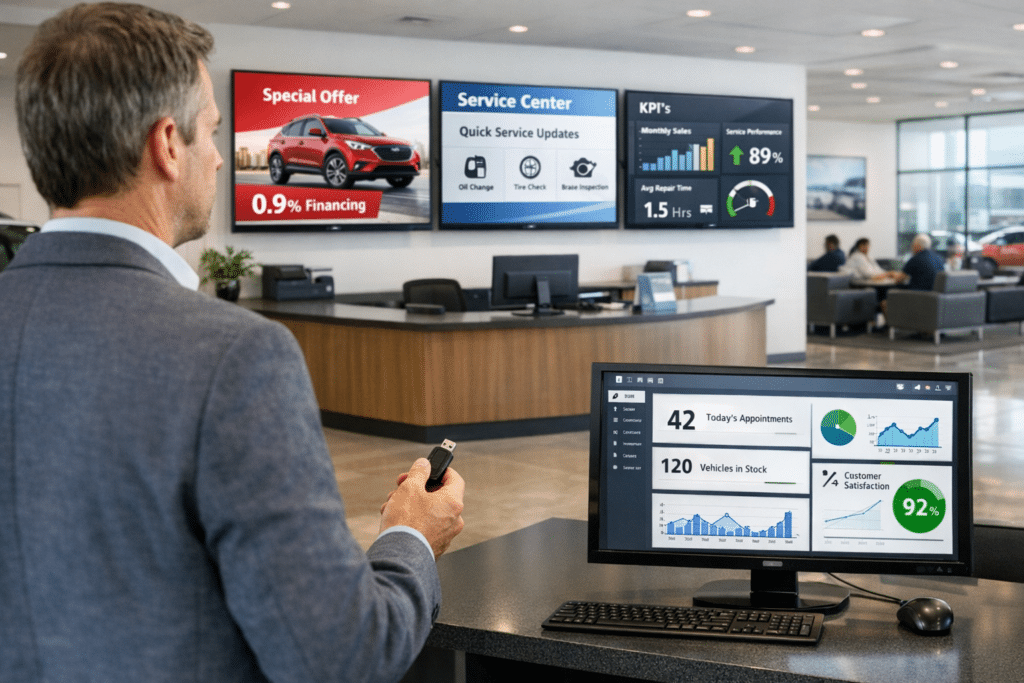
Because the drop-off is often your first real chance to educate a customer, deploying tablets, videos, and displays there turns a transactional moment into a strategic touchpoint: you’ll use tablet benefits and video engagement to convert curiosity into informed consent. Equip advisors with tablets showing service history so recommendations are evidence-based and personalized. Place short, high-impact educational videos on displays to explain repair rationale and maintenance value. Add interactive kiosks for customers who want self-directed learning.
- A tablet presenting timed maintenance alerts and past repairs builds credibility.
- A display looping concise how-it-works clips reduces anxiety and reinforces importance.
- An interactive kiosk invites customers to explore owner-specific care paths.
These digital tools raise engagement, improve satisfaction, and support retention through targeted education.
Scripts & Phrases to Teach Customers (Ready-to-Use Examples)
Start with a short, repeatable script you can train every advisor to use so customer education becomes consistent, credible, and measurable. Use concise phrases: “Here’s what we recommend, why it matters, and how it helps your vehicle last longer.” Pair that with a personalized video: “I’ll send a short clip showing this procedure on your model.” At check-in, ask: “Have you noticed X? If so, this usually means Y; here’s a simple analogy…” Use CRM-driven prompts: “Based on your vehicle history, next service is due—would you like an explainer video or a quick walkthrough?” Offer choices: “Prefer a demo now, a webinar link, or a one-minute phone summary?” These educational tools and targeted scripts boost customer engagement, clarity, and informed consent without technical overload.
Measure Service-Drive Education: KPIs, Surveys, and Revenue Signals
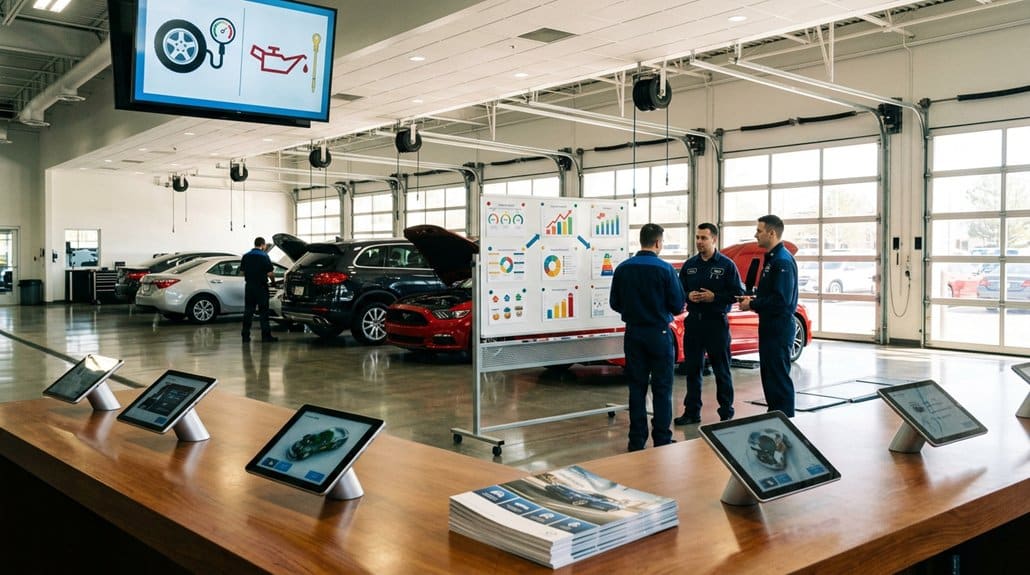
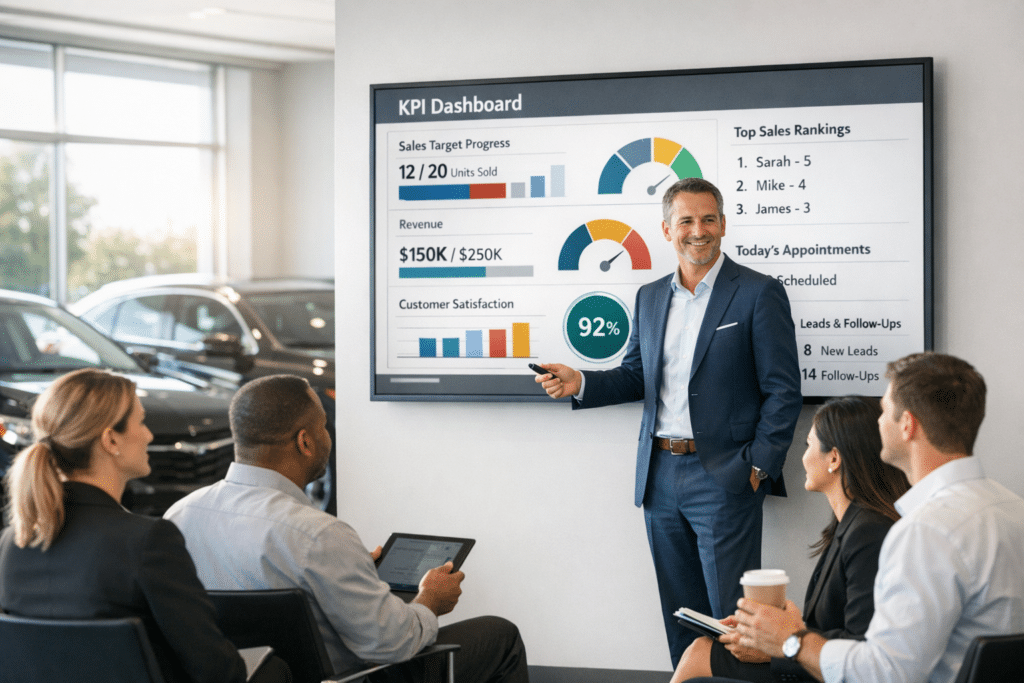
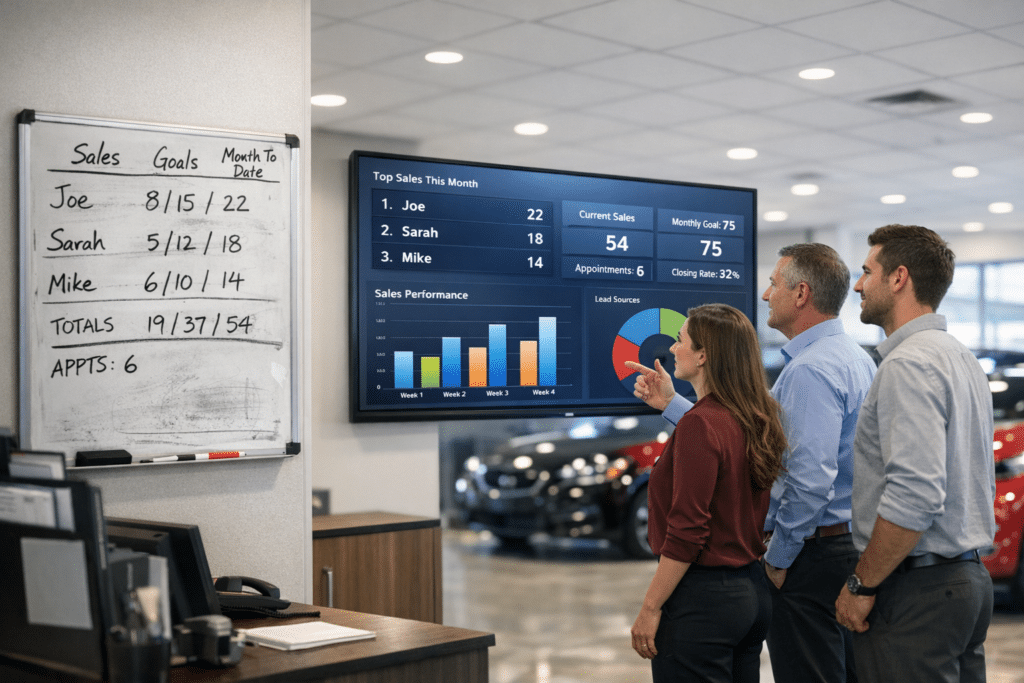
Measuring the impact of service-drive education means tracking a handful of targeted KPIs—customer retention, service upsell rate, average repair order, and follow-up inquiry frequency—to tie learning interventions to behavior and revenue. You’ll use KPI Analysis to benchmark performance before and after Educational Content rollouts. Survey Implementation captures comprehension and flags gaps, while Feedback Analysis turns comments into actionable tweaks. Revenue Tracking links workshops and explainer moments to increased order value.
Track key KPIs—retention, upsell, ARO, inquiries—to prove service-education ROI and iterate via surveys and feedback.
- A visual of rising retention percentages after a brief service-drive demo.
- A chart showing upsell lift correlated with follow-up inquiries.
- A dashboard where survey scores trigger content revisions.
Focus on Customer Engagement metrics and clear reporting so you can prove educational ROI and iterate fast.
Train Your Team to Teach: Role Play, Incentives, and Workflows
Equip your service team to teach, not just sell: structured role-play, clear incentives, and embedded workflows turn individual coaching moments into measurable business outcomes. You’ll use role play techniques in training to sharpen advisors’ communication, lifting customer satisfaction by roughly 30% when explaining maintenance options. Pair that with transparent incentive structures that reward documented education outcomes; performance-based rewards raise engagement and retention by about 25%. Standardized workflows should embed educational touchpoints so every interaction becomes consistent and trust-building. Leverage feedback data to target common confusion, cutting repeated visits by up to 40%. Regular teach-the-teacher sessions cultivate knowledge-sharing, improve efficiency, and create measurable KPIs tied to coaching frequency, customer comprehension, and retention—so teaching clearly becomes part of your service profit model.
Scale Service-Drive Lessons to SMS, Email, and Loyalty Programs
When you extend service-drive lessons into SMS, email, and loyalty programs, you turn one-off coaching moments into scalable touchpoints that drive retention and measurable revenue. You’ll apply SMS Strategies for timely maintenance alerts and educational reminders, boosting engagement; Email Engagement delivers how-to videos and tips that lift service visits; Loyalty Integration rewards Educational Workshops and digital actions to reinforce behavior. Use Data Personalization from CRM to map Content Preferences and tailor Digital Outreach, and monitor Customer Feedback to refine cadence and topics. Measure impact on visits, NPS, and referrals. Visualize the program with simple scenarios:
- A technician demo followed by an SMS reminder and video link.
- Post-service email with tailored tips based on vehicle data.
- Loyalty points for attending workshops and sharing feedback.
Frequently Asked Questions
What Is the 30-60-90 Rule for Cars?
The 30-60-90 rule for cars schedules major car maintenance at 30k, 60k, and 90k miles; you’ll follow service reminders to change oil, inspect filters, replace belts, check brakes, spark plugs, and prevent costly failures.
What Are the 5 Important Factors for Customer Service?
You might doubt time costs, but you’ll see returns: prioritize responsive customer engagement, service transparency, personalized interactions, efficient operations, and data-driven insights—strategically aligning incentives and communication to boost loyalty, satisfaction, and repeat business.
What Are the 4 C’s in Automotive?
The 4 C’s are Customer, Cost, Convenience, and Communication — you’ll prioritize Customer engagement, transparent Cost, convenient processes, and consistent Communication to drive Service Promotions strategically, analytically strengthening loyalty, conversions, and operational effectiveness.
What Are the 3 C’s of Customer Satisfaction?
A warm handshake: the 3 C’s are Clarity, Consistency, Convenience. You’ll drive Customer Loyalty by ensuring Service Transparency, delivering predictable experiences, clear pricing, and seamless processes, creating measurable trust and strategic satisfaction across every touchpoint.
Conclusion
You’re sitting on a strategic sweet spot: the service drive. Use concise coaching, clear content, and consistent cadence to convert casual conversations into committed customers. Train teams to teach with targeted talk tracks, timely tech, and measurable metrics. Prioritize practical processes, promote profitable behaviors, and push predictable performance. With disciplined delivery and data-driven adjustments, you’ll transform transient touchpoints into trusted relationships that boost retention, revenue, and reputation.