
Most dealerships do not have a data problem. They have a visibility problem.
The numbers exist somewhere inside the DMS, a report, a spreadsheet, or a manager’s desktop. The challenge is getting the right information in front of the right people while there is still time to do something with it. Handy Toyota’s experience is a strong example of what happens when a dealership stops treating screens as decoration and starts treating them as part of the operating environment.
Performance Data Has More Value When It Enters the Workday
Handy Toyota needed its sales team to have live visibility into unit and gross performance throughout the day. That information also needed to reach multiple sales offices rather than remaining confined to reports reviewed by management.
That distinction matters because reporting and visibility are not the same thing. A report can tell a manager what happened, while a well-placed Sales Leaderboard gives the entire team a shared understanding of what is happening now.
In many dealerships, employees are technically surrounded by data but still lack a common view of performance. Managers may know the numbers, salespeople may know their own numbers, and leadership may receive another version entirely, but there is no single visual reference keeping everyone aligned throughout the day.
The Screen Is Not the Strategy
One of the most important lessons from Handy Toyota is that the solution was not simply adding more televisions. Each display had a specific audience and a specific job, whether that meant helping employees understand current performance or helping customers navigate the service experience.
That is where dealership digital signage strategies often go wrong. Hardware gets installed first and the communication strategy gets figured out later, resulting in screens that eventually become background noise, outdated marketing displays, or another system somebody has to remember to maintain.
The better question is not, “Where can we put a TV?” It is, “What information does someone need at this point in the dealership, and what should that information help them do?”
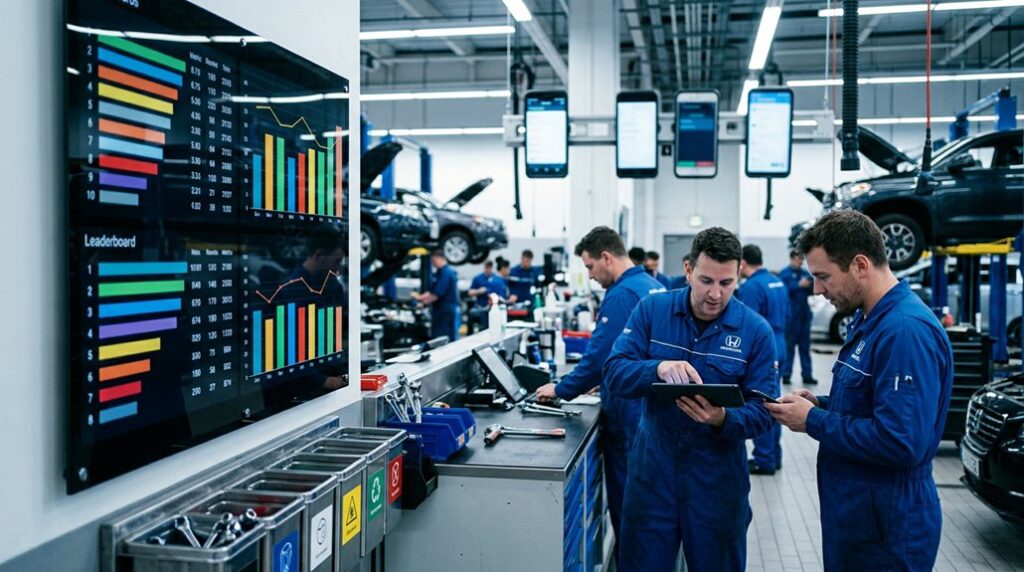
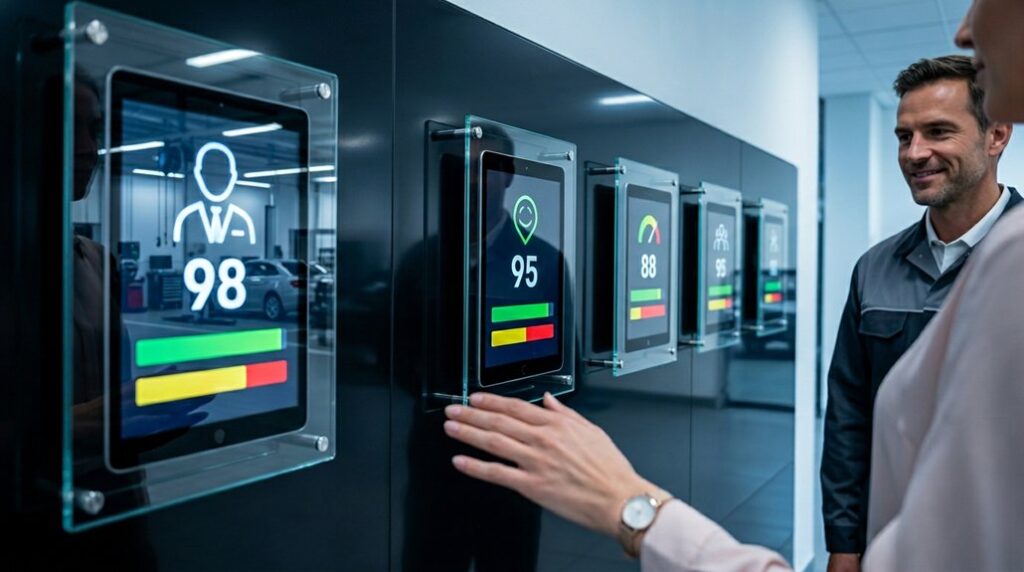
For Handy Toyota, Sales Leaderboards were placed across offices and the break room so current unit and gross performance remained visible during the workday. Managers also had access to desktop reporting they could use during meetings, coaching conversations, and daily performance discussions.
Shared Visibility Changes the Management Conversation
There is an important operational difference between telling an employee where they stand and creating an environment where they can see it for themselves. When performance is visible throughout the day, conversations can begin with a shared set of facts instead of requiring managers to repeatedly pull reports, explain standings, or reconstruct what happened.
Handy Toyota General Manager Adam Luneau described that benefit directly, explaining that the team can see unit and gross performance throughout the day while managers use the reports during meetings. He said the system gives employees a clearer understanding of both their individual position and the dealership’s overall performance.
That does not mean a leaderboard replaces management. It means management spends less time establishing what the numbers are and more time discussing what to do about them.
For sales leaders, that can make coaching more immediate. Instead of waiting for an end-of-day recap or discovering a performance gap after the opportunity to address it has passed, current information becomes part of the environment in which the team is already working.
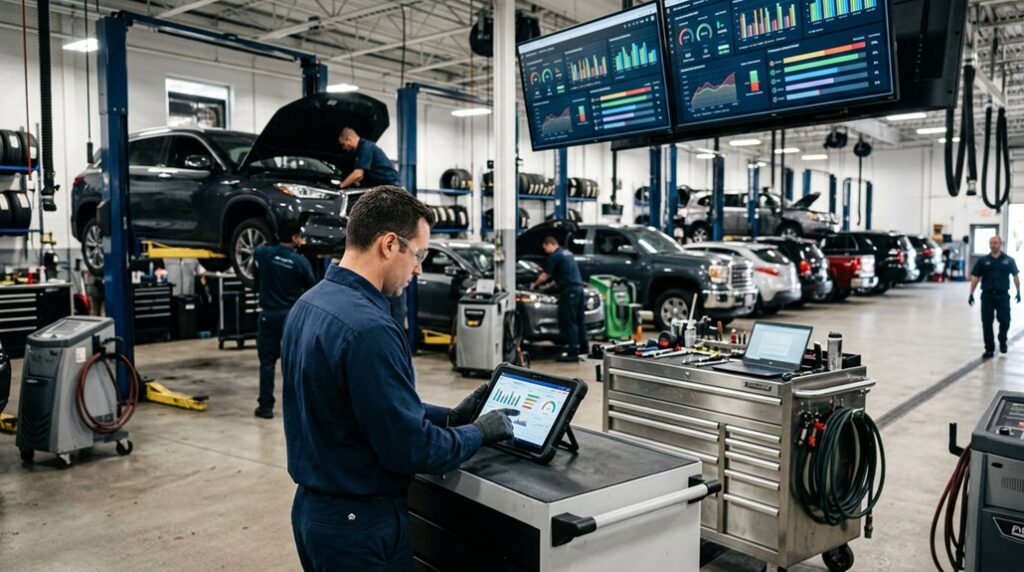
The same principle applies in service. A Fixed Ops Leaderboard can help keep advisor and technician performance visible where managers and employees can use it during the workday.
Customer-Facing Communication Requires a Different Strategy
Handy Toyota’s deployment also illustrates another principle dealership leaders should pay attention to: employee-facing and customer-facing digital signage should not be treated as the same thing.
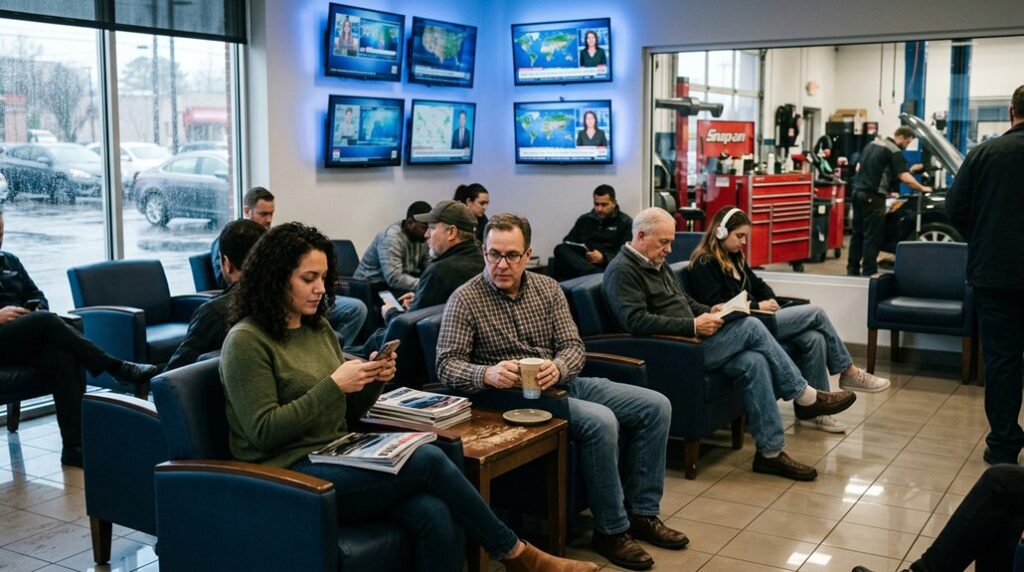
The dealership uses service menus and customer-facing content in areas designed for customers, while performance information is positioned in staff areas where employees can actually use it. Digital Dealership System’s broader dealership digital signage solutions are built around that same idea of matching the content to the audience and location.
That separation sounds simple, but it is fundamental to good dealership communication. A Sales Leaderboard belongs where it can influence the sales team, while a service menu or Customer Lounge TV belongs where it can help inform and engage customers.
The larger goal is relevance. Every screen should earn its place by helping the audience in front of it understand something, decide something, or take the next step.
The Real Opportunity Is Building a Communication System
Handy Toyota has been a Digital Dealership System customer since 2018 and currently uses Service Menus, Customer Lounge TV, Sales Leaderboards, and a Manual Fixed Ops Leaderboard.
What makes that combination interesting is not the number of products. It is the way different communication needs are handled across the dealership, with staff-facing performance visibility, management reporting, and customer-facing content each serving a different operational purpose.
Dealership leaders evaluating digital signage should therefore start with the workflow rather than the hardware. They should identify who needs the information, where that person is when they need it, how frequently the information changes, who is responsible for maintaining it, and what should happen after someone sees it.
Those questions turn dealership technology from a hardware purchase into an operating decision.
Visibility Should Make the Dealership Easier to Run
There are no revenue-growth percentages or invented ROI claims in the Handy Toyota case study, and there do not need to be. The documented outcome is straightforward: employees have ongoing visibility into unit and gross performance, managers use the reporting in meetings, and Digital Dealership System helps the team stay informed and focused.
That is the larger lesson for the industry. Technology creates the most value when it removes friction from the workday, makes important information harder to ignore, and gives people a clearer understanding of what is happening around them.
For dealerships still relying on disconnected reports, whiteboards, manually updated screens, or information that lives primarily inside a manager’s computer, the opportunity is bigger than upgrading the display. It is creating an environment where performance information is visible where decisions are actually being made.
Digital Dealership System helps dealerships bring performance data and dealership communication into the places where employees and customers can use it. From Sales Leaderboards and Fixed Ops Leaderboards to customer-facing digital signage solutions, the goal is not simply to add more screens. It is to make the screens inside the dealership work harder for the business.
Want to see the Case Study Click Here: Handy Toyota_Case_Study
If your dealership is ready to improve performance visibility across sales, fixed operations, or customer-facing areas, schedule a demo with Digital Dealership System.