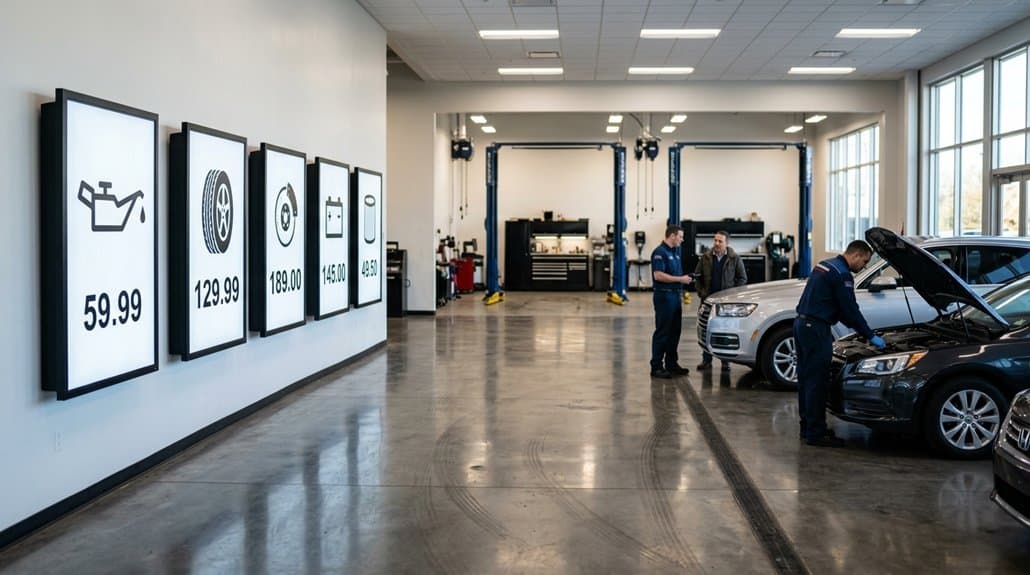
You’ll cut costs and boost service efficiency by replacing manual boards with digital signs that sync to your DMS for real-time repair updates, automated customer notifications, and targeted promotions. Expect fast ROI—often months—with predictable pricing and lower print and labor expenses. Digital displays reduce front-desk interruptions, raise satisfaction and upsell rates, and deliver measurable KPIs like wait times and conversion. Keep going to see rollout steps, integration tips, and performance metrics you can act on.
Key Takeaways
- Digital signs cut recurring print and labor costs, often delivering ROI within months and predictable costs from as low as $8/screen/month.
- Real-time DMS integration displays live repair status and technician notes, increasing transparency and reducing front-desk interruptions.
- Automated notifications and visual progress bars improve customer satisfaction and retention by reducing anxiety and perceived wait times.
- Lobby screens combined with targeted promotions and interactive kiosks convert idle time into measurable upsell and loyalty opportunities.
- KPI dashboards pull DMS data to show queue lengths, wait times, and upsell rates, enabling data-driven operational improvements.
Why Digital Signs Beat Manual Boards : The Quick ROI
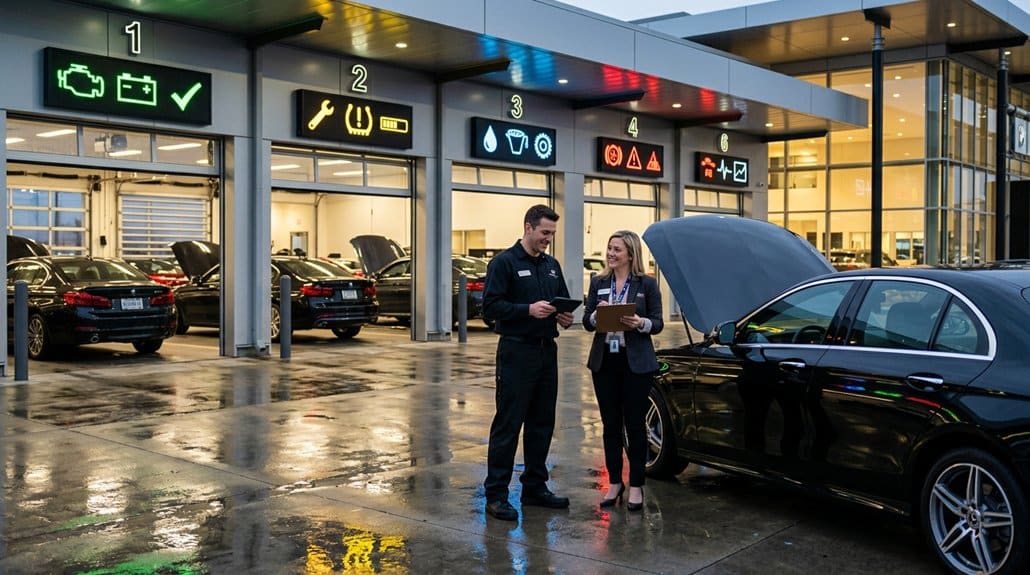
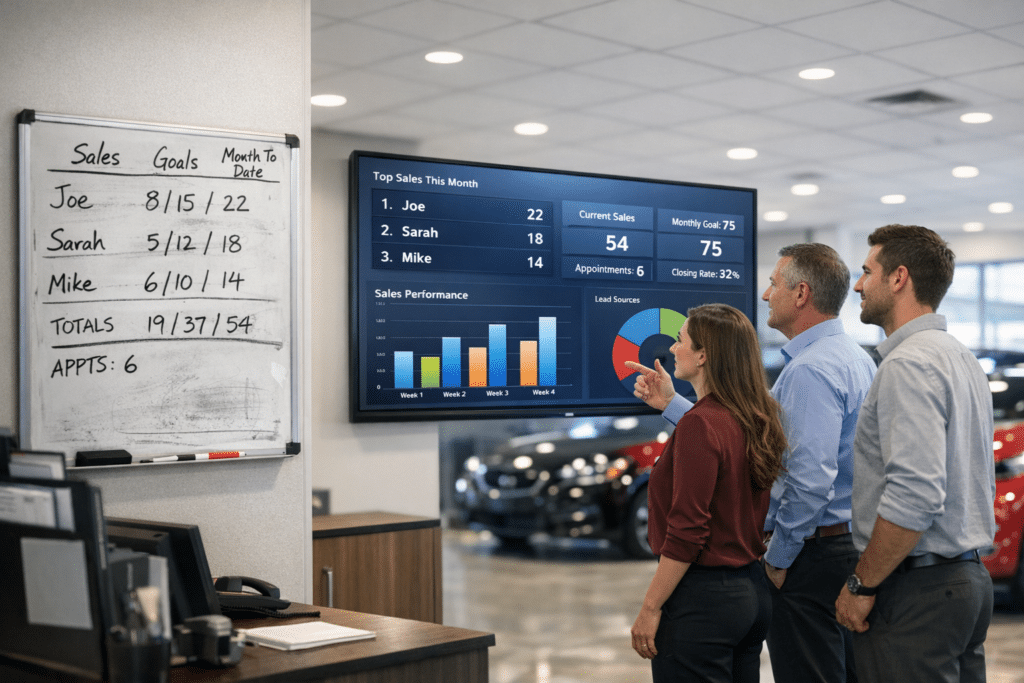
Because every minute in service counts, switching from manual boards to digital signs delivers measurable ROI fast: you cut recurring print and labor costs, often recouping investment within months while boosting operational efficiency. Digital displays create a single auditable source of truth, reducing human error and supporting brand consistency across touchpoints. By presenting real-time KPIs and automated status updates, you reinforce staff accountability and surface performance improvements that are easy to track. The engaging visuals increase customer engagement and lower perceived wait times, which opens service upsell opportunities and elevates satisfaction metrics. Altogether, the reduced costs, improved accuracy, actionable data, and strong visual impact make digital signage a strategic, measurable upgrade over manual boards.
How Real-Time Service Updates Cut Anxiety and Front-Desk Calls
You’ll cut customer anxiety by showing real-time repair status and live estimated completion times on digital signs, which builds trust through transparency. That instant visibility reduces front-desk interruptions, letting staff focus on high-value interactions rather than routine status calls. Data shows dealerships using automated on-screen updates see fewer inquiries and higher service satisfaction, improving both efficiency and brand perception.
Real-Time Repair Status
When customers can see real-time repair status on digital displays, anxiety drops and trust rises—studies show 68% of people feel more satisfied when they can track their vehicle’s progress, and displaying estimated completion times cuts perceived wait and uncertainty. You’ll boost customer engagement and service transparency by feeding live updates from your DMS to service-drive screens, giving visible progress checkpoints that reinforce your brand’s reliability. That visibility cuts front-desk calls by as much as 30%, freeing staff to deliver higher-value, face-to-face service. Data-driven displays also improve retention: satisfied customers return and recommend your dealership. Implement with clear UX, standardized status labels, and DMS integration to guarantee accuracy. The result is measurable efficiency gains and a stronger, trust-based brand perception.
Live Estimated Completion
If you give customers a live estimated completion time on service-area displays, they’ll feel more informed and less anxious while your staff handles the work. You’ll reduce perceived wait times, boost trust through transparency, and lift customer engagement by showing real-time progress tied to your service process. Technology integration automates status updates, cutting manual errors and supporting consistent brand experiences that drive repeat business. Metrics show improved operational efficiency and higher satisfaction when live estimates are visible.
| Benefit | Impact |
|---|---|
| Real-time updates | Fewer surprises, clearer expectations |
| Automated displays | Fewer errors, consistent messaging |
| Higher engagement | Increased loyalty, better ROI |
Implementing live estimated completion is a strategic, measurable step toward a modern, efficient service drive.
Reduced Front-Desk Interruptions
Because real-time service updates shown on digital signs give customers instant visibility into repair progress and estimated completion times, they dramatically cut the number of front-desk interruptions and calls, letting staff focus on sales and service tasks that drive revenue. You’ll reduce anxiety and build trust by automating transparent status updates that keep customers informed and engaged, improving customer engagement and measurable satisfaction scores. This also boosts staff efficiency: fewer interruptions mean advisors can prioritize high-value interactions.
- Lower call volume — frees advisors for upsell and problem-solving.
- Reduced walk-ins — maintains workflow and reduces errors.
- Measurable satisfaction gains — higher NPS and quicker throughput.
Deploying signage is a data-driven move that strengthens brand perception and operational KPIs.
Designing Digital Signage for Wait Rooms to Lower Perceived Wait Time
One effective way to shrink perceived wait times is to design wait-room digital signage that combines real-time service progress, targeted promotions, and interactive options so customers feel informed and productive rather than idle. You’ll drive customer engagement by integrating live service updates and automated completion estimates, which reduce anxiety and front-desk interruptions. Use visual storytelling—concise videos and testimonial snippets—to build credibility and make waiting feel valuable. Link interactive kiosks to displays so guests can explore packages and pricing at their own pace, increasing satisfaction without pressure. Track engagement metrics and A/B test content cadence to quantify impact on perceived wait time and throughput. This strategic, brand-focused approach turns idle minutes into measurable loyalty and revenue opportunities.
Using Digital Signage to Increase Service Upsells and Package Adoption
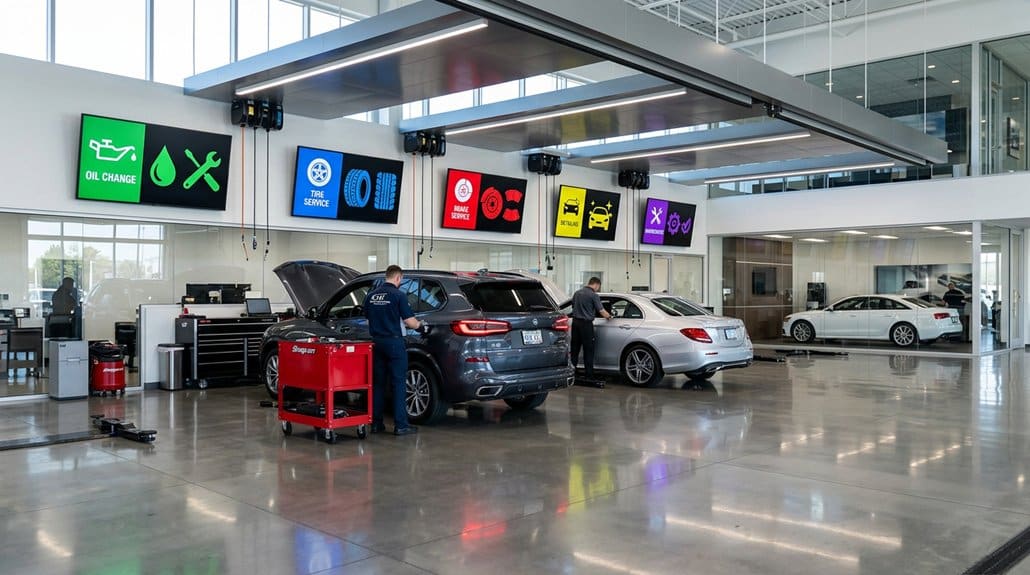
Think of digital signage as your frontline upsell engine: by showing dynamic visuals, short benefit-focused videos, and real-time package options tied to a customer’s service history, you’ll boost awareness and make add-ons an easy choice. You’ll leverage data-driven messaging to drive upsell strategies and measurable customer engagement, with studies showing up to 68% lift in conversions and 30% higher upsell rates when placed strategically. Use concise creative that educates and reduces anxiety, building trust that leads to package adoption.
- Highlight: real-time offers and benefits.
- Educate: short videos on maintenance value.
- Nudge: clear CTAs aligned with customer history.
This approach reinforces brand credibility while converting idle attention into revenue.
How to Connect Digital Signs to Your DMS and Shop Workflows
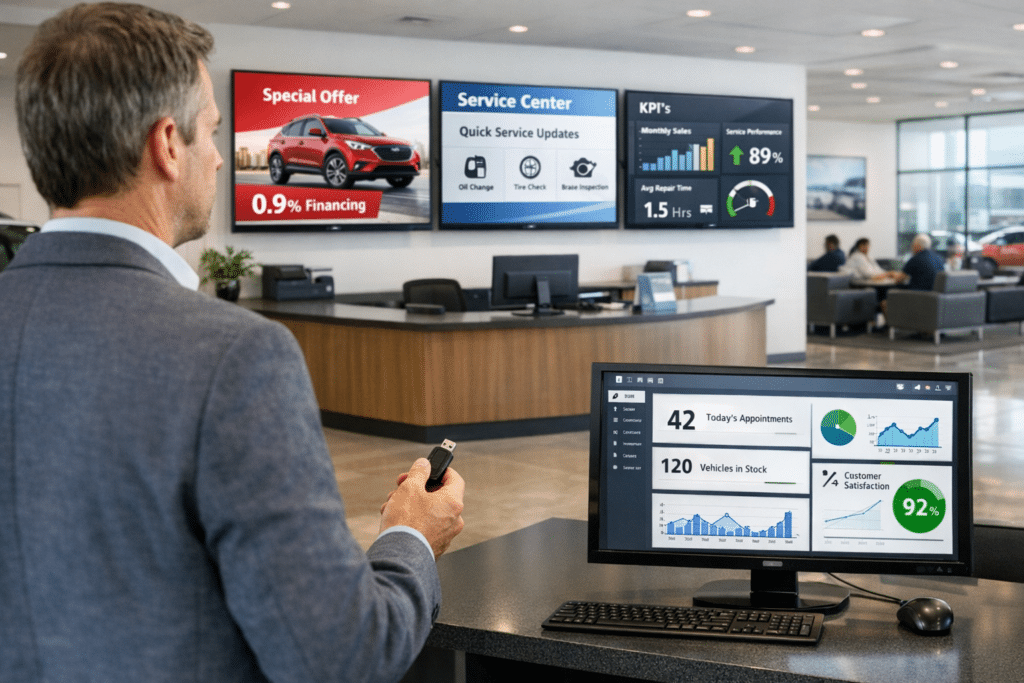
To connect digital signs to your DMS, you’ll want clear integration basics that map data fields like RO status, technician assignments, and KPIs to on-screen templates. With real-time workflow sync, you can push live repair order feeds and automated service notifications that keep customers informed and reduce staff interruptions. This data-driven setup guarantees consistent, brand-aligned messaging and measurable improvements in service transparency and operational efficiency.
DMS Integration Basics
Because your DMS holds the live repair orders, integrating it with digital signs turns static waiting areas into real-time communication channels that boost transparency, reduce manual updates, and free staff to focus on customer care. You’ll leverage DMS benefits to feed accurate repair statuses, targeted promotions, and service recommendations directly to screens. Map data fields, set update frequency, and choose signage types that match zones (waiting area, service desk, bay). Integration improves technician coordination and customer trust while creating upsell opportunities tied to real-time context.
- Connect: secure API or middleware to pull RO feeds and scheduling.
- Configure: templates for status, ETA, and promotional content.
- Monitor: analytics to refine messaging and measure revenue lift.
This approach guarantees operational clarity and measurable ROI.
Real-Time Workflow Sync
When you tie your DMS and shop workflows directly into digital signs, you’ll get real-time repair order and technician updates on display that cut manual steps, lower errors, and keep customers informed with accurate ETAs and status messages. You’ll synchronize live repair order feeds so estimated completion times and status changes update automatically, reducing anxiety and improving customer engagement. This automated workflow optimization removes manual sign edits, minimizes human error, and frees staff to focus on high-value interactions. You can also surface targeted upsell offers based on actual service context, increasing revenue with relevant, timely prompts. Measure impact with metrics like reduced update latency, fewer call inquiries, and higher satisfaction scores to justify ROI and align signage with your brand strategy.
Automating Service Notifications
You’ve seen how live workflow sync keeps repair statuses current on your lobby screens; now let’s connect those feeds directly to your Dealer Management System and shop tools so notifications flow automatically from check-in to checkout. By integrating digital signs with your DMS, you’ll push real-time updates and automated notifications that cut manual steps, boost customer engagement, and make digital content part of your service promise. Visual progress bars and technician notes increase transparency and reduce calls.
- Link DMS events to signage triggers for instant status shifts.
- Automate completion and ETA notices to lower anxiety and drive throughput.
- Use analytics from signage impressions to refine messaging and capacity planning.
This approach aligns brand consistency with measurable efficiency gains and happier customers.
Track KPIs: Wait Times, Upsell Rates, and Staff Leaderboards
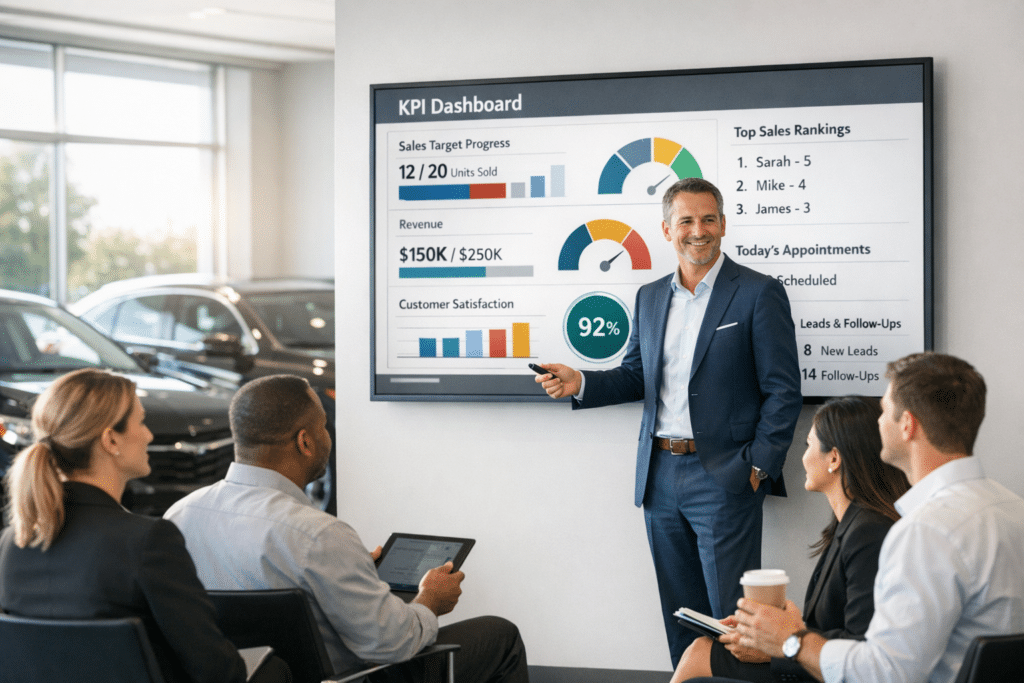
If you want real-time accountability and measurable gains, digital signs let you track KPIs like wait times, upsell rates, and staff leaderboards at a glance, creating a unified, data-driven view of service performance. You’ll deploy KPI dashboards that pull live data from your DMS so performance metrics — current queue lengths, average wait, and conversion on recommended services — are visible to customers and staff. Showing wait times reduces perceived frustration; promoting targeted upsells visually can lift add-on sales by ~20%. Public leaderboards display staff performance metrics, sparking friendly competition and faster adjustments. With instant feedback, teams correct bottlenecks and align on goals, improving throughput, satisfaction, and your dealership’s bottom-line consistency.
Cost, Reliability & Rollout Checklist for Service-Drive Digital Signage
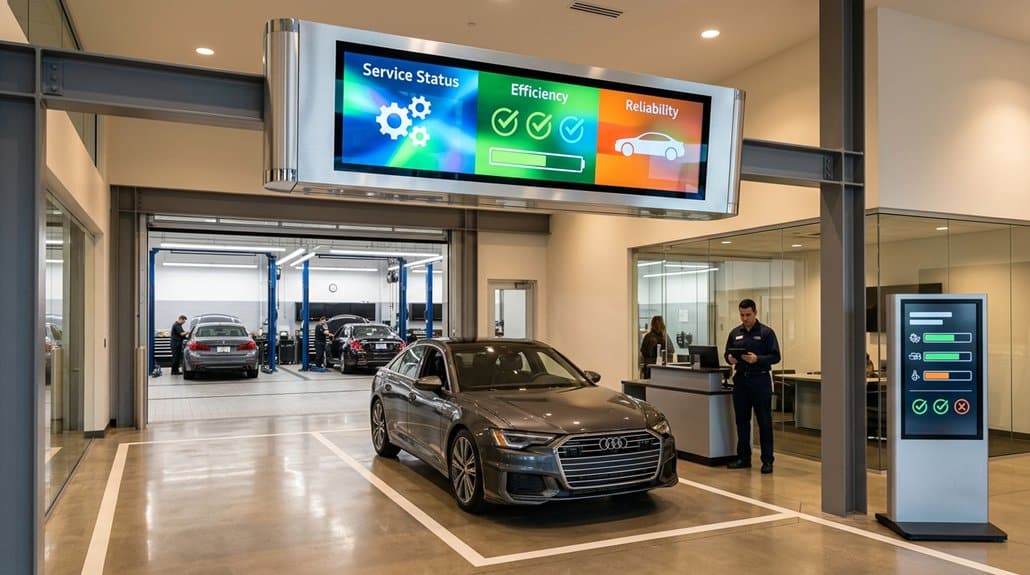
Because upfront cost and operational reliability drive adoption, you’ll want a clear, data-backed checklist before deploying service-drive digital signage: Start with cost benefits—solutions can run as low as $8/screen/month with no hidden fees, offering predictable ROI versus static signage. Prioritize reliability by integrating displays with your DMS for real-time repair-order and service-status updates, reducing uncertainty and perceived wait times. Address implementation challenges with a tight rollout plan:
Because cost and reliability matter, use a data-backed checklist: low monthly pricing, DMS integration, and a tight rollout plan.
- Hardware, connectivity, and thermal/cleaning maintenance protocols.
- DMS integration, content templates, and staff training for updates.
- KPI mapping (wait time, upsell rates) and phased deployment to validate performance.
Be strategic: measure impacts, iterate on content, and guarantee brand consistency to maximize operational efficiency and customer satisfaction.
Frequently Asked Questions
What Is the $3000 Rule for Cars?
The $3000 rule for cars says you shouldn’t spend over $3,000 annually on car maintenance before considering replacement; it’s a strategic, data-driven guideline that helps optimize maintenance budgets and improve customer retention for dealerships.
How Much Does a Digital Signage System Cost?
About $8 per screen monthly to $1,000–$10,000 upfront; you’ll see digital signage benefits quickly. Strategic, brand-focused installation costs vary by scale and hardware, but data shows many dealerships recoup investment within months.
How Much Does a Car Salesman Make off a $20,000 Car?
You’d typically earn about $1,200–$1,500 on a $20,000 car, assuming a 20–25% commission structure; with sales incentives, financing or add-ons you’ll often boost that, so target data-driven upsells to optimize revenue.
What Is the 30-60-90 Rule for Cars?
The 30-60-90 rule schedules car maintenance at 30k, 60k, and 90k miles to prevent failures. You’ll use data-driven inspections and services to boost reliability, support customer engagement, and reinforce your brand’s strategic value.
Conclusion
You’ve seen how digital signs deliver faster ROI, cut anxiety with real-time updates, and boost upsells through targeted messaging—so why stick with static boards that cost time and money? By linking signage to your DMS and shop workflows, you’ll measure wait times, adoption rates, and staff performance to drive smarter decisions. Roll out with a reliability and cost checklist, and you’ll turn the service drive into a measurable revenue and satisfaction engine.