
Long waits in the Finance and Insurance (F&I) office drain energy and patience. Buyers sit and wonder what is next, which makes the visit feel longer.
Many shoppers feel stuck at the store, waiting for forms or the F&I manager. Slow steps hurt customer satisfaction and can lead to tough reviews.
Reducing Customer Wait Time for F&I: Keeping Buyers Engaged is within reach. Studies show longer wait times lower customer engagement and can cost sales and loyalty.
This guide shares simple ways to speed the line, use digital retailing tools, and improve productivity. It also shows how short educational resources can turn downtime into learning.
Follow these steps to help both the business and the buyer.
Key Takeaways
- In 2023, only 37% of dealership customers waited more than 30 minutes for F&I, showing higher expectations for faster visits.
- Digital tools like e-signatures and AI suggestions shorten paperwork and help buyers choose F&I products faster, raising satisfaction.
- Training on digital systems and clear communication helps manage wait time and keeps buyers engaged through every step.
- Simple, honest updates about expected waits lower stress, while educational resources help buyers learn about finance choices during downtime.
- Shorter F&I waits increase engagement, build trust, improve satisfaction scores, and lift profitability.
How do F&I wait times affect customer satisfaction?
Long F&I waits make buyers frustrated and uneasy. Research shows that 41% of shoppers spend 15 to 30 minutes in this step, which shapes how they rate the visit.
Only 37% waited more than half an hour in 2023, which means people expect faster service now. Delays slow the store, lower the mood, and raise the chance of a poor review.
Active vehicle delivery during the wait helps. A quick feature tour keeps buyers focused on their new car, not the clock. Clear updates about the next step also set fair expectations.
Digital options like e-signature speed up forms and reduce back-and-forth, which improves scores right away.
Customer satisfaction keeps slipping even as F&I sales rise each year—speed matters for happy buyers.
Strategies to reduce F&I wait times
Reducing Customer Wait Time for F&I: Keeping Buyers Engaged matters more every day. Shoppers want a quick, smooth path from test drive to keys in hand.
What practical steps can shorten F&I wait times?
Speed in F&I builds trust and lifts sales. These steps make the process clear and quick.
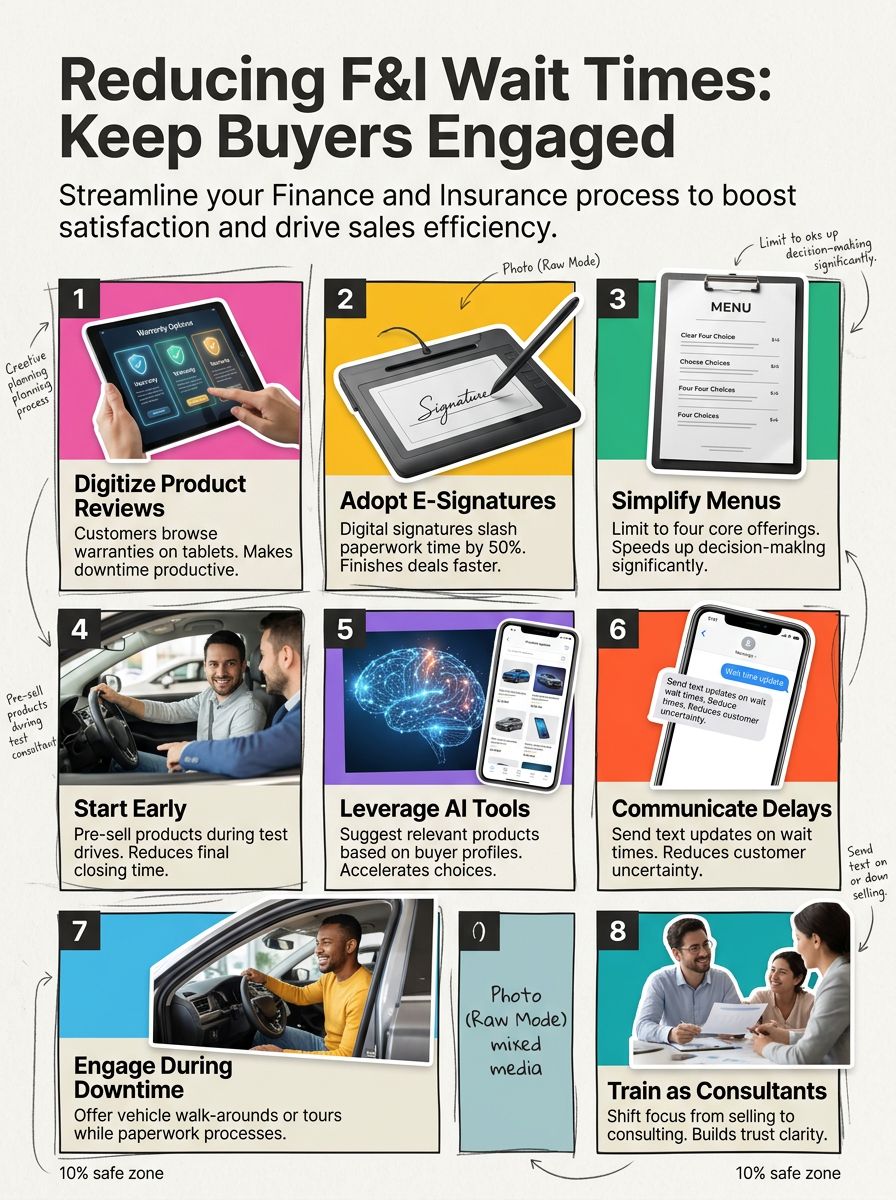
- Offer a digital F&I product review while buyers wait. Let them browse warranties and protection plans on a secure device.
- Adopt e-signature for all contracts. Digital signing cuts paperwork time in half and reduces errors.
- Keep the product menu focused, one to four core options. Fewer choices mean faster, more confident decisions.
- Introduce key F&I products during the test drive. A brief preview gives buyers time to think before closing.
- Use AI to suggest relevant products based on the buyer’s profile. Smart prompts guide faster choices without pressure.
- Send short updates on expected wait times by text or with quick check-ins. Certainty lowers stress.
- Offer a vehicle walk-around or a brief dealership tour during downtime. Keep the visit active and useful.
- Coach F&I staff to act as consultants, not just salespeople. Clear, friendly guidance speeds decisions.
Good process and good communication work best together. Next, see how the right tools can move everything faster.
How can technology improve the F&I process speed?
Technology turns slow steps into smooth ones. It trims errors, shortens forms, and keeps buyers informed.
- Digitize forms and product menus so buyers review on a screen. Fewer papers mean fewer stalls.
- Use e-signature to finish documents in minutes. Buyers can sign on a phone, tablet, or desktop.
- Adopt contracting software that catches mistakes early. Fewer re-writes keep deals moving.
- Automate scheduling and wait lists. Let customers see their place in line in real time.
- Apply AI-driven personalization to match products to needs. Right-fit options appear first, which speeds decisions.
- Simplify the digital menu for clear side-by-side choices. Clean layouts reduce confusion.
- Train sales staff to preview F&I topics before the sit-down. Early context shortens the final meeting.
Use tech to guide each step, then back it up with simple language and friendly support.
What role does staff training play in reducing wait times?
Training turns tools into results. When teams know the systems and the plan, everything moves faster.
Teach sales staff to introduce F&I options early, in plain words. This reduces last-minute surprises and shortens closing time.
Build skills for using digital platforms, managing the wait list, and giving clear updates. Short refreshers help teams stay sharp as products and rules change.
Coach F&I managers to use AI recommendations and a trimmed menu. Acting as a trusted guide builds confidence and keeps the flow steady.
Why is it important to keep buyers engaged during the F&I process?
Engagement makes the wait feel shorter and the visit feel fair. Simple updates and quick learning tools keep interest high.
Use digital forms and short educational videos to explain common choices like terms, rates, and protection plans. Informed buyers decide faster and feel better about the deal.
Share honest time estimates and check in often. When people know what is next, frustration drops and trust grows.
Stronger engagement speeds decisions and opens the door to quick answers. That boosts satisfaction and supports long-term loyalty.
Conclusion
Dealerships can raise customer satisfaction and sales efficiency by cutting F&I wait times. Fast steps, clear communication strategies, and helpful digital retailing tools keep buyers engaged and calm.
Short educational resources make the pause productive. Timely updates reduce anxiety and build trust. With steady focus on wait time reduction and customer engagement, stores see better reviews, higher profitability, and happier handoffs.
Start these changes today. Small wins add up quickly and buyers will notice the difference.
FAQs
1. Why is reducing customer wait time important in F&I?
Reducing customer wait time in Finance and Insurance keeps buyers engaged, improves satisfaction, and helps prevent lost sales. Quick service shows respect for your clients’ time and builds trust.
2. What strategies help keep buyers engaged during the F&I process?
Clear communication about each step, digital paperwork solutions, real-time updates on progress, and comfortable waiting areas all help maintain buyer interest throughout the finance process.
3. How does technology support faster F&I transactions?
Digital contracting tools speed up document review and signing; automated systems streamline data entry; online pre-qualification lets customers complete steps before arriving at the dealership.
4. What benefits do dealerships gain by shortening F&I wait times?
Shorter waits lead to higher closing rates, better reviews from satisfied customers, more referrals, and a stronger reputation for professionalism within your market—every minute saved adds value to both business operations and client experience.