
Every dealership wants to keep skilled auto technicians on the team. Technician turnover slows repairs, hurts customer trust, and cuts profit. Many service managers face this problem every day.
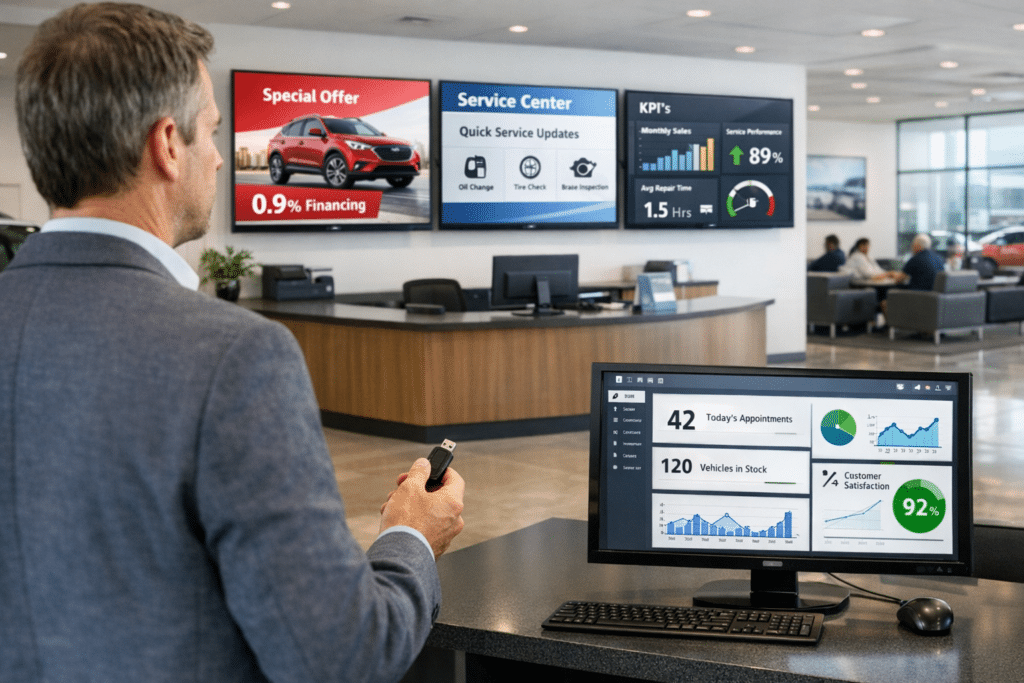
Clear communication helps. Real-time KPI dashboards, short for key performance indicators, and shop digital signage, screens that show live updates, support employee retention. These tools share goals, highlight progress, and celebrate wins in a fair way.
This article shares simple steps any store can use to build a better work environment. Short actions like steady training and open feedback make a real difference. Keep reading to learn how to lower turnover and build a stronger crew.
Key Takeaways
- High technician turnover raises costs through extra training and slower service, which lowers customer satisfaction.
- Real-time KPI dashboards and digital signage improve communication, track performance, and increase motivation, which supports higher retention.
- Ongoing training and clear career paths help technicians grow skills and loyalty to the dealership.
- Leadership recognition, visible leaderboards, and open feedback boost engagement and reduce turnover in 2024.
- Dealerships that use digital tools for workforce development see better job satisfaction, stronger morale, and higher-quality service.
Why Does Technician Turnover Hurt Your Dealership?
Losing a veteran tech is like losing your shop’s memory. Each time an experienced automotive technician leaves, the store spends more on hiring and training a replacement. New people need time to learn the process, the equipment, and the team’s standards.
That delay slows service and lowers shop efficiency. It can also increase comebacks, which are repeat repairs on the same issue. Costs rise while service bays sit idle and customers wait longer.
Customer satisfaction drops when new staff cannot match prior speed or recall a repeat customer’s vehicle history. Knowledge walks out the door, so the handoff between teammates weakens. Stores that keep trained technicians see better shop results, higher ratings, and stronger loyalty from car owners.
What Are the Best Ways to Keep Automotive Technicians?
Once the risks are clear, focus on practical steps that keep good people. The goal is a fair workplace where techs can learn, earn, and grow.
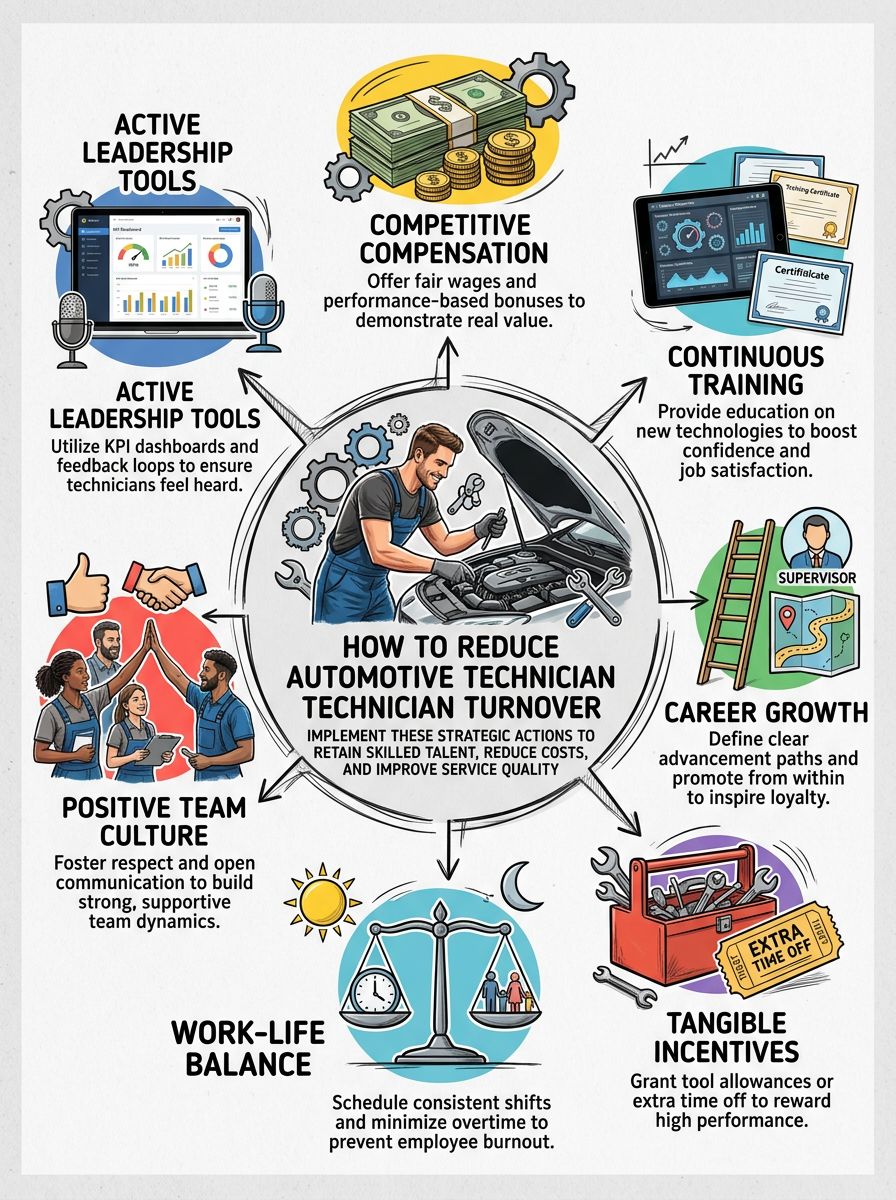
- Pay competitively with clear bonus plans. Show that great work, including quality and safety, leads to real rewards.
- Provide ongoing training. Use OEM classes and short clinics on EV systems and ADAS, advanced driver assist features. Training builds confidence and job satisfaction.
- Map career paths. Show how a tech can move to senior tech, team lead, or shop foreman. Promote from within to strengthen stability.
- Offer smart incentives. Try a tool stipend, paid ASE test fees, or an extra day off for top performance. Small perks go a long way.
- Protect work-life balance. Set steady shifts, limit overtime, and plan schedules early. Rested teams make fewer mistakes.
- Build strong teamwork. Hold quick daily huddles, share clear goals, and keep respect front and center. Good culture starts in the service bay.
- Open feedback channels. Use short surveys, a simple suggestion box, and monthly one-on-ones. Make sure every voice is heard in the shop.
Each step raises trust and stability, so technicians feel valued and stay longer. For example, paying ASE fees can keep a rising tech from looking elsewhere.
How Can Leadership Help Lower Technician Turnover?
Pay and benefits matter, but leadership behavior sets the tone. Managers who make goals clear and give fast feedback keep people engaged.
Real-time KPI dashboards help leaders spot issues early. Track hours flagged, cycle time per repair, comeback rate, and parts wait time. A comeback is a return visit for the same problem, and lowering it improves both quality and profit.
Use digital signage to recognize wins in public. Leaderboards can highlight quality, speed, training badges, and safety, not just flat-rate hours. That balance encourages healthy competition and skill growth.
Custom shop screens can show today’s goals, open ROs, parts ETAs, and customer promise times. Focus on sales targets, service quality, and customer satisfaction to build a place where techs want to stay. Recognition systems reward hard work right away, and leadership coaching keeps teams improving together.
Dealerships that want higher retention in 2024 can start small. One display in the main service bay can lift clarity and morale within a week.
Conclusion
Investing in technician retention improves performance, job satisfaction, and the service department’s culture. Modern tools like digital KPI dashboards and leaderboards make daily goals clear and fair for every team member.
These tools boost motivation through healthy competition, quick feedback, and public praise. Better communication helps technicians see their impact on the business and feel respected for their craft.
Stores that use digital signage often see stronger training results, clearer career growth, and better team morale. Ready to reduce technician turnover and strengthen workforce development? Start with a simple screen, a short KPI list, and a plan for recognition this month.
FAQs
1. What are the main reasons automotive technician turnover is high in dealerships?
Technician turnover often results from low pay, lack of career growth, poor work-life balance, and limited recognition for skills. These factors can make skilled workers look elsewhere for better opportunities.
2. How can a dealership reduce technician turnover quickly?
Offer competitive wages and clear advancement paths. Provide ongoing training programs that keep technicians up to date with new technology. Recognize achievements regularly to boost morale and loyalty.
3. Why does investing in technician development matter for retention?
Continuous skill development shows your commitment to each team member’s future. When technicians see real investment in their careers, they feel valued and stay longer at your dealership.
4. What steps should managers take today to improve technician retention rates?
Start by reviewing compensation packages against industry standards; adjust as needed to remain attractive in the market. Create mentorship programs so experienced staff guide newer hires through daily challenges, building trust within your service department. Encourage open communication about job satisfaction during regular check-ins—this helps address concerns before they become reasons to leave.
Ready to build a stronger team? Call us now or visit our website for proven solutions tailored just for your dealership’s needs!