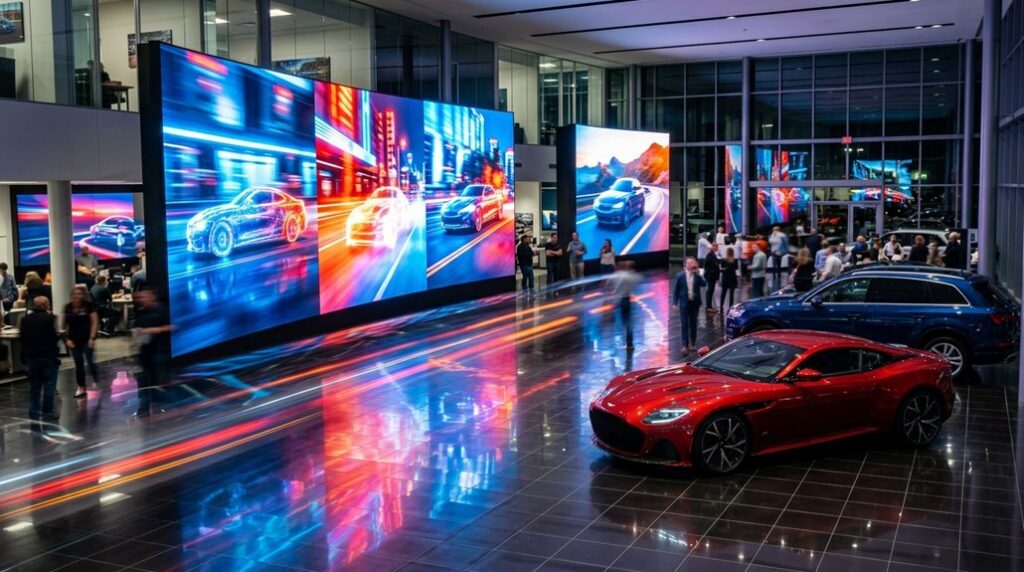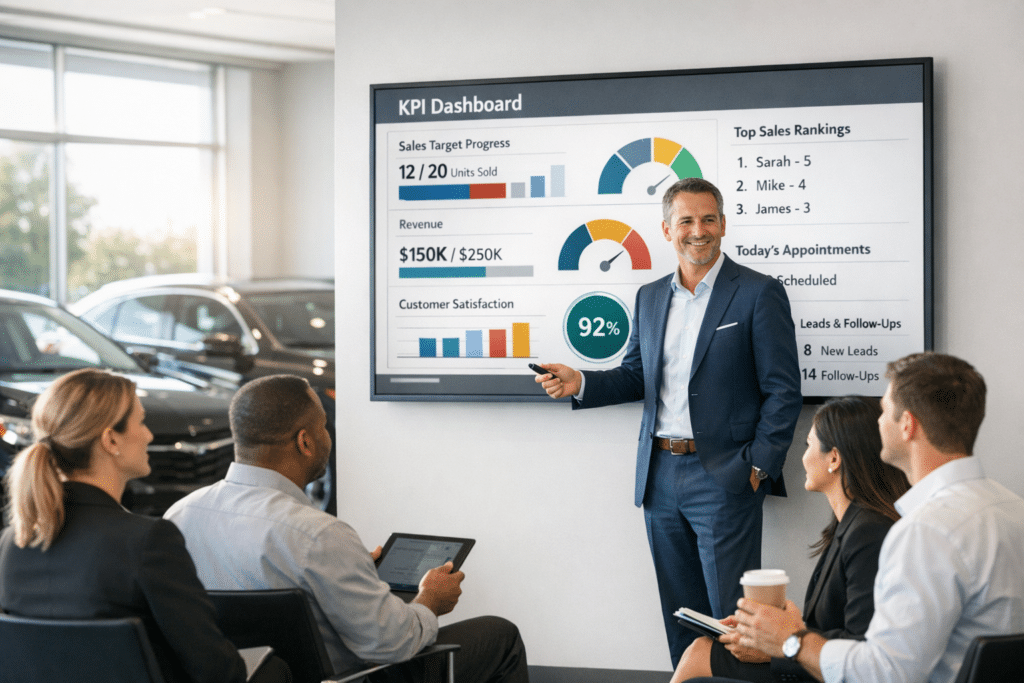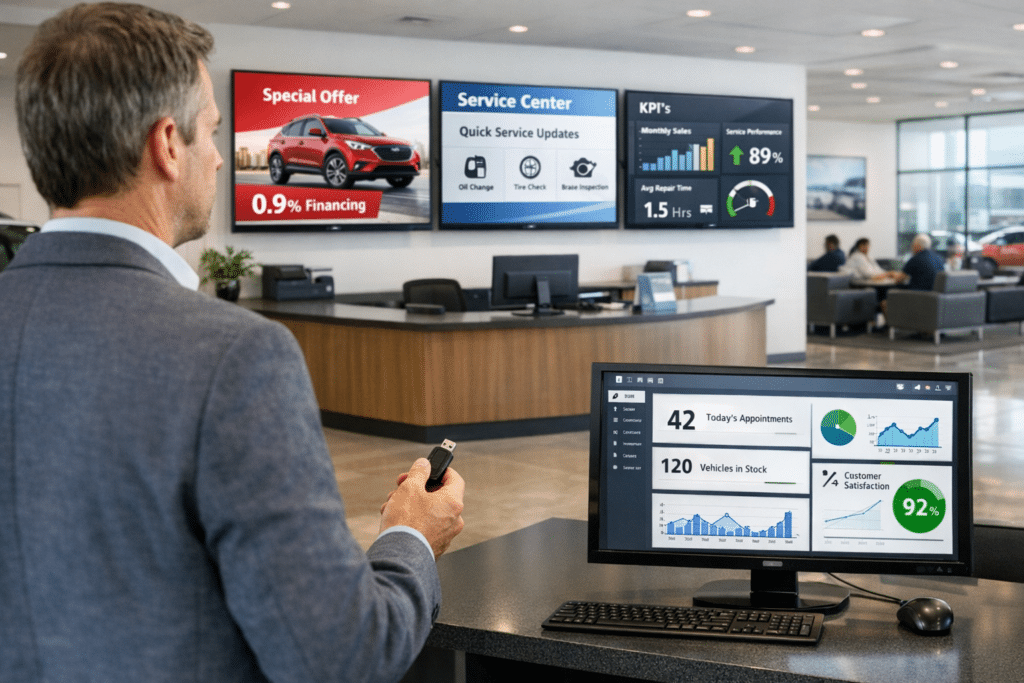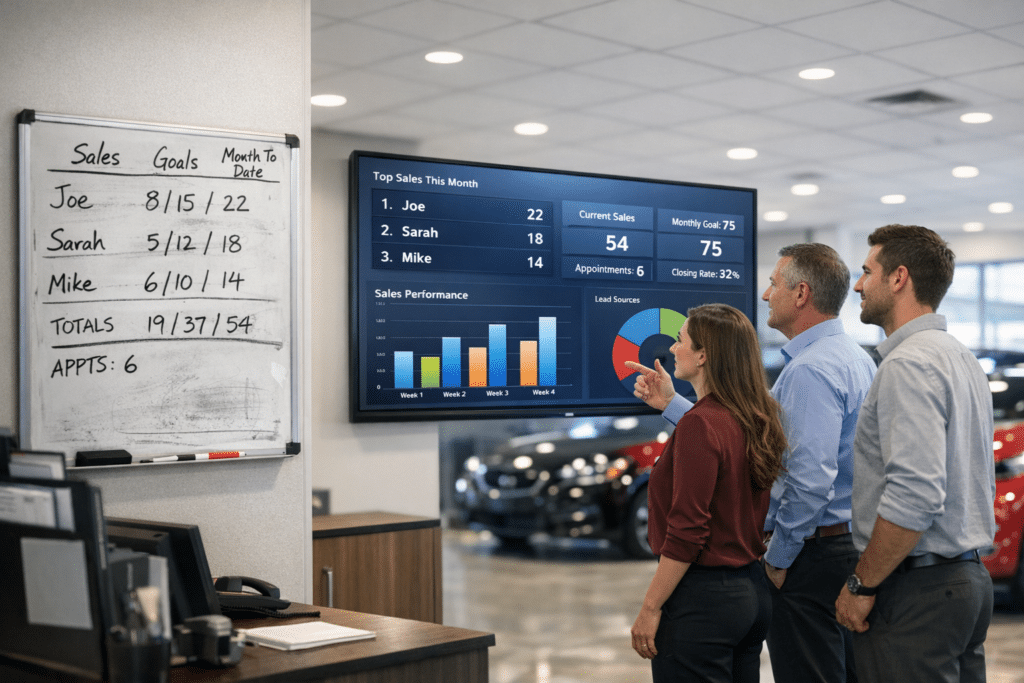
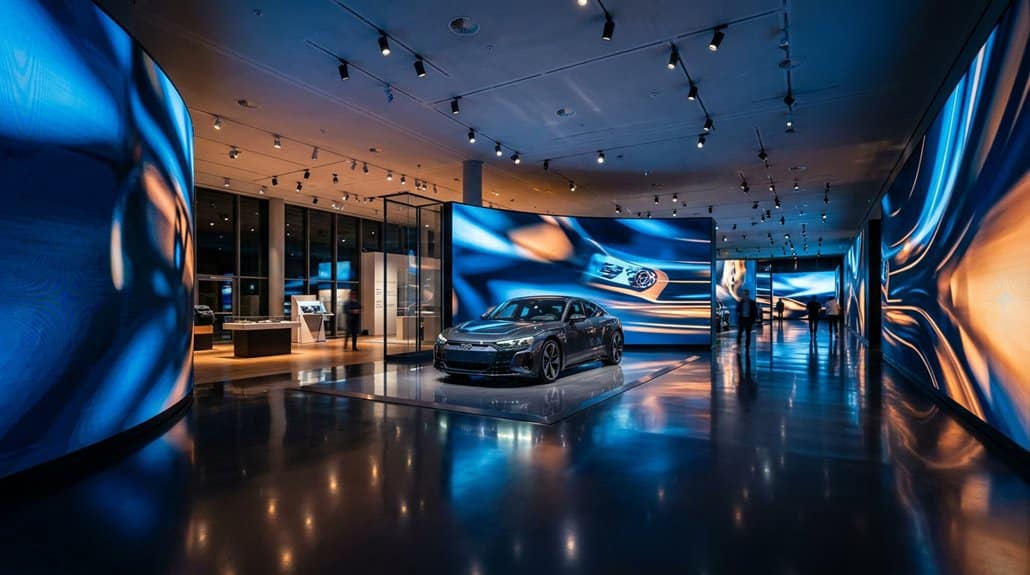
You can turn your showroom into a cohesive, revenue-driving brand experience by deploying dynamic screens that inform, personalize, and accelerate buying decisions. They deliver real-time inventory, financing clarity, and immersive brand films that reduce anxiety and boost engagement. Interactive kiosks let shoppers explore features and payment scenarios at their own pace, while analytics optimize content and prove ROI. With improved dwell time, faster conversions, and stronger loyalty, keep going to uncover practical rollout and measurement strategies.
Key Takeaways
- Dynamic showroom screens deliver personalized, real-time inventory and pricing updates that build trust and reduce purchase anxiety.
- Interactive kiosks and touch displays let customers explore features, customize vehicles, and self-serve at their own pace.
- High-quality brand films and visuals create emotional connection and reinforce professionalism without overt selling.
- Data-driven content and A/B testing optimize messaging, increasing engagement and conversion based on real-time analytics.
- Governance, DMS integration, and modular hardware ensure consistent, timely content across locations for a seamless brand experience.
Why Showroom Screens Pay Off Now
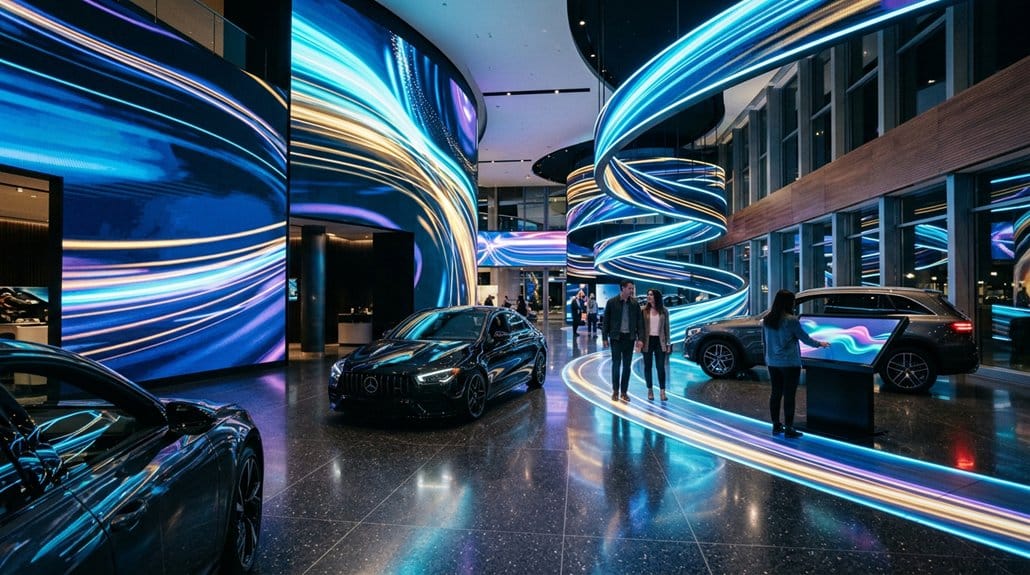
Because customers expect faster, more personalized service, showroom screens are a strategic way to meet those expectations while reinforcing your brand’s professionalism. You’ll capitalize on current technology trends by delivering real-time service updates that 70% of North American dealers prefer, which boosts perceived value and positions your dealership ahead of competitors. Interactive displays let you present vehicle features and financing options clearly, improving customer engagement and shortening decision cycles. That clarity drives sales and supports the 17% of dealers who report higher profits from immersive digital experiences. With 42% of buyers prioritizing experience over price, screens strengthen loyalty and repeat business while signaling a modern, trustworthy brand. Investing in displays is a measurable, brand-forward move that pays off now.
Showroom Screens: Impact on the Customer Journey
When customers step into your showroom, dynamic screens immediately shape their journey by delivering clear, relevant information that keeps them engaged and confident; they guide attention, reduce uncertainty, and set a brand tone. You’ll use digital displays to surface real-time inventory and instant availability, cutting decision anxiety and speeding productive conversations with sales staff. Interactive kiosks paired with screens let shoppers explore features and options at their own pace, reinforcing autonomy and informed choice. With roughly 70% of North American dealers upgrading signage, this isn’t experimental—it’s strategic. The result is measurable: higher customer engagement, stronger confidence, and a more immersive experience that aligns perception with promise. Showroom screens convert passive browsing into intentional brand interactions.
Content Types & Examples for Showroom Digital Signage
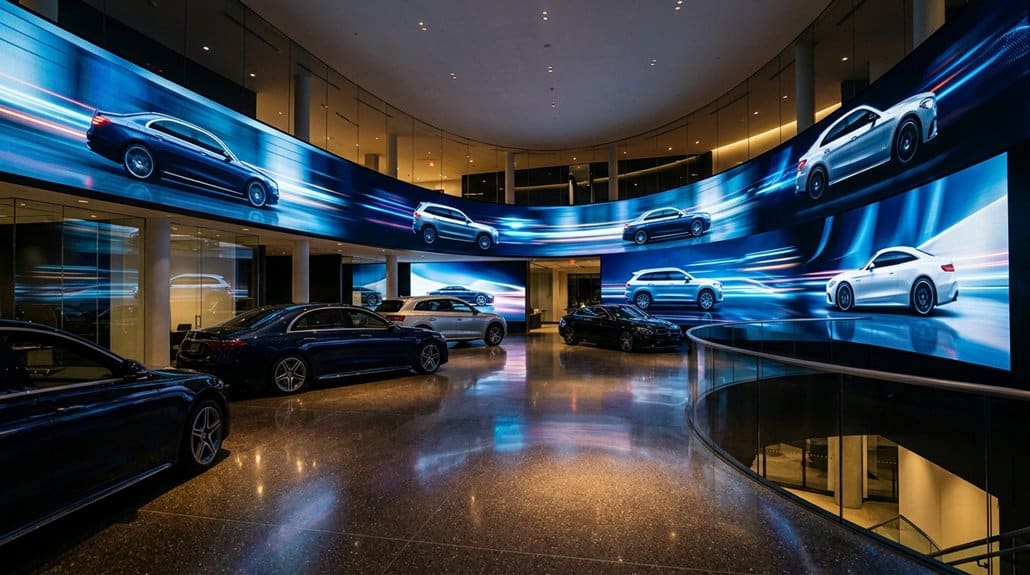
Having established how screens shape the customer journey, let’s get specific about what to show. You’ll want content strategies that drive customer engagement, reinforce brand, and move people toward action. Prioritize real-time, interactive, emotional, and promotional content so every display supports your sales and loyalty goals.
- Dynamic updates: real-time arrivals, inventory and time-limited promotions to create urgency and transparency.
- Interactive kiosks: spec explorers and configurators that let visitors personalize and compare models.
- Brand films: short, high-quality narratives that deepen affinity without selling overtly.
- Event and feedback loops: event promos plus quick survey prompts shown after experiences to capture insights and close the loop.
Storytelling on Screens: Showcasing Vehicles and Financing
You’ll use bold visuals to tell each vehicle’s story—highlighting performance, comfort, and customization in ways that make features feel personal. At the same time, clear, dynamic displays of financing and promotions will simplify choices and reinforce value, so buyers can compare options without confusion. Together, vehicle storytelling and transparent financing turn screens into persuasive brand experiences that move customers toward confident decisions.
Vehicle Storytelling Through Visuals
If you want customers to connect with a vehicle before they even touch the wheel, screens should tell a focused, emotionally resonant story that highlights features, lifestyle fit, and financing in one seamless experience. You’ll use visual engagement to spotlight key specs, animations to demonstrate capability, and testimonials to build emotional resonance that boosts trust. High-quality visuals increase attention and profitability, while interactive elements let customers explore trim, color, and payment scenarios without pressure. Design each sequence to reinforce your brand promise and move prospects toward a confident decision.
- Feature-focused clips pairing benefits with lifestyle scenes.
- Interactive demos that let buyers personalize visuals.
- Testimonial-driven segments that humanize the brand.
- Real-time updates that keep offers relevant and urgent.
Clear Financing Options Display
One clear financing display can turn sticker shock into confidence by showing customers exactly how a vehicle fits their budget—monthly payments, term options, and current rates—right next to the features that justify the price. You’ll use financing clarity to link product value with purchase options, boosting customer engagement and shortening decision cycles. Interactive screens let buyers test scenarios and see incentives in real time, creating personalized narratives that support your brand promise.
| Monthly Payment | Term Options | Current Rate |
|---|---|---|
| $349 | 36 months | 3.9% |
| $279 | 48 months | 4.5% |
| $219 | 60 months | 5.2% |
These displays drive urgency and start smarter conversations with sales staff.
Personalizing Showroom Screens for Buyer Segments and Moments
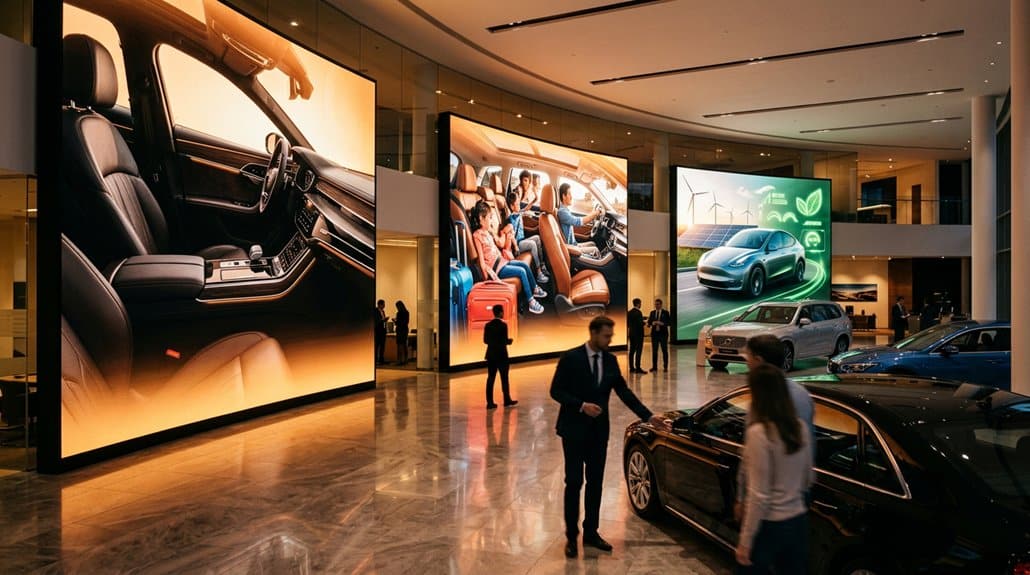
You can boost engagement by running segment-based content streams that surface promotions and vehicle features tailored to business travelers, families, or multilingual guests. Pair those streams with moment-driven screen triggers—like arrival, test-drive scheduling, or service check-in—to deliver the right message at the right time. This targeted approach strengthens your brand experience and moves the 42% of experience-focused buyers closer to a decision.
Segment-Based Content Streams
When dealerships tailor showroom screens to distinct buyer segments — business travelers, families, first-time buyers — they’ll boost relevance and conversion by showing the right vehicle features and timely offers at the right moment. You’ll use customer segmentation strategies and content personalization techniques to map displays to behaviors, boosting engagement and perceived brand value. Real-time analytics let you swap promos for a family-friendly SUV or a commuter sedan when foot traffic fits that profile, raising satisfaction and conversion rates.
- Showcase targeted features and financing for each segment.
- Use passenger flow data to prioritize segment-specific content.
- Localize offers and inventory to match immediate needs.
- Continuously A/B test streams to refine messaging and ROI.
Moment-Driven Screen Triggers
How do you turn passing foot traffic into timely, personalized showroom moments? You deploy moment-driven screen triggers that use data analytics to recognize buyer segments and peak times, facilitating screen personalization that boosts moment engagement by matching content to customer intent. Real-time updates push targeted promotions and financing options when they matter most, reducing perceived wait times and speeding decisions. Interactive displays let shoppers explore tailored vehicle configurations and payment plans during key touchpoints, increasing satisfaction and conversion potential. By dynamically adapting digital signage, you guarantee messages resonate with each demographic, reinforcing your brand and loyalty. This strategic approach turns screens into responsive sales tools that convert casual visitors into committed buyers.
Interactive Kiosks and Self-Service Customization
Because buyers expect control and convenience, interactive kiosks let you tailor the showroom experience—customizing trims, colors, and packages while seeing real‑time availability, pricing, and promotions. You’ll boost kiosk engagement by giving customers immediate customization options, streamlining decisions without overloading staff. Self‑service flows let shoppers build a vehicle, view compatible packages, and book test drives at their pace, reinforcing your brand promise of effortless, modern retail.
- Empowerment: Customers personalize vehicles and feel ownership early.
- Efficiency: Reduced staff dependency speeds the journey from interest to intent.
- Accuracy: Integrated signage guarantees current inventory, pricing, and offers.
- Experience: Personalized paths increase satisfaction for the 42% who prioritize CX.
This strategic approach supports a consistent, premium brand experience.
Showroom Screens ROI: KPIs and Analytics to Measure Impact
Results matter: to justify showroom screens you’ll track a tight set of KPIs—engagement lift, conversion uplift, inventory touch frequency, dwell time, and promotional response—that directly link digital content to sales, customer satisfaction, and operational efficiency. You’ll measure ROI Metrics against a baseline: a typical 30% engagement boost and up to 25% conversion lift translate to clear revenue gains, supporting average first-year ROI near 300%. Use analytics for Customer Insights—interaction paths, repeat views, and inventory queries—to reduce wait times and inquiries by about 40% while informing Engagement Strategies. Feed real-time data into Content Optimization loops: test creatives, personalize offers, and scale what converts. Present concise dashboards to stakeholders so screens are seen as measurable business drivers, not just décor.
Practical Rollout: Hardware, Integrations, and Content Governance
Having shown leadership the measurable impact screens can deliver, you’ll now focus on making them work day-to-day: choosing hardware that fits your showroom, wiring it into dealer systems for live inventory and pricing, and enforcing content governance so every message strengthens the brand. Pick modular hardware selection that supports high-quality displays and interactive kiosks for immersive self-service. Prioritize integration strategies that link to your dealer management system for real-time updates and accurate pricing. Build content management routines that enable quick seasonal swaps and promotional updates. Establish governance frameworks to keep messaging consistent across locations as 70% of dealers modernize signage.
- Standardize hardware and modular layouts.
- Map integration strategies to DMS/APIs.
- Define content management workflows.
- Publish governance frameworks and approval chains.
Frequently Asked Questions
How Much Does a Car Salesman Make off a $20,000 Car?
You’d typically earn about $400–$600 commission on a $20,000 car (10% margin), plus possible flat fees $150–$400; commission structure and sales incentives can boost your pay, especially with higher volume or used-car premiums.
How Can the Location and Design of a Display Attract Attention and Increase Sales?
Boldly beaming banners boost attention: you’ll use strategic Display Placement and strong Visual Appeal to steer traffic, spark Customer Engagement, and deploy Interactive Features that persuade prospects, deepen brand connection, and increase conversions.
What Is the First Step When a Customer Walks Into the Dealership?
The first step is ensuring a warm customer greeting via engaging showroom atmosphere, so you’ll capture attention instantly with strategic digital signage and staff synergy, reinforcing brand identity and guiding visitors toward high-impact displays and offers.
How to Do Marketing for a Car Dealership?
You’ll use digital advertising strategies and customer engagement techniques to target local buyers, showcase realtime promotions on showroom screens, offer interactive kiosks for personalization, analyze engagement data, and craft immersive brand messaging that drives conversions.
Conclusion
You’re closing more than a sale—you’re crafting a brand stage where every screen speaks to intent and emotion. When you place targeted content, interactive tools, and real-time offers on showroom screens, you turn passive browsing into guided decision-making. Think of those displays as a conductor, orchestrating finance options, specs, and stories to harmonize with each buyer’s moment. Invest in thoughtful hardware, governance, and measurement, and you’ll convert engagement into loyalty and measurable revenue.