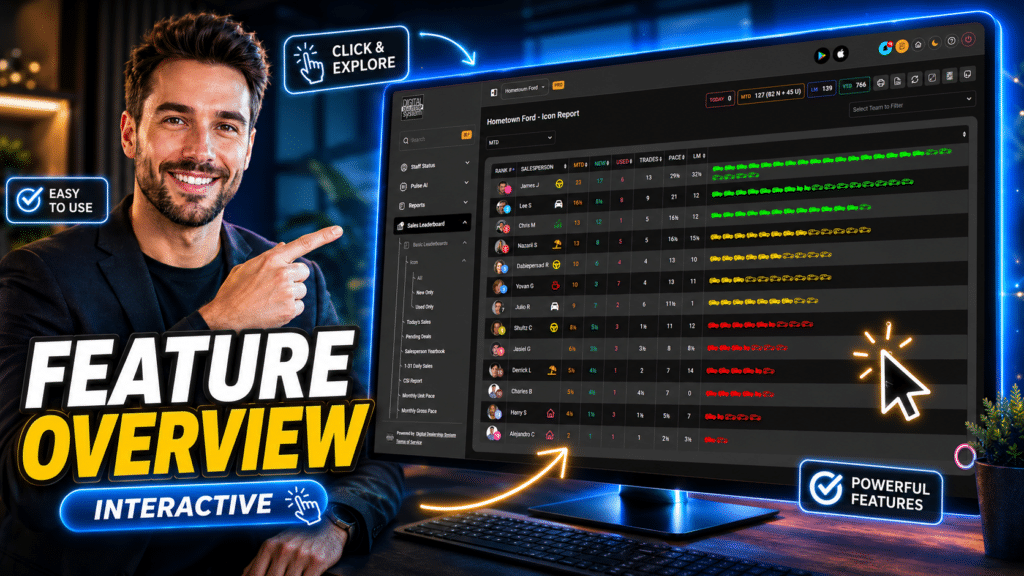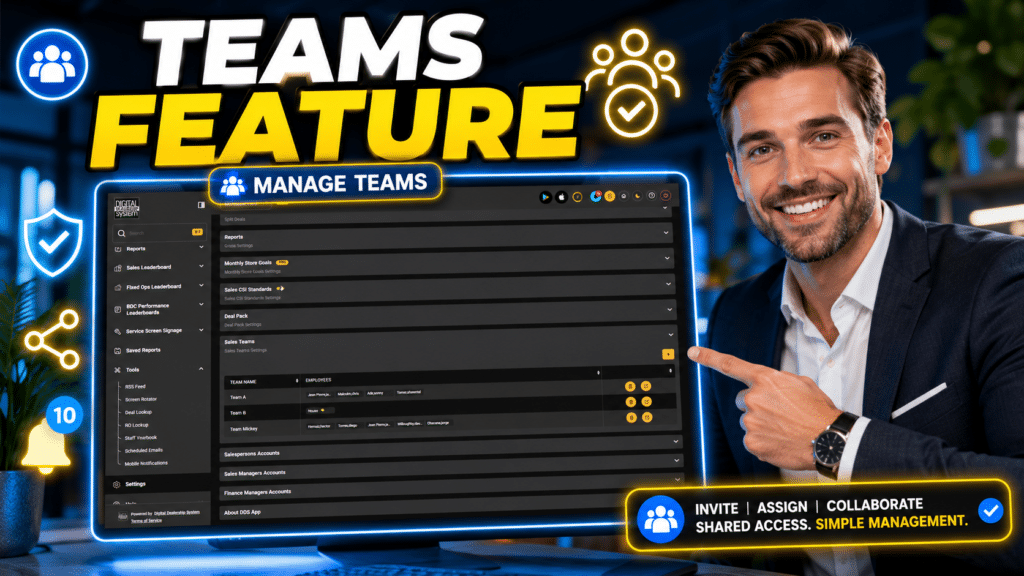
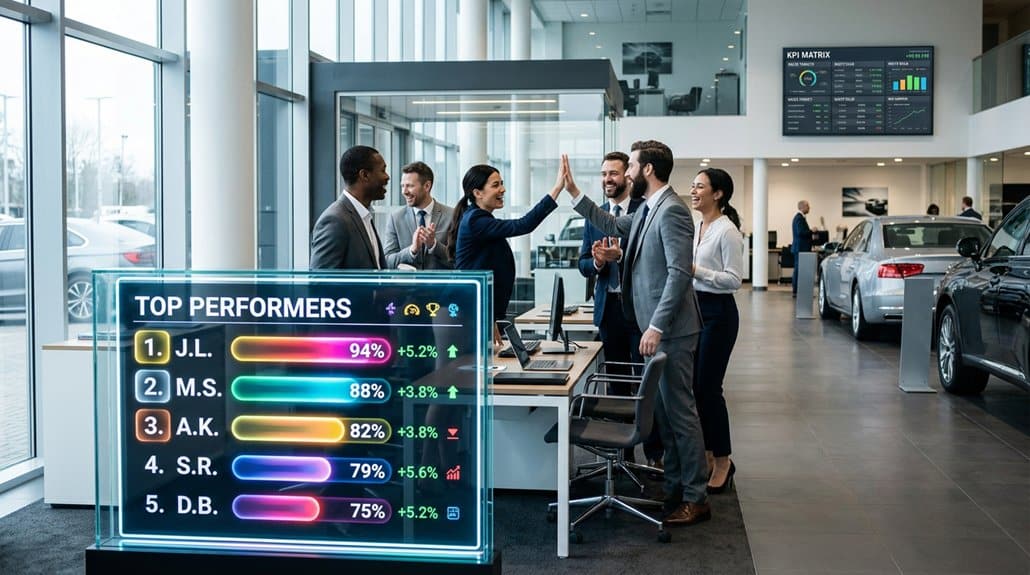
You can build a more competitive, accountable dealership by deploying a real-time sales leaderboard that ties unit and gross metrics to CSI, conversion and activity KPIs. It boosts visibility, creates immediate feedback loops, and makes coaching data-driven so managers drive measurable lifts in sales and retention. Choose a platform that syncs with your DMS/CRM, supports mobile access, and balances incentives to prevent gaming. Keep going to uncover implementation steps, KPI choices and ROI tracking.
Key Takeaways
- Display real-time leaderboard metrics (sales, CSI, conversion) to increase visibility, accountability, and healthy competition among staff.
- Balance KPIs—unit sales, gross revenue, CSI, and conversion rates—to reward both short-term wins and long-term customer retention.
- Integrate leaderboards with DMS/CRM for accurate, real-time data and mobile access so teams can act on insights anywhere.
- Use leaderboards to identify performance gaps, drive targeted coaching sprints, and measure week-by-week improvement.
- Implement transparent rules, tiered incentives, and rotating contests to sustain engagement and prevent gaming of the system.
How This Guide Helps Implement a Dealership Sales Leaderboard

This guide helps you implement a dealership sales leaderboard by translating proven, data-driven practices into actionable steps that boost visibility, accountability, and results. You’ll see clear leaderboard benefits: real-time performance tracking, transparent metrics, and immediate recognition that sharpen focus on targets. The guide shows how to include dollar sales and customer service index scores so you balance revenue with satisfaction. You’ll deploy digital displays and mobile dashboards that deliver continuous feedback and heighten accountability across teams. We’ll map specific gamification strategies—points, tiers, and time-bound sprints—to sustain engagement and encourage collaboration without undermining teamwork. Finally, you’ll get routines for regular updates and data governance so the leaderboard stays accurate, fair, and strategically aligned with dealership goals.
Why Sales Leaderboards Transform Dealership Culture
When you introduce a sales leaderboard, you immediately turn individual activity into measurable, visible outcomes that drive accountability and faster, data-informed decisions. You’ll harness leaderboard dynamics to make performance transparent, so staff see where they stand and managers spot trends in real time. That visibility cultivates a competitive mindset, pushing reps to outpace prior results and collaborate on tactics that work. Immediate feedback loops let you address gaps quickly with coaching or process changes, reducing lag between issue detection and remediation. Recognition becomes systematic—wins are public, morale rises, and peer-driven best practices spread across departments. Overall, leaderboards shift culture from intuition-driven to metrics-driven, enabling sustained performance improvements and sharper strategic responses to market changes.
Which KPIs to Display on Your Sales Leaderboard

Which KPIs will give you the clearest picture of performance and drive the right behaviors? For effective KPI selection, prioritize unit sales, gross revenue, and CSI scores to balance volume, profitability, and service quality. Add lead conversion rates and closing ratios so performance metrics highlight sales effectiveness and push improved engagement tactics. Include fixed-ops indicators—appointment counts and effective labor rates—to align sales and service, improving throughput and margin. Use real-time performance metrics for instant recognition, fueling motivation and rapid course correction. Track customer satisfaction alongside sales to stress long-term retention over short-term wins. Present this concise, mixed scorecard so you measure activity, outcomes, and customer impact—creating a data-driven leaderboard that steers behavior toward sustainable dealership growth.
Choose a Compatible Leaderboard Platform for Your DMS/CRM
When choosing a leaderboard, prioritize one that’s proven compatible with your DMS and CRM so data flows without manual workarounds. Make sure it supports real-time syncing to keep unit sales, gross revenue, and CSI figures current for immediate coaching and decision-making. Finally, confirm it lets you map and customize KPIs so reports align with your strategic targets and drive measurable improvements.
DMS/CRM Integration Compatibility
Because your DMS and CRM are the sources of truth for sales performance, picking a leaderboard that natively integrates with them is essential to get accurate, real-time metrics without manual workarounds. You’ll capture integration benefits immediately: automated data flows improve data accuracy, reduce entry errors, and eliminate duplicate records that skew KPIs. Prioritize platforms that support your key metrics—unit sales, gross, CSI—and offer mobile access so managers and reps can act on insights anywhere. A compatible leaderboard streamlines reporting, accelerates decision cycles, and makes accountability measurable, which raises performance across teams. Before buying, map required fields, verify API compatibility, and request proof-of-concept syncs to confirm the integration sustains reliable, auditable reporting under production loads.
Real-Time Data Syncing
Although choosing a leaderboard that plugs directly into your DMS/CRM might seem technical, real-time data syncing is the linchpin that turns raw transactions into actionable performance intelligence—giving reps and managers instant visibility into unit sales, CSI, lead conversions, and gross so decisions are timely, measurable, and based on reliable, automated updates rather than lagging spreadsheets. You’ll prioritize platforms that deliver real time analytics and clear data visualization, reducing manual errors and making performance a shared, trustworthy metric. With automated syncing, feedback loops shorten, competition sharpens, and managers can intervene precisely. Imagine a simple snapshot:
| Metric | Benefit |
|---|---|
| Unit Sales | Immediate recognition |
| Lead Conversion | Faster coaching |
| CSI/Gross | Accurate benchmarking |
That clarity drives faster, evidence-based actions and higher engagement.
Customizable KPI Mapping
If you want a leaderboard that actually moves the needle, pick one that’s compatible with your DMS/CRM and lets you map KPIs to the metrics that matter—unit sales, gross, CSI, lead conversion, holdbacks, or any custom commission triggers—so dashboards reflect real goals, not generic defaults. When you choose integration-capable software, KPI alignment strategies become executable: map each role to measurable targets, automate data feeds, and eliminate manual reconciliation. That enables precise performance measurement techniques across departments, so managers can spot trends, coach effectively, and reward outcomes tied to strategy. Real-time, accurate data increases accountability, fosters healthy competition, and drives revenue growth. Prioritize platforms that support customizable KPI mapping to turn insight into repeatable sales results.
Integrate Real-Time DMS/CRM Data Without Manual Entry
When your DMS and CRM feed directly into sales leaderboards, you get up-to-the-minute metrics without the errors and delays of manual entry, so leaders can act on real data to drive deals, coach reps, and optimize pipeline health. You’ll gain data accuracy and performance tracking that remove guesswork, delivering integration benefits and efficiency gains across operations. With automated updates, you can focus on sales strategies instead of administrative tasks, aligning daily activity with broader goal alignment. Real-time visibility keeps employee motivation high and fuels a competitive spirit by instantly recognizing wins and highlighting gaps. Use this integrated view to pinpoint coaching opportunities, reallocate resources, and iterate tactics rapidly for measurable, repeatable improvements in close rates.
Design Fair Leaderboard Rules, Incentives, and Scoring
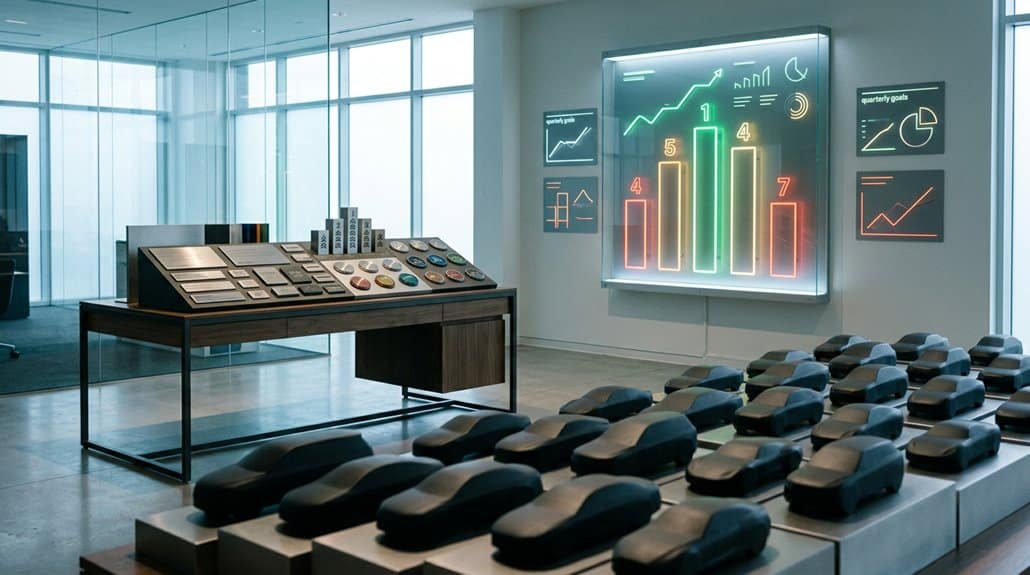
Connecting automated DMS/CRM feeds to your leaderboards gives you reliable, real-time data—but rules, incentives, and scoring must be designed so that data drives the right behavior. You’ll establish transparent rules so every rep knows how points are earned, ensuring leaderboard fairness and trust. Build scoring around diverse metrics—unit sales, CSI, and conversion rates—so performance reflects real business value and different selling styles. Use tiered incentives and incremental recognition to reward top performers and measurable improvements, keeping team motivation high. Push real time updates to sustain urgency and allow tactical adjustments. Run monthly or quarterly contests with tangible rewards to stoke competitive spirit and focus on outcomes, linking leaderboard results to compensation and visible recognition for maximum impact.
Coach Underperformers and Develop Talent With Leaderboard Data
Use leaderboard metrics to pinpoint specific performance gaps—CSI drop-offs, low lead conversion, or sales stage bottlenecks—so you know exactly where coaching should focus. Then set targeted development goals tied to those gaps, with clear actions, timelines, and measurable KPIs. Track improvement progress against the leaderboard regularly to guarantee accountability and adjust coaching until results meet dealership targets.
Identify Performance Gaps
One clear advantage of leaderboards is that they give you real-time visibility into who’s falling short of targets and why, so you can direct coaching where it’ll move the needle fastest. You’ll use performance analysis to spot gaps in conversions, closing rates, or product mix, then apply focused coaching strategies to close them. Leaderboard trends reveal persistent weaknesses versus one-off dips, so your interventions are timely and evidence-based. Use data to prioritize high-impact coaching and to allocate training resources efficiently, improving overall team ROI and individual development.
- Track conversion rates by rep to find skill gaps
- Compare product mix to reveal upsell opportunities
- Monitor time-to-close for process breakdowns
- Flag consistent underperformers for targeted coaching
- Use trend lines to measure coaching effectiveness
Set Targeted Development
Leverage leaderboard data to create laser-focused development plans that turn underperformers into producers: identify the exact metrics (conversion rate, follow-up cadence, product mix) dragging their scores, prioritize the highest-leverage skill gaps, and schedule short, measurable coaching sprints tied to clear KPIs so you can track improvement in real time. Use targeted coaching driven by performance metrics to design brief modules—call handling, objection closure, demo routing—and assign mentors with measurable goals. Gamify milestones to boost engagement and accountability while preserving constructive feedback loops. Below is a simple imagery table to guide sprint focus:
| Skill Focus | KPI | Sprint Length |
|---|---|---|
| Follow-up Cadence | Calls/week | 2 weeks |
| Conversion Technique | % closed | 3 weeks |
| Product Mix Upsell | Units add-on | 2 weeks |
This keeps development tactical, measurable, and repeatable.
Track Improvement Progress
After you’ve run short, measurable coaching sprints, start tracking improvement with the same leaderboard data that identified gaps—monitor week-by-week changes in conversion, follow-up cadence, and product mix to see whether interventions move the needle. You’ll use improvement metrics to quantify progress, compare cohorts, and adjust coaching frequency. Performance tracking should highlight small wins and persistent gaps so you can tailor next steps: intensified coaching, shadowing, or promotion prep. When underperformers show consistent gains, formalize development plans; when they don’t, pivot fast.
- Weekly conversion rate deltas for each rep
- Follow-up cadence adherence and response times
- Product mix shifts and upsell rates
- Peer-ranked engagement and accountability scores
- Time-to-proficiency for coached skills
Display Options: Floor Screens, Mobile App, and Remote Access
Three display channels — floor screens, a mobile app, and remote access — give dealerships a coordinated way to surface real-time metrics, sustain performance-driven behaviors, and keep dispersed teams accountable. You’ll use floor displays to broadcast live leaderboards and immediate recognition, creating a visible performance loop that boosts motivation. App notifications push timely updates and reminders so reps stay informed and act on leads faster. Remote visibility guarantees managers and satellite staff see the same metrics, preserving transparency across locations. Together these channels support robust performance tracking beyond unit sales—CSI, conversions, activity counts—while digital updating ensures accuracy. Deploy them with clear rules for cadence, thresholds, and recognition to drive measurable, continuous improvement.
Post-Launch ROI Metrics to Track (Sales Lift, Conversion, CSI)
When you roll out leaderboards, the first thing to measure is tangible ROI: track sales lift as the percent increase in vehicle volume tied to leaderboard activity, compare conversion rates to see if reps are closing more of the same lead flow, and monitor CSI to confirm that higher throughput isn’t sacrificing customer experience. You’ll use sales analytics to attribute gains, set performance benchmarks, and report outcomes to leadership. Focus on comparative windows (pre/post launch), statistical significance, and per-rep attribution to isolate impact. Use CSI trends to validate quality alongside quantity. Regular reviews let you optimize rules, visibility, and rewards to sustain ROI without undermining service.
- Sales lift percentage by period
- Lead-to-sale conversion delta
- CSI score trends
- Benchmarked KPIs by role
- Attribution via sales analytics
Sustain Engagement and Troubleshoot Common Pitfalls
Although leaderboards can ignite quick wins, you’ll need deliberate design and monitoring to keep engagement high and avoid backsliding into counterproductive behavior. Use engagement strategies that combine real-time ranking with immediate recognition and data-driven performance incentives to sustain momentum. Track diverse KPIs—sales, CSI, follow-up rates—and update dashboards frequently so behavior isn’t skewed toward a single metric. Introduce gamification (points, badges) and rotate objectives to prevent burnout and encourage skill breadth. Monitor for negative signals—unethical shortcuts, disengagement, or clustering—and intervene with targeted coaching informed by leaderboard trends. Run periodic A/B tests on rules and incentives to measure lift, then iterate. That disciplined loop maintains healthy competition and guarantees leaderboards drive measurable, sustainable improvement.
Frequently Asked Questions
What Is the 4 Square Trick Car Dealers?
The 4 Square Trick is a sales technique that breaks a deal into price, trade-in, down payment, and monthly payment; you’ll use it to simplify choices, boost transparency, data-driven decisions, and stoke competitive spirit for measurable results.
What Is the Hardest Month to Sell a Car?
January’s the toughest month to sell a car, and you’ll face seasonal challenges, buyer behavior shifts, market fluctuations and sales trends showing dips. Use data-driven tactics, competitive incentives and targeted outreach to boost results efficiently.
How Much Does a Car Salesman Make off a $20,000 Car?
You’d make about $400 on a $20,000 car with a $2,000 profit margin at a 20% commission breakdown, though sales incentives, bonuses or sliding scales can raise that, so verify your dealership’s exact payout structure.
What Tactics Do Car Dealerships Use?
You’ll deploy incentive programs and team competitions like tuning an engine: set real-time leaderboards, track CSI and conversion metrics, run targeted coaching, reward specific outcomes, and iterate using data to boost measurable sales performance.
Conclusion
You’ve got the tools to turn leaderboards into a performance engine — now act. Use real-time KPIs, seamless DMS/CRM integration, and multi-channel displays to drive measurable sales lift, higher conversion and improved CSI. Coach with data, reward results, and track post-launch ROI to prove impact. Think of the leaderboard as your dealership’s GPS: it constantly recalibrates the route to higher performance, so you’ll hit targets faster and sustain a competitive culture.