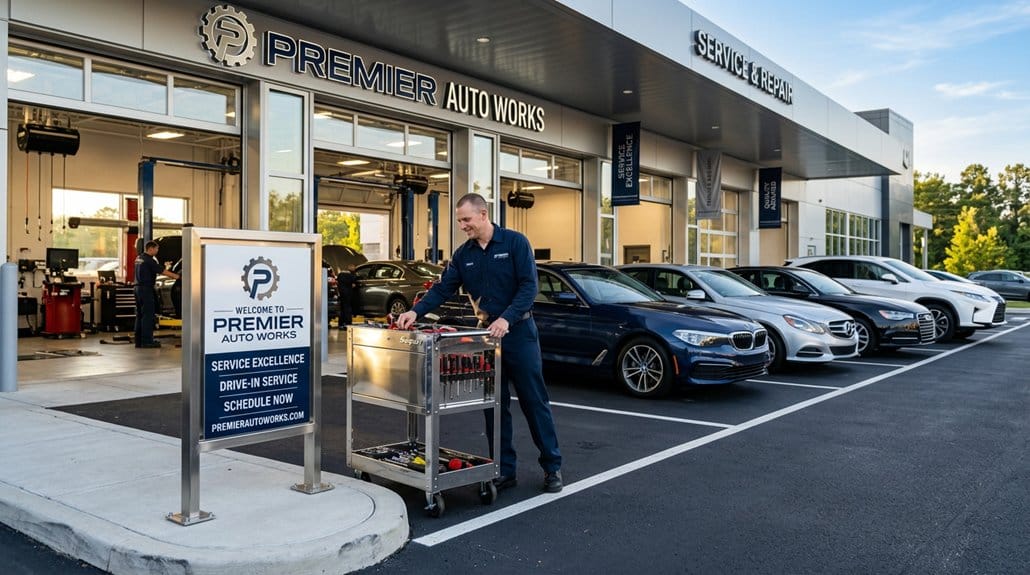
You can turn every service visit into a measurable marketing channel by capturing customer and vehicle data, centralizing it in a CRM, and applying predictive scores to prioritize outreach. Use service history and satisfaction signals to serve timely, personalized trade‑in and maintenance offers, optimize local SEO and mobile booking to boost appointments, and map an annual calendar to peak demand. Track service‑to‑sales KPIs and train advisors to close transfers—keep going and you’ll uncover the tactical playbook.
Key Takeaways
- Capture and centralize service-drive data (demographics, visit history, satisfaction) in CRM to enable targeted marketing and segmentation.
- Use predictive behavior scores to prioritize outreach and identify high-value customers nearing purchase or service milestones.
- Present personalized trade-in offers and on-site estimates based on vehicle age, repair cadence, and service history.
- Optimize local SEO and mobile-first scheduling with SMS reminders to increase bookings and reduce no-shows.
- Train service advisors to recognize buy-ready signals and follow clear handoff protocols for service-to-sales conversions.
Define Your Service Drive Data: What to Capture at Every Touchpoint
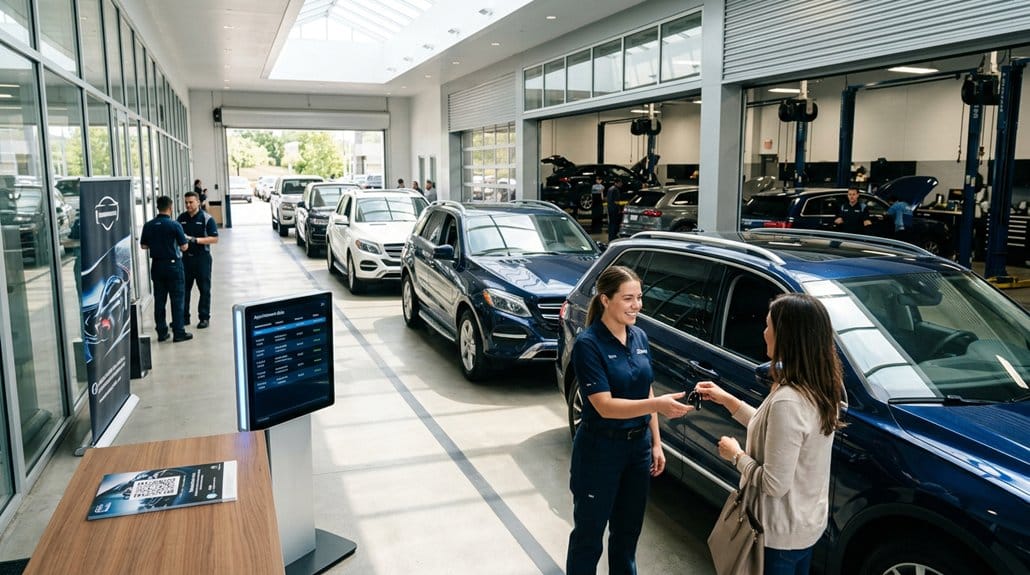
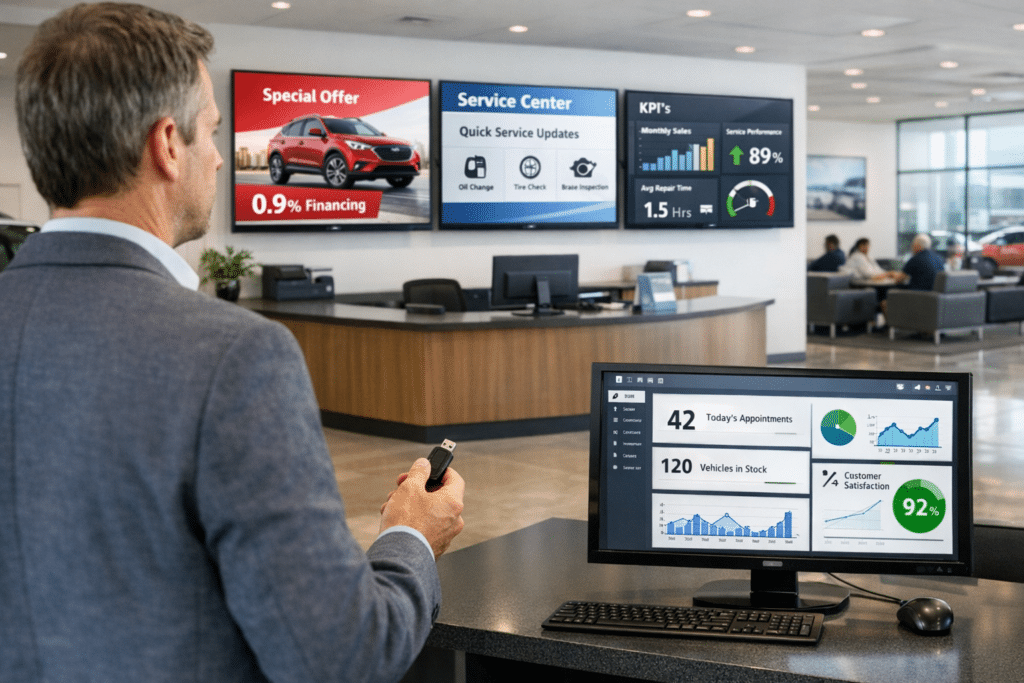
Because every interaction in your service drive creates actionable intelligence, you should capture key customer demographics, visit frequency, service types, satisfaction scores, appointment history, and vehicle ownership history at each touchpoint—and store it all in a centralized CRM. You’ll use customer demographics like age, gender, and ownership history to segment offers and personalize communications. Track visit frequency and service types to spot patterns and schedule timely reminders. Record satisfaction scores and service feedback after each visit to identify friction points and improve processes. Consolidating appointment history and service milestones in one system lets you analyze behavior, measure campaign impact, and align service with sales. This disciplined data capture turns routine visits into measurable marketing assets and revenue drivers.
Use Predictive Scores to Prioritize High-Value Service Customers
You should use predictive Behavior Scores to rank service customers by likelihood to respond, so your team focuses on the opportunities that deliver the biggest return. Prioritized service outreach based on those scores lets you time offers around major maintenance milestones and service history, improving engagement and conversion. With a data-driven scoring system like Mastermind’s Behavior Prediction Score®, you’ll increase retention and lift service-to-sales revenue by targeting the customers who matter most.
Predictive Behavior Scores
One clear advantage of predictive behavior scores is they let you focus marketing on the service customers most likely to respond—using AI-driven analytics that rank prospects by engagement and lifetime value. You’ll use customer engagement signals and robust data analysis from 197 million households and 3 billion ownership records to spot high-value service clients approaching key milestones. Implementing a Behavior Prediction Score® lets you tailor outreach so resources hit the customers most likely to return for service or buy again. That boosts retention and conversion through personalized, timely campaigns. Consider these priority actions:
- Target customers nearing service milestones to increase repeat visits.
- Allocate spend to segments with highest predicted lifetime value.
- Measure lift with controlled tests to refine scoring models.
Prioritized Service Outreach
Having scored customers by predicted behavior, prioritize outreach to the high-value segment that’s most likely to return for service or convert to a sale. You’ll use Mastermind’s Behavior Prediction Score® and AI analytics to rank customers, then focus resources where customer engagement yields the greatest ROI. Analyze service histories to spot upcoming maintenance milestones and combine that with demographic signals from 197 million households to craft timely, relevant messages. Deploy targeted promotions—service reminders, bundled discounts, or trade-in offers—to the top-tier cohort and track service-to-sales conversion rates. Continuously refine scoring thresholds and creative based on measured conversion lifts. This disciplined, data-driven approach guarantees outreach is efficient, persuasive, and directly tied to dealership profitability.
Turn Appointments Into Personalized Offers and Trade-In Opportunities
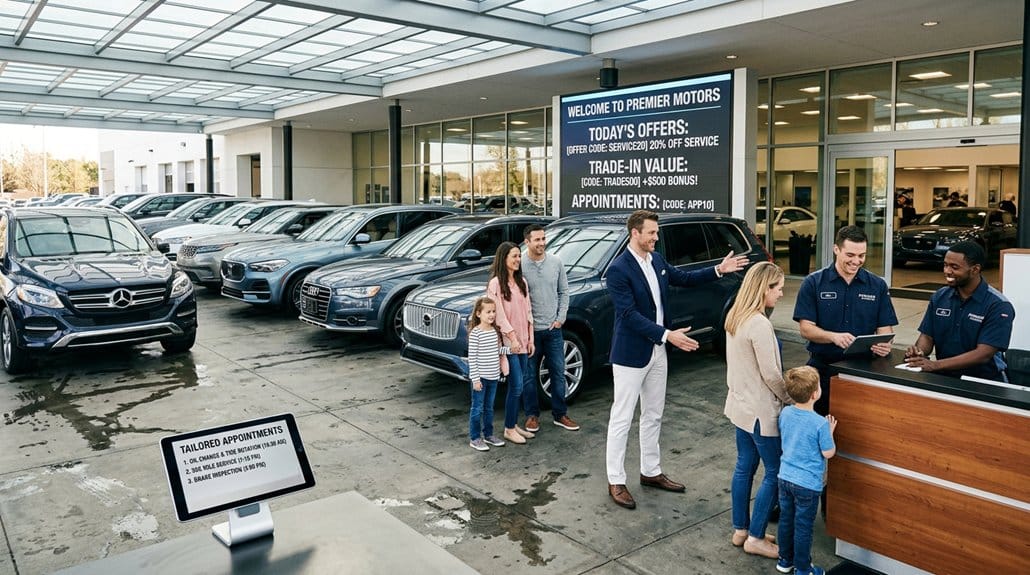
Turn a routine service appointment into a revenue-generating touchpoint by using service history and vehicle data to present personalized offers and trade-in opportunities right when the customer’s already on-site. You can boost customer engagement and conversion by analyzing age, service frequency, and preferences to surface timely trade in incentives and tailored promotions. Use integrated service-sales data to trigger proactive outreach—maintenance reminders, estimated trade values, or bundled upgrade offers—that feel relevant and urgent.
- Identify high-potential candidates by vehicle age, repair cadence, and loyalty metrics.
- Present on-site trade-in estimates and incentives tied to current service needs.
- Follow up with data-driven offers that reference the visit and expected lifecycle stages.
This approach turns maintenance visits into measurable sales opportunities.
Optimize Your Site & Local SEO for Service Drive Marketing
You can amplify the on-site sales opportunities you created during service visits by making certain customers find and trust your service offerings online first. Use local keyword optimization to target nearby intents—track rankings and clicks, prioritize high-converting terms, and align content with service landing pages that showcase promos, testimonials, and detailed scopes. Keep your Google Business Profile accurate with NAP and hours to increase trust and click-throughs. Build local links via community partners to raise authority and local rankings. Ascertain mobile-friendly pages so users can view service details and contact info instantly. Measure conversions per landing page and iterate based on data to turn service traffic into measurable sales.
| Priority | Tactic | KPI |
|---|---|---|
| 1 | local keyword optimization | Organic clicks |
| 2 | service landing pages | Conversion rate |
| 3 | Google Business Profile | Local visibility |
Simplify Mobile Scheduling and Service History for Faster Bookings
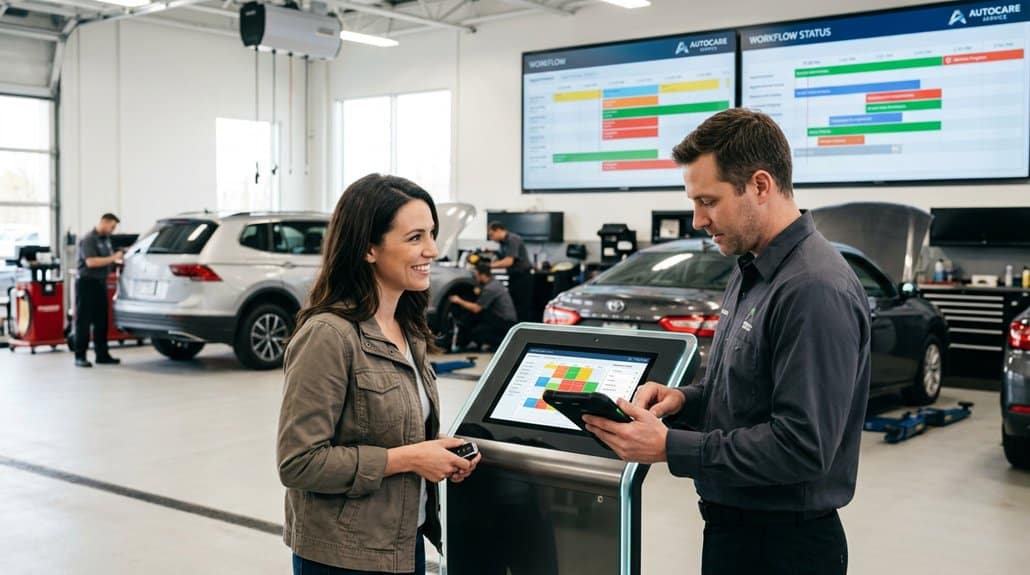
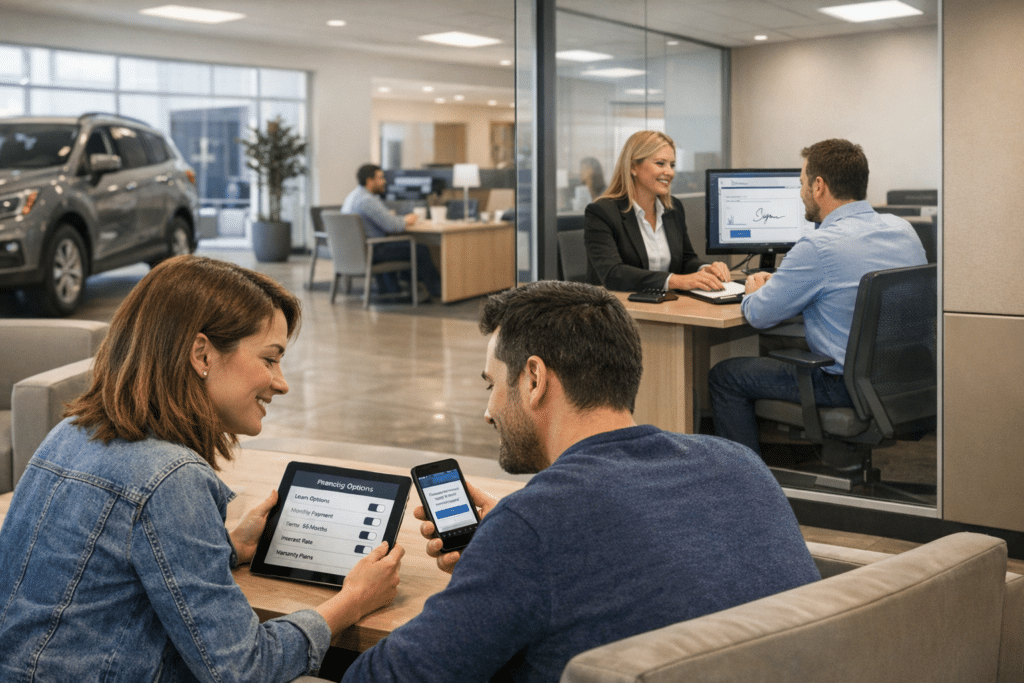
Make your service drive mobile-first so over half of customers can book in seconds with minimal fields and taps. Pair a one‑tap service history that shows past work and recommendations to build trust and speed decision-making. Add SMS confirmations and reminders to boost engagement and cut no-shows, improving retention and throughput.
Mobile-First Appointment Flow
How quickly can a customer book service on their phone before they drop off? You need a mobile-first appointment flow that minimizes friction: mobile scheduling must be fast, intuitive, and tied to a clear user experience. Focus on measurable wins.
- Reduce fields and clicks — shorter forms boost conversions; with 60% of local searches on mobile, fewer taps means more bookings.
- Use SMS confirmations and reminders — they raise attendance and keep customers engaged, improving show rates and retention.
- Provide a lightweight, mobile-friendly service history portal — quick access to maintenance records builds trust and speeds repeat scheduling.
A streamlined mobile experience captures more bookings, increases conversion rates, and turns the service drive into a predictable marketing channel.
One-Tap Service History
After shaving clicks and fields from your mobile booking flow, the next step is a one-tap service history that puts maintenance records—and the next logical appointment—right under the customer’s thumb. You’ll let customers access full service history instantly, which streamlines scheduling and cuts booking time up to 50%. That speed boosts customer engagement and makes repeat visits more likely: a user-friendly one-tap experience increases loyalty and simplifies decision-making. Integrated service history also powers personalized reminders and tailored upsell opportunities, driving a measurable 20% lift in appointment bookings. Strategically, that converts convenience into revenue and retention metrics you can track. Implement this feature, and your service drive becomes a proactive marketing channel rather than just a cost center.
SMS Confirmation Reminders
One simple text can shift no-shows into kept appointments: SMS confirmation reminders cut missed bookings, streamline mobile scheduling, and make your service history far more actionable. You’ll reduce friction by minimizing fields and clicks, using SMS Engagement Strategies that drive faster responses and higher conversion.
- Reduce no-shows — automated confirmations and follow-ups lift attendance, boosting service revenue and retention.
- Simplify scheduling — one-tap replies and concise links make booking mobile-friendly, improving completion rates and data accuracy.
- Consolidate records — confirmations feed a mobile service history portal so you can personalize outreach and forecast needs.
These Appointment Reminder Benefits are measurable: higher attendance, increased engagement, and cleaner service records that turn the service drive into a proactive marketing channel.
Build Your Annual Service Calendar & Budget Around Peak Needs
When you map out an annual service calendar tied to historical peak needs—winter tire swaps, pre-summer A/C checks, and warranty-covered manufacturer campaigns—you’ll be able to time marketing spend where it drives the biggest ROI; allocating a larger portion of your budget to those windows and splitting it across email, social, and paid digital channels boosts appointment fill rates and retention while keeping cost-per-visit down. Plan seasonal promotions around verified demand spikes and manufacturer campaigns so your offers hit when customers need them most. Use service-history data to quantify peaks, then assign budget slices to channels that deliver the best CPA. This disciplined, data-driven cadence increases customer engagement, improves facility throughput during busy periods, and turns predictable maintenance cycles into measurable revenue opportunities.
Measure Service-to-Sales: 5 KPIs That Prove ROI
Curious how your service drive is actually feeding vehicle sales? You need measurable KPIs that tie service marketing and customer engagement to revenue. Focus on these three high-impact indicators to prove ROI and guide strategy:
- Service-to-sales conversion rate — percentage of service customers who buy a vehicle; direct evidence your service funnel produces sales.
- Retention & visit frequency — track post-service retention (service-loyal customers buy at over twice the rate) and how often future buyers return; this reveals lifetime value and timing for offers.
- Revenue per visit & promo effectiveness — average spend per visit plus lift from targeted trade-in or service incentives quantifies profitability and campaign impact.
Measure consistently, segment by cohort, and optimize based on outcomes.
Train Teams & Close the Service-to-Sales Process
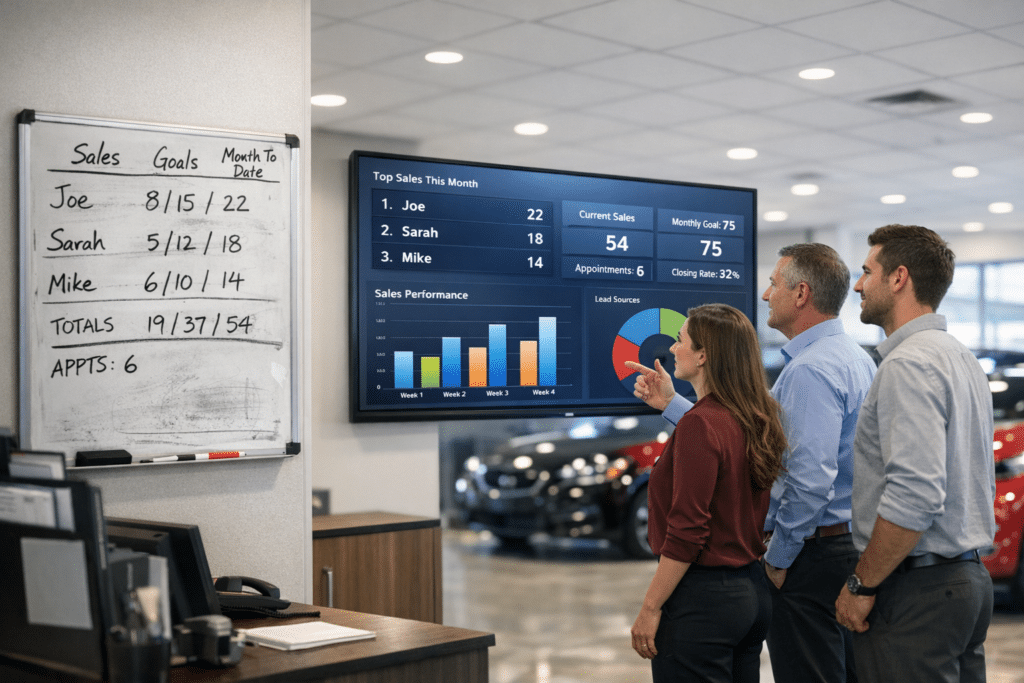
Start by treating your service drive as a proactive sales channel: train advisors to spot and act on buy-ready signals—vehicle age, service cadence, and repair spend—so they can hand off qualified leads or close deals on the spot. You’ll boost conversions: service-loyal customers are over twice as likely to buy. Use sales training techniques that pair data-driven triggers with customer engagement strategies, and set structured incentives so service and sales collaborate. Only 33% of dealers have transfer processes—fix that with clear handoff protocols, inventory briefings, and promo scripts. Regular coaching on current stock and offers lets advisors close more at drop-off. Track transfers, closures, and incentive ROI to continuously refine your service-to-sales funnel.
| Signal | Action |
|---|---|
| Vehicle age | Offer trade appraisal |
| Repair spend | Suggest replacement |
| Service frequency | Present upgrade |
| Promo match | Close on-site |
| High loyalty | Prioritize follow-up |
Frequently Asked Questions
What Are Some Effective Marketing Strategies Utilised in the Automotive Industry?
You should use digital advertising, targeted email campaigns, AI chatbots, video testimonials and local SEO to boost customer engagement, track behavior for data-driven personalization, run paid social campaigns, and optimize mobile experiences to increase conversions and retention.
What Is the Marketing Strategy of a Car Dealership?
The marketing strategy is to use data-driven customer engagement that personalizes outreach, predicts service needs, and nurtures brand loyalty, so you’ll retain customers, increase lifetime value, and convert service visits into profitable vehicle sales.
What Is the $3000 Rule for Cars?
Imagine a beacon: the $3000 rule says you’ll spend roughly $3000 on repairs over three years, showing the $3000 impact. Use the Service drive to highlight value, loyalty programs, and data-driven retention strategies you’ll trust.
How to Generate Leads for a Car Dealership?
Use predictive analytics to target service promotions, personalize offers via email/SMS, track service-to-sales conversion metrics, and align service-sales teams to boost customer loyalty, convert maintenance visits into trade-in discussions, and generate high-quality leads.
Conclusion
Test the theory that your service drive is just for repairs — it isn’t. When you track touchpoints, score customers, and act on predictive signals, you’re sitting on measurable revenue. Data shows service-driven trade-ins and offers lift sales efficiency and retention; prove it with the five KPIs, tightened workflows, and trained teams. Treat every appointment as a conversion moment, and you’ll transform routine maintenance into a predictable, profitable marketing channel.