
Reports from different stores that do not match can slow every decision. Many automotive group leaders want clear, fast Financial Reporting they can trust across all locations.
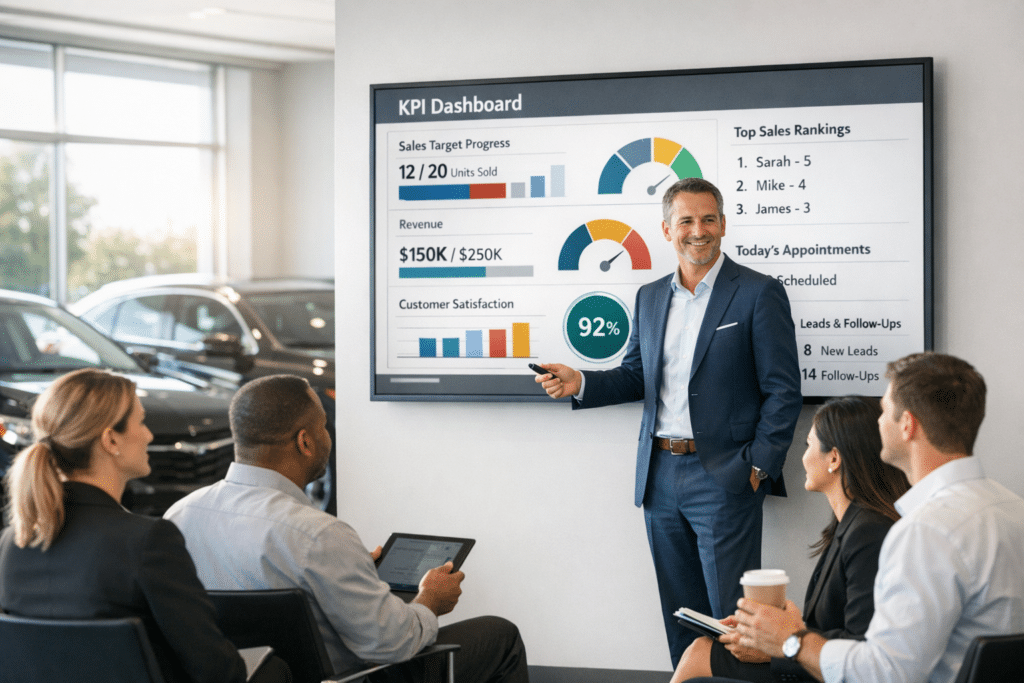
Consolidated reporting pulls finance, sales, and operations data into one place. A KPI dashboard, key performance indicators shown in charts, gives leaders a single view of Performance Metrics for the whole group. With Digital Dealership System, teams see live numbers instead of waiting for manual updates.
This guide explains how consolidated reporting works in the Automotive Industry and why it matters for profit and cash flow. It covers common roadblocks, the features that fix them, and simple steps to lift results. If faster insight sounds helpful, request a quick walk-through or survey for your group.
Key Takeaways
- Since 2023, Digital Dealership System has offered real-time KPI dashboards and custom reporting for dealership groups, saving managers hours each week.
- Consolidated reporting gives executives a clear look at sales, service, and customer activity from every store on one screen.
- Top hurdles include Data Integration across different systems, keeping data clean, getting staff on board with new tools, and setting common KPIs for the whole group.
- Strong group reports need timely financials from all entities, rule compliance, honest communication, audit trails, and standard processes for easy side-by-side review.
- Leaders who automate consolidation make faster choices with fresh insight, not old files or guesswork.
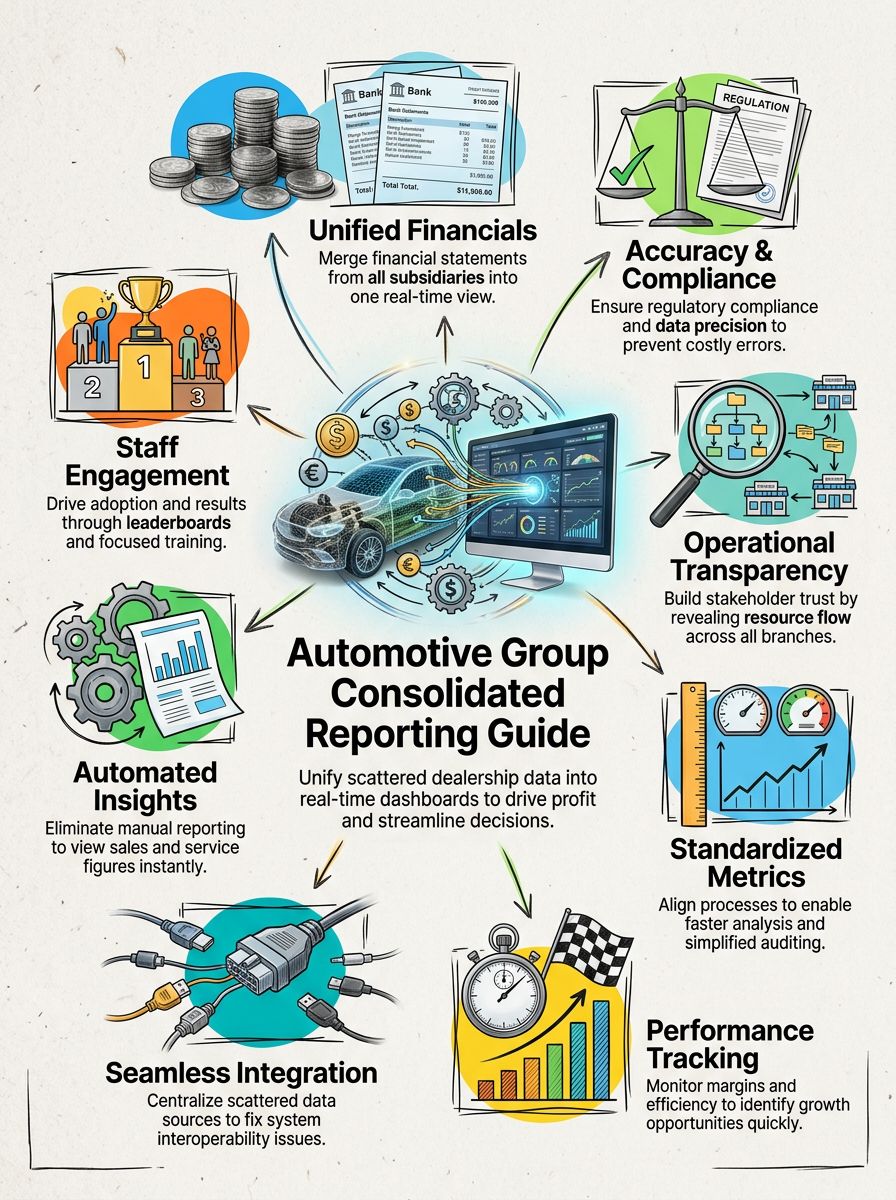
Why is consolidated reporting crucial for automotive groups?
Real-time visibility changes daily decisions. With one dashboard for Management Reporting, managers spot wins and risks in minutes. It works like a clean dashboard in a car, easy to read at a glance.
Without centralized analytics and business intelligence, tools that turn data into trends, sales optimization stalls. Automated consolidation, the process that combines Group Financial Statements from all stores, shows sales, service, and customer signals side by side. That saves hours once spent stitching spreadsheets.
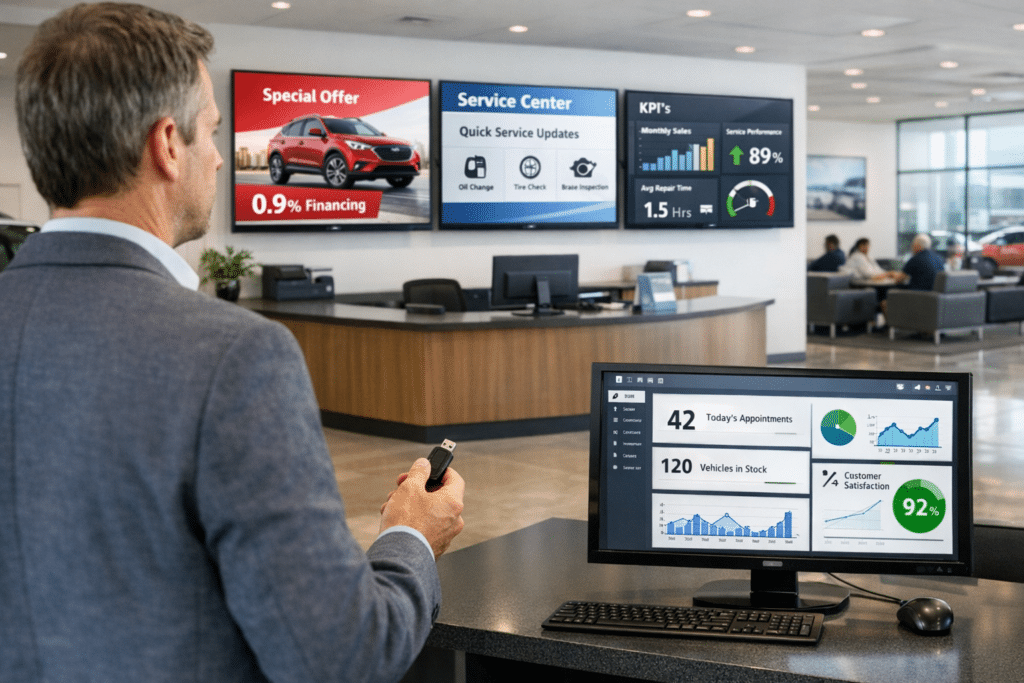
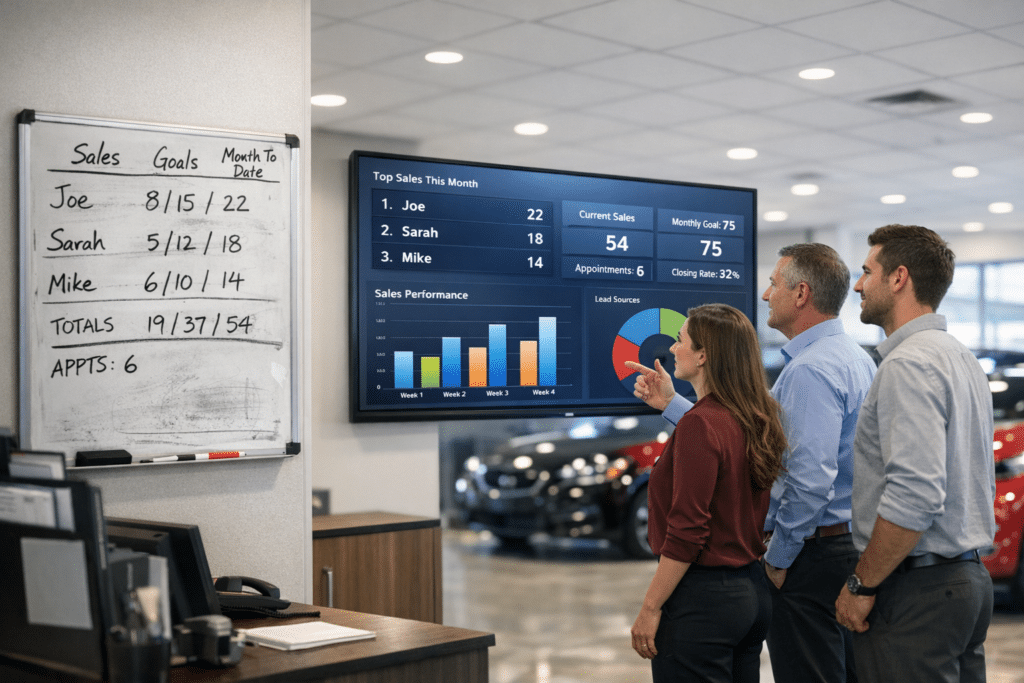
Since 2023, Digital Dealership System has provided custom reporting for both large chains and single rooftops. In-store digital signage links to campaigns, so leaders see marketing impact. Manager and team leaderboards keep goals clear and friendly competition high.
Consolidated tracking highlights gaps in staffing, parts turns, or close rates before they grow. Executives act with current insight across regions, which supports Operational Efficiency and steady growth in a tight market.
Key components of effective consolidated reporting
Clear reporting starts with trusted data and a steady process. These essentials help any automotive group move from scattered updates to confident decisions.
- Timely, accurate financials from every store, so leaders see true performance without delays.
- Consolidation of all entities into one report, so the full story appears in one place.
- Compliance with industry rules and accounting standards, which protects the business and its reputation.
- Strong data accuracy checks, since a single error can change plans and cost money.
- Transparency across locations, so stakeholders can see how money and resources flow.
- Standardized processes and chart of accounts, which make period-to-period comparisons simple.
- An audit trail, a record of who changed what and when, to catch issues fast and pass reviews.
- Clear communication with charts and plain summaries, so finance and operations share the same view.
- Performance metrics that track growth, margins, and efficiency, helping teams focus on what matters.
- A reporting framework that keeps layout and timing consistent, aligned with best practices over time.
What are common challenges in implementing consolidated reporting?
Different dealership systems often do not talk to each other. That creates delays during Data Integration and makes adoption harder for busy teams.
Report accuracy is a constant risk. If source data has errors or different KPI definitions, totals will not line up. A simple example is parts sales recorded as service in one store but as retail in another.
Training matters. Staff need short, repeatable steps to enter and validate data the same way at each location. Change is hard, so clear goals and quick wins help build trust in the new tools.
Integrations that fit with current platforms reduce disruption and support clean consolidated reports. That gives decision makers a view they can rely on. To see how this can work in your group, ask for a short demo and checklist.
Conclusion
Digital Dealership System gives executives clarity and control. With real-time KPI dashboards and automated Financial Reporting, group decisions become faster and less stressful. Teams spend more time serving customers and less time fixing spreadsheets.
Each store can share live insights, compare results, and plan as one unit. Leaders guide finance and operations together with confidence.
Want a smarter path to consolidated reporting? Request a Free Demo or a quick survey for your team’s needs. This content is general information, so consult your accounting advisor for guidance on specific policies.
FAQs
1. What is consolidated reporting for automotive groups, and why does it matter?
Consolidated reporting brings together financial and operational data from all your dealerships into one clear view. This process helps executives spot trends, compare performance across locations, and make faster decisions that drive profitability.
2. How can an executive guide help streamline our group’s reporting process?
An executive guide offers step-by-step strategies tailored to the unique needs of automotive groups. With this resource, you gain proven methods for integrating dealership management systems, standardizing metrics, and ensuring compliance with industry regulations—all while saving time on manual tasks.
3. What are the main benefits of using consolidated reports in auto retail operations?
With consolidated reports, leadership gains real-time insights into cash flow, inventory levels, sales performance, and expenses across every location. These insights support smarter forecasting; they also reveal opportunities to cut costs or boost revenue—giving your group a competitive edge.
4. Why should I trust this executive guide for my dealership network’s success?
This guide draws on years of experience working with top-performing dealer networks nationwide; it reflects best practices backed by industry certifications and client testimonials. You get actionable advice designed specifically for multi-store operators who want reliable results fast—plus ongoing support if you need it.
Ready to see how streamlined reporting can transform your business? Call us today or visit our website to request your copy of The Executive Guide to Consolidated Reporting for Automotive Groups!