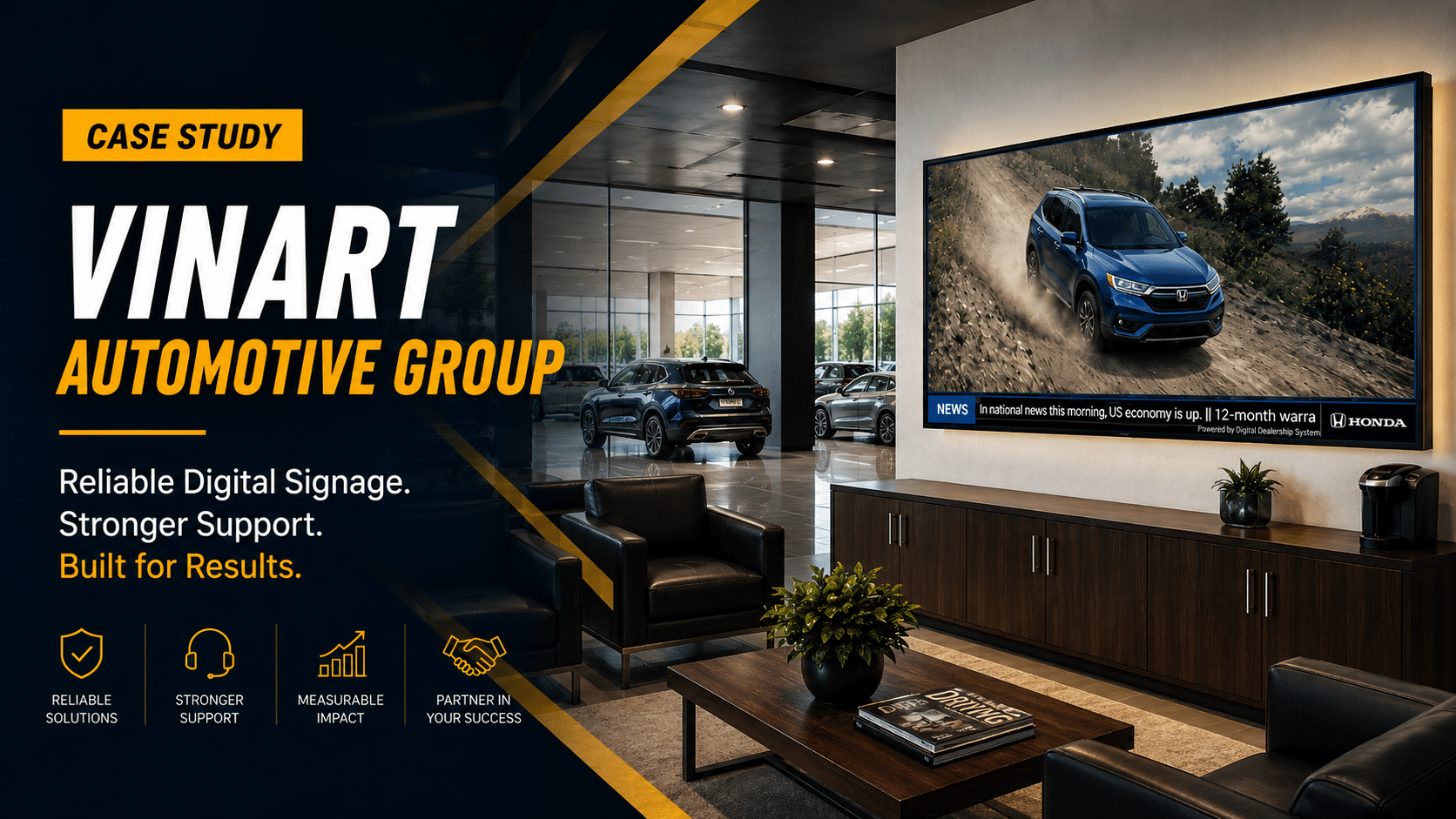
Vinart Automotive Group was not simply looking for new screens. The dealership needed a digital signage solution that was reliable, supported by a responsive provider, and able to fit within the group’s budget without requiring participation in an optional OEM program.
That distinction matters because the value of digital signage is not determined by the hardware alone. Screens are only useful when the information on them is current, appropriate for the audience, and supported by a provider that can keep the system working as intended.
For Vinart Automotive Group, the challenges were clearly defined. The previous provider had been unreliable. The group did not want to adopt the optional OEM program. The dealership wanted a higher level of service and support, and the solution still needed to remain within budget.
Those issues are closely connected. A display that is difficult to update can quickly show outdated information. A system with inconsistent support can create additional work for dealership employees. Customer-facing screens can also become a liability when content is irrelevant, outdated, or inconsistent with the dealership’s brand and customer experience.
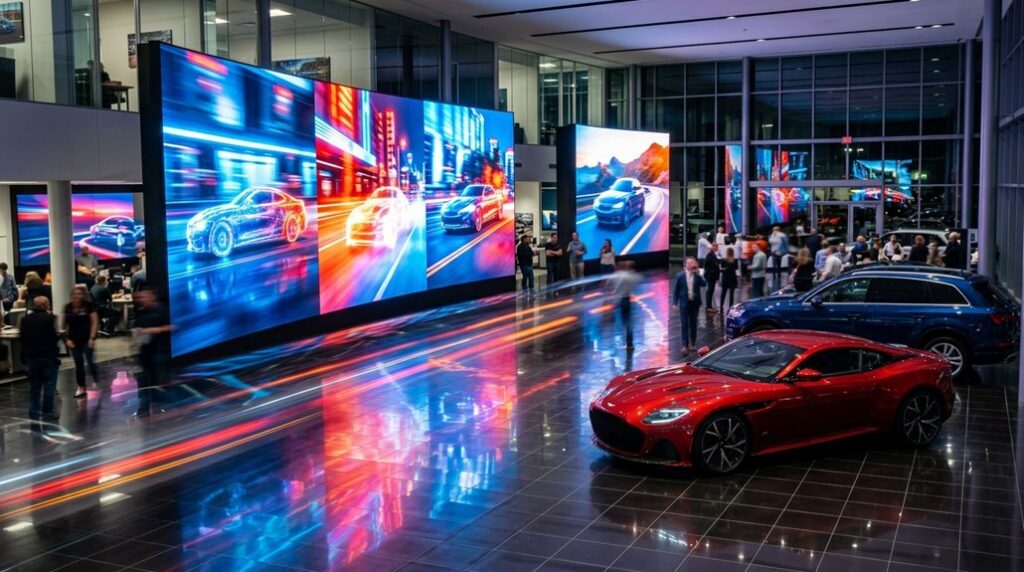
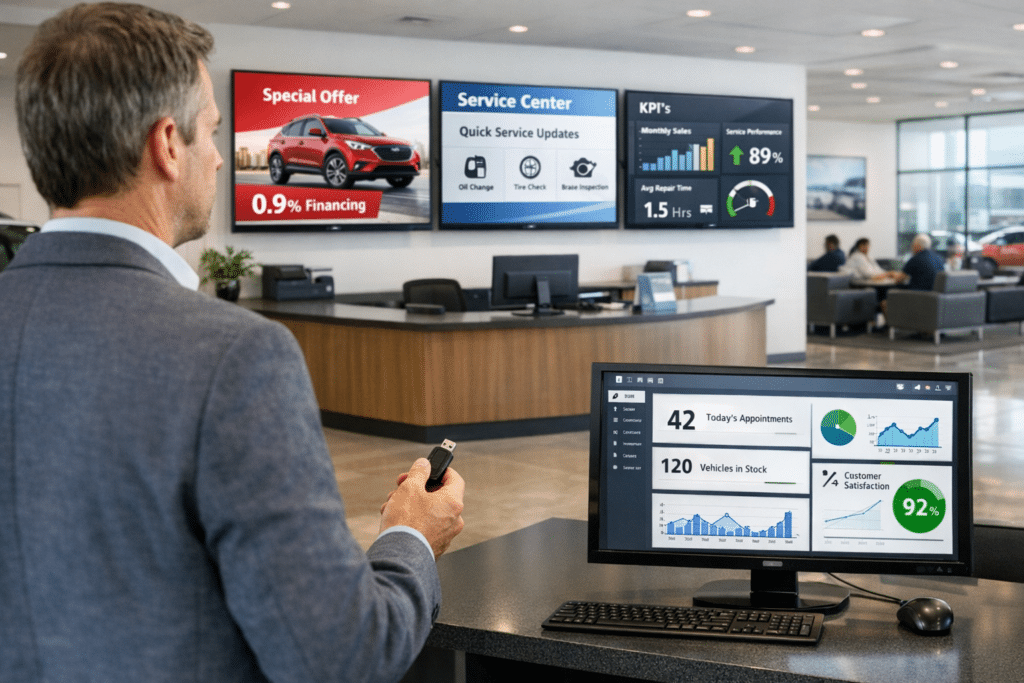
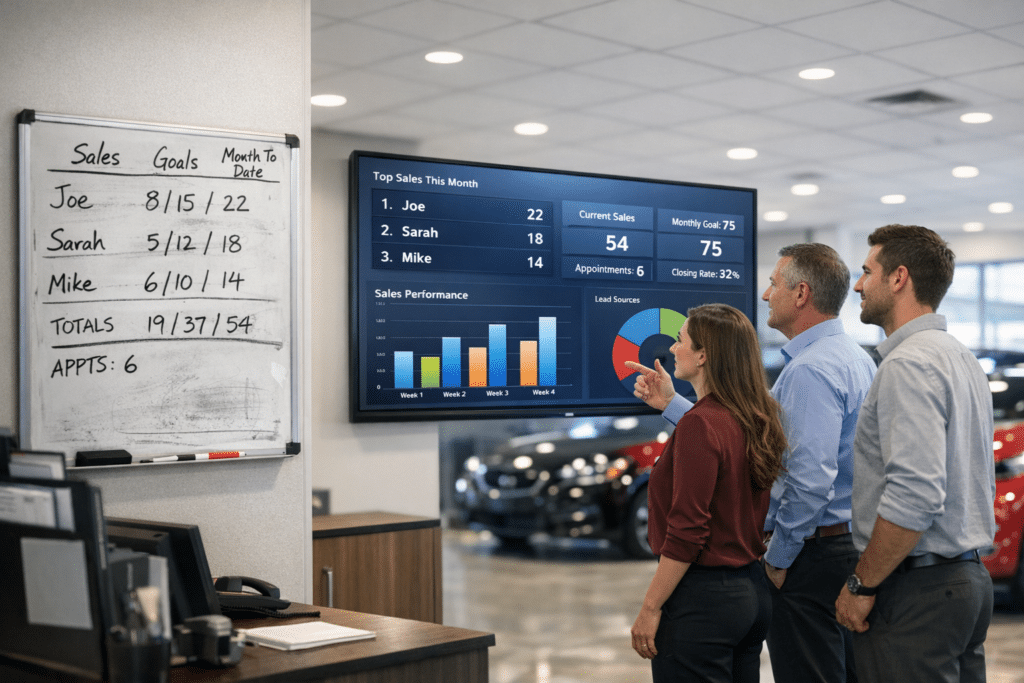
Digital Dealership System addressed those requirements with a managed digital signage program that included Customer Lounge TVs, Dare to Compare boards, a Service Menu, and Showroom TV.
Each of those products serves a different communication purpose. Customer Lounge TV provides content for customers while they wait. Service menus present dealership service information in a clear, consistent format. Dare to Compare boards help communicate vehicle and dealership information, while Showroom TV supports the customer experience on the sales floor.
The common requirement across all of them is not simply the ability to display content. It is the ability to keep that content useful, current, and appropriate for the location where it appears.
That is where provider service becomes part of the buying decision.
Dealership technology operates in an environment where information changes constantly. Offers change. Service messaging changes. Vehicles change. Branding requirements change. Screens need maintenance, content needs updates, and employees need someone to contact when something is not working correctly.
A lower-cost screen or platform can become far less attractive if dealership employees are responsible for troubleshooting problems, tracking down support, or managing content that was supposed to be handled by the provider.
Vinart Automotive Groups’ own explanation of the experience provides the clearest documented result. Andy Wright, Managing Partner, said: “Digital Dealership System provided us with a reliable solution that fit within our budget. Since making the switch, we have received a much higher level of service and support. Their team has been easy to work with.”
That quote is important because it identifies the factors the dealership itself considered meaningful: reliability, budget fit, service, and support.
The case study does not publish revenue growth, percentage improvements, or a calculated return on investment, so those claims should not be added. The documented outcome is more straightforward. Vinart identified an operational problem, selected a managed solution that addressed its requirements, and reported a better experience with reliability and provider support.
For other dealership leaders evaluating digital signage, the lesson is to look beyond the equipment list.
Before selecting a provider, ask how the system will be supported after installation. Determine who is responsible for content updates, how quickly changes can be made, what happens when a screen or media player has a problem, and whether the provider understands the different roles of customer-facing and staff-facing communication.
Price and hardware specifications still matter. But they are only part of the decision.
The Vinart Automotive Group case shows why provider service belongs in the evaluation from the beginning. A digital signage system has to work every day, not just on installation day. The right solution is one that fits the dealership’s budget, supports the way the store communicates, and comes with a provider capable of keeping the system useful over time.