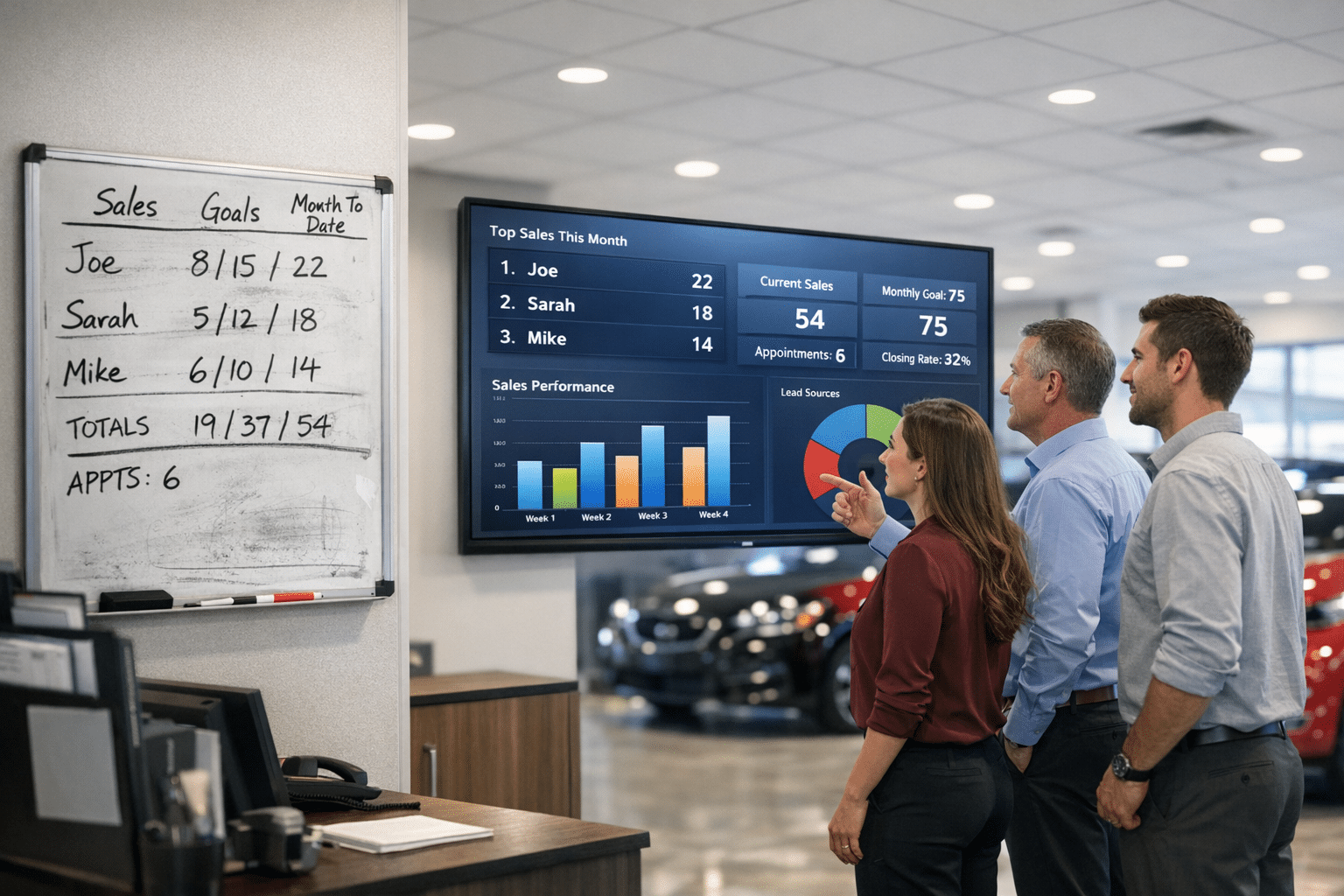
Every dealership wants stronger sales performance and a team that stays fired up. Old dry erase sales boards make that hard. They get messy, updates lag, and useful numbers slip away. Digital dealership leaderboards change that with real-time data and simple automation.
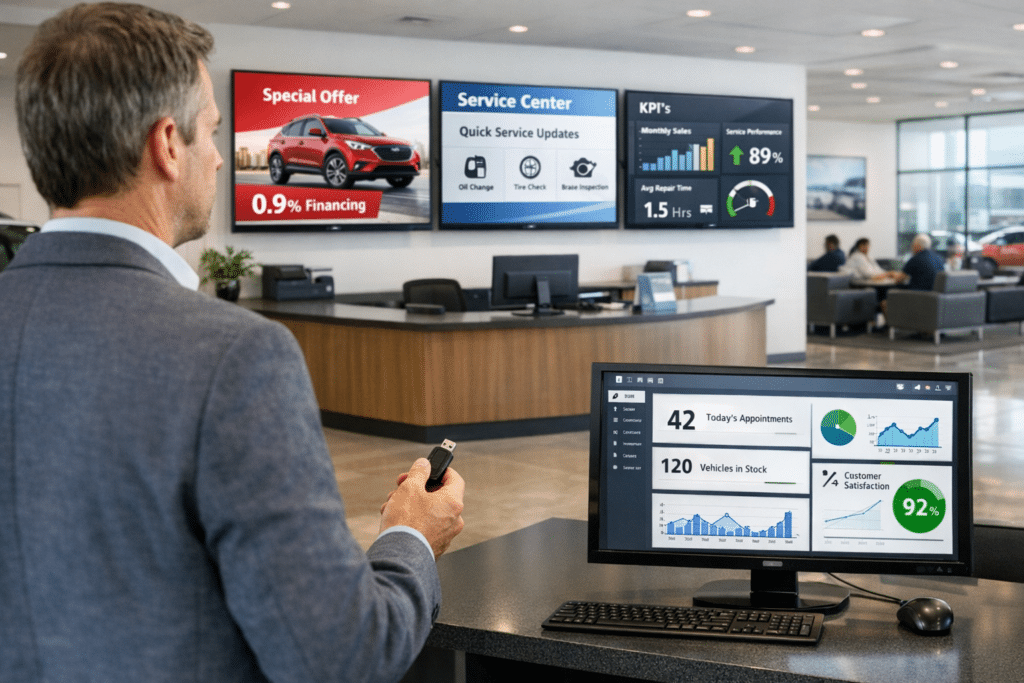
These screens show live updates on key performance indicators, called KPIs, for managers and staff. Goals, spiffs, and rankings stay current on the showroom floor where everyone can see them. The result is faster decisions and fewer mistakes.
This article compares board-and-marker tracking with modern digital tools. It explains the pros and cons, and how a switch can boost motivation and daily workflow. Keep reading to see how a smarter display can save time and lift results.
Key Takeaways
- Dry erase sales boards invite reporting mistakes, miss real-time updates, and make data tough to track for teams that rely on hand-written numbers.
- Digital dealership leaderboards provide live KPI dashboards, fast alerts for managers, and automated updates that lift productivity and motivation compared to marker boards.
- Automated digital displays improve customer engagement with timely promos in showrooms, and they connect with management tools for accurate analytics.
- Professional setup from Digital Dealership System makes installation smooth, with flexible options for any store size or budget.
- Dealerships using digital leaderboards see quicker goal tracking, stronger operations, and clearer performance metrics for every role.
What are the drawbacks of using dry erase sales boards?
Dry erase sales boards feel simple at first. Over time, they slow down the sales process and cloud the picture.
- Lack of real-time updates makes boards go stale fast. Staff may not see the latest counts, goals, or spiffs.
- Manual updates take time and invite errors. One missed deal or wrong tally can throw off the whole day.
- Boards need constant cleaning. Smudges, faint lines, and ghosting make numbers hard to read and less professional.
- Space is limited. There is never enough room for all teams, models, and goals, so info gets erased too soon.
- Basic visuals hold people back. Markers cannot show trend lines, charts, or motion that guide quick action.
- No automation means every change depends on a person to rewrite it. There are no alerts for milestones or risks.
- Data accuracy drops when writing by hand. That weakens trust in the numbers and slows manager decisions.
- Boards do not engage shoppers during tours. They only serve as internal tools, not customer-facing aids.
- Physical boards require being onsite. Remote staff and after-hours checks are tough or impossible.
- Productivity tools are missing. There are no instant charts, leaderboards, reports, or built-in engagement features.
These limits add up. Teams spend time fixing boards instead of selling cars and serving guests.
Benefits of using digital dealership leaderboards
Switching to digital dealership leaderboards brings clear, daily wins. Think of it as moving from a flip phone to a smartphone for store metrics.
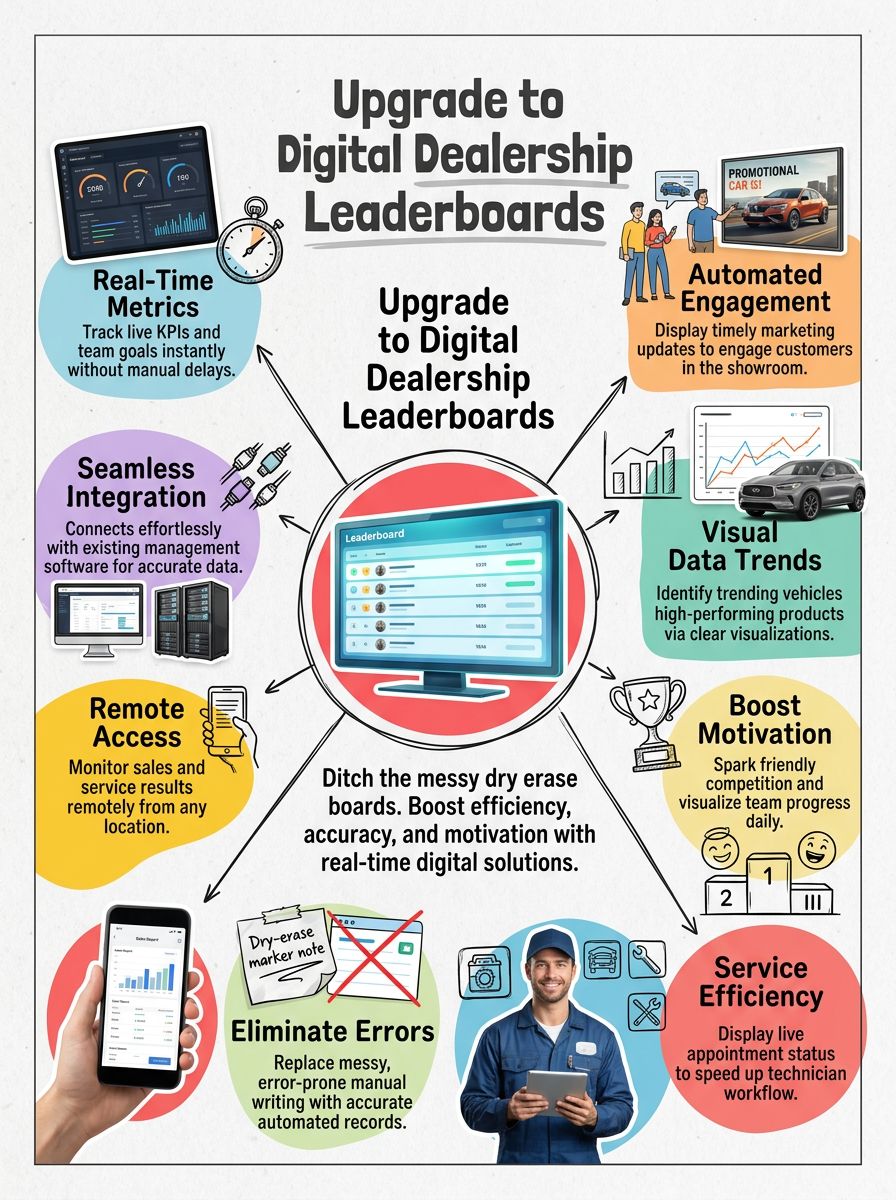
- Live KPI dashboards show real-time performance. KPIs are key metrics like units, gross, appointments, and close rate. Managers can track each person and team at a glance.
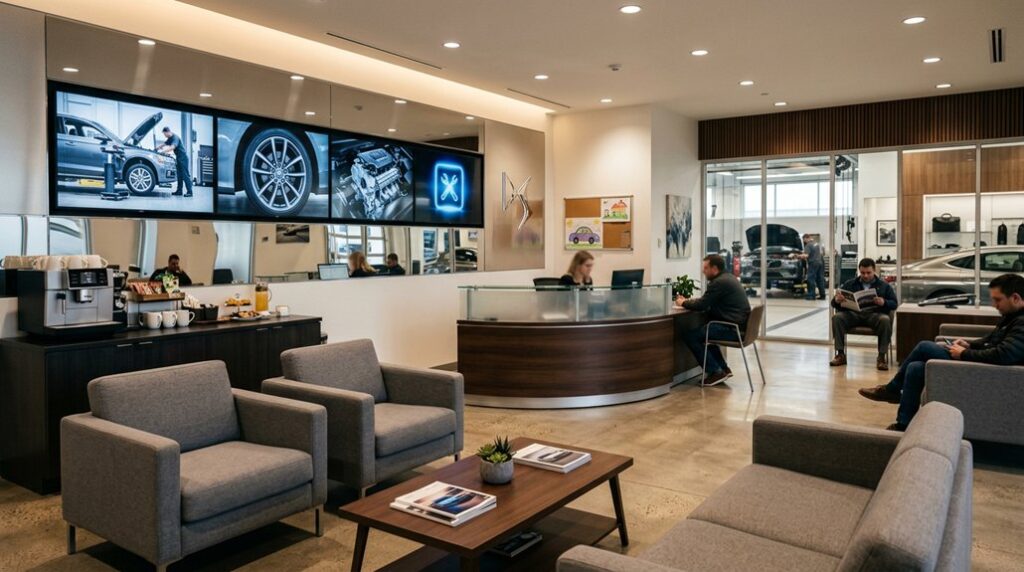
- Automated digital signage lifts customer engagement. Timely promos and service offers play across the showroom and service lounge without extra work.
- Easy data visualization turns raw numbers into charts and heat maps. Staff can spot which cars or service packages are trending and adjust focus quickly.
- Goal alerts keep leaders proactive. When targets are hit or missed, managers get notified. No more waiting on a wall chart update.
- Visible rankings fuel healthy competition. Progress shows on shared screens, which boosts energy and friendly push.
- Service flow improves. Appointment status and mechanic performance display live, which helps reduce wait times and raise satisfaction.
- Flexible setups fit any store. Start with a single screen or roll out connected dashboards across multiple rooftops.
- Marketing stays consistent. Specials and events update on all screens at once, so messaging matches what customers hear and see.
- Simple software integration keeps reports accurate. Systems connect with dealership tools for smooth analytics and clean data.
Dealers also gain time back. Less manual work means more coaching, more guest time, and more sold units.
Key factors before switching to digital leaderboards
Cost, ease of use, and solid installation support matter most. The Digital Dealership System team provides professional setup for digital signage and dashboards. That saves time and avoids tech headaches for busy stores.
Look for options you can shape to your needs and budget. Pick screen layouts, goals, brands, and colors that match your store. A small-town lot may need one screen. A metro group may want multi-store dashboards and advanced reporting.
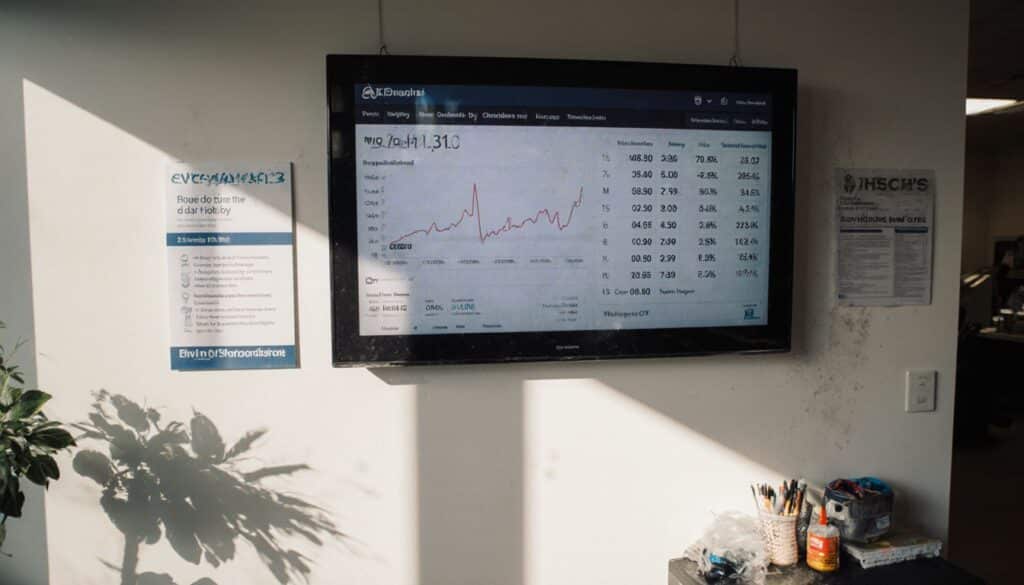
Sales analytics should be clear and live. Real-time KPI dashboards give accurate numbers every day. Automated updates keep the sales floor engaged, and interactive displays brighten the showroom experience.
Choose a system with business intelligence tools. These tools turn data into ready-to-use reports across sales, service, and finance. Managers and staff can see the same leaderboard, work the same plan, and hit goals faster.
Ask for quick customization and on-call support. A good partner helps fine-tune goals, data feeds, and layouts from start to finish.
Conclusion
Choosing between marker boards and digital dealership leaderboards shapes how teams track progress and stay motivated. Dry erase boards had their time. Modern digital tools now give a clearer view with real-time data and automation.
With live KPIs, easy reports, and visible rankings, teams stay focused and operations run smoother. Managers save hours each week and spend more time coaching and serving customers.
Professional installation from Digital Dealership System makes upgrades smooth for stores of any size. Ready to raise efficiency and morale? Explore a digital leaderboard demo, compare options, and see the lift in performance metrics across the dealership.
FAQs
1. What are the main differences between dry erase sales boards and digital dealership leaderboards?
Dry erase sales boards use physical surfaces for tracking goals, team performance, and daily results. Digital dealership leaderboards display real-time data on screens, update automatically, and integrate with your CRM or DMS systems. Both tools show progress but digital options offer instant updates and remote access.
2. How do digital dealership leaderboards improve efficiency compared to traditional dry erase boards?
Digital leaderboards save time by syncing directly with your existing software; no manual updates needed. Sales teams see live stats from anywhere in the store or even offsite. This reduces errors, boosts accountability, and lets managers focus on coaching instead of updating numbers.
3. Are there security or privacy benefits when switching to a digital leaderboard system?
Yes, digital systems protect sensitive information using secure logins and user permissions while limiting who can view or edit data. Dry erase boards leave details exposed in public areas where anyone can see them; this increases risk of unauthorized access.
4. Why should dealerships consider upgrading from dry erase sales boards now?
Upgrading helps you stay competitive as more dealers move toward automation and real-time reporting solutions that drive better decisions fast. Digital platforms highlight top performers instantly while supporting goal setting for every staff member—plus they look professional to both employees and customers alike.