
You’ll find that technicians perform better when they clearly understand their roles and expectations. Role clarity boosts confidence and accountability, while real-time performance tracking allows immediate adjustments. Clear performance metrics and feedback systems align their goals with organizational objectives, which enhances both job satisfaction and productivity. When technicians know where they stand, they’re more motivated and focused. By gaining insight into these dynamics, you can unleash the full potential of your technical team.
Key Takeaways
- Role clarity enhances confidence and accountability, boosting technician performance and initiative.
- Clear performance metrics enable technicians to align their efforts with organizational goals for better productivity.
- Real-time tracking identifies skill gaps, allowing technicians to make prompt adjustments and improve efficiency.
- Regular feedback provides technicians with a performance benchmark, motivating them to enhance their skills and output.
- Understanding their role fosters technicians’ job satisfaction and encourages ownership of tasks, improving overall performance.
Understanding Technician Roles and Why It Matters

A well-defined role is essential for technicians, as it directly impacts their productivity, job satisfaction, and overall performance. When you have role clarity, you can perform tasks with confidence, knowing exactly what’s expected. This not only boosts your productivity but also increases job satisfaction. Having clear expectations fosters accountability, which in turn strengthens technician engagement. You’re more inclined to aim for quality work and embrace responsibility when there’s transparency. Defined roles help you prioritize effectively, reducing confusion and contributing to a smoother workflow within your team. Additionally, knowing your responsibilities enables you to take the initiative in supporting extra tasks, enhancing operational efficiency. Regular feedback further enforces this clarity, making you feel valued and motivated, and improving team dynamics.
The Power of Clear Performance Metrics
You’ll find that clear performance metrics are essential because they set transparent goals and expectations, providing technicians with a tangible framework for what success looks like. This clarity enables real-time performance tracking, which not only allows for timely feedback but also creates a clear path for improvement. By aligning individual efforts with organizational objectives through well-defined benchmarks, technicians can enhance their productivity, accountability, and overall job satisfaction.
Transparent Goals and Expectations
While unambiguous targets may seem trivial, the power of clear performance metrics in improving technician effectiveness shouldn’t be underestimated. Key aspects of goal clarity and expectation management drive improved results:
- Concrete Benchmarks: You’re given tangible criteria to evaluate performance, boosting motivation.
- Aligned Efforts: Knowing what’s expected aligns your work with broader organizational goals, enhancing team cohesion.
- Regular Feedback: Transparent goals provide a foundation for constructive feedback, encouraging continuous development.
- Reduced Ambiguity: Clear expectations help you focus on critical tasks, minimizing distractions.
- Self-Assessment and Adjustment: Understanding metrics empowers you to self-evaluate and refine your methods, fostering better outcomes and building client trust.
These insights reveal that transparent goals are crucial for both personal and team success.
Real-Time Performance Tracking
Ten seconds—that’s the average duration within which real-time performance tracking systems can deliver feedback to technicians, transforming how they execute their tasks. With tracking technology, you gain immediate performance insights, granting you autonomy to adjust your efforts swiftly. Data visualization makes clear performance metrics accessible, establishing transparent expectations and fostering an accountability culture. Consistent feedback loops help you recognize where you stand against performance benchmarking, encouraging continuous improvement. By identifying skill gaps quickly, engagement initiatives and skill enhancements become more targeted, improving your competence. Furthermore, motivation strategies flourish when achievements are recognized, positively impacting team morale. Real-time tracking doesn’t just adapt your strategy— it turns immediate data into a compelling narrative of growth and accountability.
Clear Path for Improvement
When technicians have access to clear performance metrics, it greatly enhances their ability to improve productivity because they gain precise goals and an actionable framework for self-assessment. These metrics illuminate a structured path for skills development and continuous self-improvement. By understanding where you stand through competency assessments, you can tailor performance coaching and embrace training opportunities effectively.
- Goal setting workshops help you design realistic self-improvement plans.
- Regular performance reflection encourages embracing growth and refining capabilities.
- Motivational strategies derived from clear metrics boost job satisfaction and engagement.
- Defined benchmarks empower you to focus efforts precisely where improvement’s needed.
- Transparent evaluations eliminate uncertainty, aligning your efforts with organizational objectives.
With these insights, clear metrics pave the way for a robust and fulfilling career trajectory.
How Goals Drive Technician Productivity
When you’re aware of your goals, you naturally become more engaged and focused, which greatly enhances your performance. Understanding and aligning your objectives with company priorities not only boosts your motivation but also fosters a sense of accountability that encourages you to exceed expectations. This synergy between clear expectations and motivation not only streamlines processes but also leads to improved workplace productivity and satisfaction.
Clear Expectations Enhance Performance
Although often overlooked, setting clear expectations is an essential factor in driving technician productivity. When there’s expectation clarity, technicians can align their efforts with organizational objectives, leading to performance consistency. Understanding what’s expected helps you stay focused and efficient. Key elements that enhance performance through clear expectations include:
- Precise goals guide technicians towards achieving specific outcomes.
- Transparent performance metrics allow you to track progress and foster accountability.
- Regular feedback sharpens clarity and lets you make timely adjustments.
- Awareness of your standing among peers can ignite healthy competition and boost productivity.
- Open communication of objectives guarantees cohesive team efforts, aligning individual and group goals.
Goal Alignment Boosts Motivation
By aligning individual goals with organizational objectives, technicians experience a heightened sense of motivation and purpose. Goal clarity fosters ownership empowerment, which greatly boosts engagement and productivity. You might find that when technicians understand how their roles support larger team objectives, their drive to excel strengthens.
| Aspect | Impact |
|---|---|
| Goal Clarity | Boosts ownership and engagement |
| Understanding Objectives | Enhances productivity by up to 20% |
| Regular Feedback | Reinforces motivation and performance |
| Organizational Alignment | Increases satisfaction and retention rates |
Evidence suggests that technicians with well-defined objectives outperform counterparts lacking such clarity. Regular updates on progress perpetuate a cycle of motivation, as you see firsthand the difference your work makes. Implementing goal alignment not only sharpens focus but also cultivates a fulfilled, productive workplace.
Effective Feedback Systems for Greater Engagement
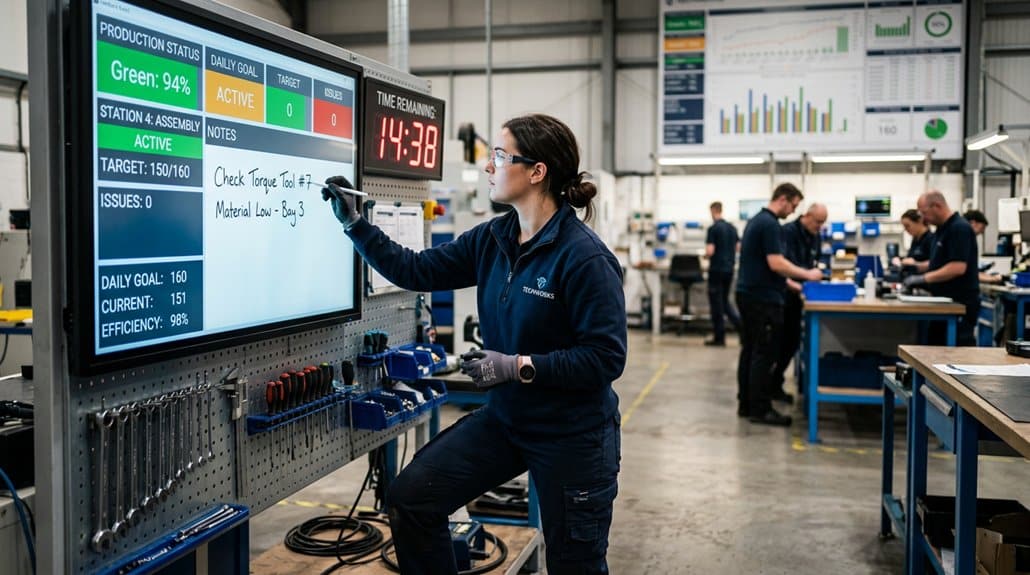
An effective feedback system is a cornerstone for enhanced technician engagement, providing them with clear performance metrics that highlight both strengths and areas in need of improvement. By establishing robust feedback loops and integrating performance reviews, you foster an improvement culture where technicians are encouraged through continuous feedback. This approach uses:
- Constructive communication to nurture technician engagement,
- Recognition strategies to amplify morale and collaboration,
- Data utilization to address skill gaps and refine abilities,
- Transparent expectations to cultivate accountability,
- Targeted development that enhances job satisfaction.
When technicians know they’re valued through structured recognition, they become more motivated. Data-driven insights from this system not only identify areas for growth but also pave the way for tailored training, boosting productivity and overall team performance.
Strategies to Align Technician Goals With Business Objectives
Building upon the foundation of effective feedback systems, aligning technician goals with business objectives further enhances engagement and performance. You can foster goal ownership by involving technicians in setting their objectives, which promotes buy-in and commitment. Clear communication of business objectives guarantees that technicians understand their role in organizational success, increasing productivity. Transparency is key—establish measurable performance indicators to let technicians track progress, boosting accountability and motivation. It’s vital that technicians feel their contributions are recognized; regular feedback and acknowledgment of achieved goals establish a positive workplace culture. This approach not only aligns goals but also increases job satisfaction and lowers turnover, creating a win-win situation for both technicians and the organization.
Key Tools That Boost Technician Output
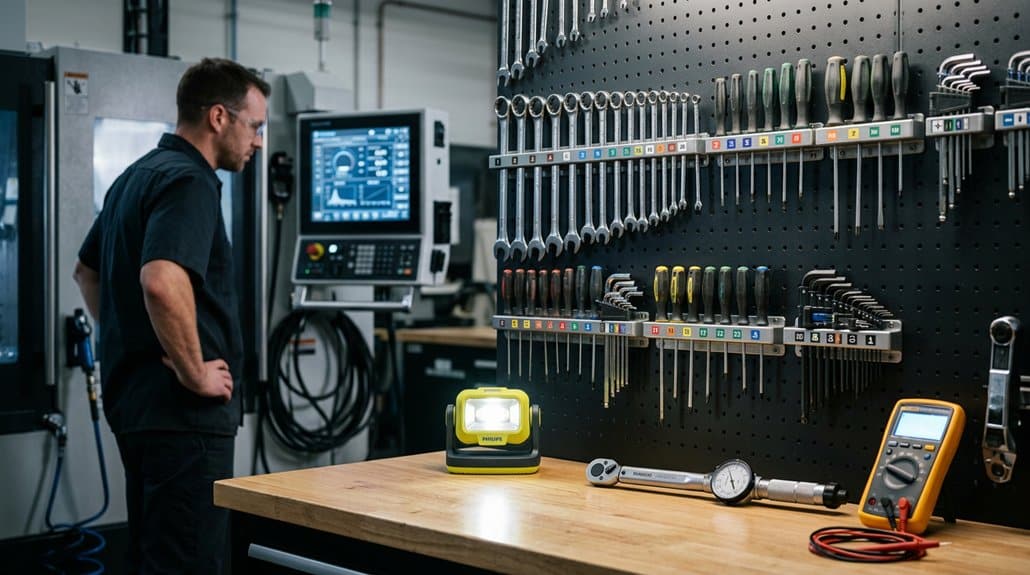
Although the role of advanced tools in enhancing technician output cannot be overstated, it’s the precision and specificity of these tools that truly amplify efficiency and effectiveness. The right tool selection plays an essential part in this dynamic, boosting technician output by focusing on critical efficiency factors:
- Torque wrenches with well-defined specifications (e.g., 400 ft/lbs) help minimize errors.
- Specialized tools for specific models like the Tata Indica V2 enhance repair precision.
- Combined ratchet keys and indispensable hand tools streamline workflows effectively.
- Data-driven diagnostics tools facilitate prompt, accurate issue assessments.
- Organized tool inventory guarantees quick access, reducing workflow downtime.
Creating a Workspace Technicians Love
While selecting the right tools is instrumental in boosting technician efficiency and effectiveness, the environment where these tools are deployed is equally significant. A well-crafted workspace not only improves productivity but also elevates technician satisfaction. Integrating ergonomic equipment reduces physical strain, enhancing technician comfort and allowing focus on tasks without distraction. Effective workspace aesthetics, including organization and cleanliness, are proven to minimize diversions, helping you consistently meet performance expectations. Additionally, an atmosphere that prioritizes teamwork and support strengthens communication, expediting problem-solving. You’ll find that regular feedback and recognizing contributions will instill a sense of ownership among technicians, driving them to uphold superior work standards. By shaping a workspace technicians love, you foster a motivated, efficient, and cohesive team.
Fostering Ongoing Improvement in Technical Roles
Regular performance feedback for technicians catalyzes engagement, driving them to actively seek improvement opportunities. They perform better when they understand their roles, driven by an accountability culture and the desire for skills enhancement. This environment benefits from several critical practices:
- Clarity in Job Expectations: Sets a solid foundation, motivating you to exceed standards.
- Open Communication: Encourages dialogue about skill enhancement and problem-solving.
- Performance Metrics: Understanding these increases your job satisfaction and reduces turnover.
- Career Progression Opportunities: Clearly defined paths fuel your motivation for ongoing training.
- Management Support: Fosters a sense that your career development is prioritized.
Why Adaptability Is Key in Technical Environments
In today’s rapidly evolving technical environments, adaptability isn’t just a desirable trait—it’s essential for technicians seeking to excel in their roles. Adaptive learning enables you to swiftly acquire new skills or technologies, ensuring your value in an industry where standards are constantly shifting. When priorities change abruptly or crises arise, effective crisis management hinges on your ability to adapt quickly, facilitating quicker problem-solving with complex machinery or client demands. This adaptability enhances operational efficiency and fosters resilience, helping you maintain high productivity under pressure. Additionally, flexible technicians like yourself are better equipped to work with diverse teams, improving communication and workflow as you navigate dynamic situations. Embrace adaptability to boost team morale and remain competitive in technical fields.
Frequently Asked Questions
How Does Communication Impact Technician Performance?
Communication directly affects your performance as a technician by enabling clear feedback loops. When you understand performance metrics, you’re better equipped to analyze your work, identify areas for improvement, and efficiently achieve ideal results.
What Role Does Team Collaboration Play in Technician Success?
Team collaboration is the engine driving technician success. By harnessing team dynamics and collective problem solving through shared goals, performance feedback, collaborative tools, and peer support, you’ll elevate productivity and uncover innovative solutions more effectively.
How Are Technical Challenges Identified and Addressed?
You’ll identify technical challenges through systematic challenge assessment, using data analysis and feedback. Address them by solution implementation, applying best practices and innovative strategies, ensuring efficiency and reliability in your technical operations for successful problem resolution.
What Training Programs Improve Technician Skills?
To improve your skills, engage in hands-on workshops and earn online certifications tailored to your field. Mentorship programs provide guidance, while regular skill assessments help identify areas for growth. This multifaceted approach guarantees continuous improvement in your technical abilities.
How Is Technician Morale Linked to Overall Performance?
Technician morale directly impacts overall performance as it ties to how feedback and performance metrics are communicated. When you understand your standing through transparent metrics and constructive feedback, you’re more likely to stay motivated and perform better.
Conclusion
Imagine a world where every technician knows exactly where they stand, driving them to excel like never before. Picture clear metrics guiding their actions, goals igniting their passion, and feedback systems nurturing their engagement. Envision a synergy between technician objectives and business goals, powered by indispensable tools and enthralling workspaces. As adaptability fuels their continuous improvement, the stage is set for unprecedented productivity. Will your organization harness these insights to redefine success in technical roles?