You can turn idle showroom minutes into measurable sales momentum by deploying large, high-def TVs that auto-update targeted promos, walkaround videos, testimonials, and live inventory tickers. Place screens at entry and waiting areas, track dwell and interaction rates, and automate playlists for peak demographics to boost recall and shorten decision cycles. Embed QR codes and link feeds to web, email, and social for traceable touchpoints. Keep content fresh and family-friendly, and continue for tactics, KPIs, and fixes.
Key Takeaways
- Use large, eye-level HD screens in entry and waiting areas to capture attention and reinforce brand identity.
- Run short, high-frequency promos and rotating feature videos to highlight new models, services, and limited-time offers.
- Embed QR codes and links to sync showroom content with web, email, and social campaigns for measurable engagement.
- Display authentic customer testimonials, live inventory tickers, and service updates to build trust and urgency.
- Automate content schedules and track view/interaction KPIs to optimize messaging and prevent stale playlists.
What Showroom TVs Do : And 3 Quick Wins
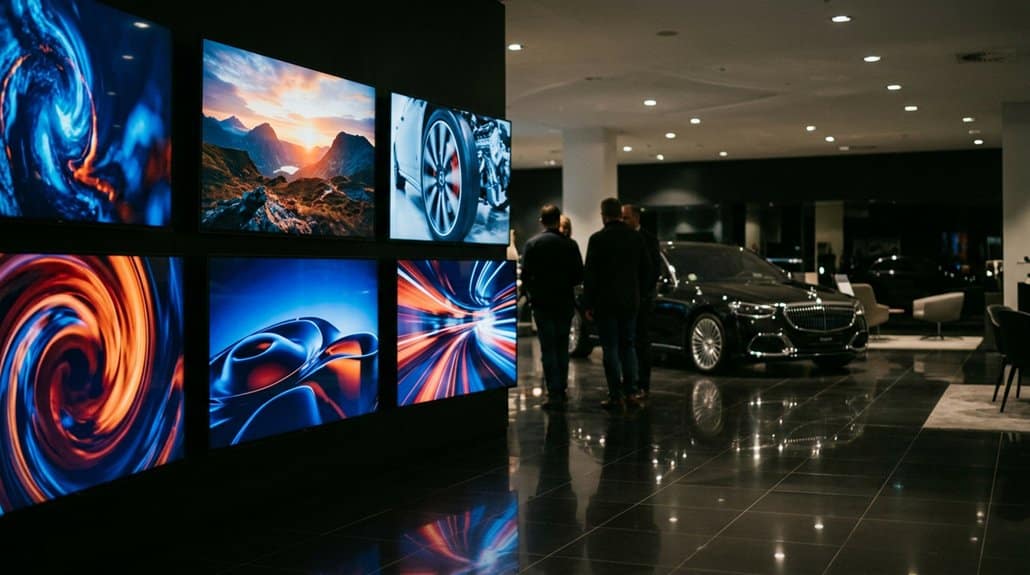
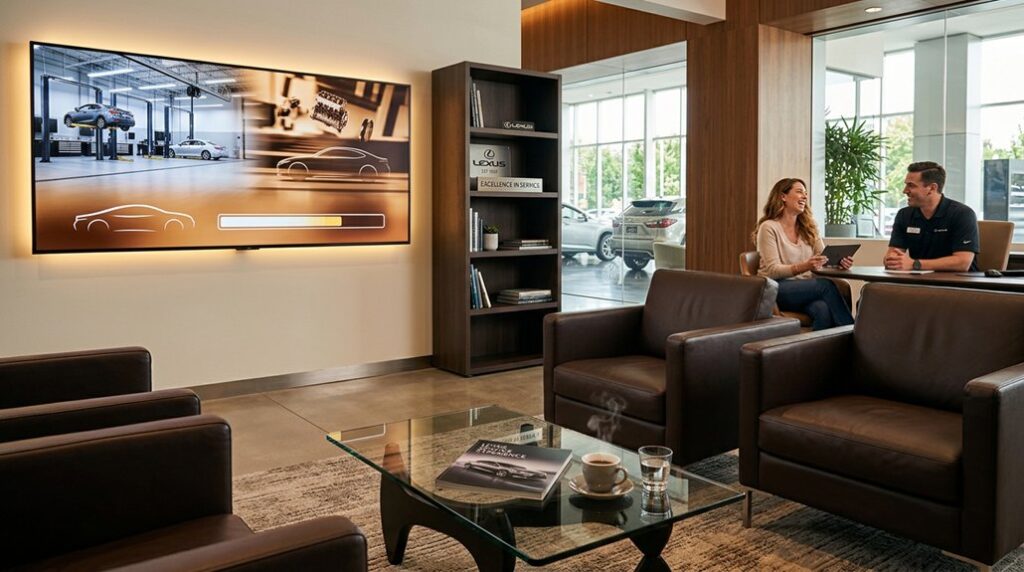
While customers wait, showroom TVs turn idle time into a conversion opportunity by delivering dealership-specific content that boosts brand recognition and engagement; you’ll use them to drive customer engagement through a focused content strategy that aligns with sales and service goals. Start with three quick wins: 1) automatic content updates that keep messaging timely and increase repeat impressions, improving recall metrics; 2) customizable programming to highlight promotions, unique services, and inventory tailored to typical buyer segments; 3) educational videos on trends and services that raise purchase confidence and shorten decision cycles. Include real-time vehicle availability and service status feeds to reduce uncertainty and streamline communication. These tactics give you measurable uplift in awareness, dwell time, and conversion.
Choose Screens and Placements for Maximum Attention
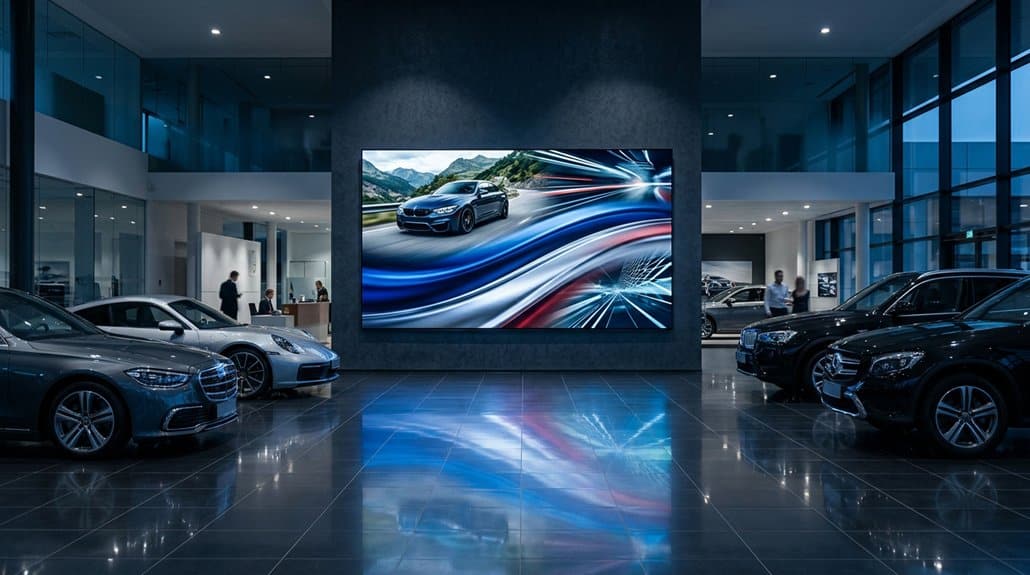
Because placement and screen choice directly shape what customers notice and remember, plan your displays like a sales funnel: prioritize large, high-definition panels in entry points and waiting lounges to grab attention, add eye-level positioning for easy viewing from multiple angles, and deploy interactive touchscreens where you want deeper exploration of specs and inventory. You should select screen types based on viewing distance and traffic flow—LED walls for impact, UHD TVs for close-range clarity, and touch kiosks for exploration. Your placement strategy must map customer paths: sightlines from reception, lines, and vehicle aisles. Measure dwell time and interaction rates to refine locations. Rotate hardware and update mounts to optimize sightlines; small changes in angle or height can lift engagement metrics and increase showroom conversion.
Content Mix: Video, Promos, Live Feeds
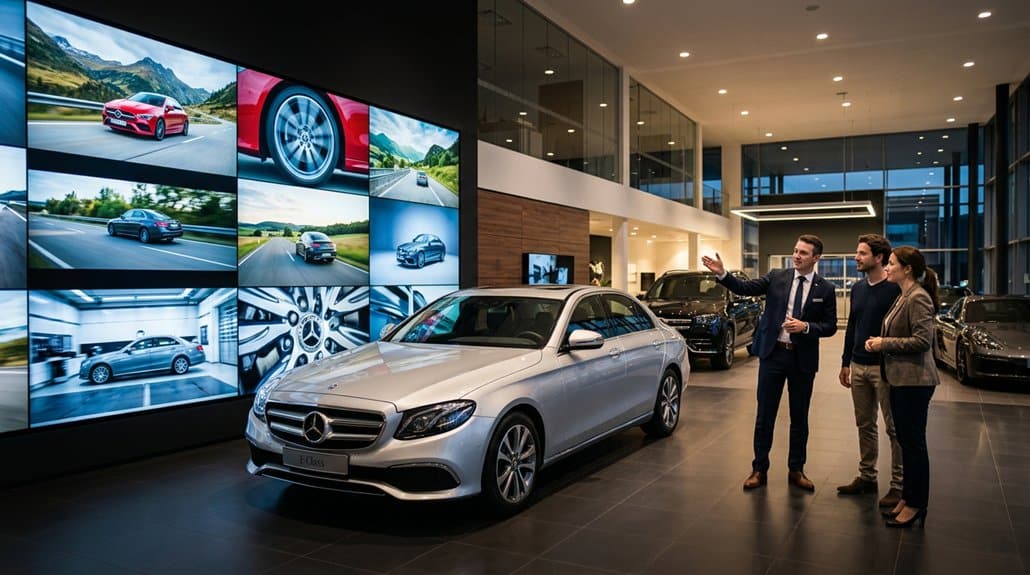
Mixing short promotional spots, customer testimonials, and live feeds lets you balance attention-grabbing impact with trust-building depth—promos drive urgency and feature awareness, testimonials boost credibility and intent, and live feeds signal authority and relevance. You should design a content schedule prioritizing high-frequency short promos to maximize video engagement and immediate showroom upsell opportunities. Pair those with weekly live feeds from industry events or local dealership happenings to reinforce expertise and topical relevance. Rotate longer feature videos monthly to spotlight new models and services, using geo-targeted promotional strategies to tie offers to community interests. Track view rates and on-floor behaviors to optimize runtimes and message mix; data-driven tweaks will sustain interest and convert casual viewers into repeat customers.
Customer Segments: Testimonials, Walkarounds, Demos
You’ve already seen how promos, testimonials, and live feeds shape attention and trust; now focus on tailoring those assets to specific customer segments with testimonials, walkarounds, and demos. You’ll leverage testimonial impact and measurable video engagement to convert intent into purchase decisions. Use segment-specific stories that mirror buyers’ priorities—commuters, families, luxury seekers—to build relatability and loyalty.
- Prioritize authentic testimonials: 42% of buyers value experience over price, so rotate fresh customer stories.
- Produce targeted walkarounds: highlight features each segment values to deepen exploration.
- Deploy demo clips: show daily-use benefits that answer segment-specific objections.
- Track engagement metrics: optimize content cadence and format to boost conversions.
This strategic, data-driven approach keeps showroom content relevant and persuasive.
Add Service Updates and Live Inventory Alerts
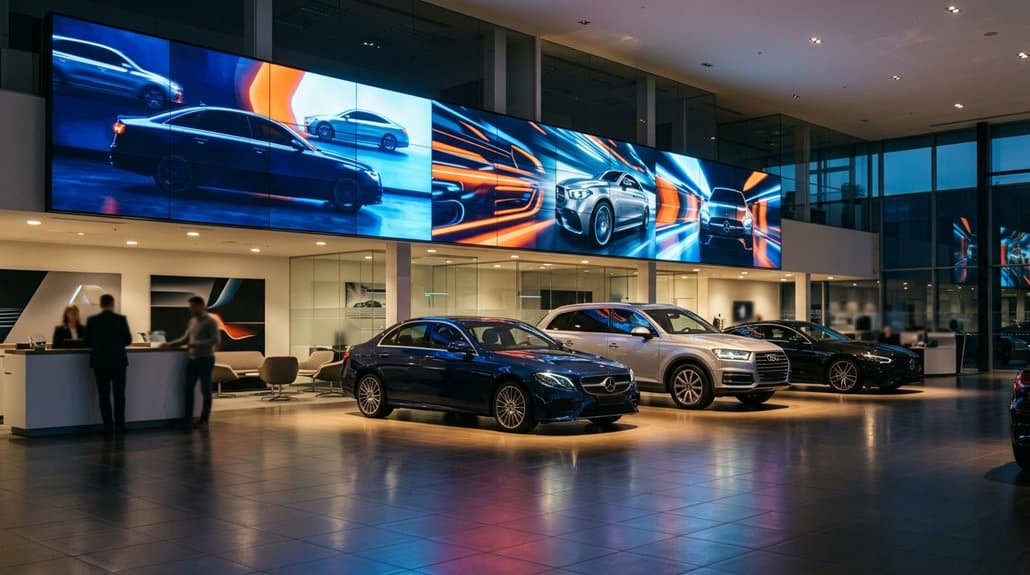
You can use showroom TVs to push real-time service alerts that tell customers exactly when their car will be ready, which studies show raises perceived service transparency and satisfaction. Pair that with live inventory tickers highlighting new arrivals and limited-time offers to create measurable urgency—dealerships reporting dynamic displays see higher foot traffic and quicker decision cycles. Together these feeds turn passive waiting areas into conversion engines that keep customers informed and more likely to buy or return.
Real-Time Service Alerts
When service bays are busy, real-time alerts on showroom TVs keep customers informed about their vehicle’s status and reduce uncertainty, which boosts perceived transparency and trust; by surfacing live service updates and newly arrived inventory or promotions, dealerships can prompt immediate conversation, increase upsell opportunities, and shorten perceived wait times. You’ll drive measurable customer engagement and transparency enhancement by integrating service updates with digital signage, making maintenance needs visible and prompting proactive scheduling. Real-time alerts also create a dynamic environment that stimulates staff-customer interaction and raises retention.
- Reduce perceived wait time: visible status updates.
- Increase conversions: timely promotions drive inquiries.
- Improve NPS: transparency builds loyalty.
- Boost service revenue: proactive upsell triggers.
Live Inventory Tickers
After showing customers real-time service status, keep that momentum with live inventory tickers that blend vehicle availability and service updates into one continuous feed. You’ll use live inventory alerts to spotlight new arrivals, popular models, and limited-time promotions while simultaneously surfacing service reminders and maintenance offers. Data shows real-time displays cut perceived wait times and boost satisfaction, so integrating service updates drives transparency and trust. Strategically, tickers create urgency—flashing low-stock alerts and timed offers increases conversion rates. Tactically, tie the ticker to CRM triggers so sales teams see who engaged and when. Measured outcomes include higher customer engagement, faster turn on hot inventory, and improved service uptake. Deploying concise, data-driven tickers turns showroom TVs into revenue-generating communication hubs.
Schedule & Automate Showroom TV Content
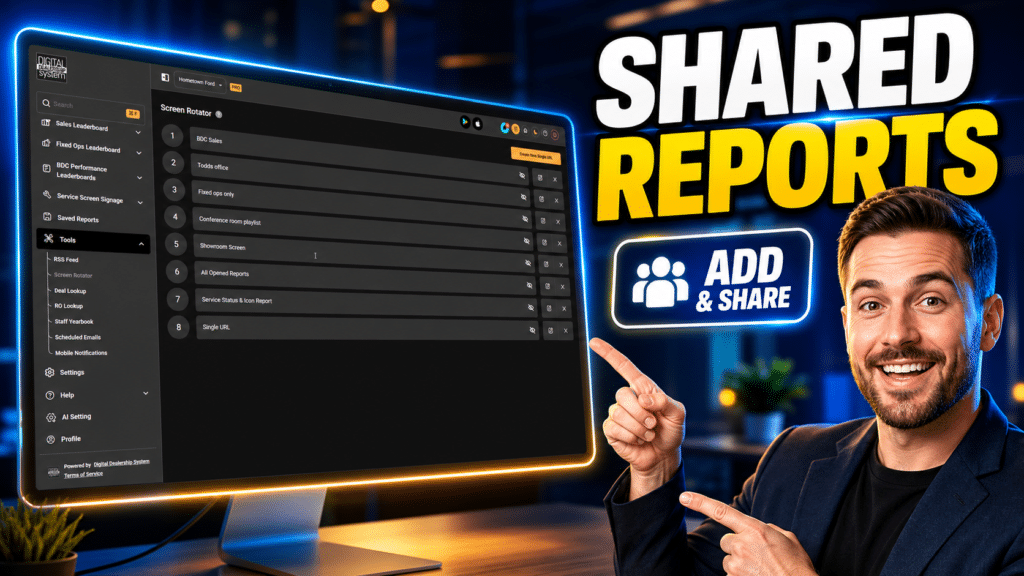
You can set automated daily playlists to guarantee a consistent mix of dealership promos, manufacturer videos, and service updates that keep visitors informed and engaged. With real-time content updates pushed from cloud software, your screens always show the latest offers and inventory changes without manual intervention. Use scheduling by audience—time-of-day and demographic targeting—to boost relevance and increase retention and conversion rates measurably.
Automated Daily Playlists
A smart, automated daily playlist lets your showroom TVs run like a silent salesperson—delivering scheduled, family-friendly videos about new models, promotions, and services without staff intervention. You’ll use content curation and engagement strategies to program rotating blocks that match customer demographics, increasing relevance and dwell time. Automation reduces staff workload while ensuring consistency and brand professionalism; regularly refreshed playlists with manufacturer releases keep messaging current and measurable. Topic blocking lets you target audiences by interest, maximizing conversion potential. Track metrics to prove ROI: play counts, average watch time, and promo-driven inquiries. A compact plan:
- Schedule family-friendly model showcases.
- Insert timed promotions and service reminders.
- Rotate manufacturer releases weekly.
- Target blocks by customer profile.
Real-Time Content Updates
When real-time content updates are tied to your showroom TVs, they’ll always display the latest promotions, arrivals, and service specials without staff intervention—cutting manual workload while keeping messaging timely and relevant. You can schedule and automate content to rotate dynamic promotions and new inventory instantly, ensuring visitors see what’s most important. Data shows refreshed displays boost dwell time and increase upsell opportunities, so automated feeds convert attention into measurable results. Integration with digital-signage platforms lets you push targeted creative based on inventory changes or local events, improving customer engagement without extra headcount. Adopt rules-driven updates and analytics to optimize play patterns, reduce wasted impressions, and prove ROI—turning your showroom screens into a revenue-generating channel.
Scheduling By Audience
Because different customers bring different priorities to your showroom, scheduling content by audience lets you serve the right messages at the right times—using analytics to target demographics, peak visit windows, and buying intent so displays drive engagement and conversions. You’ll use audience insights to map who’s here and when, then automate playlists that match needs—family SUVs during after-school hours, commuter EVs at rush-hour, premium models during weekend shoppers. Dynamic scheduling keeps promotions current and cuts manual updates, freeing staff to sell. Integrate testimonials, specs, and lifestyle clips to create varied touchpoints that reinforce targeted messaging and shorten decision cycles.
- Identify demographics and peak times
- Automate tailored playlists
- Rotate dynamic promotions
- Measure engagement and optimize
Link Showroom TVs to Web, Email, and Social Campaigns
Although the showroom floor is where customers make buying decisions, linking your showroom TVs to web, email, and social campaigns turns passive displays into measurable touchpoints that drive online-to-offline conversion. Use digital integration to sync real-time promotions with your website so visitors see consistent offers whether they browse at home or on the lot. Embed QR codes that route prospects to tailored landing pages and limited-time deals, and tie TV content to segmented email blasts to showcase personalized offers that boost customer engagement. Pull moderated social feeds and testimonials onto screens to reinforce community credibility and encourage follows and shares. Promote interactive social prompts on TV to capture UGC and drive cross-channel interaction, turning attention into tracked leads and repeat visits.
How to Measure Success: Simple KPIs for Showroom TVs
Linking showroom TVs to your web, email, and social campaigns sets up measurable touchpoints, so next you should define the KPIs that prove those screens are moving customers and revenue. You’ll use KPI benchmarks and engagement metrics to prioritize impact: measure foot-traffic lift in the months after TV deployment, track average viewing duration and play frequency to spot popular content, compare pre/post sales to quantify revenue uplift, and survey recall for brand awareness. Turn these into actionable targets and reporting cadence so teams act on signals. Use attribution tags on inquiries and test-drive requests to capture leads tied to TV content. Regularly review benchmarks, optimize creative, and report outcomes to show clear ROI from showroom TVs.
- Foot-traffic lift
- Viewing duration & frequency
- Sales uplift percentage
- Recall rate & lead attribution
Common Pitfalls and Fast Fixes
When showroom TVs go stale or miss the mark, you’re not just wasting a screen—you’re losing measurable engagement and potential sales; fixable issues like outdated playlists, untargeted content, and missing service updates are easy to detect and correct. You should audit playlists weekly, enable automatic content updates, and use topic blocking controls so your content strategy aligns with buyer personas. Swap generic clips for dealership-specific commercials and family-friendly programming to boost brand recall and a welcoming atmosphere. Integrate real-time service status feeds to improve customer convenience and measurable audience engagement.
| Pitfall | Fast Fix |
|---|---|
| Stale playlists | Automatic updates, weekly audits |
| Irrelevant content | Topic blocking, audience targeting |
| No service updates | Real-time feed integration |
Frequently Asked Questions
How Much Does a Car Salesman Make off a $20,000 Car?
You’d typically earn about $1,000–$1,500 on a $20,000 sale assuming 20–30% of $1,500–$3,000 gross profit; with lower margins you’d get $300–$600, so optimize commission structure and sales techniques.
What Is the Hardest Month to Sell a Car?
January’s the trickiest month to sell a car — you’ll face steep sales trends and seasonal fluctuations. Use data to target cautious buyers, lean into clearance incentives, and craft persuasive, strategic offers that counter slowed demand effectively.
What Kind of Advertising Does a Local Car Dealership Use?
You’ll use targeted TV and digital ads, social media, email, PPC, and digital signage in-showroom to boost customer engagement; data shows doubling ad spend and integrated channels can sharply raise web visits, inquiries, and sales.
How to Attract Customers to a Car Dealership?
You attract customers by using targeted ads, interactive displays, and customer engagement tactics that boost visibility and conversions; test targeted promos, measure increases in visits, and optimize content to drive foot traffic and loyalty.
Conclusion
Showroom TVs turn browsers into buyers when used strategically. One study found in-store digital signage can lift sales by up to 31%, so prioritize high-impact placements, a video-forward content mix, and automated schedules tied to inventory and service alerts. Target segments with testimonials, walkarounds, and demos, then link displays to web, email, and social for measurable lift. Track impressions, dwell time, and conversion to iterate quickly and keep brand excitement high.