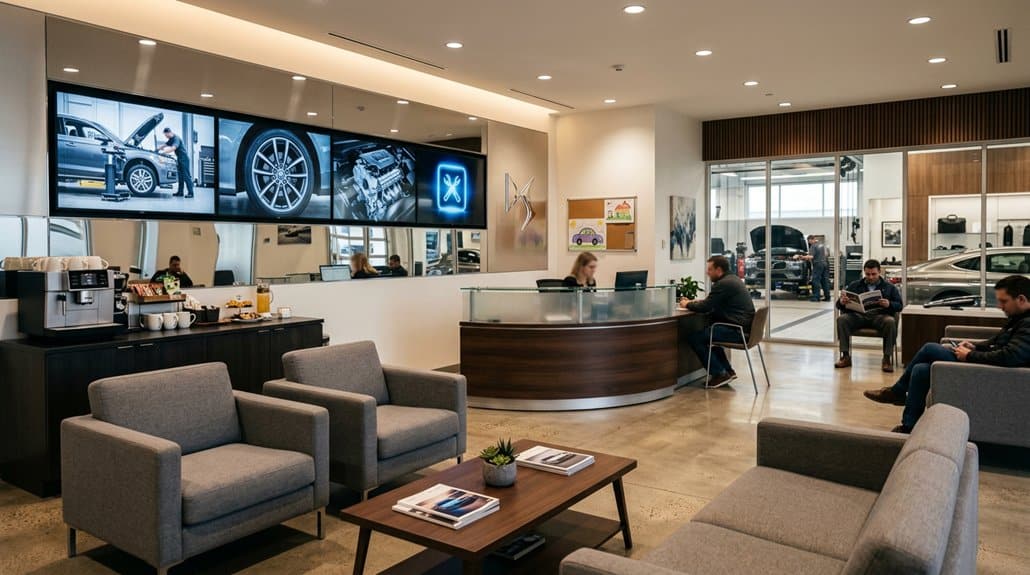
Your service waiting room is a controllable, high-impact marketing channel: captive customers spend measurable dwell time, engage with TV content and Wi‑Fi, and respond well to testimonials and local partnerships. Use curated videos to educate and justify services, premium seating and charging stations to boost satisfaction, and analytics to track KPIs like CSI and upsell conversion. Small tech and content investments yield clear ROI through repeat business and higher spend — keep going to see practical steps and metrics.
Key Takeaways
- Captive customers in the waiting room provide a high-attention audience ideal for targeted marketing messages.
- Waiting room screens and Wi‑Fi create measurable engagement channels for upsells, specials, and service education.
- Comfortable seating and amenities increase satisfaction and dwell time, improving receptiveness to promotions.
- Rotating testimonials and maintenance tips build trust and justify recommended services, boosting repeat business.
- Analytics from media players and surveys establish KPIs to prove ROI and optimize marketing content.
Why Your Auto Service Waiting Room Is a Marketing Channel
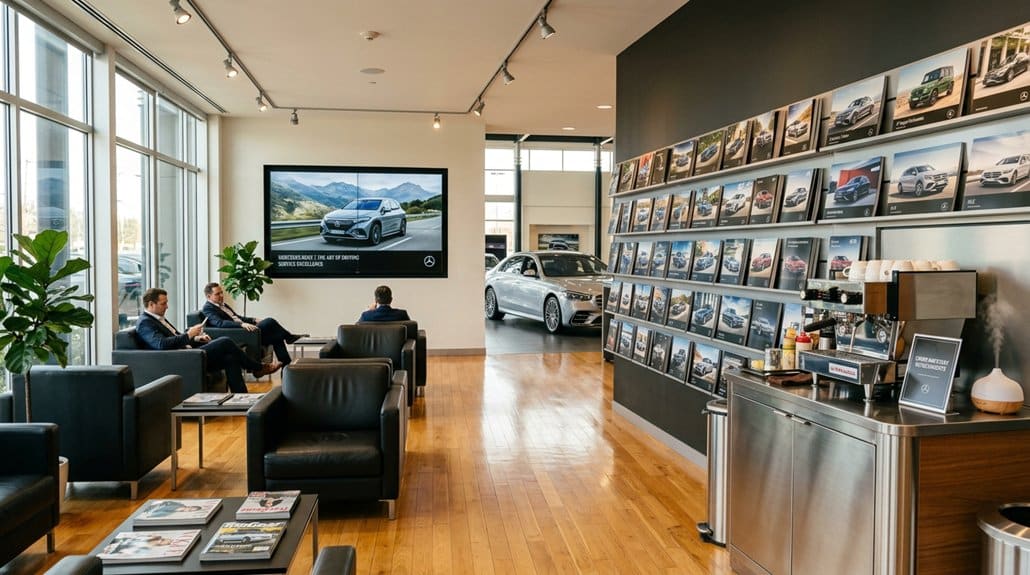
Because your customers are already captive and engaged, the waiting room is more than comfort—it’s a high-impact marketing channel you can measure and optimize. You can turn that 75%-plus expectation for comfort into measurable customer engagement by tracking dwell time, TV interactions, and click-throughs from QR-enabled displays. Use waiting room TV to showcase in-house services and upsell opportunities, and display testimonials to boost trust metrics and repeat rates. Partnering with local businesses reinforces community ties and enhances brand loyalty, which you can quantify through referral codes or promo redemptions. Amenities like free Wi-Fi and charging stations aren’t just conveniences—they’re touchpoints that improve satisfaction scores and brand perception. This strategic, data-driven approach makes your waiting area a verifiable extension of your dealership’s brand storytelling.
What Customers Want in an Auto Service Waiting Room
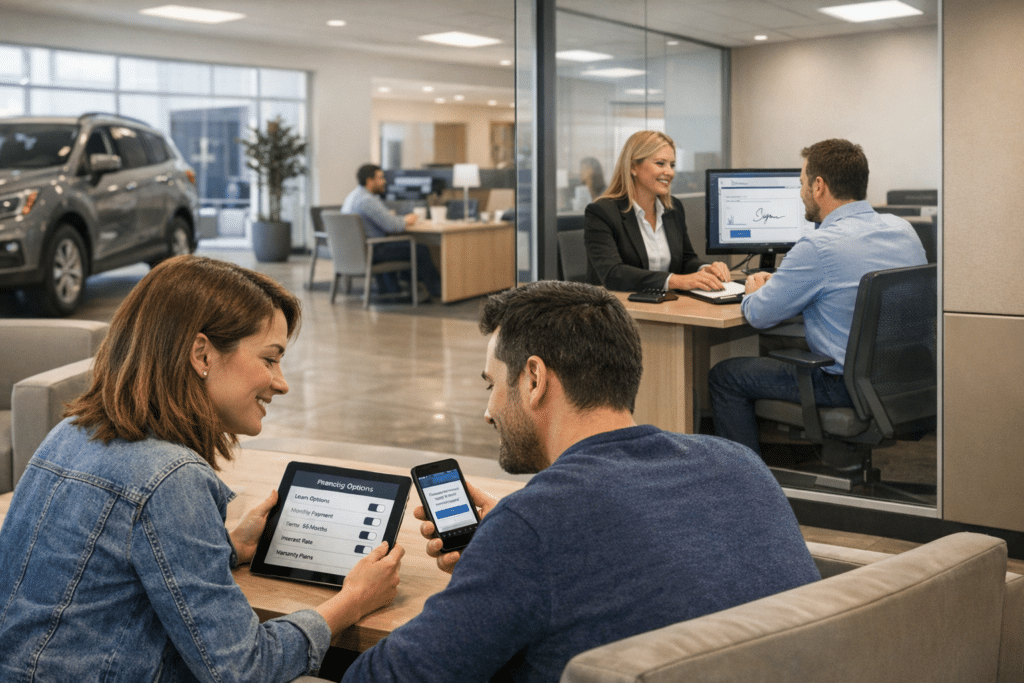
You’ll want to prioritize comfortable seating options because over 75% of customers say a well-designed lounge is critical to satisfaction, so seating quality directly affects your brand perception. Equally important are productive workstations—about half of customers want dedicated spaces to work while they wait, which lets you capture more dwell time and goodwill. Pair these with charging points and fast guest Wi‑Fi to reinforce a modern, service-oriented brand experience.
Comfortable Seating Options
Comfortable seating is a strategic investment: over 75% of customers say quality lounges are critical to satisfaction, so your waiting area should prioritize ergonomics, durability and style. You’ll want ergonomic designs that support healthy posture for longer waits and convey that your brand cares about customer well-being. Choose seating materials that balance easy maintenance with premium appearance—vinyl or treated textiles for durability, perforated leather or mesh for breathability. Because roughly half of customers expect productive options, guarantee some chairs accommodate device use and charging without converting the space into a workstation. Track satisfaction metrics after upgrades to quantify ROI: higher comfort scores correlate with better service perceptions and repeat business. Thoughtful seating is a subtle, measurable extension of your dealership’s brand promise.
Productive Workstations
While many customers come in expecting quick service, about half now want dedicated workstations in the waiting area so they can stay productive during repairs. You should treat workspace design as a measurable brand investment: ergonomic seating supports healthy posture for longer waits, chargers and fast guest Wi-Fi remove friction for device-dependent customers, and clearly defined “work while you wait” stations signal operational empathy. Use productivity enhancements like business-focused reading materials and short educational videos to engage clients and shorten perceived wait times. Frame these features in customer satisfaction metrics and marketing collateral to show you respect their time and needs. Done well, productive workstations strengthen your dealership’s value proposition and drive loyalty through functional, branded experiences.
Quick Wins: 5 Actions You Can Do This Week
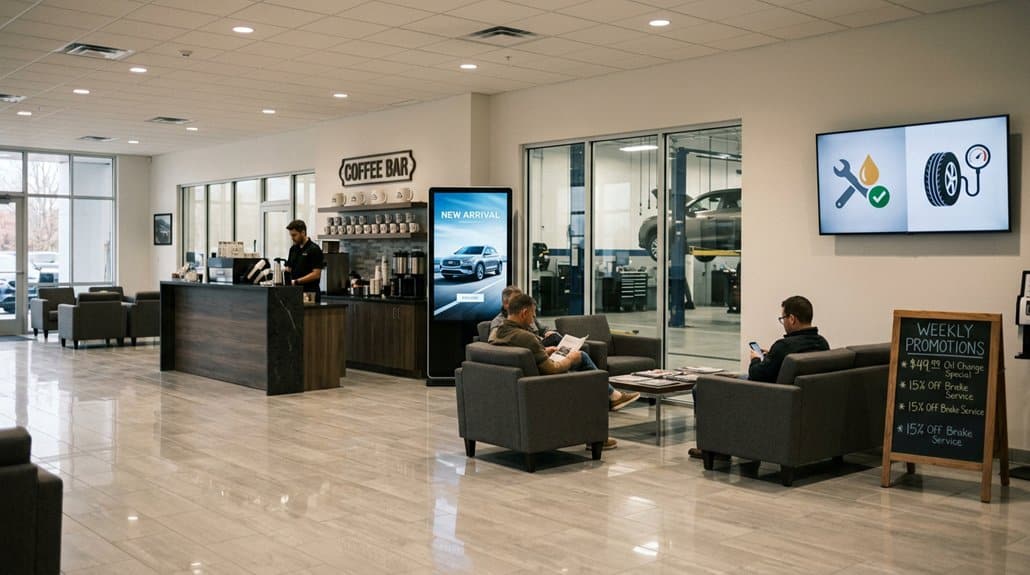
Because small, focused changes can drive immediate returns, start this week with five tactical upgrades that boost customer satisfaction and create upsell opportunities. First, improve waiting room ambiance: add comfortable seating and charging stations—data shows 75% of customers value comfort and 50% want workspaces—so prioritize layouts that enable brief productivity. Second, enable free high-speed Wi-Fi and provide curated reading materials to reduce perceived wait time and increase dwell. Third, program your waiting room TV to highlight in-house services and seasonal specials to drive awareness and conversions without pressuring customers. Fourth, rotate customer testimonials on screens to build trust and influence decisions. Fifth, partner with local businesses for ad swaps to strengthen community ties and reinforce your brand through reciprocal promotions.
Turn Waiting Time Into Education With Video and Content
Use curated educational video playlists to turn idle minutes into measurable brand equity by showing concise maintenance tips visuals that increase customer understanding and trust. You’ll shorten perceived wait times and boost CSI by blending practical service how-tos with targeted, personalized service messaging tied to each customer’s vehicle. Track engagement and retention metrics to refine content mix and demonstrate uplifts in service loyalty.
Educational Video Playlists
A curated playlist of short, educational videos turns customers’ wait time into a strategic touchpoint that boosts satisfaction and trust—75% of guests say a comfortable service lounge is critical, and informative content further raises your Customer Satisfaction Index by explaining maintenance needs and validating recommendations. You’ll use customer engagement strategies and video content effectiveness to shorten perceived wait times, build credibility, and justify service recommendations. Tailor and rotate clips to answer frequent questions, showcase technician credentials, and explain service scopes without diving into maintenance how-tos. Regular updates keep content relevant and reinforce your brand promise. Measure play-to-completion rates and CSI shifts to optimize programming.
- Reassure
- Educate
- Validate
- Differentiate
Maintenance Tips Visuals
Three-minute maintenance-tip clips played on loop turn idle wait time into a measurable touchpoint that educates customers and lifts trust—viewers who see concise, non-salesy explanations of fluid checks, tire wear indicators, and warning lights report higher acceptance of recommended services. You should design maintenance visuals that prioritize clarity, brand voice, and actionable takeaways; concise captions, branded color palettes, and consistent callouts reinforce expertise without pushing sales. Data shows continuous playback increases customer engagement and reduces perceived wait, improving CSI. Rotate content monthly to keep tips timely and aligned with seasonality, recalls, or service trends. Track view metrics and correlating service uptake to quantify ROI, then refine topics to deepen loyalty and position your dealership as a trusted advisor.
Personalized Service Messaging
When waiting-room screens are tailored to individual service needs and customer profiles, they don’t just pass time—they educate and nudge behavior in measurable ways. You can deploy personalized messaging via a continuous loop of short maintenance and repair videos that build trust, clarify recommendations, and increase CSI without hard selling. Scheduled updates keep content relevant to seasonality, recalls, or owner history, improving customer engagement metrics and loyalty. Use brand-focused visuals and data-driven topics tied to common service orders to reinforce expertise.
- Reassurance: see why a recommended repair matters.
- Confidence: understand cost and timeline.
- Comfort: family-friendly entertainment lowers perceived wait.
- Loyalty: informed customers return more often.
Tech Choices That Make Content Work: Screens, Players, Wi‑Fi, Analytics
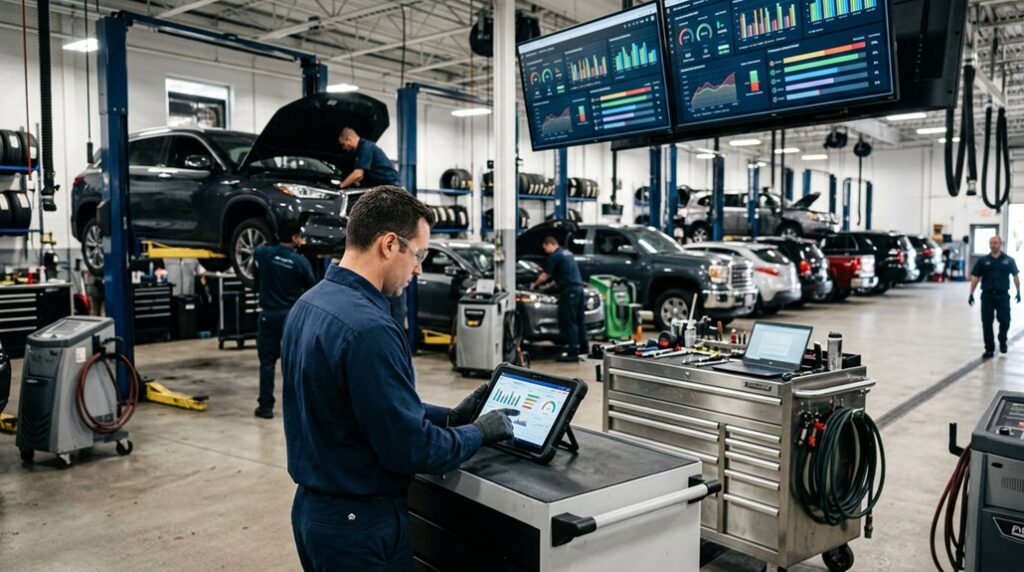
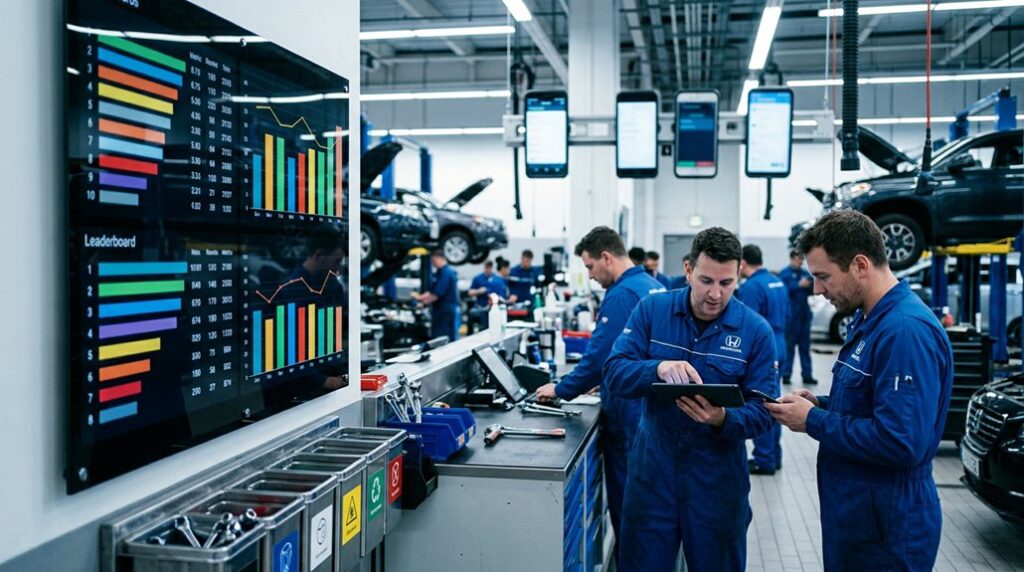
One clear investment that pays off is matching premium screens, reliable media players, fast guest Wi‑Fi, and analytics into a single, measurable ecosystem so your waiting room becomes an active marketing channel. Choose modern screen technologies and interactive displays that elevate user experience and enable compelling visual storytelling; quality digital signage increases customer engagement by showcasing service promos and educational videos. Pair screens with dependable media players and a content scheduling system so updates align with campaigns without operational friction. Provide fast guest Wi‑Fi—over 75% of customers expect it—to keep visitors connected and receptive. Finally, integrate data analytics into your CMS to track viewership, optimize messaging, and quantify ROI. These tech choices turn passive waiting time into targeted, brand-forward interactions that drive service awareness.
Low‑Cost Layout and Amenity Changes That Drive Repeat Visits
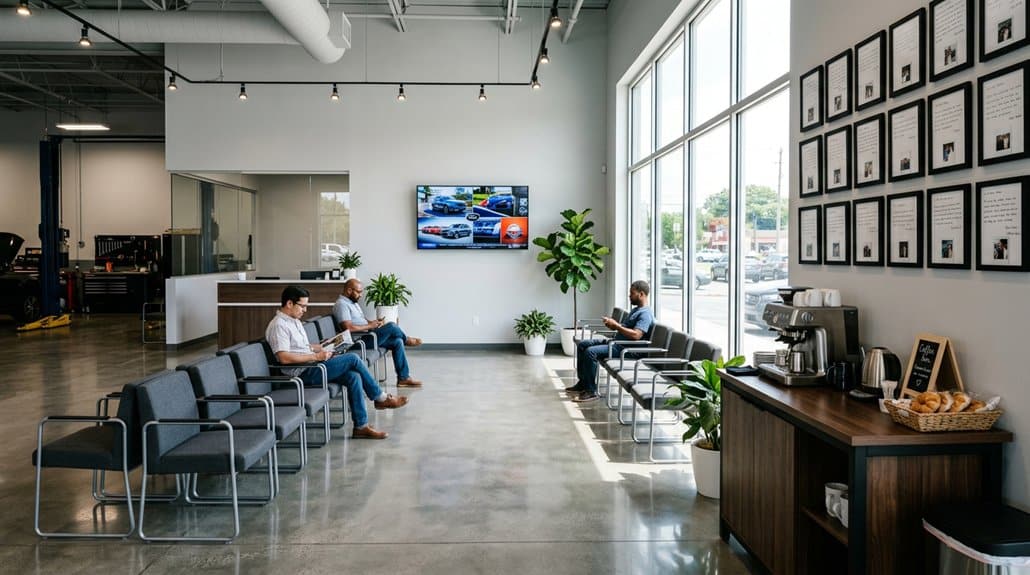
You can boost repeat visits with targeted, low-cost layout and amenity tweaks that reinforce your brand promise. Prioritize comfortable seating zones and dedicated workspaces, reliable charging and fast guest Wi‑Fi, plus complimentary snacks or local dining perks—each of these moves is backed by customer preference data and lifts satisfaction metrics. When you align these elements with on‑screen maintenance content and clear branding, you turn waiting time into a retention engine.
Comfortable Seating Zones
Because customers increasingly treat your service lounge as an extension of your brand, investing in comfortable seating zones is a low‑cost, high‑impact way to boost satisfaction and repeat visits. You’ll leverage seating aesthetics and a calibrated lounge atmosphere to create a measurable brand advantage: over 75% of customers say comfort drives their satisfaction. Design for posture support and modular arrangements so guests stay relaxed during longer waits and perceive higher value.
- Improved comfort → immediate emotional relief
- Dedicated work nooks → productivity for ~50% of patrons
- Modern materials → convey trust and quality
- Thoughtful sightlines → reduce perceived wait time
Small seating upgrades differentiate you locally, increase repeat rates, and support a cohesive service brand.
Charging And Wi‑Fi
Comfortable seating sets the stage, but keeping guests connected and powered is what turns a pleasant wait into a branded advantage: free, fast guest Wi‑Fi influences satisfaction for over 75% of customers, while visible charging points meet growing device-dependence and reduce friction during stays. You should prioritize Wi Fi reliability as a measurable KPI—uptime, bandwidth per user, and onboarding speed—then showcase performance with subtle signage. Deploy mixed charging solutions: tabletop USB, wireless pads in lounge chairs, and powered work nooks to serve both casual and productivity-driven guests (about 50% want dedicated workspaces). These low-cost layout tweaks convert convenience into loyalty by reducing friction, extending dwell time, and reinforcing brand professionalism. Track repeat visits and NPS to quantify ROI.
Snacks And Local Perks
A few targeted, low-cost perks—complimentary drinks and snacks, upscale options for premium clients, and nearby-restaurant gift cards for longer services—can materially boost satisfaction and repeat visits when they’re aligned with your brand and measured for impact. You should prioritize offerings based on data: ~50% of customers expect complimentary refreshments, ~25% prefer dining off-site during long services. Align upscale beverages and healthy options with luxury positioning; add seasonal treats to reflect local taste and prompt social shares. Small layout tweaks—better seating, a children’s play area—amplify these perks. Measure NPS and return-rate lift after implementation. Start small, test bundles, and scale what moves the needle.
- Delight
- Comfort
- Brand uplift
- Repeat visits
Local Promotions and Partnerships That Boost Spend and Loyalty
When you partner with nearby businesses and spotlight their offers in your waiting room, you’re not just supporting the local economy—you’re creating measurable touchpoints that lift spend and loyalty; limited-time TV promotions and integrated gift-card incentives, for example, drive urgency and longer visits, while local-restaurant tie-ins appeal to roughly 25% of customers who prefer dealerships with nearby dining options. Use community engagement strategies to curate rotating ads, seasonal bundles, and co-branded offers that track redemption and lifetime value. Feature testimonials about local partnerships to build trust and amplify word-of-mouth. Tie local discounts into your loyalty program incentives so rewards compound—boosting repeat service and ancillary sales. Measure impact via redemptions, dwell time, and repeat-customer rates to refine partnerships and messaging.
Train Staff to Engage Visitors Naturally : Scripts and Role Plays
Because customers often wander from the service bay into the showroom while they wait, train your team with concise scripts and role-play that turn casual exploration into measurable engagement—equip staff to reference local dining options (25% of customers care), highlight lounge amenities (75% value a good waiting area), and mention complimentary snacks or drinks (50% expect them) so every interaction boosts satisfaction and creates upsell or loyalty opportunities. You’ll use role playing techniques and engagement strategies to make approaches feel natural, not salesy. Build short, data-backed scripts and run focused role-play sessions so staff internalize tone, timing, and shifts. Measure comfort and consistency qualitatively, then iterate. Emotional connection drives brand preference; train for empathy, curiosity, and helpfulness.
Turn showroom wanderers into engaged customers with concise, empathetic scripts, role-play, and data-backed talking points for natural, helpful interactions.
- Confidence
- Warmth
- Relevance
- Respect
KPIs, A/B Tests, and Simple Ways to Prove ROI
Training your team to engage visitors naturally sets the stage for measuring impact: now you’ll pair those scripts and role-plays with clear KPIs and simple experiments so you can prove the waiting room moves the needle. Define KPI Analysis around customer satisfaction scores, average wait times and service bookings driven by Digital Signage. Run A/B tests—educational videos versus traditional ads—and capture Engagement Metrics like interactions and time viewed. Tie Content Strategy to conversions: which messages increase bookings? Use short Customer Feedback surveys post-visit to validate effects on loyalty. Maintain Performance Tracking dashboards to show trends and calculate Marketing Effectiveness. Finally, perform a straightforward ROI Assessment by comparing incremental bookings and retention gains to display and content costs.
A 30‑Day Action Plan to Convert the Waiting Room Into a Profit Center
Kick off a focused 30‑day sprint that turns your waiting room from a passive amenity into a measurable revenue channel by sequencing quick wins, customer‑centric amenities, and data collection tasks. Week 1: survey guests, map pain points, enable fast guest Wi‑Fi and dedicated workspaces to serve the ~50% who want productivity. Week 2: add complimentary drinks/snacks and test display content—educational videos that lower perceived wait times and lift CSI. Week 3: install screens for local ads and testimonials to boost trust and community ties. Week 4: launch targeted customer engagement offers and tie results into loyalty programs; track KPI shifts and average repair spend. Review data, iterate offers, and scale high‑ROI tactics.
Turn your waiting room into a revenue-driving experience: fast Wi‑Fi, comfort perks, engaging content, local ads, and targeted offers.
- Quick wins
- Comfort boosts
- Content strategy
- Monetization tests
Frequently Asked Questions
What Is the Marketing Strategy of a Car Dealership?
Your marketing strategy is to boost customer engagement and brand trust through data-driven digital marketing, targeted email campaigns, personalized offers, analytics-informed content, and in-store experiences that convert service visits into sales while measuring lifetime value.
How Much Does a Car Salesman Make off a $20,000 Car?
You’d typically earn about $1,000–$2,000 on a $20,000 car, depending on commission structure and sales incentives; combine percentage-of-profit plus flat fees and bonuses to reach an annual $40K–$70K range.
What Is the Red Flag Rule for Auto Dealers?
By golly, you’re required to implement a written program detecting red flag signs during vehicle transactions; you’ll train staff, document efforts, and guarantee dealership compliance to reduce fraud risk, fines, and protect brand reputation with measurable controls.
How Do I Get More Customers in My Auto Repair Shop?
You’ll attract more customers by improving customer experience, promoting service promotions via targeted ads and in-waiting-room displays, leveraging testimonials, offering amenities and productivity perks, tracking results with data, and strengthening your brand’s local partnerships and messaging.
Conclusion
You’re sitting on a fertile, untapped channel: your service waiting room can drive revenue, retention and brand affinity if you treat it like marketing, not just real estate. Start with data-driven quick wins—screens, targeted videos, Wi‑Fi analytics—and train staff to engage using tested scripts. Measure KPIs, run A/B tests, and partner locally to lift spend. With a strategic plan, that waiting room becomes a humming engine for growth, a lighthouse guiding customers back to you.