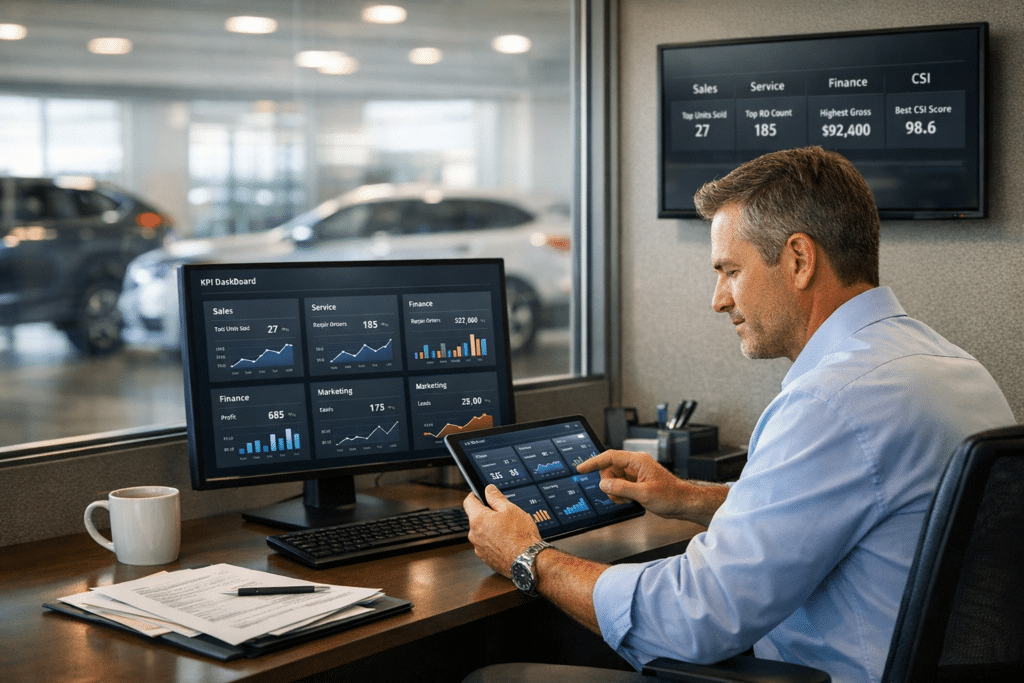
Tekion’s Automotive Retail Cloud (ARC) – one of the most advanced automotive platforms in the industry — is building an ecosystem where specialized providers can deliver focused, high-quality solutions alongside its strong core platform.
This approach creates space for providers like Digital Dealership System to deliver deep expertise in areas like digital signage, while the core platform continues to power overall dealership operations.
This direction also reveals something important for the industry.
Digital signage is not just another software feature. It’s a fundamentally different product category that requires specialized expertise, ongoing support, and dealership-specific execution.
Tekion’s ARC is no longer included in General Motors’ Dealer Performance (EBE 2.0) approved vendor list for digital signage— further reinforcing that signage is not a bolt-on feature, but a specialized solution that demands dedicated attention.
The Fundamental Difference Between Software and Signage
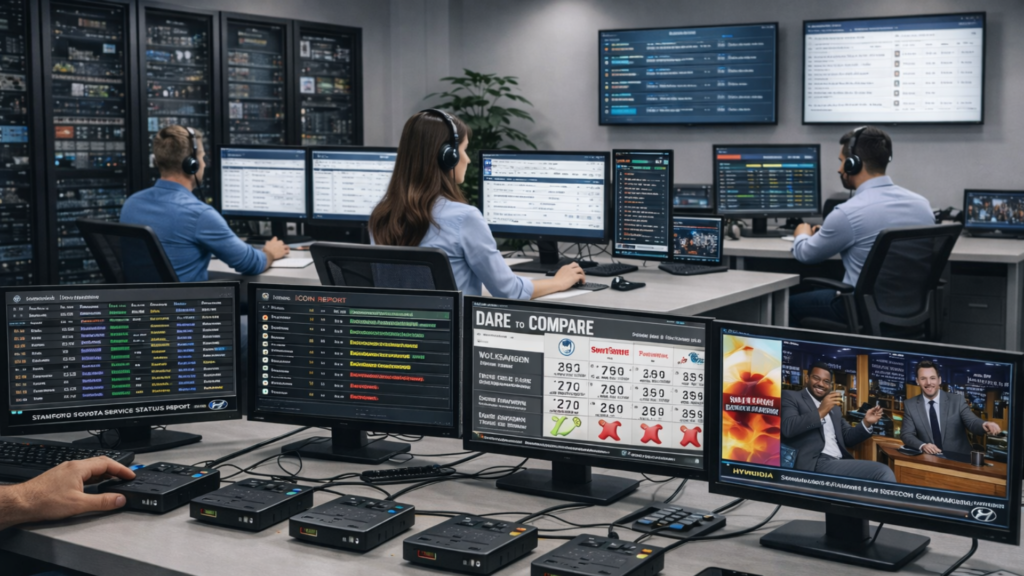
At a high level, enterprise software and digital signage may seem similar—they’re both “technology solutions” inside a dealership.
In practice, they operate completely differently.
Universal Fixes vs. Singular Support
When something breaks in a DMS or CRM, the solution is typically centralized. A single patch or update can resolve the issue across hundreds or thousands of rooftops simultaneously.
Digital signage doesn’t work that way.
If one screen goes down in one store, it requires attention to that specific screen, in that specific dealership, often tied to that exact piece of hardware, connection, or setup. There is no universal fix.
Every issue is isolated. Every fix is individual.
The Financial Reality
Enterprise platforms often command high monthly costs— justifying large support teams and infrastructure.
Digital signage, on the other hand, typically falls in a much lower monthly price range.
That creates a mismatch.
For a large enterprise company, dedicating high-touch, store-by-store support to a lower-cost product becomes operationally inefficient. The level of effort required simply doesn’t align with the revenue model.
In simple terms, it takes too much effort for too little return.
Daily Visibility and Immediate Impact
Unlike backend systems, digital signage is front-facing.
Customers see it. Employees rely on it. It shapes the in-store experience in real time.
If a CRM has an issue, it may slow down a process.
If a screen is wrong, blank, or outdated, it is immediately visible to every customer walking through the door.
That visibility raises the standard. Issues aren’t just technical—they’re experiential.
The Complexity of Dealership-Specific Installations
Another key difference is physical complexity.
No One-Size-Fits-All Setup
Every dealership is unique.
Even within the same OEM, layouts vary dramatically. One store might have dozens of screens across the showroom, service drive, and lounge. Another may only need a handful in specific locations.
There is no standardized deployment.
Each installation must account for:
- Physical layout
- Customer flow
- Screen placement
- Departmental needs
Hardware Creates Unique Variables
Digital signage isn’t just software— it’s tied directly to hardware.
Media players, screens, wiring, internet connectivity, and physical positioning all come into play. Even when systems are designed to be simple and scalable, each store introduces its own variables.
For example, many systems rely on local media players connected to TVs, sometimes distributing content across multiple screens from a single source.
That setup works well— but it also means every environment is slightly different.
When something goes wrong, it’s not a global issue. It’s a local one.
The Necessity of Granular, Localized Content

Generic Content Doesn’t Work
Backend systems are standardized. A CRM doesn’t change based on a dealership’s location or the time of year.
Digital signage is different.
Every screen needs to reflect that specific store—its geography, pricing, messaging, and customers.
Regional and Seasonal Differences
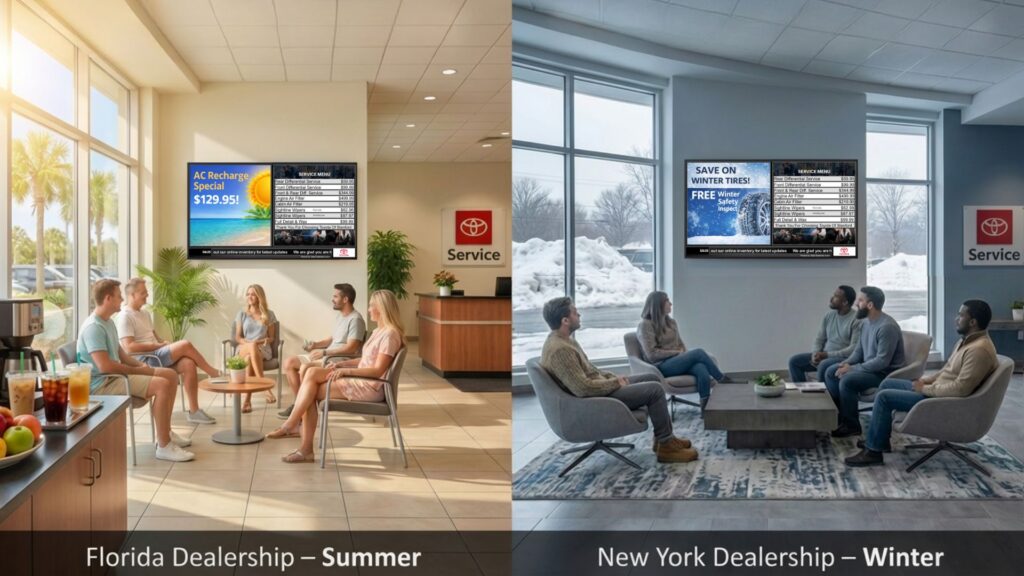
A service menu in South Florida will look very different from one in Buffalo, New York.
Seasonal needs, pricing structures, and service demand vary by region. Signage must adapt accordingly.
Even within a single brand, what works in one market may be irrelevant in another.
Constant, Store-Level Updates
Dealerships are constantly changing:
- Staff come and go
- Promotions shift
- Hours adjust
- Marketing campaigns update
Digital signage must keep up with all of it— often in real-time.
In many cases, dealers rely on support teams to push updates quickly and correctly, because managing content internally can be time-consuming or technically challenging.
This creates an ongoing operational requirement— not a one-time setup.
Why Dealerships Need a Dedicated Signage Partner
All of this leads to a clear conclusion: digital signage requires a different type of provider.
Automotive Focus Matters
Dealerships operate differently from hospitals, gyms, or retail stores.
Customer flow, service drive dynamics, sales motivation, and fixed ops strategy all shape how signage should be used.
Providers that specialize in automotive understand these nuances. They design systems around the dealership environment— not as an afterthought.
Responsiveness Is Critical
Because signage is visible and customer-facing, delays in support matter.
Dealerships should expect:
- Fast response times
- Quick content updates
- Reliable troubleshooting
If a screen is wrong or blank, it needs to be fixed quickly— not queued behind unrelated enterprise software issues.
Evaluating a New Provider
For dealerships using Tekion’s ARC for digital signs—or any provider—the next step is choosing the right partner.
Key things to evaluate:
- Do they specialize in automotive?
- How quickly can they push custom updates?
- How responsive is their support team?
- Does their platform allow for store-level flexibility?
Many dealerships today have screens in place, but lack the content, support, or consistency to make them effective.
That gap isn’t solved by software alone— it’s solved by service.
Why Choose Digital Dealership System
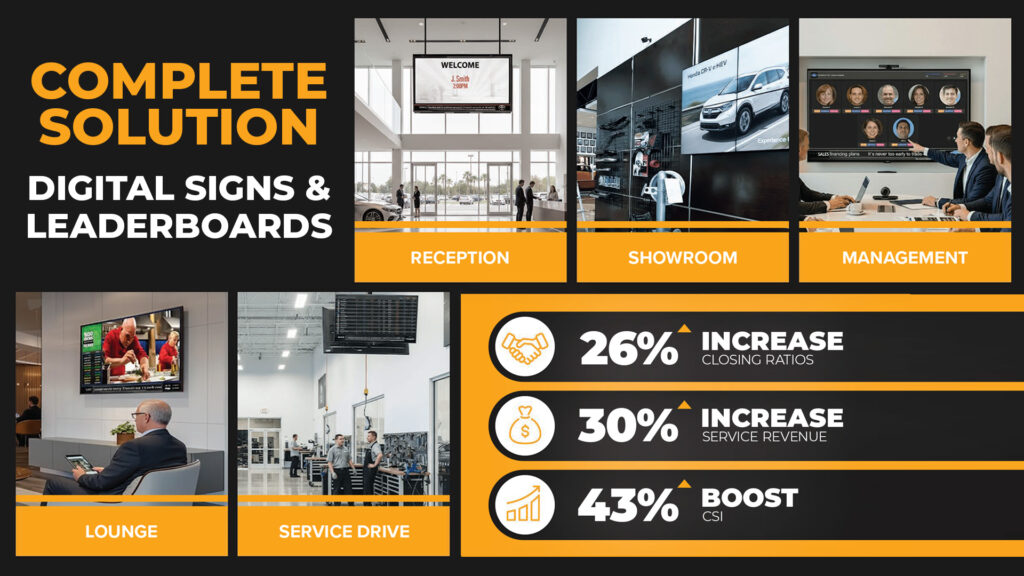
As dealerships evaluate their next move after this pivot for Tekion’s ARC, one thing becomes clear: success with digital signage requires a partner that is fully dedicated to the automotive space—and built specifically for it.
Digital Dealership System (DDS) is designed from the ground up to meet that need.
Unlike general-purpose providers or enterprise platforms treating signage as an add-on, DDS focuses exclusively on dealership environments. That means every product, integration, and support process is built around how dealerships actually operate—across sales, service, and the customer journey.
A Tekion-Integrated, Approved Solution
Digital Dealership System is a Tekion-approved vendor that offers direct integration with Tekion’s ARC platform to ensure seamless data flow and real-time accuracy across your screens.
This includes fully integrated solutions for:
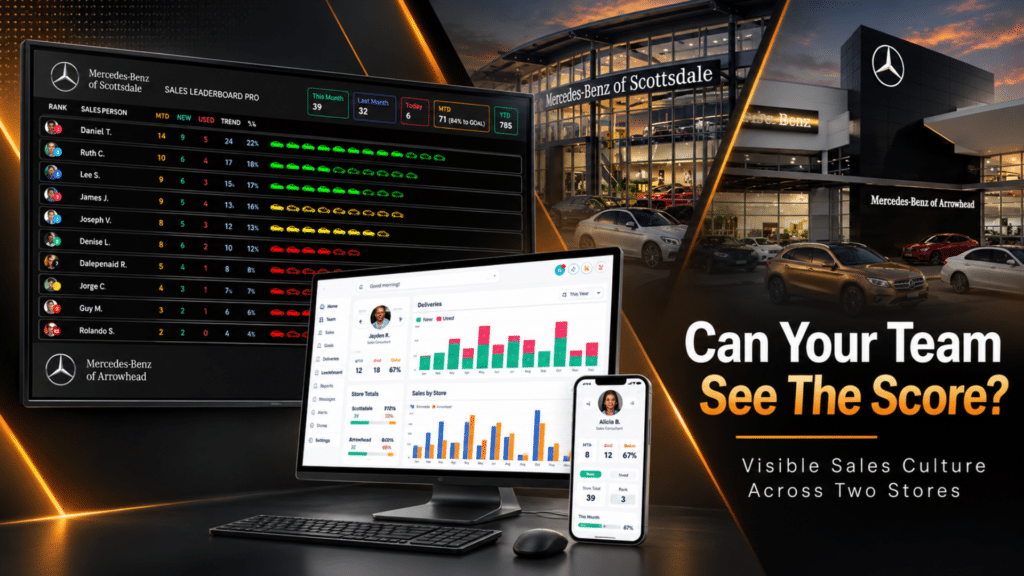
- Sales Leaderboards – Real-time visibility into sales performance to drive accountability and motivation
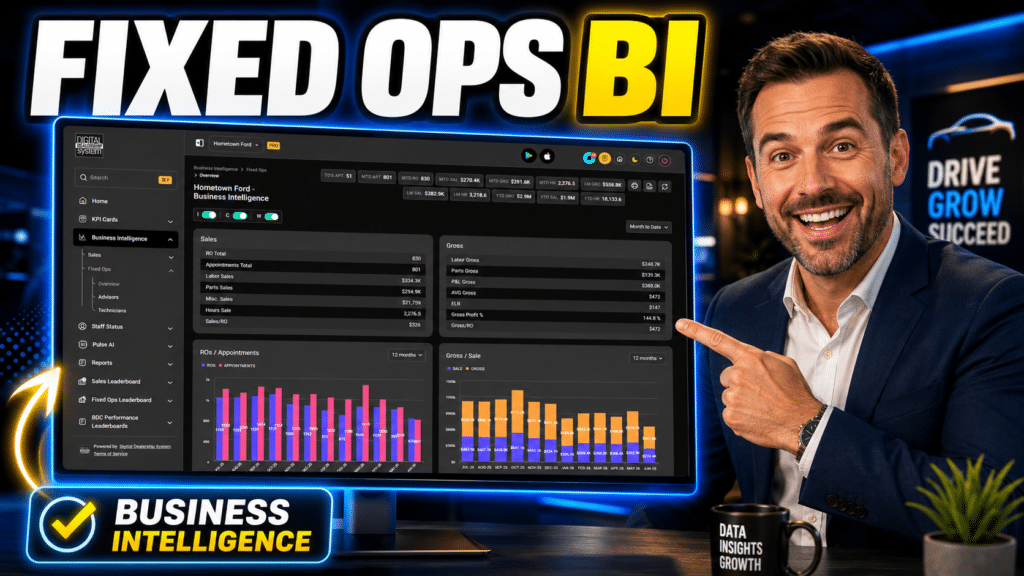
- Fixed Ops Leaderboards – Track service advisor performance and key KPIs live
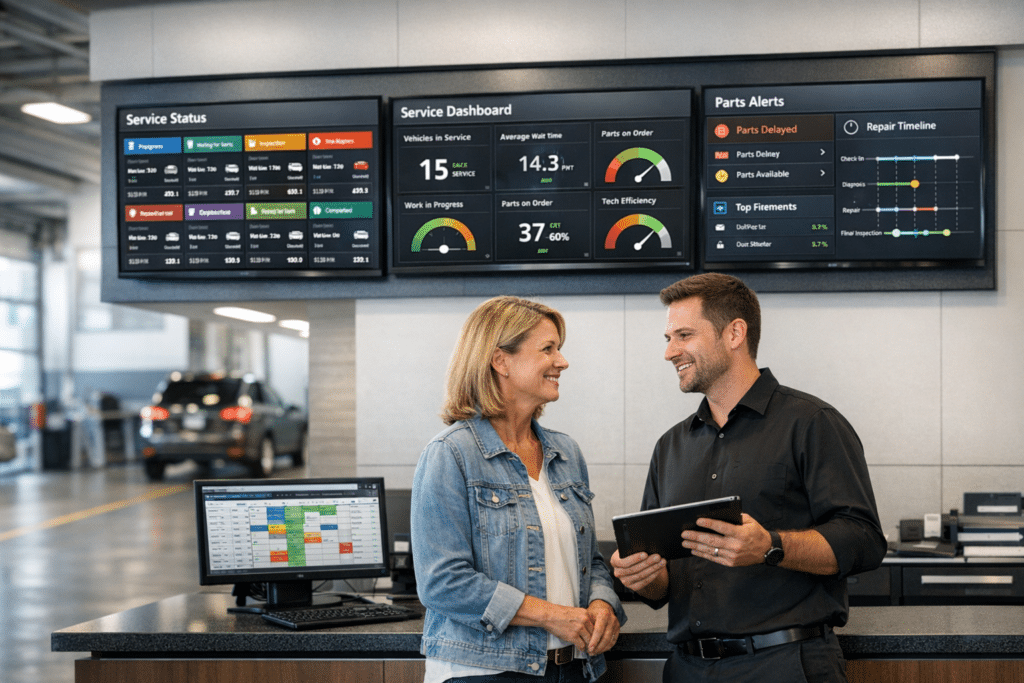
- Lounge TV with Service Status – Keep customers informed and engaged while they wait
- Service Status Menus – Provide transparent, real-time updates pulled directly from the DMS
These integrations allow dealerships to move beyond static screens and into fully dynamic, data-driven displays that reflect what’s actually happening in the store.
Built for Dealership Complexity
Every dealership is different—and DDS is built to handle that.
From service drive layouts to showroom configurations, DDS systems are designed to adapt to each store’s physical environment, customer flow, and operational goals. Whether it’s a single screen or a full-store rollout, the platform is flexible and scalable without sacrificing customization.
Dedicated Support That Matches the Product
As highlighted earlier, digital signage requires ongoing, store-level attention.
DDS provides:
- Fast, responsive support
- Ongoing content updates
- Customization tailored to each dealership
- Hands-on assistance to ensure screens are always accurate and effective
Because signage is customer-facing, DDS treats every screen as part of the dealership experience—not just a piece of software.
More Than Screens—A Complete In-Store Communication System
Digital Dealership System isn’t just about filling TVs with content.
It’s about:
- Driving service upsells
- Improving customer communication
- Increasing transparency in the service drive
- Motivating teams with real-time performance visibility
In short, it turns underutilized screens into active tools that support revenue, operations, and the customer experience.
Conclusion
Managing digital signage is fundamentally different from managing a DMS, CRM, or any other automotive platform.
It’s a smart business decision for Tekion’s ARC to focus on enterprise software. In doing so, it highlighted an important truth:
Digital signage is not a scalable add-on for large platforms—it’s a specialized service that requires dedicated attention.
For dealerships, this creates both a challenge and an opportunity.
If you currently have screens in your store that are underutilized—or sitting blank—it’s time to rethink your approach.
The right partner won’t just provide technology.
They’ll provide the ongoing support, customization, and responsiveness needed to make your screens actually work for your dealership.
📅📞 Click here to schedule a demo: Schedule Now