
Many service departments see their service advisors miss sales goals or pass on upselling chances. That slows revenue growth and weakens customer engagement. Profits suffer and client retention drops.
Managers often ask how to build consultative selling skills in a fast service lane. Service advisors play a key role in upselling, which means suggesting helpful add-ons. With clear performance metrics, focused training, and tools like real-time KPI dashboards, teams improve fast. KPI stands for key performance indicator, a simple score that tracks progress. Upsell ratio means the percent of repair orders where customers accept an add-on.
This guide shares practical steps to help advisors sell more with stronger upsell ratios. Expect ideas on goal setting, coaching, personalized recommendations, and tracking with technology like Digital Dealership System. There are also quick tips for feedback that sticks.
See which strategies help service departments win. Keep reading.
Key Takeaways
- Real-time KPI dashboards and digital signage show upsell ratios, sales totals, and satisfaction scores for each advisor every day.
- Leaderboards spark healthy competition, keep goals visible, and raise motivation across the team.
- Training programs should use custom learning paths and regular coaching, with quick feedback after each customer visit.
- Role-play and open-ended questions improve communication, so advisors can match add-ons to real customer needs.
- Use short digital surveys and analytics tools to collect performance data, then act on it right away.
How can I set clear and measurable goals for service advisors?
Clear targets act like lane lines on a busy road. They guide behavior, reduce guesswork, and help advisors meet sales goals.
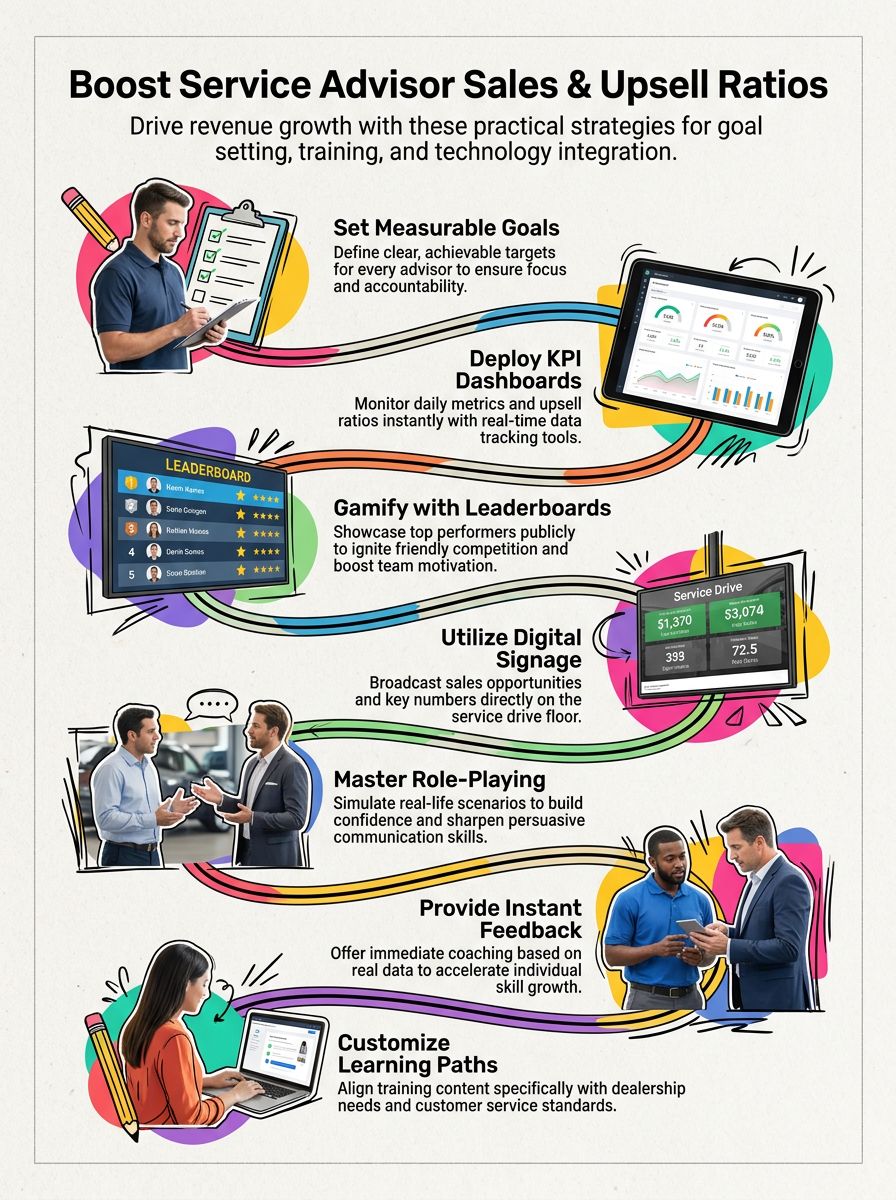
Real-time KPI dashboards let managers review performance every day. Everyone can see who is hitting targets and who needs support. Leaderboards show top performers and create friendly competition, which keeps energy high.
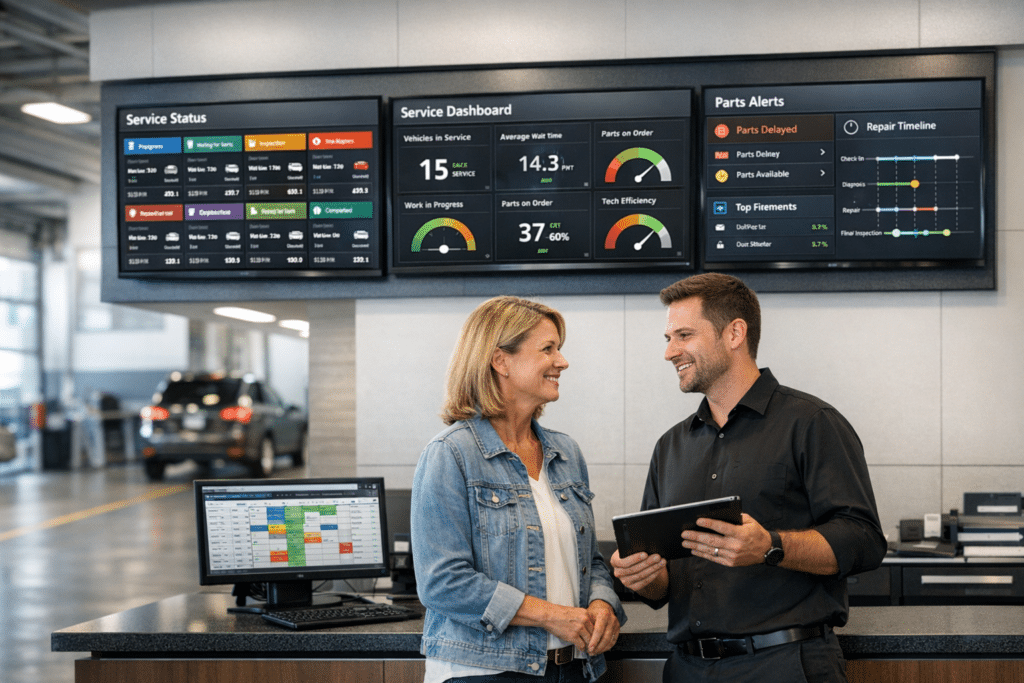
Automated digital signage can spotlight daily add-on opportunities right on the drive. That keeps focus on upselling without nagging. These digital tools scale to any store size and budget, from a single rooftop to a group.
“Every goal should be visible, measurable, and achievable for each advisor,” said dealership manager Carl Jensen. Use industry benchmarks to set fair targets. Tie goals to both upselling techniques and overall sales effectiveness to grow revenue and customer engagement.
What are effective training and coaching programs for service advisors?
Great training makes selling feel natural, not pushy. It should build skills step by step, then reinforce them on the lane.
How do I create a training program that boosts sales skills?
Start with data from real-time KPI dashboards. The numbers show which sales skills need help and where to coach. Add manager and staff leaderboards so progress is public. Seeing a name move up a list boosts motivation fast.
Keep goals in sight with digital signage that displays key numbers on the floor. Make the program scalable so any dealership can join, no matter the budget. Build custom learning paths that match your store’s process and your customers’ needs.
- Blend short digital lessons with hands-on practice.
- Focus on clear explanations of benefits, not just features.
- Teach simple price framing, such as good, better, best options.
- Use checklists for write-up, inspection, and presentation steps.
Pair training with short coaching sessions each week. Give direct feedback right after a customer interaction so skills stick. Small rewards for progress, like shout-outs on screens or gift cards, help keep momentum. For example, one mid-size store raised its upsell ratio 12 percent by adding a five-minute debrief after each tough visit.
Next, look at coaching moves that lift upsell ratios.
What coaching techniques help improve upsell ratios?
Use role-play to practice real conversations. Advisors gain confidence and learn clear product knowledge. They also learn how to present add-ons in plain language that ties to safety, savings, or time.
Hold regular one-on-one coaching using simple scorecards. Point out what worked and what to try next. Set one action step per meeting to avoid overload.
Teach open-ended questions, which invite longer answers. Examples include “What concerns do you have about long trips?” or “How long do you plan to keep this car?” Questions like these uncover needs, so advisors can offer the right solution.
Ongoing practice builds trust and better customer engagement. It also raises upsell ratios without pressure or hard sells.
How can I track service advisor performance and give useful feedback?
Consistent tracking turns guesswork into coaching. With a simple system, managers give fast, fair feedback that drives action.
- Use real-time KPI dashboards to see daily numbers for each advisor, such as upsell ratios, customer satisfaction scores, and total sales.
- Post manager and staff leaderboards on displays to keep goals front-of-mind and inspire friendly competition.
- Match the tracking setup to your store, from one service lane to a multi-rooftop group.
- Scale from a single break room screen to a full digital network across departments with automated signage.
- Collect data with brief digital surveys and analytics tools, including performance reviews, customer comments, and sales results.
- Bring dashboard insights to staff evaluations. Celebrate wins, close gaps, and set one or two clear next steps.
- Give immediate feedback based on real numbers, which keeps advisors engaged and aligned with sales goals.
- Use professional installation and support so your data stays accurate and reliable for coaching.
These steps turn raw data into progress. Managers and employees can move in the same direction and win together.
Conclusion
Raising upsell ratios and helping service advisors sell more starts with simple tools and steady training. Clear sales goals, timely coaching, and easy-to-read dashboards make a real difference.
Real-time KPI dashboards keep performance visible for every team member. Digital signage promotes helpful services before an advisor speaks, so each upsell talk feels natural. With this sales strategy in place, service departments build trust, grow revenue, and deliver value on every visit.
Ready to see stronger results and happier customers? Invest in solutions that set the team up for success. Reach out to learn how Digital Dealership System can support your goals today.
FAQs
1. How can service consultants increase their sales and upsell ratios?
Service consultants boost sales by building trust with clients, understanding each customer’s needs, and recommending only relevant services or products. Training in communication skills helps them explain benefits clearly, making customers more likely to accept recommendations.
2. What strategies help service consultants identify upsell opportunities?
Effective strategies include reviewing vehicle history reports, listening for customer concerns during check-in, and using diagnostic tools to spot potential issues early. These steps allow the consultant to suggest valuable add-ons that improve safety or performance.
3. Why is product knowledge important for increasing upsells?
Deep product knowledge lets a consultant answer questions confidently and match solutions to client needs quickly. This expertise reassures customers about quality and value, leading them to trust recommendations on additional services.
4. How does follow-up impact future sales success for service consultants?
Consistent follow-up after visits shows commitment to customer satisfaction; it keeps your business top of mind when new maintenance needs arise. Satisfied clients are more likely to return for future work or refer friends—driving higher long-term sales results overall.