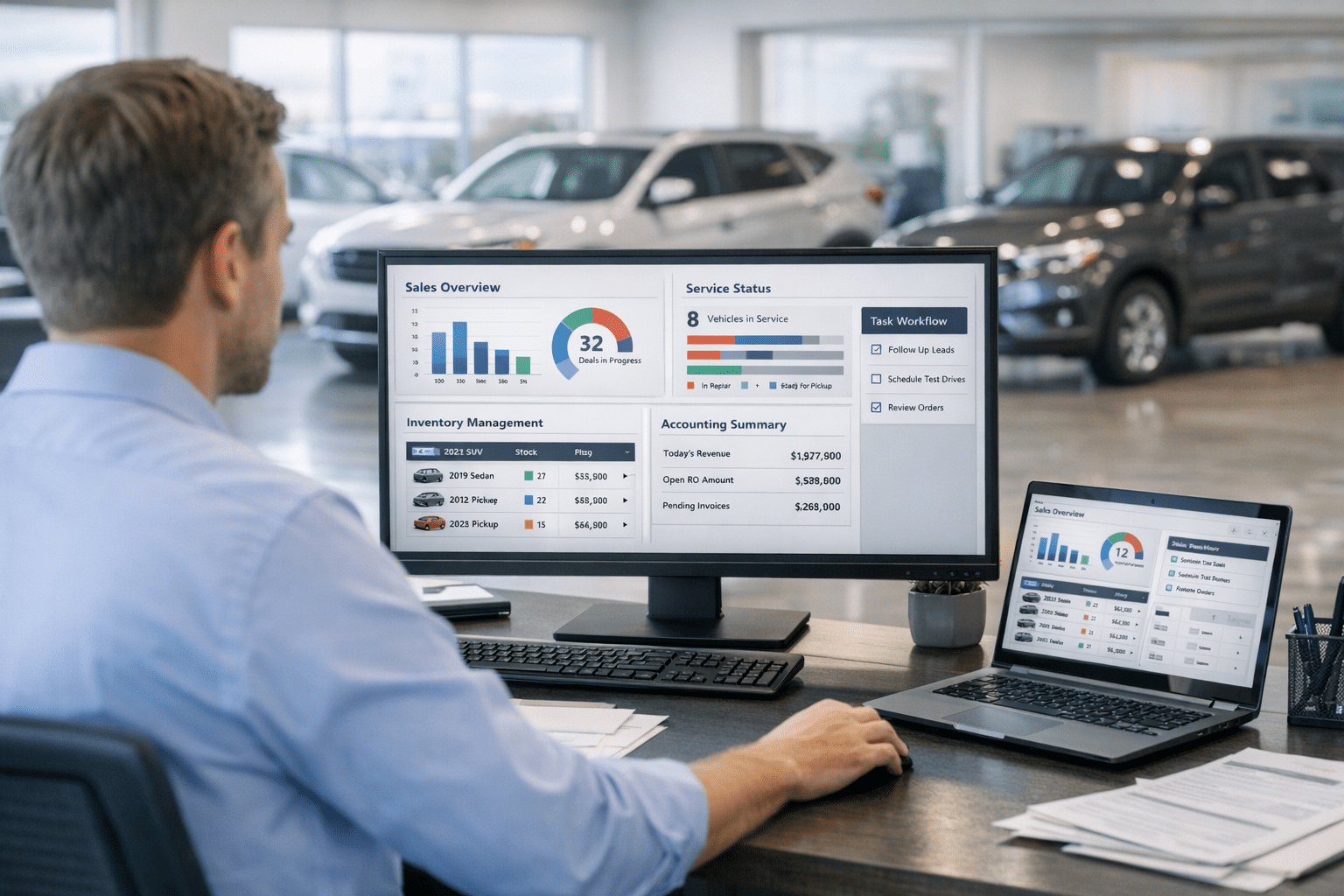
Manual data entry slows car dealership operations. Staff spend hours typing sales, service, and inventory details into separate systems. Mistakes slip in, and energy goes to fixing them instead of serving buyers. Eliminating manual data entry in car dealerships with DMS integration cuts that waste and raises data accuracy fast.
With DMS integration, updates move in real time across every tool. Cleaner numbers lead to clearer gross revenue reports at the start of the year. This guide explains how a Dealer Management System, or DMS, removes extra typing, boosts efficiency, and reduces errors so teams can work with confidence.
See why today is a great time to switch and streamline your workflows.
Key Takeaways
- DMS integration automates data sharing between sales, service, and accounting, which reduces errors and keeps records current in every system.
- Automation speeds up transactions and raises staff productivity by centralizing daily tasks in one place.
- Digital processes improve customer satisfaction with faster service, fewer invoice mistakes, and instant access to accurate pricing and inventory.
- Secure platforms help dealers follow industry rules while protecting private information throughout connected tools.
- Investing in a DMS trims costs from rework and duplicate entry, improves efficiency, and builds an edge over slower competitors.
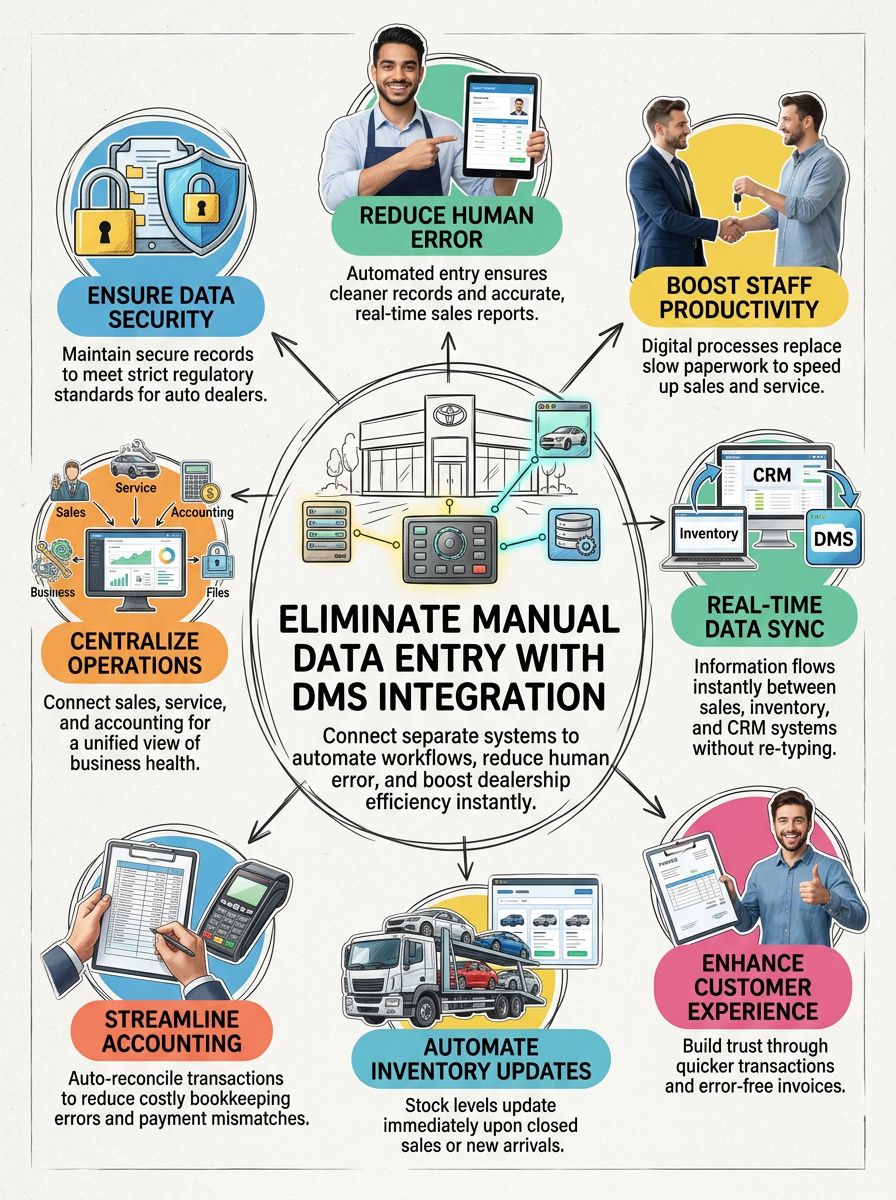
How does DMS integration automate data entry in car dealerships?
Many stores still rely on manual steps across several programs. DMS integration connects those separate tools into one digital network, which makes data management simple and consistent.
With real-time data exchange, details flow between sales, inventory management, and customer relationship management, or CRM. CRM is software that tracks leads and customer history. No one needs to retype the same information into multiple screens.
Automated workflows update vehicle inventory the moment a deal closes or new stock arrives. New leads drop straight into the CRM and push details to the sales desk, so no one loses track or enters data twice. For example, when a vehicle sells, the stock count and deal record update at once.
Transactions and repair orders match up automatically, which shortens bookkeeping and lowers error rates. Payroll links with performance metrics in a central dashboard, giving HR quick and accurate insights. Staff can focus on conversations and test drives instead of sorting numbers across tabs.
What are the key benefits of eliminating manual data entry in car dealerships?
DMS integration removes repeat typing and gives stores a clear path to growth. Processes run faster, and teams get back time for customers and sales. Here are the biggest wins dealers see with automation and integration:
- Fewer human errors and cleaner records, which produce accurate sales reports with real-time sync across systems.
- Digital forms and e-signing speed both sales and service, lifting productivity and satisfaction.
- One hub connects sales, service, and accounting for a complete view of business health.
- Efficiency rises as teams skip repeat tasks and spend time on closing deals and care.
- Faster transactions, fewer billing issues, and quick answers build trust right away.
- Workflow optimization removes re-entry across programs, so updates stay in sync automatically.
- Secure platforms protect sensitive data and support strict dealer compliance rules.
- Digital transformation keeps stores ahead of shops that still use paper or outdated tools.
- Real-time processing speeds each step from inventory checks to final contracts without waiting.
- Error reduction prevents costly problems like bad counts or wrong payments, which gives managers peace of mind.
How does DMS integration streamline dealership operations?
Real-time data exchange removes manual entry, which lowers mistakes and improves data accuracy. Inventory updates, e-signing, and customer details move automatically through the system. Sales teams see current stock and pricing without chasing paper files or logging into five tools.
Centralization brings together sales, service, and accounting in one place. Any staff member can view a customer’s history and vehicle details with a few clicks. Integration with CRM helps track leads, schedule follow-ups, and build long-term relationships.
Payroll, compliance tracking, and transaction checks improve as systems share information smoothly. No double entry needed. Dealers meet legal requirements with secure records each day, while saving time for what matters most, service that brings customers back. Ready to see the impact of automation and efficiency through DMS integration? Explore how a connected platform can simplify every shift.
Conclusion
Eliminating manual data entry in car dealerships with DMS integration changes daily work for the better. Tasks move faster, errors drop, and teams spend more time with customers. A fully integrated DMS lifts data accuracy, smooths workflows, and supports smarter decisions across the store.
Information updates instantly across systems, which improves inventory management and transaction processing. Finance teams gain confidence with features like automatic reconciliation. Digital tools, including e-contracting and digital signage, fit many budgets and store sizes.
It is a smart investment for any dealership ready to cut costs and raise efficiency. Take the next step and explore DMS integration today. A short demo can show how automation improves operations in one week, not months.
FAQs
1. What is DMS integration, and how does it eliminate manual data entry in car dealerships?
DMS integration connects your dealership management system with other software tools. This connection lets information flow automatically between platforms, removing the need for staff to type in details by hand. Your sales team can focus on customers instead of paperwork.
2. How does eliminating manual data entry benefit my car dealership?
Automating data transfer reduces errors and saves time; you get more accurate records and faster processes across inventory, finance, and service departments. This efficiency means fewer mistakes that cost money or slow down deals.
3. Is DMS integration secure for sensitive customer and vehicle information?
Yes, reputable providers use advanced security protocols to protect all stored and transferred data; this includes encryption standards required by industry regulations. You can trust that your clients’ personal details remain confidential at every step.
4. What steps should I take to start using DMS integration at my dealership?
First, contact a certified provider who specializes in automotive solutions; they will assess your current systems and recommend the best fit for your needs. Schedule a demo or consultation today—see firsthand how seamless automation can transform daily operations while boosting productivity throughout your business!