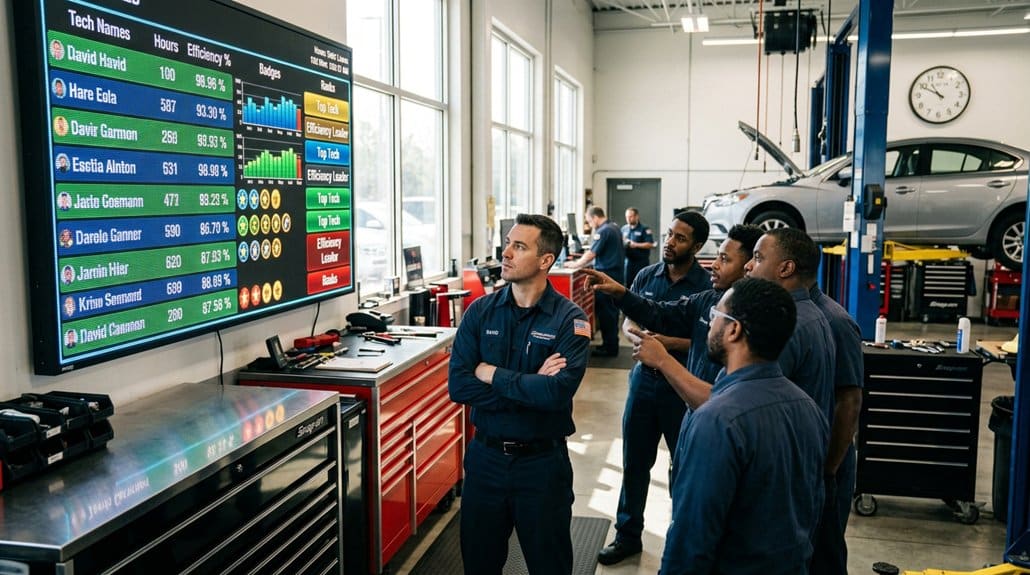
You’ll find that technician leaderboards revolutionize dealerships by offering real-time insights into hours, efficiency, and productivity. They facilitate precise tracking of key metrics like Effective Labor Rate (ELR) and Customer Satisfaction Index (CSI). By fostering competition among technicians, efficiency increases up to 42%, and fixed operations profit can rise by 28%. AI-powered scheduling optimizes task allocation and reduces downtime. To enhance your dealership’s operational performance, there’s much more to explore ahead.
Key Takeaways
- Technician leaderboards offer real-time metrics for tracking effective labor hours and efficiency benchmarks.
- Leaderboards provide insights into technician productivity, enabling task redistribution to eliminate inefficiencies.
- They foster competition, driving a 42% increase in efficiency and 28% boost in fixed operations profit.
- Real-time data from leaderboards facilitates swift trend identification and issue resolution in service durations.
- Leaderboards visualize technician impacts, enhancing accountability and motivating improved performance and customer satisfaction.
Technician Leaderboards in Dealerships Explained
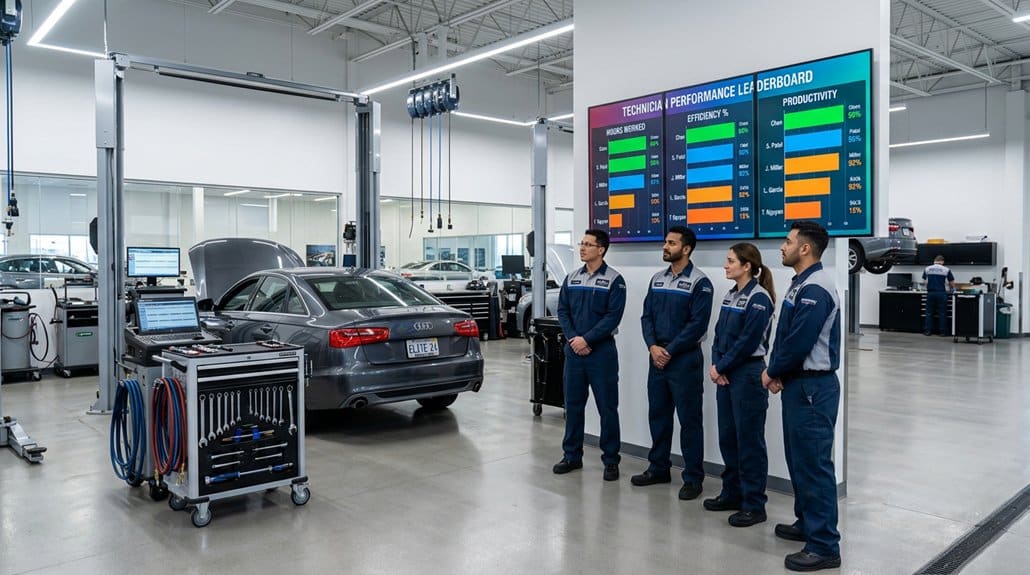
In the ever-evolving automotive industry, technician leaderboards are an indispensable tool for dealerships aiming to enhance operational efficiency. Leaderboard design is critical, as it must clearly display key metrics like effective labor rate (ELR) and Customer Satisfaction Index (CSI) scores. These boards don’t just inform; they ignite. By ranking technicians, they introduce performance incentives, spurring motivation. You’ll find that competitions fostered by these rankings lead to a projected 42% increase in technician efficiency and a 28% boost in fixed operations profit.
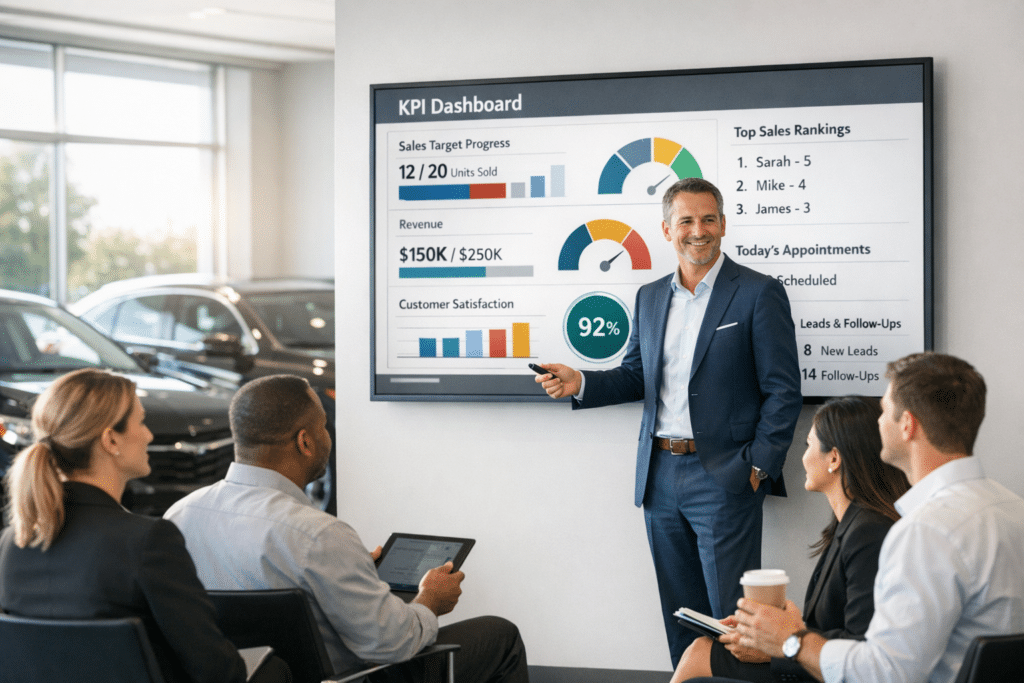
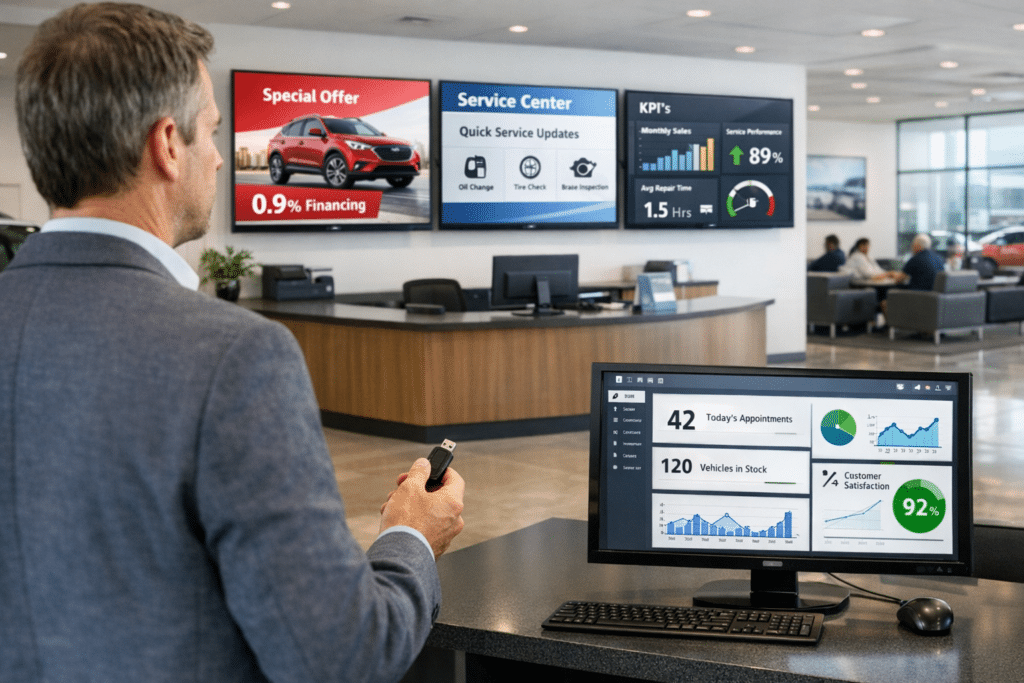
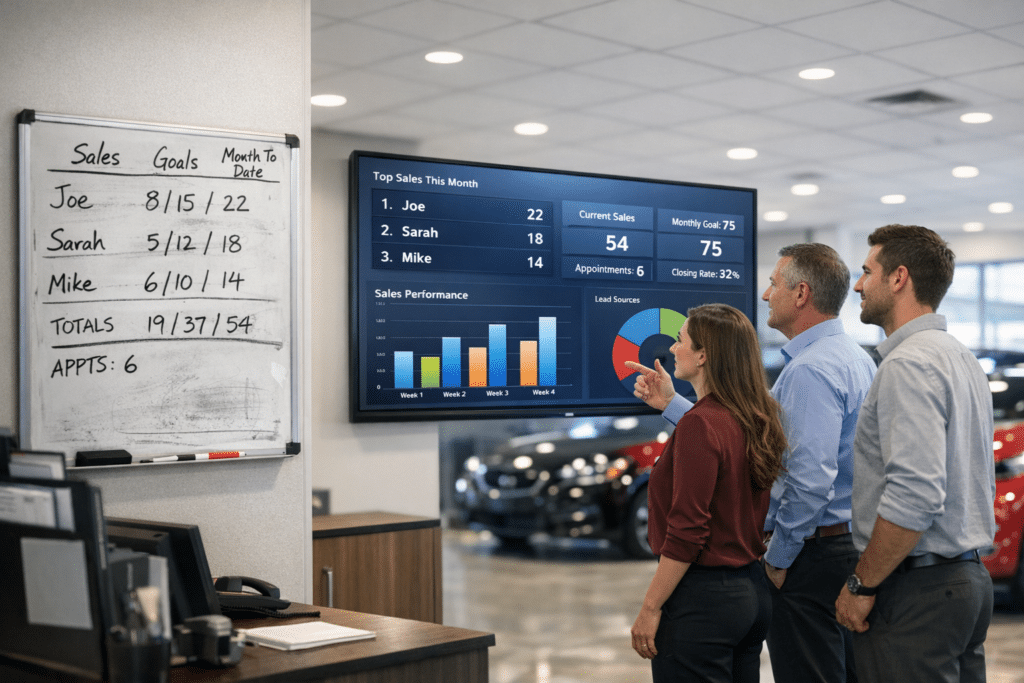
Visual data within these leaderboards allow quick analysis, ensuring you’re always on top of service order progress. By making informed decisions based on transparent data, dealerships foster a more productive work environment and consistently improve service operations.
Role of Real-Time Data in Enhancing Performance
With access to real-time performance metrics, you’re empowered to manage your technicians with precision and accuracy, leading to unparalleled operational efficiency. By analyzing live tracking data on service duration and completion times, you can swiftly identify trends, address issues, and optimize processes for a substantial boost in productivity. This data-driven approach not only guarantees timely task completion but also fosters a competitive environment where technicians are continually motivated to excel.
Real-Time Performance Metrics
Although many industries benefit from the strategic use of data, real-time performance metrics have emerged as particularly indispensable in transforming dealership operations. By leveraging real time tracking and performance visualization, the Digital Fixed Ops Leaderboard empowers you to assess technician hours and efficiency instantly, enabling informed decision-making. Live data analysis highlights service metrics such as average completion times and effective labor rates, essential for evaluating productivity.
Managers can swiftly spot workflow bottlenecks, like communication gaps, using real-time updates and remedy these to boost service performance. Tracking these metrics also allows you to measure technician performance against industry benchmarks, encouraging continuous improvement. Additionally, dealerships leveraging these insights have seen up to a 28% increase in fixed operations profits and a 42% rise in technician efficiency within a year.
Data-Driven Technician Management
Harnessing real-time data is revolutionizing technician management within dealerships, offering a foundation for enhanced performance metrics. By employing data analytics, you can instantly visualize service metrics through technician leaderboards, providing an acute analysis of hours worked, efficiency, and productivity. This immediate insight enables you to track performance against industry benchmarks, fostering a competitive atmosphere and driving technicians towards continuous improvement.
The Digital Fixed Ops Leaderboard further bolsters your ability to identify trends and issues swiftly, using actionable insights to fine-tune staffing and task allocations. Monitoring KPIs can surge technician efficiency by an anticipated 42% within a year. Ultimately, this data-driven approach not only boosts accountability but also paves the way for a potential 28% profit increase in fixed operations.
Strategies to Optimize Technician Hours
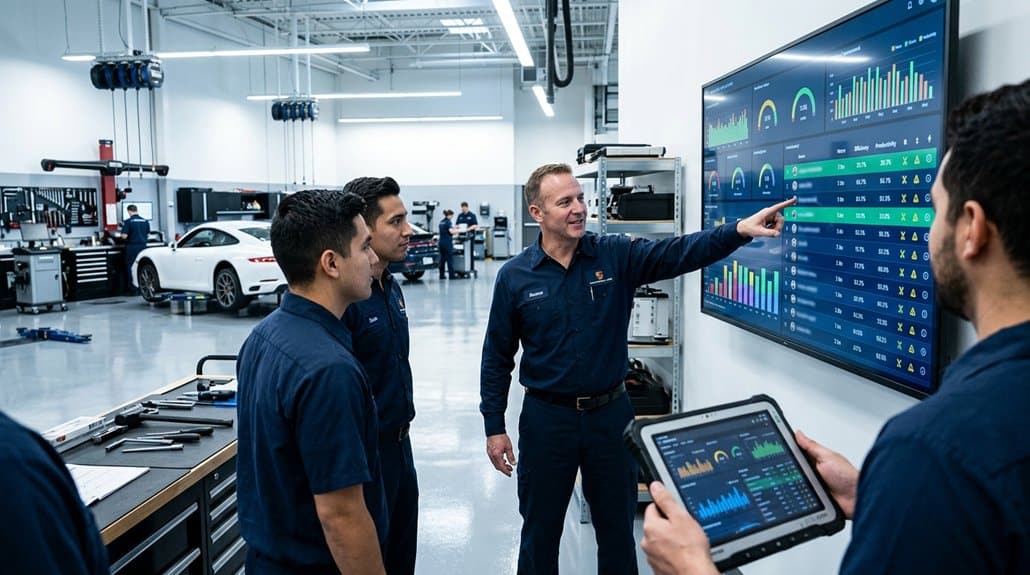
To optimize technician hours in your dealership, it’s crucial to harness AI-powered scheduling tools that strategically allocate tasks to reduce downtime and enhance labor utilization. By analyzing real-time data from technician leaderboards, you can swiftly pinpoint discrepancies in hours worked versus billed, allowing for swift adjustments that maximize productivity. Additionally, fostering a culture of continuous performance analysis enables identification of training opportunities, ensuring that every technician’s hour translates to effective, billable work.
AI-Powered Scheduling Tools
In today’s fast-paced automotive service environment, optimizing technician hours is essential for maximizing productivity and profitability. AI scheduling tools are revolutionizing how you manage technician performance. By analyzing real-time data, these tools allocate technician hours efficiently, ensuring minimal downtime and enhanced productivity. With AI-driven accuracy, appointment scheduling is tailored to suit each technician’s availability and expertise, speeding up repair times and boosting job assignment precision. Additionally, AI scheduling reduces technician waiting time, thereby increasing billable hours and operational efficiency.
Consider the following benefits:
- Enhanced job assignment: Matches technician expertise with specific tasks.
- Reduced bottlenecks: Identifies service delivery obstructions for proactive management.
- Improved resource management: Real-time insights guide scheduling adjustments.
- Increased profitability: Streamlined processes contribute to significant profit gains.
Real-Time Performance Analysis
A fundamental shift is occurring in automotive service management as real-time performance analysis takes center stage. By leveraging the Digital Fixed Ops Leaderboard’s real-time data visualization, you gain immediate insights into your technicians’ service durations and productivity levels. This facilitates swift real-time intervention, enabling you to address inefficiencies as they happen. The AI-powered scheduling tools integrated into the leaderboard further optimize technician hours, minimizing downtime. Performance feedback collected continuously via real-time performance tracking helps pinpoint emerging trends and issues. This approach doesn’t just boost technician efficiency by 42% within a year but also proposes a potential profit increase of 28%. Additionally, continuous monitoring empowers you to allocate workloads based on technicians’ expertise, enhancing both decision-making and customer satisfaction.
Maximizing Productive Hours
Harness the power of strategic planning to release the full potential of your technicians’ productive hours. Implementing AI-powered scheduling tools can drastically diminish downtime, driving technician motivation and optimizing productive time. Keep technicians informed of their performance with regular leaderboard updates to cultivate accountability and encourage them to refine their productive hours. Real-time service metrics, monitored consistently, shed light on inefficiencies, offering opportunities for a potential 42% boost in efficiency. Data analytics from platforms like the Digital Fixed Ops Leaderboard guide managers in refining workflows, enhancing labor utilization, and mitigating stalled productivity.
- AI Scheduling: Reduces downtime.
- Performance Tracking: Boosts accountability.
- Data Analytics: Streamlines workflows.
- Workspace Organization: Minimizes search times.
Elevate productivity by integrating these precision-focused strategies into your daily operations.
Solving Common Workflow Problems
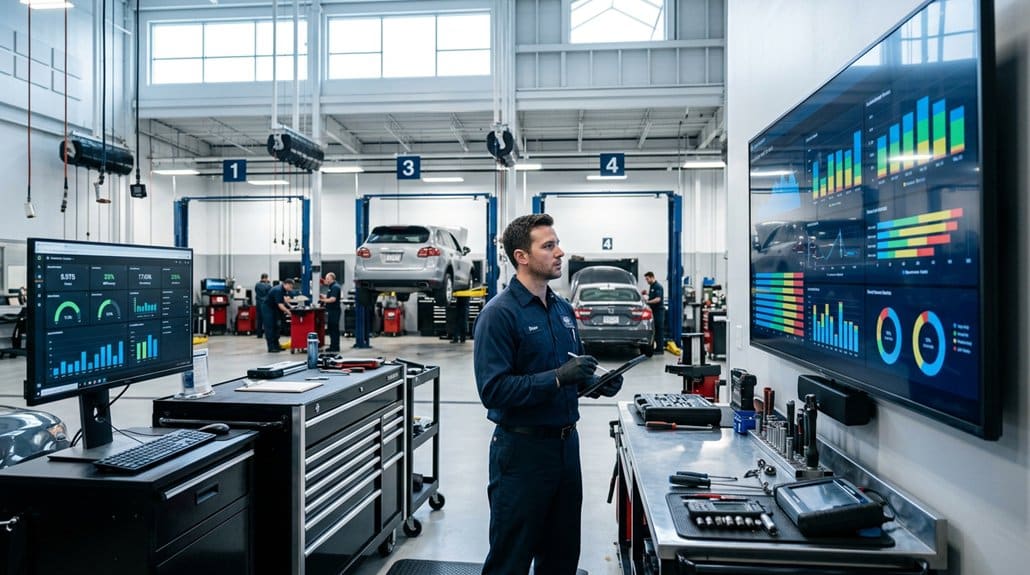
When attempting to solve common workflow problems within a dealership, leveraging technician leaderboards can be a game-changer. Leaderboards capture real-time performance metrics, highlighting workflow challenges like turnaround delays and communication barriers due to customer approvals and parts deliveries. They enable you to spot performance gaps by comparing active repair hours with clocked-in times, thereby enhancing technician engagement. By promoting accountability measures and collaborative efforts, you’re encouraged to optimize workflow efficiencies. Leaderboards not only track effective labor rates and completion times but also aid managers in redistributing tasks, helping eliminate inefficiencies. Customer feedback can be acted on swiftly, further refining processes. This real-time data empowers you to bridge existing gaps, aligning technician practices with improved service delivery and productivity.
How Rankings Immediately Motivate Technicians and Improve Performance
Leaderboards, an innovative tool previously discussed in solving workflow problems, are equally powerful in motivating technicians to enhance their performance. By fostering a competition drive, leaderboards present real-time performance rankings that push technicians to raise their efficiency and productivity. This recognition culture not only highlights top performers but also encourages everyone to aim for excellence. As technicians see how their efforts directly impact dealership success, their engagement climbs, leading to improved service quality and substantial growth in efficiency—up to 42% within a year.
- Real-time rankings encourage performance boosts.
- Recognition culture promotes accountability and excellence.
- Technicians optimize time, driving potential 28% profit increase.
- Engagement grows by visualizing individual impact on dealership success.
Embrace leaderboards for enhanced motivation and performance.
Essential Metrics for Evaluating Technician Efficiency
Evaluating technician efficiency relies heavily on precise metrics, offering insights that directly influence dealership success. By comparing flat rate hours produced to actual hours worked, you establish efficient benchmarks critical for tracking productivity trends. Top dealerships aim for an efficiency rate of 125% for factory manuals and 135% for non-factory manuals. This efficiency formula—Efficiency = Flat rate hours produced / Hours worked—provides a transparent view of technician time management. Monitoring these metrics via a detailed leaderboard allows you to spot immediate opportunities for performance enhancement. Aim for a minimum of 100% proficiency, with the ideal goal at 120%, to guarantee technicians are optimizing work hours effectively. Ultimately, these metrics are essential for evaluating training and maximizing profitability.
AI Tools for Smarter Scheduling
With AI tools for smarter scheduling, you can efficiently allocate resources by analyzing real-time data to reduce technician downtime markedly. These tools not only streamline technician hours but also enhance operational efficiency, boosting productivity by up to 42% within the first year. As you integrate these AI insights, you’ll notice improved labor utilization patterns, leading to seamless workflows and a superior customer service experience.
Efficient Resource Allocation
Harnessing the power of AI-driven scheduling tools is a transformative approach for dealerships seeking efficient resource allocation. By analyzing real-time data, these tools guarantee ideal resource distribution and workload balancing by aligning technician availability and skills with varying service demands. This dynamic scheduling approach, rooted in historical performance metrics, minimizes customer wait times and streamlines operations. Not only does this enhance technician efficiency by up to 42%, but it also boosts service delivery and customer satisfaction.
- AI tools predict service order patterns for more effective resource allocation.
- Ideal labor utilization leads to improved profitability.
- Real-time data analysis matches skills with demand.
- Historical metrics guide precise scheduling decisions.
Reducing Technician Downtime
As dealerships endeavor for increased efficiency, AI tools have become indispensable in reducing technician downtime. With AI-powered scheduling, you can optimize technician time by assigning the right person to the right job, minimizing downtime causes. Real-time data analysis identifies inefficiencies, allowing proactive adjustments and significant technique improvements. Within a year, productivity can increase by up to 42%, thanks to these tailored scheduling processes. Use the Digital Fixed Ops Leaderboard to track and improve completion times, boosting both efficiency and technician morale.
| Technique Improvements | Downtime Causes |
|---|---|
| Optimized Scheduling | Ineffective Job Matching |
| Real-Time Data | Delays in Allocation |
| Actionable Insights | Communication Breakdowns |
| Proactive Adjustments | Scheduling Conflicts |
Streamlined scheduling not only engages technicians but enhances customer satisfaction with quicker service delivery.
Improving Customer Satisfaction Through Leaderboards
Leaderboards transform how dealerships operate by providing real-time insights into technician performance, which directly impacts customer satisfaction. With clear metrics on display, technicians see how their efforts contribute to the overall customer experience, engaging more purposefully with customer feedback. This visibility encourages technicians to refine their skills, reducing service times and enhancing efficiency—a pivotal factor in boosting customer retention.
- Improved Service Efficiency: Quicker repair times mean happier customers, enhancing loyalty.
- Healthy Competition: Performance rankings drive technicians to excel, elevating service quality.
- Profit and Customer Experience Link: A 28% boost in fixed operations profit illustrates direct benefits of satisfied customers.
- Alignment with CSI Goals: Regular leaderboard updates guide technicians to align efforts with enhancing customer satisfaction index scores.
These elements synergistically improve customer experiences.
Real-Life Wins With Leaderboards
In the ever-evolving landscape of automobile service, a significant transformation is emerging through the implementation of technician leaderboards. They provide real-time performance data, enabling dealerships to effectively track hours and productivity. This tool has resulted in an impressive 28% increase in fixed operations profit. By promoting team collaboration and offering detailed performance feedback, leaderboards foster healthy competition and elevate technician morale. Dealerships have observed a remarkable 42% rise in technician efficiency due to optimized processes and effective time management. The real-time data visualization identifies workflow bottlenecks, allowing swift adjustments that boost service speed and enhance customer satisfaction. Ultimately, leaderboards instill transparency and accountability, motivating technicians to refine their skills in alignment with dealership objectives.
What’s Next for Service Operations Optimized by Leaderboards
Harnessing the power of technician leaderboards, service operations are poised to enter a new era of optimization and efficiency. Future enhancements in leaderboard gamification offer exciting possibilities to refine productivity, efficiency, and customer satisfaction. By integrating AI-powered scheduling and real-time performance metrics, you can identify areas for improvement that drive a potential 28% increase in profitability. Consider these innovative advancements:
Technician leaderboards and AI yield a 28% boost in profitability through enhanced productivity and efficiency.
- AI-Driven Scheduling: Minimizes downtime and maximizes output, essential for enhancing productivity.
- Enhanced Gamification: Boosts motivation and camaraderie among technicians, fostering a productive environment.
- Proactive Maintenance Alerts: Leverages technician efficiency metrics to preemptively resolve service issues.
- Data-Driven Insights: Facilitates strategic decisions, increasing fixed operations profit and showcasing areas for operational refinement.
These developments emphasize a commitment to evolving service excellence and operational prowess.
Frequently Asked Questions
How to Track Technician Efficiency?
To track technician efficiency, utilize tracking methods like digital platforms that offer performance metrics. They let you monitor flat rate hours and actual hours worked, ensuring you identify areas for improvement and maintain peak service department productivity.
What Is Automotive Technician Efficiency?
Imagine technician efficiency as the engine’s heartbeat—evaluating efficiency metrics is essential to performance benchmarks. You’re analyzing the tempo of hours worked versus labor sold, revealing technicians’ prowess in surpassing manual guidelines and optimizing service operations.
Conclusion
Imagine technician leaderboards as a high-performance engine. When well-tuned, they transform chaos into seamless operation. Picture Mike, once juggling tasks like an out-of-sync transmission, now streamlined and efficient. Leaderboards spotlight real-time metrics, turning data into actionable insights. Efficiency rates climb, mimicking a vehicle’s improved fuel economy. As you’re steering your dealership, these digital dashboards guide you toward precise adjustments, turbocharging technician morale, customer satisfaction, and ultimately, dealership profitability. Just like Mike, you’re driving success.