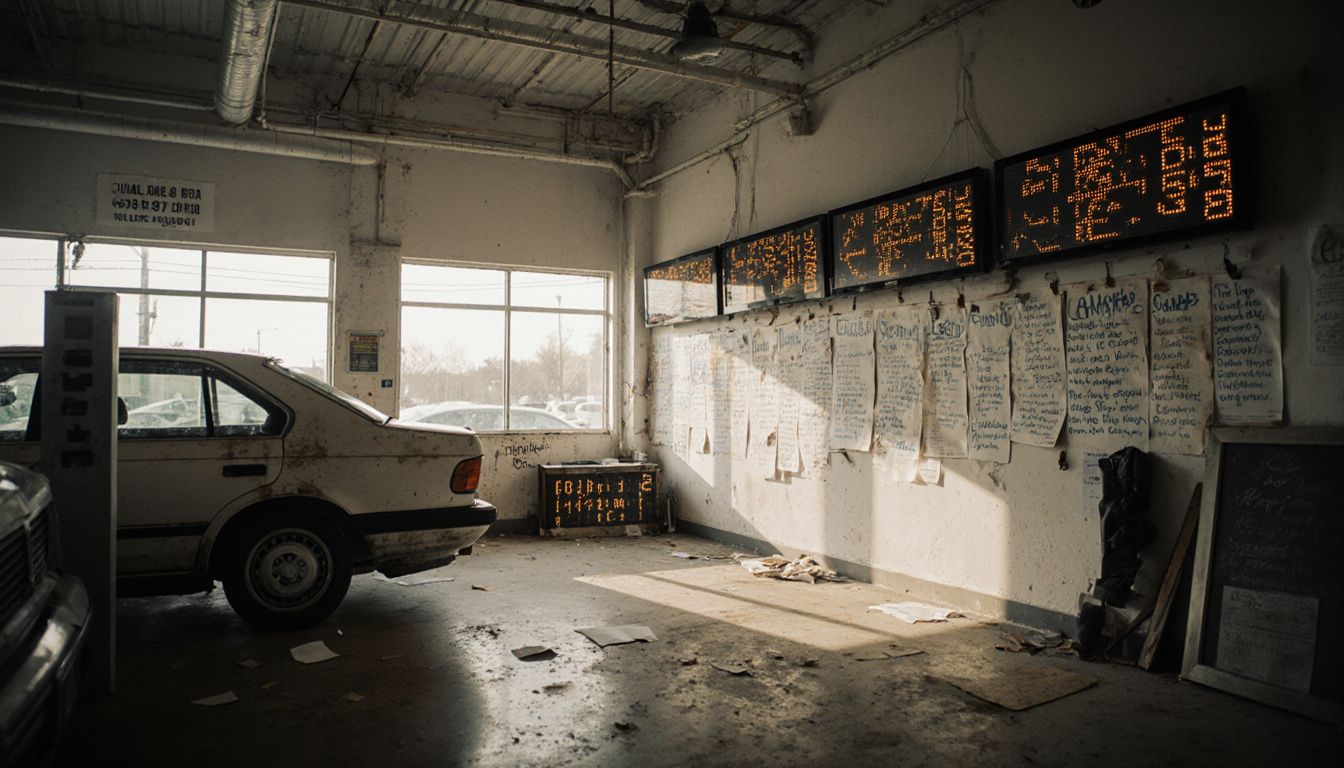
Empty showrooms and old screens make dealerships look tired and slow. Many managers notice competitors switching to bright digital signage or Smart TV setups.
Outdated tech can drain sales every day. Staff lose time swapping paper signs or fixing clunky apps that were never made for auto sales teams.
Here is the big difference. Digital Dealership System provides real-time KPI dashboards and automated digital signage built for car retailers. KPI means key performance indicator, such as sales, appointments, and repair orders. DIY Smart TV solutions often lack this depth in content management, performance tracking, and true commercial use.
This guide compares both options, from cost to features, so leaders can see what drives sales and makes work easier. The right choice can lift foot traffic, improve customer satisfaction, and reduce stress across the team.
Ready to see what drives real results? Keep reading…
Key Takeaways
- Digital Dealership System delivers real-time KPI dashboards, automated digital signage, and custom installs made for car dealerships, not basic living room setups.
- DIY Smart TV solutions seem cheaper at first but often need manual updates, lack auto integrations, and create hidden costs plus lost staff time.
- Digital Dealership System includes professional installation, scales from one screen to a full network, provides 24/7 support, and shows live leaderboards to motivate staff.
- DIY platforms do not include customer satisfaction tools or advanced dealership marketing integrations that boost engagement and track results instantly.
- Since 2013, Digital Dealership System has shown higher ROI through better efficiency, data-driven management features, and a seamless showroom experience.
What is a Digital Dealership System?
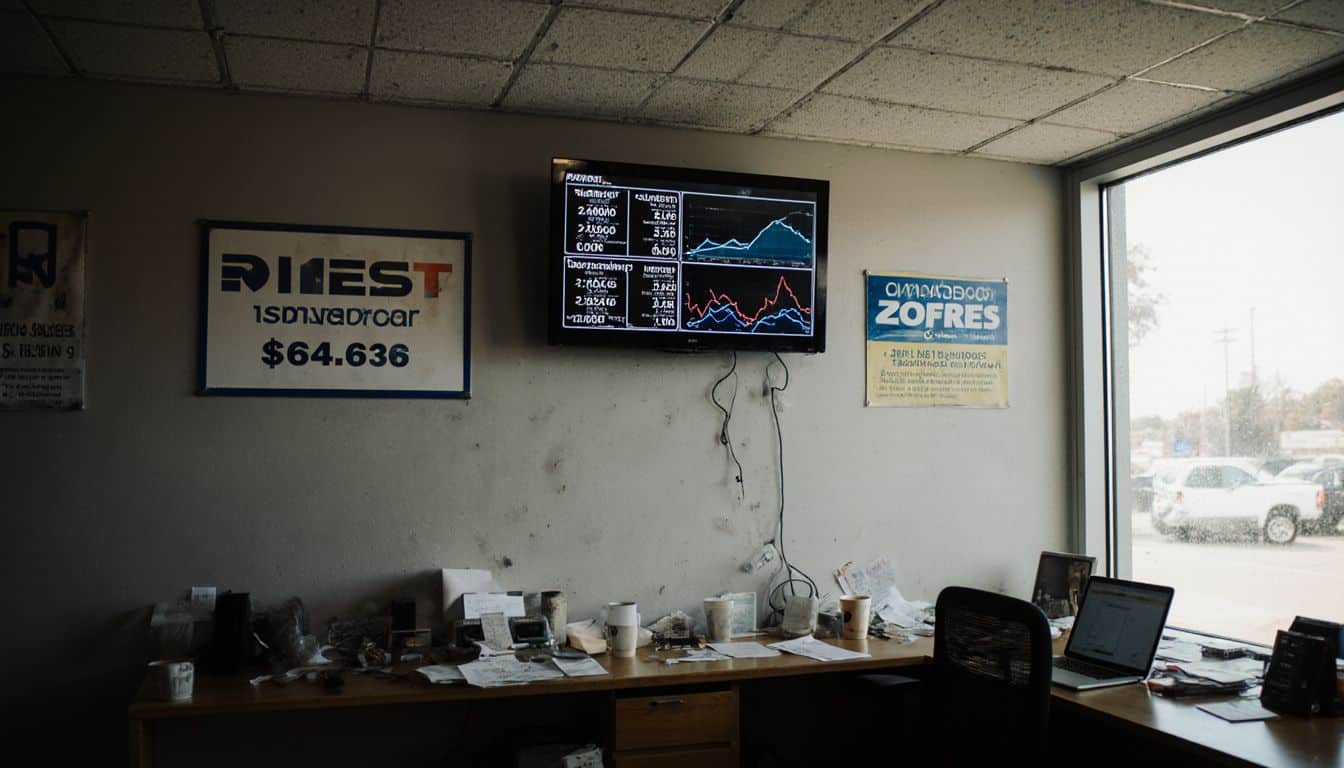
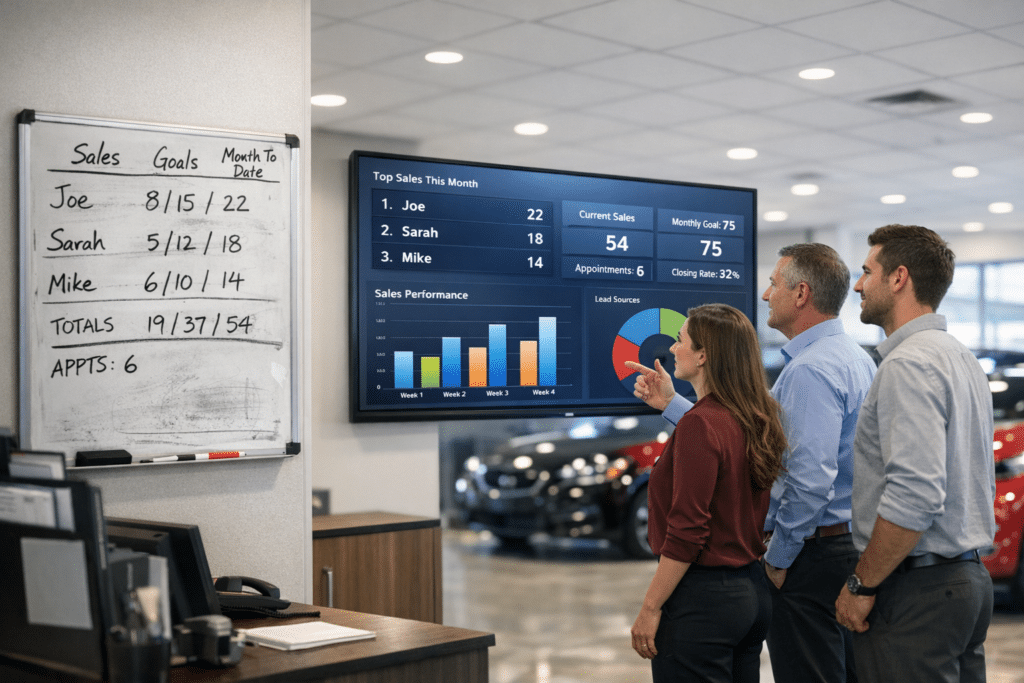
Empty floors and outdated signs make it tough to impress buyers or measure results. Teams work harder but miss key steps because manual tracking takes too long and shows no clear metrics.
Competitors already use advanced automotive software to tighten their process. Slower stores fall behind fast.
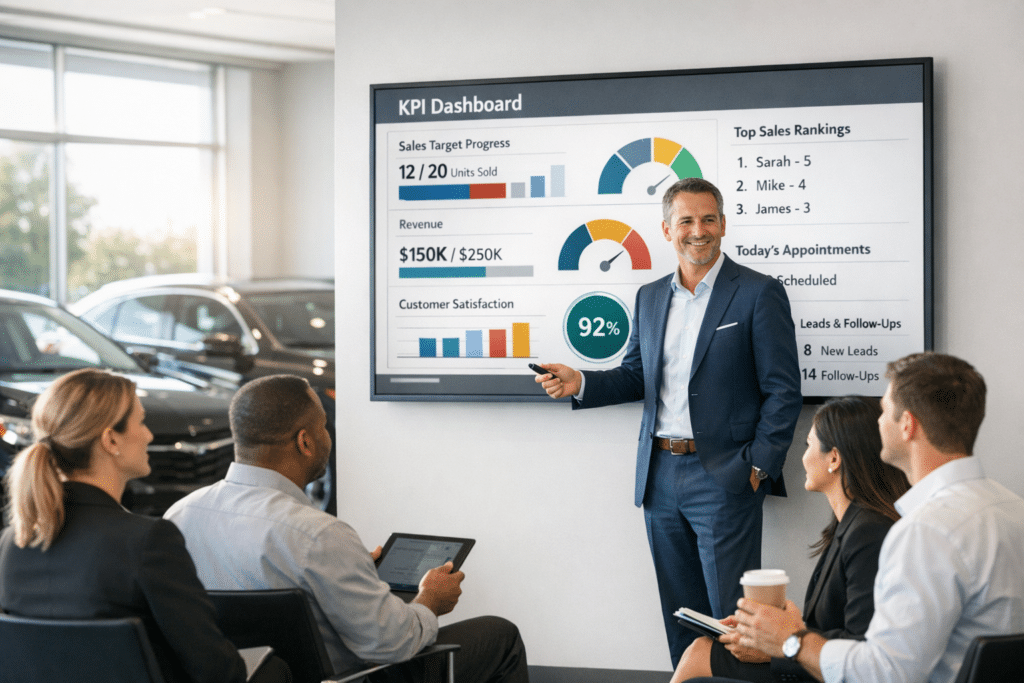
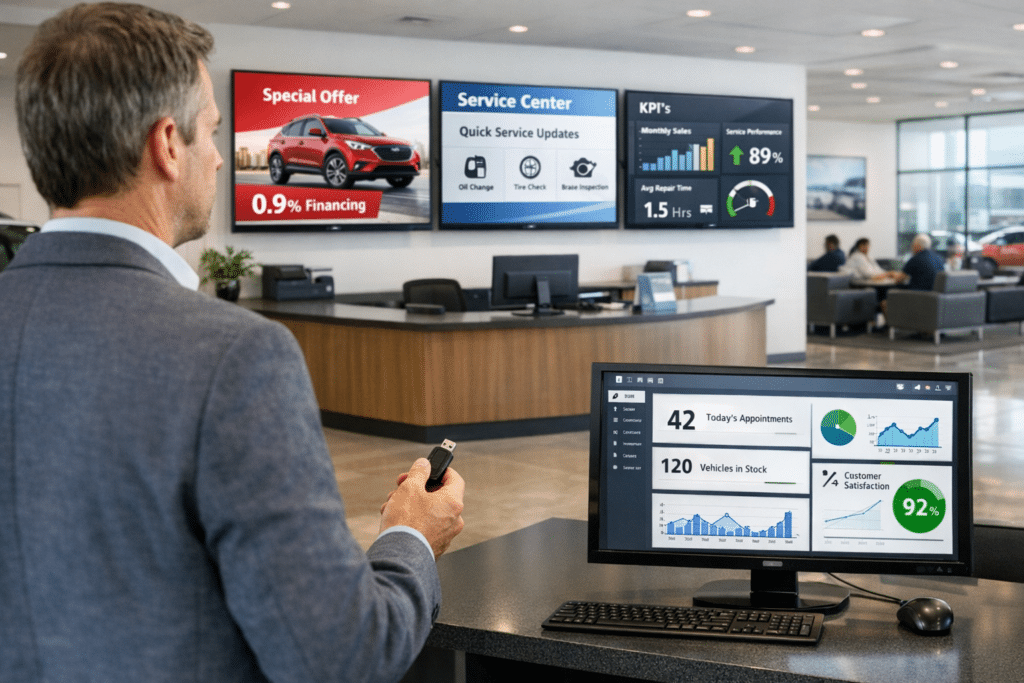
A Digital Dealership System solves this with connected tools built for the automotive business. It shows live analytics on clear dashboards so managers can track customer experience, staff activity, and sales progress from any device.
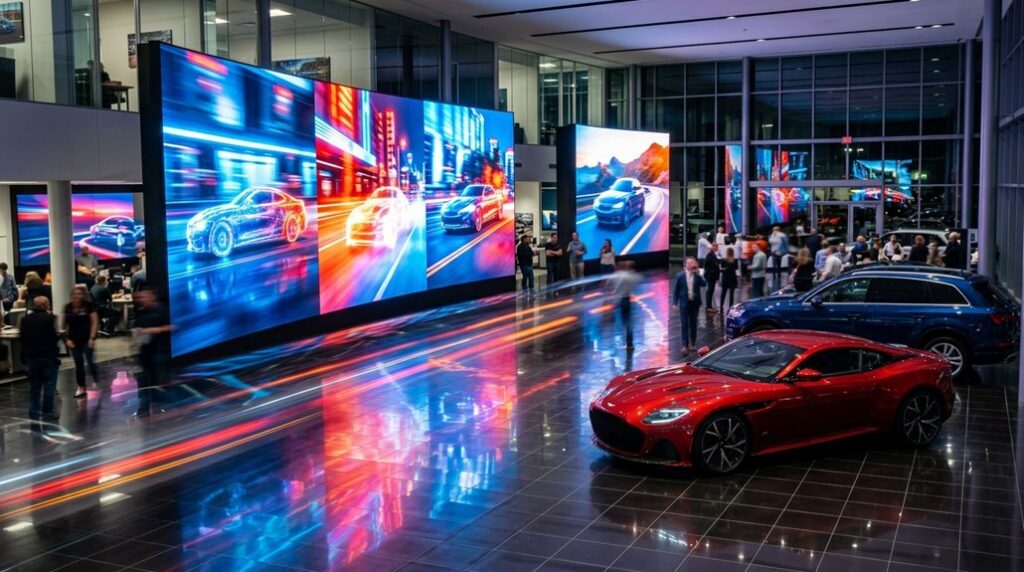
Automated digital signage draws attention across the floor with fresh, targeted messages. No more faded posters or missed specials. Leaderboards keep everyone engaged by ranking managers and staff in real time.
Each setup is built to fit the store. Some start with one screen, while larger rooftops run full digital networks managed by Digital Dealership System pros since 2013.
Digital intelligence in your dealership isn’t about gadgets—it’s about smarter decisions every day.
Stores of any size can gain insight and grow revenue without hiring a big IT team or using generic retail apps that do not match how a dealership runs.
What Are DIY Smart TV Solutions?
DIY Smart TV solutions rely on home gear, streaming boxes, or small media players. Dealers plug in a smart screen or add devices like Roku, Apple TV, or Chromecast.
Some shops even build small kits with Raspberry Pi computers and free media apps. These upgrades turn a regular screen into a basic player for slides and videos.
Most teams stack these systems with free apps and low-cost dongles found online. Staff must handle each setup, push every update, and fix issues on their own. Troubleshooting chews up time if something breaks in the TV setup or the smart home links.
The price tag looks low at first. Then the manual work grows with every extra screen in the showroom and waiting area.
Key Differences Between Digital Dealership Systems and DIY Smart TV Solutions
Many leaders want to know how a Digital Dealership System compares with DIY Smart TV options on digital signage, cost, and in-store experience. Here is how they stack up in real dealership use.
How Do Digital Dealership Systems and DIY Solutions Compare in Features?
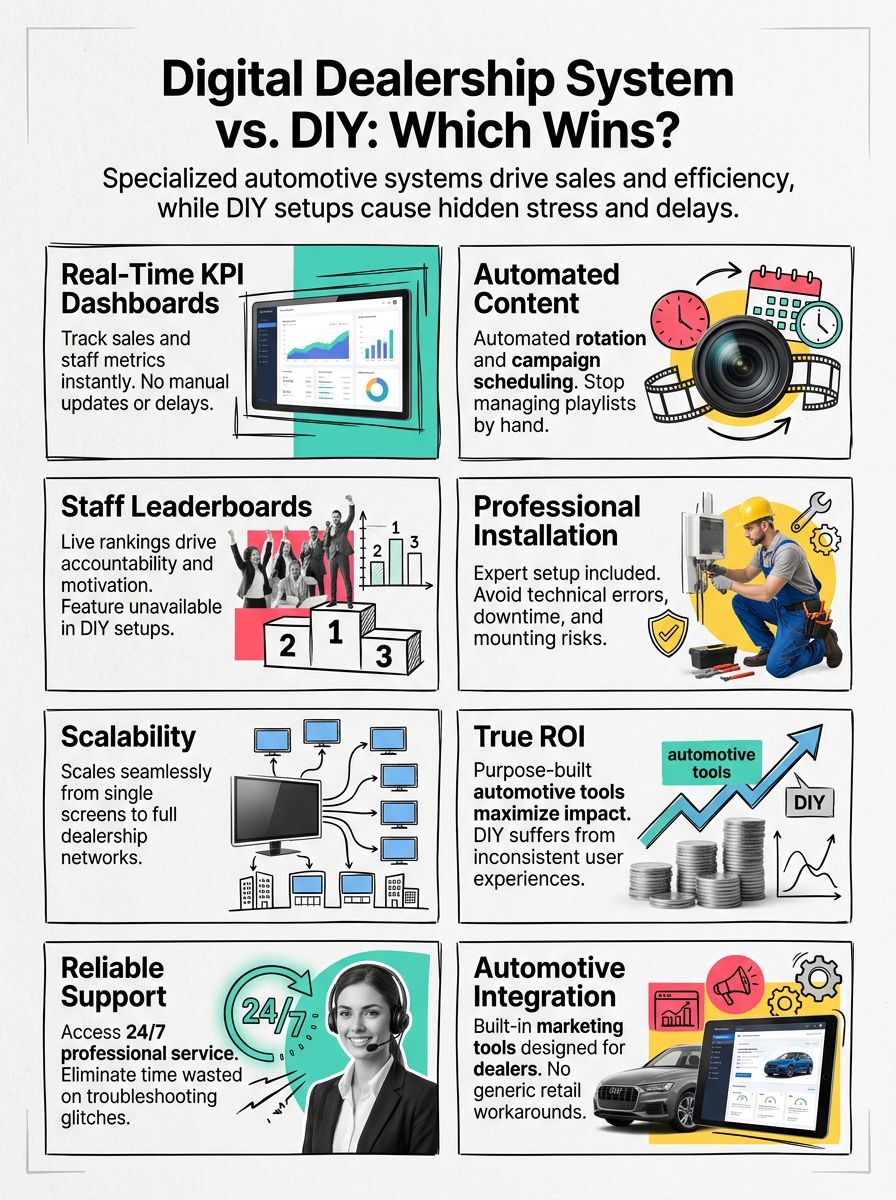
Piecemeal TV setups and old slideshows waste hours and hide performance data. Competitors use live dashboards and automated content, which helps them move faster and sell more. That is why Digital Dealership System was built, to deliver a connected, data-driven platform that improves sales performance.
| Feature | Digital Dealership System | DIY Smart TV Solution |
|---|---|---|
| Real-Time KPI Dashboards | Yes. Live dashboards track sales, service, and staff metrics for instant updates. | No built-in dashboards. Manual updates slow down decisions. |
| Automated Digital Signage | Yes. Automated rotation, campaign scheduling, and in-store marketing built for dealers. | Limited. Often manual, based on simple playlists or cloud folders. |
| Customer Satisfaction Tools | Yes. Content and integrations that improve the buyer experience across the store. | No direct tools for customer engagement or satisfaction. |
| Leaderboard Suite | Yes. Leaderboards for managers and staff drive accountability and motivation. | Not available. No ranking or scoring features. |
| Scalability | Scales from one screen to full-store networks with central control. | Hard to scale. Each screen is managed by hand, which adds labor. |
| Custom Design & Pro Installation | Included. Pros align each display with brand standards and sales goals. | Self-install only. Requires tech skills and risks poor setup or downtime. |
| Integration for Dealership Marketing | Built for car dealers, with marketing tools that deliver proven ROI at any budget. | Generic apps lack dealer-focused integrations and miss sales chances. |
Dealers who want speed, clear insights, and a smooth customer journey pick Digital Dealership System for a reason. See how a connected platform can refresh your showroom and strengthen your sales process.
What Are the Cost Differences Between Digital Dealership Systems and DIY Smart TV Solutions?
Features matter, but price can surprise teams that try DIY. Many stores learn too late that a simple Smart TV plan does not show the true cost. Here is a clear side-by-side view.
| Cost Factor | Digital Dealership System | DIY Smart TV Solution |
|---|---|---|
| Upfront Investment | Varies by scope. Single-screen systems start lower, full-store packages cost more. Pro-grade hardware is included. | Lower at first. Often just a Smart TV, wall mount, and a retail media player. |
| Features & Integrations | All-in-one. Includes software, CMS, live inventory, scheduling tools, and more. | Separate tools needed for content management, scheduling, and data feeds. Multiple app fees add up. |
| Customization & Scalability | Scales from one screen to large networks. Custom layouts do not need hacks. | Limited by consumer gear and app choices. Custom work needs extra time or coding. |
| Installation | Professional installation reduces downtime and prevents mistakes. | Self-install only. Mounting or cabling errors can raise repair costs later. |
| Ongoing Expenses | Predictable maintenance and support. Updates and troubleshooting are covered. | Costs rise as new features are added. Lack of support means more staff time lost. |
| Long-Term ROI | Built for auto retail. Maximizes display impact, sales engagement, and efficiency. | Lower ROI due to patchwork apps, wasted time, and uneven buyer experience. |
Dealerships trying to modernize face hidden losses from downtime, weak integrations, and slow manual work. Digital Dealership System gives auto teams an integrated, scalable, and future-ready digital signage platform that produces real results. Talk with a specialist and see how to turn screens into a steady sales engine.
Which Option Offers Better User Experience and Support?
Old Smart TVs with manual playlists frustrate staff and cause delays. Many stores spend hours troubleshooting only to see black screens or outdated content during peak hours.
Stores using live dashboards know which sales team is leading because KPI data updates instantly. That clarity shapes better coaching and faster choices on the floor.
Digital Dealership System supports users with 24/7 service teams, custom design options, and professional installation that fits most budgets. Managers can access leaderboards and automation tools from any device in the building.
Customer satisfaction improves as waiting areas show fresh offers for that location. Unlike generic DIY setups, these features raise key performance numbers month after month thanks to solid integrations and dependable support.
Do not let basic screens slow the team while competitors move faster. Upgrade to a platform built for the pace of auto retail.
Conclusion
Staying with slow, outdated tech reduces revenue and burns out staff. Empty or static screens miss chances to engage buyers who expect modern digital displays.
DIY Smart TV solutions may look easy, but they rarely show live data or handle true automation. Most cannot support complex dealership tasks or deliver the KPIs needed for steady sales growth.
Digital Dealership System brings connected tools made for car dealers. With real-time dashboards, professional installation, interactive options, and Commercial Displays built for heavy use, the platform stands far ahead of common alternatives in both performance and reliability.
Skip the patchwork. Put Digital Signage, content management, and Smart TV control on one proven system. Choose technology that helps the store outperform rivals today and keeps scaling as the business grows.
FAQs
1. What is the main difference between a Digital Dealership System and DIY Smart TV Solutions?
A Digital Dealership System offers professional, dealership-focused software with integrated support, real-time updates, and custom content management. DIY Smart TV solutions rely on consumer-grade apps or USB drives for basic displays but lack advanced features like remote control, data security, and tailored automotive content.
2. Why should dealerships choose a Digital Dealership System over DIY options?
Digital Dealership Systems are built for auto retailers; they deliver reliable uptime, secure customer data handling, and seamless integration with inventory feeds or CRM tools. These systems help you engage customers at every touchpoint while keeping your brand image sharp—DIY setups often fall short in these areas.
3. Are there cost benefits to using a Digital Dealership System instead of setting up TVs yourself?
While upfront costs may seem higher for dedicated dealership platforms compared to off-the-shelf smart TVs or streaming sticks, long-term savings come from reduced downtime, fewer tech headaches, less staff training time needed—and better sales results thanks to targeted messaging that actually moves vehicles off your lot.
4. How does technical support compare between these two approaches?
With a true Digital Dealership System you get expert assistance whenever issues arise; this includes troubleshooting hardware problems or updating digital signage remotely without disrupting daily operations. DIY Smart TV solutions usually offer little more than generic manufacturer support which rarely understands the unique needs of car dealers—leaving you stuck when something goes wrong.
Ready to upgrade? Call our team today or visit our website to see how a purpose-built system can transform your showroom experience!