You need automated advisor performance tracking because manual tracking often leads to inconsistencies and errors, impacting key metrics like approval rates or repair order efficiency. Automated systems offer real-time data visibility, enabling timely coaching and optimizing resource allocation. They simplify performance evaluation by combining metrics with customer feedback, facilitating precise and efficient decision-making. As the industry evolves, embracing automated systems guarantees you stay competitive, with further insights available for strategic advancements in dealership success.
Key Takeaways
- Automated tracking provides real-time visibility into advisor performance, enabling prompt decision-making and strategic interventions.
- It reduces error-prone manual tracking, improving data accuracy and consistency for reliable performance evaluation.
- Real-time analytics and alerts identify performance dips instantly for timely corrective actions and enhanced customer satisfaction.
- Automated systems integrate customer feedback with performance metrics for comprehensive and precise evaluations.
- Mobile access to KPIs allows service managers and advisors to make informed decisions anywhere, anytime.
The Vital Role of Service Managers in Dealerships
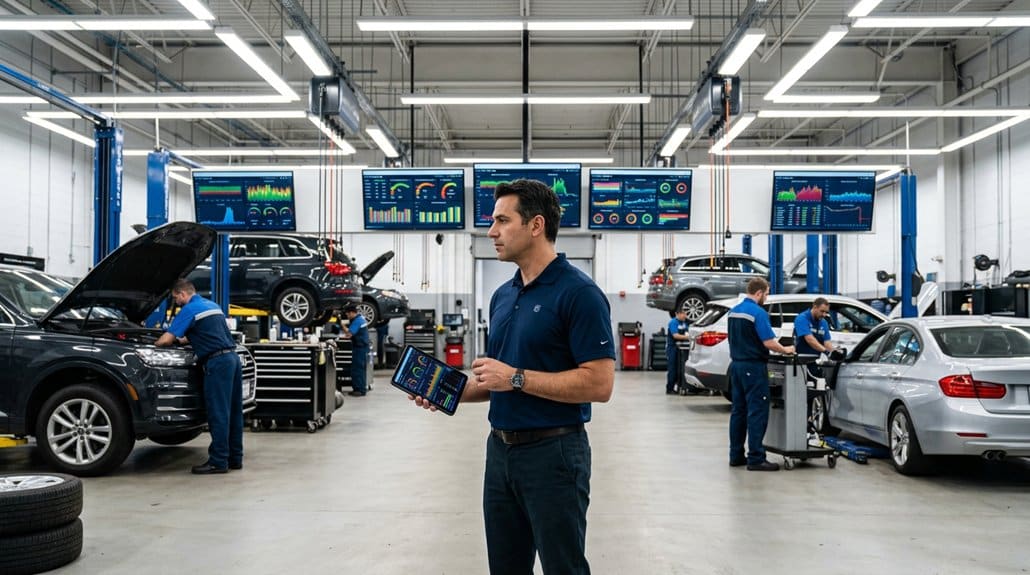
Service managers are integral to the success of any dealership; their role extends beyond just supervision. They spearhead service management strategies by leveraging performance improvement techniques to guarantee that service advisors meet both customer satisfaction and revenue goals. Monitoring key performance indicators (KPIs) such as approval rates and average repair order (RO) dollars is critical. By understanding these metrics, you can effectively coach advisors on upselling and communication. Automated performance tracking systems deliver real-time insights into advisor productivity, enabling you to make data-driven decisions quickly. Furthermore, fostering collaboration between advisors and technicians is essential for streamlined workflows and improved service delivery. These actions build a culture of continuous improvement, enabling the identification of top performers and pinpointing further training needs.
Problems With Manual Advisor Performance Tracking
Inconsistency plagues manual advisor performance tracking, making it a cumbersome and often inaccurate process. Manual methods struggle with data accuracy, affecting metrics like approval rates, which leads to unreliable performance consistency. The challenge extends to timely intervention—without quick data, service managers miss coaching strategies that could improve insights and drive revenue. Resource allocation becomes inefficient when decisions are based on incomplete data from manual records.
| Metric | Issue |
|---|---|
| Approval Rates | Prone to inaccuracies due to human error |
| Average Repair Order | Delayed data affects intervention timing |
| Hours/Repair Order | Limited insights improvement without real-time data |
| Follow-up Completion | Manual tracking hinders performance consistency |
| Upselling Opportunities | Missed due to delayed decision-making |
Improved tracking systems are necessary to enhance data-driven decisions and optimize service delivery.
Automated Systems: Enhancing Performance Evaluation
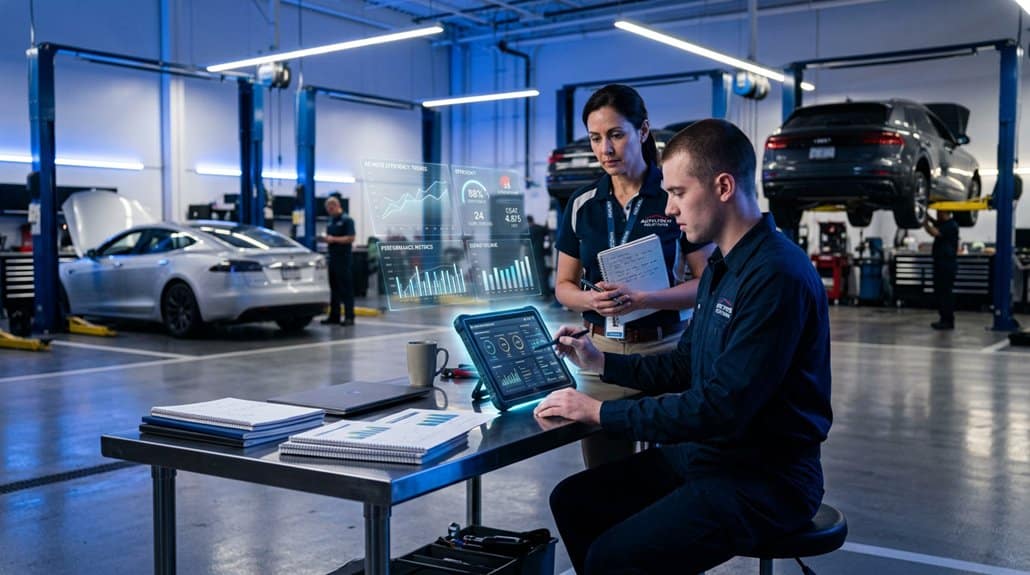
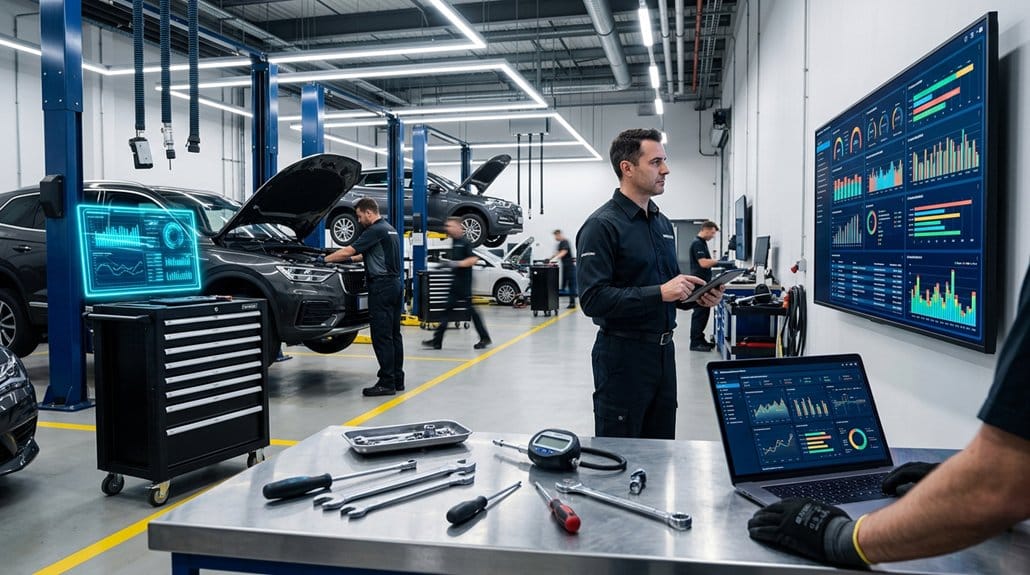
Leveraging automated systems considerably enhances the precision and efficiency of performance evaluation in dealerships. With real-time insight into metrics like approval rates and repair order values, you can swiftly make informed decisions. Automated tools excel in data visualization techniques, offering performance dashboard features that simplify trend analyses and intervention planning. Here’s why you should consider adopting these systems:
- Real-Time Visibility: Provides continuous updates on performance metrics, allowing for immediate action based on data.
- Efficient Monitoring: Automates alerts for performance dips, ensuring early issue resolution without additional administrative load.
- Strategic Integration: Combines performance metrics with customer feedback, boosting the capability to evaluate advisor effectiveness thoroughly.
Embrace automation to minimize manual bottlenecks and elevate your strategic management focus.
Crucial Metrics for Tracking Advisor Success
To guarantee your advisors’ success, it’s essential to focus on metrics such as Approval Rate, which reveals how effectively they persuade customers to accept recommended services, particularly when using visual tools. Boosting your Average Repair Order (RO) dollars depends on thorough presentations, while Hours Per RO indicates efficiency across your team. Swift Time-to-Approval strategies, like utilizing texting for quicker customer interactions, can markedly enhance shop capacity and turnover rates.
Approval Rate Insights
Approval rates are a vital metric to evaluate the success of service advisors at dealerships. By monitoring this percentage, you gauge an advisor’s prowess in communication and persuasion. Implement effective approval rate strategies to boost customer engagement and improve these statistics. Visual aids in service presentations can drive approval consistency, securing more nods and increasing revenue.
Consider these evaluation points:
- Visual Utilization: Integrate photos and videos; they greatly uplift engagement and approval rates.
- Training Focus: Enhance communication and trust-building skills; they’re essential in swaying customer decision-making.
- Performance Tracking: Focus on tracking approved dollars rather than mere quantities; it offers better insights into revenue generation.
Regularly reviewing these metrics enables informed coaching decisions, optimizing your service department’s profitability.
Maximizing Repair Efficiency
Building upon the insights from approval rates, understanding repair efficiency can greatly enhance both advisor performance and dealership profitability. To maximize repair efficiency, focus on repair workflow optimization. By closely analyzing Hours Per Repair Order (HPRO), you can improve the balance between advisors’ efficiency and technicians’ productivity. Faster approval processes are essential, directly influencing service advisor engagement and overall service quality.
Service Advisor Engagement is vital; advisors who proactively engage with clients and coordinate with technicians can minimize Time-to-Approval. This translates into increased shop capacity and higher revenue turnover. Tracking metrics like the Follow-Up Completion Rate for Declined Services allows you to capture future sales opportunities, further refining repair workflow optimization and boosting dealership success. Understanding these metrics elevates your service operation’s effectiveness.
Communication Timing Tactics
While effective communication is at the heart of customer satisfaction, it’s the timing that creates an edge in service advisor performance. To guarantee response optimization, tracking advisor response time is vital; delays could lead to dissatisfaction or lost appointments to competitors. Implement cutting-edge communication strategies to maintain a competitive advantage.
- Automate Follow-ups: Use CRM tools for declined services follow-up, addressing customer timing issues rather than outright refusals. This strategy transforms lost sales into future opportunities.
- Leverage Centralized Technology: Adopt centralized texting dashboards to dramatically reduce response times, allowing advisors to promptly engage with customers.
- Monitor Time-to-Approval: Fast approvals increase shop capacity without extra staff, underlining how streamlined communication can be a revenue multiplier.
Consider these steps to enhance your dealership’s service performance.
How Can Real-Time Data Aid Decision Making?
When you’re equipped with real-time data, you gain immediate performance insights that are essential for making informed decisions swiftly. This approach transforms static reports into dynamic decision-making tools, enabling you to adjust metrics as situations change. By leveraging these insights, you can not only optimize advisor performance but also maintain high customer satisfaction levels by responding quickly to new information.
Immediate Performance Insights
Real-time data is revolutionizing how dealerships manage service advisor performance by offering immediate insights that enhance decision-making processes. With immediate feedback on critical metrics like approval rates and hours per repair order (HPRO), you can establish clear performance benchmarks. This data allows you to swiftly identify trends and counteract issues, thereby improving service efficiency and customer satisfaction. Here are three ways real-time data aids decision-making:
- Immediate Adjustments: Automate responses to trends, boosting service efficiency and revenue strategies.
- Instant Coaching: Implement coaching for slower response times, increasing the chance to recover lost sales.
- Top Performer Recognition: Quick identification of high achievers fosters a competitive environment, motivating all advisors to perform better.
Utilizing real-time dashboards bolsters strategic planning during team meetings.
Enhanced Decision-Making Tools
Successful dealerships harness the power of real-time data tools to optimize their decision-making processes. With access to real-time dashboards, you can leverage data visualization to pinpoint trends across key metrics such as approval rates and average repair order values. Predictive analytics offer foresight into future performance, allowing you to make strategic adjustments that drive increased revenue and customer satisfaction.
Automated performance tracking enables you to respond swiftly to declining customer satisfaction indices or inefficiencies in appointment scheduling. Real-time insights empower you to implement data-driven coaching, fostering accountability without relying on anecdotal evidence. By recognizing and addressing patterns promptly, your dealership can maintain a competitive edge, enhance operational efficiency, and build strong customer relationships that contribute to long-term profitability.
Real-Time Metric Adjustments
To truly elevate your dealership’s service efficiency, leveraging real-time data is essential. Real-time adjustments using performance analytics allow you to monitor Key Performance Indicators (KPIs) such as approval rates and hours per Repair Order (RO). Here’s how real-time data aids decision-making:
- Identifying Bottlenecks: Immediate access to metrics like time-to-approval and follow-up completion rates helps pinpoint areas slowing down service.
- Informed Resource Allocation: Continuous tracking lets you make data-driven decisions regarding training and resource distribution, guaranteeing your team meets customer demands.
- Proactive Coaching: Real-time insights enable you to swiftly identify advisors struggling with specific metrics, facilitating targeted improvement sessions.
Utilizing automated performance tracking guarantees your decisions are based on the most current and relevant data, optimizing service operations.
How Automated Tracking Improves Customer Communication
Efficiency in customer communication is a critical goal that can be greatly enhanced through automated advisor performance tracking. You can leverage communication technology advancements to gain real-time insights into response times. This helps service managers identify bottlenecks and proactively address delays that might cause customer dissatisfaction. By automating follow-ups and tracking declined services, you guarantee engagement strategies convert missed opportunities into sales. Centralized messaging systems facilitate faster communication, decreasing response times and boosting customer satisfaction. Immediate feedback on advisory communication effectiveness allows advisors to refine strategies for rapport and trust-building. Real-time performance data empowers you to pinpoint improvement areas in communication, paving the way for targeted interventions and elevated service standards that foster customer loyalty.
Driving Personalized Training With Data Insights
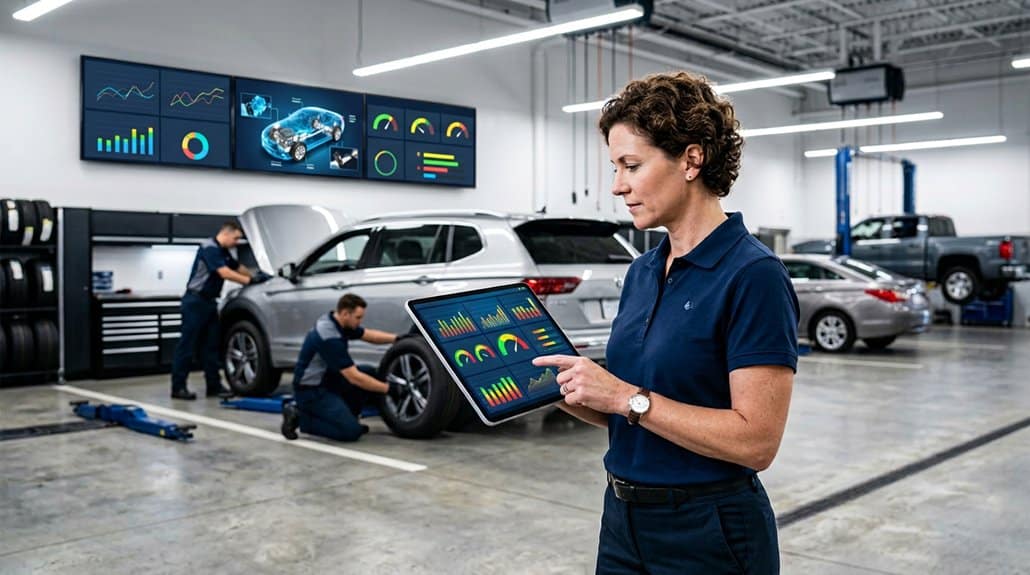
While enhancing customer communication with automated tracking is essential for dealership success, the potential of these systems goes further. Data personalization allows you to tailor training optimization efforts effectively. Real-time visibility into KPIs like approval rates will enable service managers to pinpoint advisors’ strengths and weaknesses. Here’s how you can leverage these insights:
- Personalized Training Programs: Use data to develop training initiatives tailored to individual advisor needs, boosting both performance and revenue.
- Goal Setting: Establish ambitious yet achievable goals by utilizing performance metrics, fostering accountability, and promoting continuous improvement.
- Follow-Up Training: Track declined service follow-up completion rates to spot communication gaps. Target these with focused coaching for better customer interaction and sales recovery.
Automated data insights consequently refine your team’s effectiveness and strategic approach.
Making Automated Systems Work: Integration Advice
When dealerships seek to integrate automated systems, a thorough assessment of current workflows is essential to achieve seamless functionality across departments. Implementing effective system integration strategies starts with identifying inefficiencies through workflow assessment techniques. You should establish clear objectives that align with dealership goals, guaranteeing performance metrics are relevant. Utilizing real-time dashboards for automated KPI tracking enhances visibility into advisor performance, enabling informed decisions and timely coaching. Regular training for service advisors on these tools guarantees smooth adaptation and improved customer interactions. Continuous monitoring and periodic evaluations of the systems prevent discrepancies and ensure technology adapts with dealership needs. By integrating these elements, you’ll maximize the potential of automated systems, driving operational efficiency and meeting dealership objectives.
Dealer Success Stories: Real-World Case Studies
Have you ever wondered how dealerships can transform performance metrics into substantial business growth? By examining real-world examples, it’s clear that success measurement through technology adoption is essential.
Success measurement through technology adoption is key to transforming dealership performance metrics into business growth.
- Texas Dealership: Automated performance tracking led to a 25% increase in average repair order (RO) dollars within six months by accurately identifying training needs.
- California Dealership: Implementing real-time KPI dashboards improved approval rates by 30%, converting more declined services into sales due to enhanced advisor communication.
- Midwest Dealership: After adopting automated tracking, time-to-approval dropped from 48 hours to 12, markedly boosting efficiency and customer service.
These cases highlight how integrating automated systems and real-time data enhances dealership operations, driving profitability and customer satisfaction.
What’s Next? Future Trends in Performance Tracking Tech
Building on the success stories of dealerships enhancing their operations through automated systems, the focus now shifts toward the future of performance tracking technology in the industry. Future innovations are set to harness AI-driven insights, offering real-time analytics to assess advisor performance accurately, thereby enhancing decision-making processes. The integration of predictive analytics will help anticipate advisor trends, improving training and driving coaching interventions. With technological advancements, automation will streamline tasks by minimizing manual data entry, allowing managers to concentrate on strategic improvements. Cutting-edge dashboards will deliver personalized metrics, encouraging accountability and growth through gamification. Additionally, mobile performance tracking apps will grant service advisors on-the-go access to KPIs, facilitating real-time feedback and promoting self-correction for better service delivery.
Frequently Asked Questions
What Should You Never Reveal to the Dealer When Negotiating?
In negotiations, don’t reveal your maximum budget, trade-in value expectations, or timeline. Keep financing arrangements and ideal vehicle features private. Dealer transparency isn’t guaranteed, so maintaining strategic silence helps leverage your position effectively while negotiating industry-specific deals.
What Is an ASM at a Dealership?
What makes an ASM at a dealership invaluable? You facilitate communication and oversee daily operations. Your key focus is monitoring ASM performance metrics like labor hours billed and upsell ratios, enhancing customer satisfaction and boosting profitability.
Is It Legal for Dealerships to Put Trackers on Cars?
Yes, it’s generally legal if you’ve given consent. Dealerships must consider legal implications, like consumer privacy laws and state regulations, informing you about trackers in the vehicle purchase agreement to guarantee transparency and compliance.
What Is the Highest Paid Position at a Car Dealership?
In dealership careers, the General Manager, akin to a captain steering a ship, usually holds the highest paid position. Their salary sails into six figures, driven by dealership size, location, performance metrics, and leadership skills.
Conclusion
In summary, the shift from manual to automated advisor performance tracking is like upgrading from a rotary phone to a smartphone. With real-time data at your fingertips, you can make informed decisions, tailor training, and see immediate improvements. By focusing on key metrics, you’ll reveal dealer success stories of your own. Embrace these technological advancements today to stay ahead of the curve and drive future performance. It’s not just smart; it’s essential.