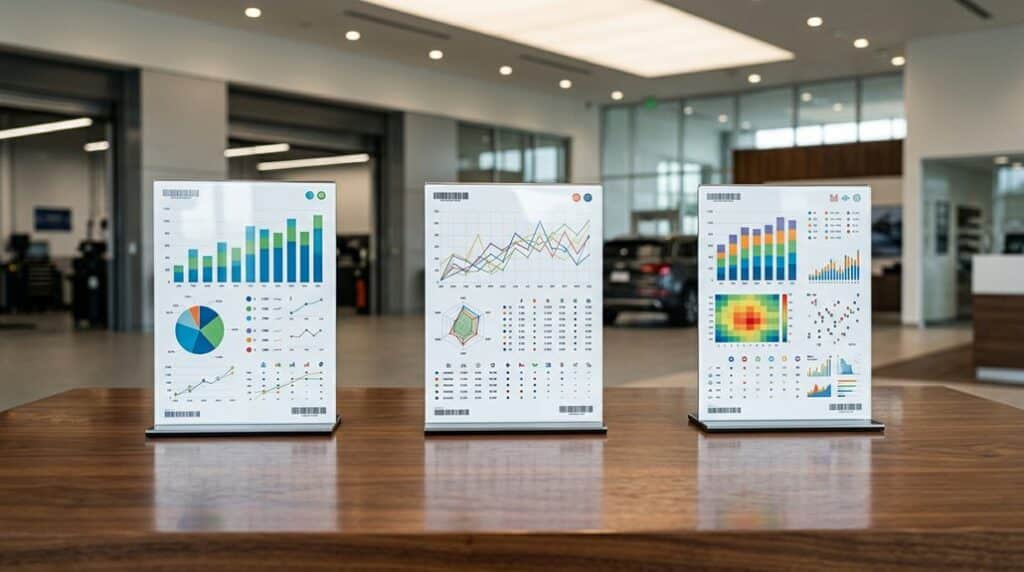
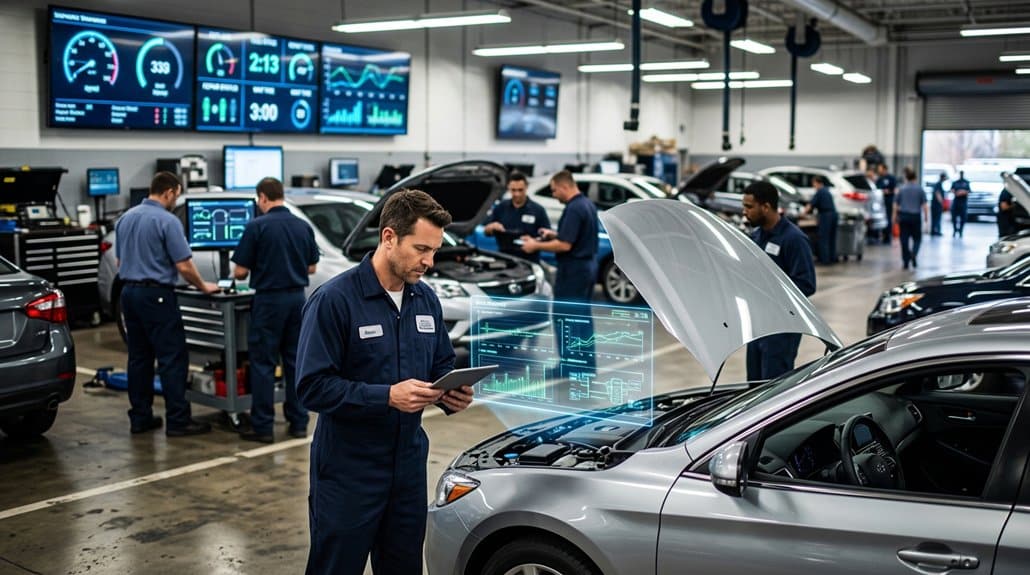
Real-time dealership performance data is essential for technician accountability because it offers immediate insights into productivity gaps and inefficiencies. You’ll see how actual hours compare to billed hours, ensuring precise tracking. This data not only highlights areas for improvement through KPI monitoring but also empowers technicians to take ownership and set clear goals. With real-time visibility, consistent feedback leads to proactive adjustments. To access further benefits, keep exploring the role of data in enhancing accountability.
Key Takeaways
- Real-time data enhances technician accountability by offering immediate visibility into productivity, comparing actual hours worked to hours billed accurately.
- Continuous monitoring via performance dashboards ensures technicians receive instant feedback, encouraging responsibility and timely performance adjustments.
- By utilizing real-time KPIs, technicians are empowered to set and achieve personal goals, fostering a culture of accountability and efficiency.
- Centralized data tools reduce errors, providing accurate insights that help technicians address performance gaps and maintain accountability.
- Real-time insights bridge operational tasks with dealership goals, promoting proactive problem-solving and alignment with wider organizational objectives.
The Power of Real-Time Data in Modern Dealerships
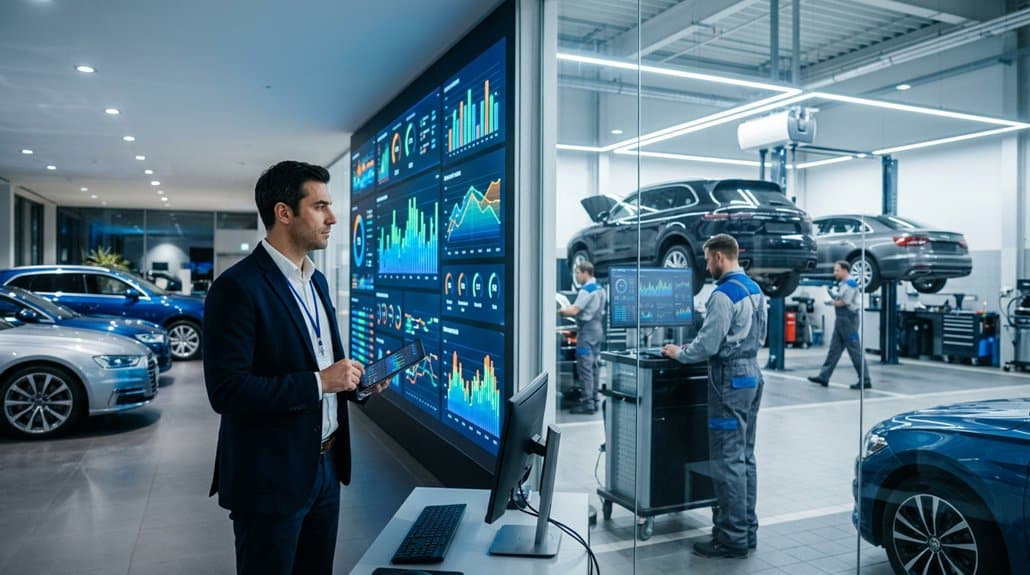
When you harness the power of real-time data analytics in modern dealerships, you release the ability to continuously monitor technician performance, allowing for immediate feedback and adjustments. Utilizing sophisticated tools like nVision, data visualization becomes essential. It transforms complex metrics into understandable visuals, enabling you to quickly assess where technicians stand against performance benchmarks. With key performance indicators (KPIs) readily available, spotting trends becomes second nature, directing your focus to targeted coaching sessions. This proactive approach guarantees that technician resources are optimized, enhancing both productivity and efficiency. The goal is not just to track performance but to continuously boost it. By leveraging extensive data insight, you’re positioned to drive improved service operations, ultimately increasing customer satisfaction and retention.
How Real-Time Data Boosts Technician Accountability
You won’t miss a beat with real-time performance data that offers immediate visibility into your technician’s productivity, comparing clocked hours to billed hours with precision. This transparency empowers you to pinpoint areas ripe for improvement and offers robust data-driven opportunities for targeted coaching. By continuously monitoring KPIs through dashboards, you’ll foster a culture of accountability that elevates technician performance and drives a more streamlined, efficient service department.
Immediate Performance Visibility
As dealerships aim to boost efficiency, real-time performance data stands out as a transformative tool in enhancing technician accountability. By leveraging performance tracking through real-time dashboards, you instantly gauge your productivity against KPIs. It fosters an environment where instant feedback empowers you to recognize areas needing improvement promptly, ensuring alignment with dealership goals.
Here’s how it evokes emotion in your work environment:
| Emotion | Trigger | Result |
|---|---|---|
| Motivation | Live performance metrics | Ownership of work |
| Competitiveness | Peer benchmark comparison | Higher productivity |
| Support | Discrepancy visibility | Immediate corrective support |
Your capability to view clocked versus billed hours live unearths discrepancies, creating accountability and efficiency improvements. Access to real-time insights allows goal-setting, driving competition that isn’t just motivating but also enhances your overall performance.
Data-Driven Improvement Opportunities
Real-time performance visibility sets the stage for uncovering data-driven improvement opportunities that greatly enhance technician accountability. By continuously monitoring metrics like hours sold and technician efficiency ratios, dealers can establish clear data benchmarks that highlight where improvements are needed. Immediate access to real-time analytics helps you spot performance trends and potential areas for growth, while minimizing human error in reporting. Leveraging this data, you can provide performance rewards, motivating technicians by ranking their output and fostering a spirit of healthy competition. Regular reviews of this data enable technicians to better understand their standings, empowering them to align personal goals with dealership objectives. Ultimately, this fosters a culture of continuous improvement and results-oriented accountability for all stakeholders involved.
Essential KPIs for Monitoring Technicians
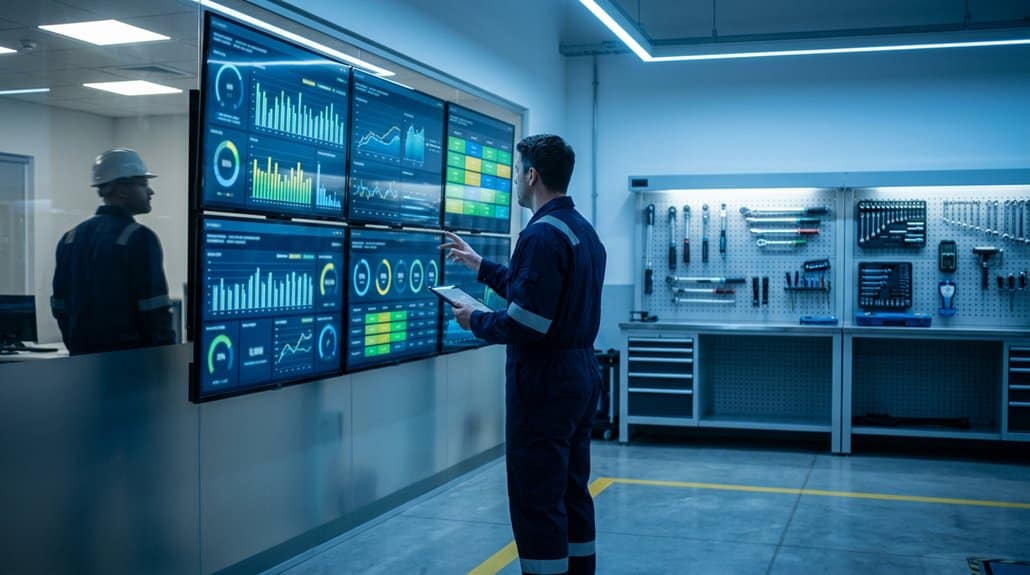
When it comes to maximizing technician performance, crucial Key Performance Indicators (KPIs) such as labor sales, gross profit, hours sold, and technician productivity serve as critical benchmarks. These performance benchmarks enable you to assess the efficiency and effectiveness of your technicians, guaranteeing they meet defined accountability standards.
Tracking hours sold is essential, distinguishing between time worked and time billed to customers. Analyzing this data helps pinpoint areas of strength and opportunities for improvement. Efficiency ratios, comparing clocked versus billed hours, offer insights into productivity gaps, guiding targeted coaching efforts.
Regularly monitoring these KPIs fosters a culture of accountability. By aligning performance with dealership goals, you can boost service quality and customer satisfaction. This analytical approach guarantees your team consistently delivers superior results.
Discovering Tools for Real-Time Performance Metrics
You’re tasked with improving technician productivity and accountability, and centralized data analytics tools are indispensable for achieving this. Real-time monitoring solutions provide instant insights into performance, allowing you to address workflow bottlenecks as they occur. By implementing these tools, you’ll cultivate an environment where technicians can self-monitor against KPIs, leading to operational excellence and enhanced customer satisfaction.
Centralized Data Analytics Tools
Frequently, integrating centralized data analytics tools into your dealership’s operations can revolutionize how you track technician performance metrics. With enhanced data accessibility and seamless analytics integration, you can monitor key performance indicators in real-time. Tools offering live dashboards let you assess metrics like hours billed versus hours clocked, pinpointing areas where technician accountability needs improvement. Leveraging real-time performance analytics not only streamlines your workflow but also enables immediate feedback, fostering continuous improvement amongst your team. By reducing human error in data analysis, these tools provide accurate, actionable performance assessments. This, in turn, sets clear expectations and informs tailored training programs, boosting both job satisfaction and productivity. Ultimately, embracing centralized analytics enhances your service department’s overall accountability and effectiveness.
Real-Time Monitoring Solutions
Real-time monitoring solutions offer your dealership unparalleled insights into vital technician performance metrics, empowering you to swiftly identify and eliminate operational bottlenecks. By utilizing performance dashboards and real-time scorecards, you gain immediate visibility into hours sold, labor sales, and productivity. This data is essential during technician onboarding, allowing you to address training needs promptly and enhance overall service quality. Keeping track of performance trends facilitates dynamic adjustments, ensuring that technicians stay accountable and motivated. With tools generating automatic notifications and detailed reports, managers can proactively tackle potential issues before they escalate. Continuous access to these metrics instills a sense of ownership in technicians, driving higher efficiency and satisfaction. Real-time insights foster a culture of accountability and continuous improvement in your dealership.
Enhancing Technician Productivity
Enhance your dealership’s productivity by harnessing the power of tools that provide real-time performance metrics for technicians. With these insights, you can drive operational efficiency by evaluating productivity metrics such as labor sales and hours sold. Access to live data empowers you to:
- Identify Areas for Improvement: Real-time insights pinpoint discrepancies between clocked and billed hours, offering a clear view for refining training programs.
- Optimize Feedback and Accountability: Use instant visibility to provide timely feedback and instill a culture of transparency and continuous improvement.
- Streamline Workflows and Goal Setting: Leverage performance tracking dashboards to assign responsibilities accurately and establish measurable goals, enhancing productivity tools’ impact.
Through informed decisions and consistent updates, you’ll guarantee technicians remain efficient and knowledgeable, ultimately boosting dealership profitability.
How Real-Time Data Ties Technicians to Dealership Goals
Leveraging real-time performance data is transformative, effectively bridging the gap between technicians’ daily tasks and overarching dealership goals. By actively engaging in performance alignment, you can see how every task you tackle contributes towards broader objectives like labor sales and billed hours. Real-time dashboards offer you instant insights into key metrics, helping identify strengths and improvement areas. This awareness strengthens an accountability culture where you’re motivated to enhance efficiency, ultimately reducing downtime and increasing profitability. Each interaction with live data empowers you to better manage workflows and stay aligned with dealership benchmarks. Furthermore, regular feedback through real-time scorecards visually tracks your progress, ensuring your contributions are clear and reinforcing a continuous improvement mindset that benefits everyone.
Using Data Proactively to Solve Problems
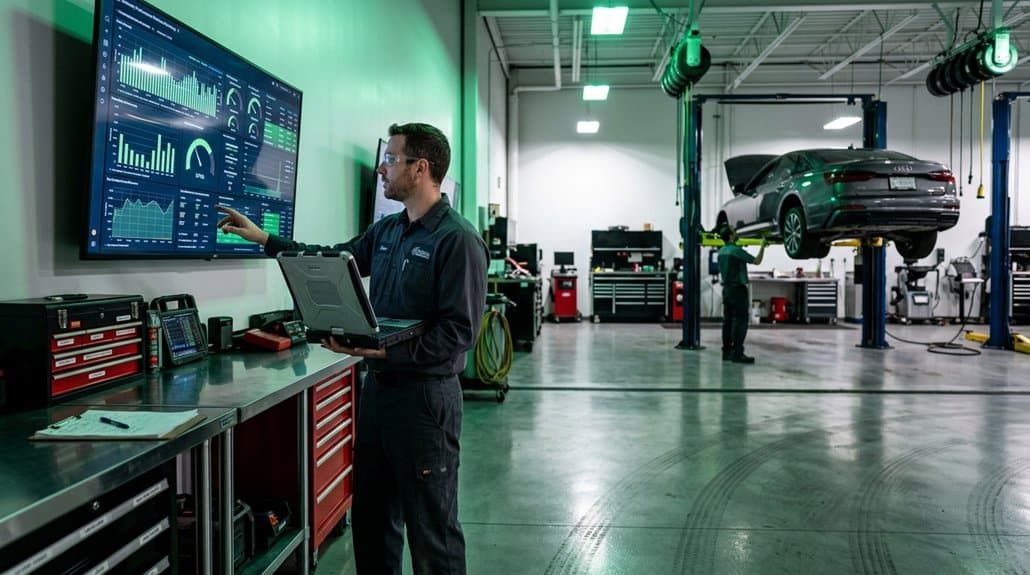
In the fast-paced environment of a dealership, the power of data extends beyond aligning daily tasks with overarching goals; it serves as a proactive tool for problem-solving. By utilizing data effectively, you can swiftly identify gaps like technician productivity discrepancies. Implementing data utilization strategies allows you to:
The power of data in a dealership is a proactive tool for identifying and solving productivity gaps.
- Pinpoint Performance Gaps: Real-time insights into clocked vs. billed hours enable precision in identifying inefficiencies.
- Enhance Service Workflows: Access to performance dashboards provides instant visibility, aiding informed decision-making to optimize resource allocation.
- Address Bottlenecks Proactively: Regular KPI monitoring, such as labor sales and hours sold, helps address issues before they impact productivity or customer satisfaction.
Harnessing data-driven insights allows your dealership to implement strategic solutions, streamlining processes and boosting overall performance.
Teaching Technicians to Interpret Performance Data
You’ll find that honing data interpretation skills is essential for utilizing real-time metrics effectively, enabling you to make more informed and precise decisions. Access to immediate performance data helps you evaluate your clocked versus billed hours, pinpointing areas to boost efficiency. By integrating these data insights into your daily workflow, you’re better equipped to enhance decision-making and align your efforts with team and dealership objectives.
Data Interpretation Skills Development
When technicians are equipped with the ability to interpret real-time performance data, they’re not just participants but drivers of their own professional growth. Developing advanced data skills through interpretation workshops is essential. Here’s how you can enhance these capabilities:
- Performance Analytics: Regularly engage with KPIs such as hours sold and technician productivity. This creates a solid foundation for skill enhancement, aligning your efforts with dealership objectives.
- Visual Tools: Use dashboards to simplify complex trends. They’re key to fostering proactive performance management and boosting immediate understanding.
- Scorecards: Implement them for transparent team and individual performance metrics, motivating you with clear success benchmarks.
Utilizing Real-Time Metrics
Although real-time metrics might initially seem overwhelming, they empower technicians to accurately assess their performance and boost efficiency. Data utilization allows you to track clocked versus billed hours, quickly identifying discrepancies and enabling workflow optimization. By employing dashboards, you gain instant visibility into essential performance metrics like labor sales and productivity, providing insight into how your efforts impact the department. This ongoing access fosters accountability, compelling technicians to take charge of their performance outcomes and actively pursue improvement.
Interpreting real-time metrics enhances your understanding of customer versus warranty labor, vital for maximizing profitability in service tasks. Regular training on data interpretation greatly bolsters your ability to leverage these metrics, driving productivity and improving service quality. Embrace these tools to elevate your technical expertise and contributions.
Enhancing Technician Decision-Making
Equipping technicians with the ability to interpret performance data transforms their approach to decision-making on the job. By mastering data visualization techniques and enhancing performance metric literacy, you can gain valuable insights that directly impact efficiency. Here’s how:
- Boost Efficiency: Understanding metrics like hours sold and average repair order value empowers you to evaluate and improve your performance continuously.
- Reduce Downtime: Real-time insights allow you to make informed choices about tool and parts accessibility, enhancing productivity in repairs.
- Increase Revenue: Tracking service demand trends enables you to pinpoint upsell opportunities, aligning your efforts with market needs effectively.
Embrace regular training sessions to foster a culture of accountability and set personal performance goals matched to dealership objectives for ideal decision-making.
Nurturing Technician Growth With Real-Time Insights
With access to real-time performance data, technicians gain a clear and immediate understanding of their productivity, empowering them to track and enhance their labor sales, gross profit, and hours sold. This data-driven approach not only highlights individual achievements but also pinpoints areas needing improvement. Integrating mentorship programs and performance coaching into this framework enables technicians to leverage insights effectively. You can minimize downtime as technicians identify available tools and parts, fine-tuning workflow efficiency. By contrasting clocked versus billed hours, technicians discover efficiency ratios that are essential for personal and professional growth. Promoting a culture of accountability through real-time scorecards facilitates transparency, motivating technicians to continually advance through targeted training. Ultimately, this structured feedback loop enhances overall service department performance.
Using Feedback to Boost Technician Accountability
Leveraging feedback effectively can markedly boost technician accountability by offering real-time insights into their work performance. Real-time performance data helps technicians enhance their productivity through immediate feedback. Here’s how to optimize these insights:
- Feedback Loops: Establish regular feedback loops driven by real-time data. This culture of accountability guarantees technicians can discuss their performance and growth transparently.
- Performance Metrics: Use scorecards to benchmark your performance against peers, fostering competition and motivating continuous improvement.
- Time Tracking: Monitor clocked versus billed hours to uncover efficiency gaps and receive targeted coaching, bolstering productivity and accountability.
Illustrative Examples of Data-Driven Technician Accountability
When technicians have access to data-driven insights, accountability isn’t just a concept—it’s a tangible practice with measurable outcomes. Real-time performance data allows you to compare clocked versus billed hours, pinpointing where improvements are needed. By employing data visualization techniques, dashboards vividly depict your alignment with KPIs, guiding you to prioritize tasks effectively and enhance efficiency.
Regular performance metric updates, like labor sales and productivity, offer transparent communication channels between you and service advisors. This transparency guarantees alignment on expectations and boosts overall accountability. Technician engagement strategies focus on providing immediate performance feedback, fostering a culture where you’re motivated to self-improve. Real-time data and comparisons not only foster your accountability but also drive engagement and consistent self-improvement efforts.
Frequently Asked Questions
What Is a KPI in a Dealership?
In a dealership, a KPI measures your effectiveness in hitting business goals. KPI examples include labor sales, average repair order value, and technician productivity. These metrics offer detailed, analytical insights, focusing on improving results and operational efficiency.
Who Is Responsible for the Overall Dealership Strategy and Performance?
You’ve likely heard, “the buck stops here.” Leadership roles such as the dealer principal and general manager shape overall strategy. They rely on performance metrics to guide decisions, ensuring each department aligns for ideal dealership success.
Which of the Following Is a Recommended Best Practice for Managing Data Access in a Dealership?
Implementing role-based access control is essential for managing dealership data access. By ensuring data security through tailored access permissions, you protect sensitive information while enhancing operational efficiency, promoting accountability, and maintaining a secure and effective working environment.
What Is a KPI in Automotive?
A KPI in automotive is a measurable value indicating how effectively you’re achieving business objectives. KPI examples include labor sales and technician productivity. Understanding KPI importance helps focus on efficiency, trends, and results, driving continuous improvement and accountability.
Conclusion
In embracing real-time data, you’re not just enhancing technician accountability—you’re driving dealership success. Imagine technicians synced seamlessly with dealership goals, interpreting data like maestros conducting a symphony. When real-time insights illuminate performance, they become a catalyst for growth, transforming feedback into actionable change. As you empower your team with these metrics, you’re crafting a culture of continuous improvement. So, ask yourself: are your technicians ready for this data-driven revolution?