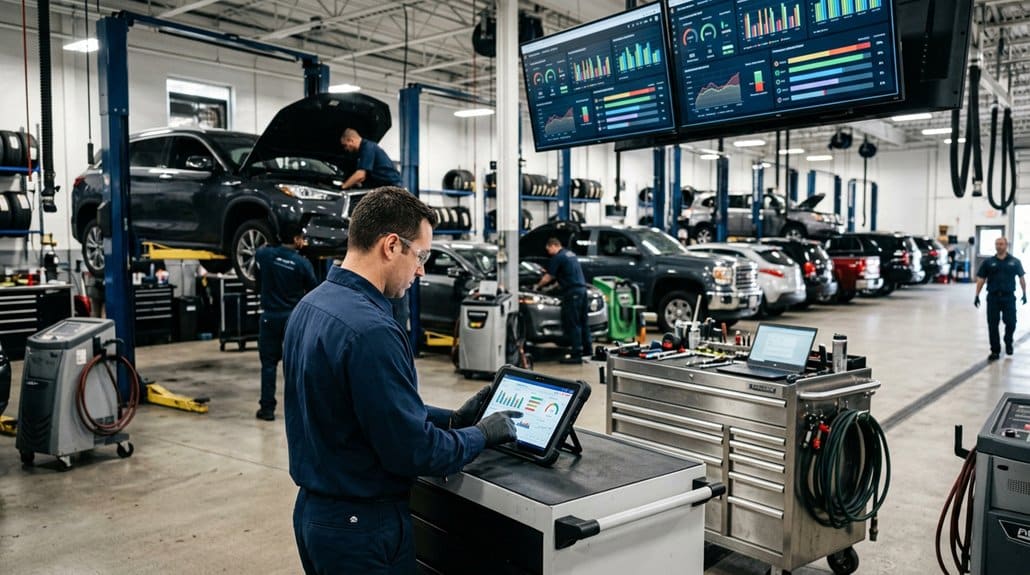
You need automated technician performance tracking to streamline operations, enhance accountability, and boost efficiency. These systems reduce manual errors, offer real-time KPI insights, and identify productivity gaps, directly impacting service delivery. They improve technician engagement by reducing administrative tasks and enabling skill-focused work. With data-driven insights, you can make informed staffing decisions and maximize revenue opportunities. See how these systems can transform daily operations and elevate your dealership’s service standards to new heights.
Key Takeaways
- Enhances technician productivity and efficiency by minimizing administrative tasks, allowing focus on primary job responsibilities.
- Provides real-time insights into technician performance, facilitating timely interventions and continuous improvement.
- Improves scheduling and resource allocation by analyzing technician skills and workload, reducing service delays.
- Enhances transparency and accountability in performance evaluations, fostering trust and improving retention.
- Offers data-driven insights to uncover revenue opportunities and optimize dealership profitability.
Unlock the Role of Automated Tracking in Operations
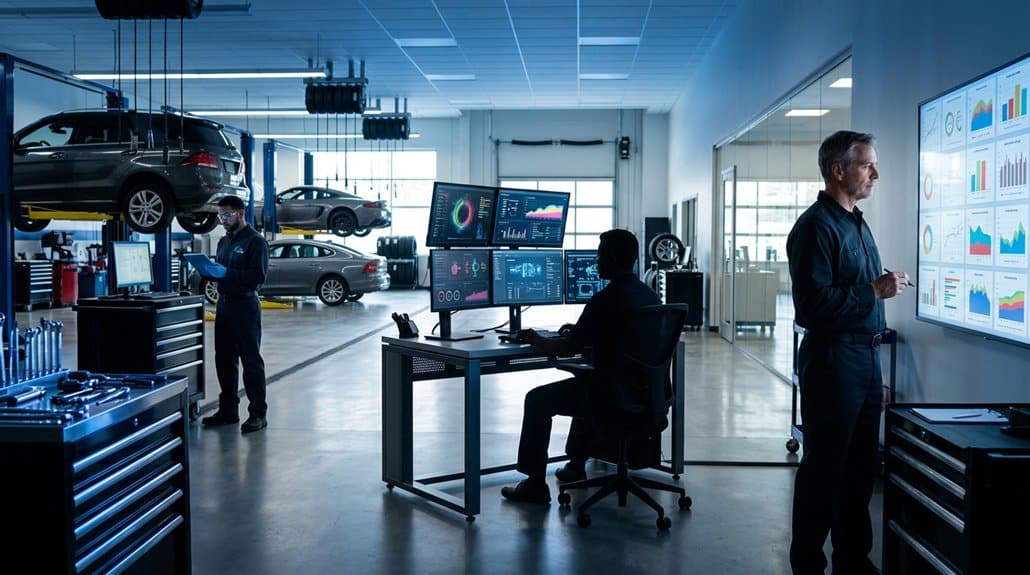
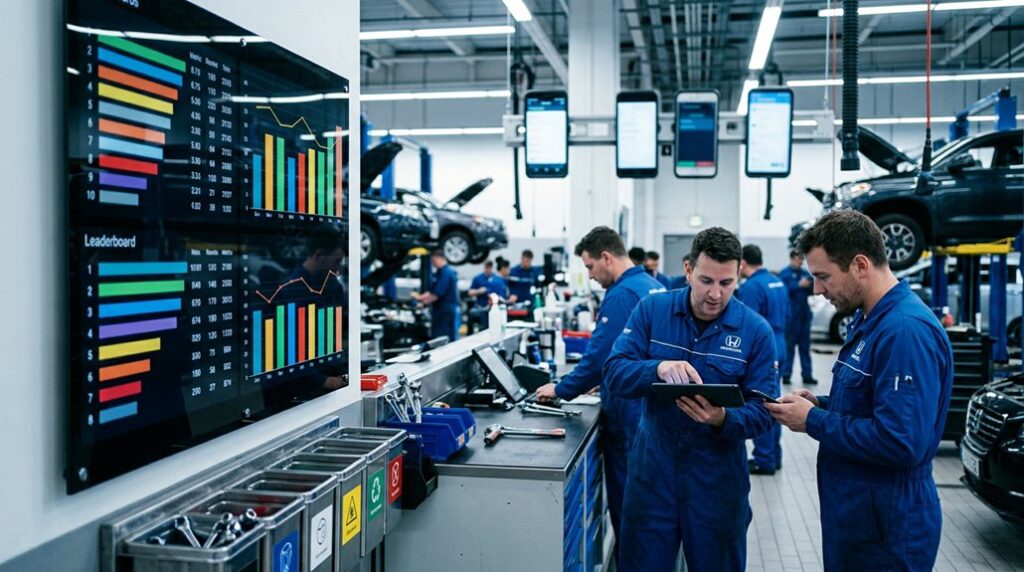
While harnessing automated tracking systems, operations managers can substantially enhance the efficiency of technician performance evaluations. By integrating data-driven insights, you’ll streamline Key Performance Indicator (KPI) monitoring, such as labor hours billed and technician efficiency. Automated systems capture real-time data, reducing manual errors and boosting payroll accuracy, which are pivotal in optimizing performance. This data integration facilitates the analysis of work-in-progress (WIP) cycle times, optimizing operational flow and productivity.
Moreover, automated benchmarks set for each technician foster accountability. Recognizing top performers motivates and drives continuous improvement. The ability to derive actionable insights guarantees proper resource allocation, matching technicians’ skills with relevant tasks. This strategy maximizes workshop efficiency and minimizes service delays, securing both technician satisfaction and client trust.
Enhancing Technician Efficiency With Automation
Open the potential of automation to transform technician efficiency. By leveraging automated systems, you’re equipped to track real-time metrics like labor hours, efficiency rates, and rework occurrences. Automation benefits include reducing manual data entry, thereby allowing your technicians to focus on their primary tasks. This reduction in administrative workload boosts technician productivity, optimizing labor costs while enhancing the workshop’s overall performance.
With automated performance data at your fingertips, identify high performers and support underperformers with targeted coaching. Efficient analysis of individual technician performance fosters continuous improvement and creates a proactive environment. Additionally, automation streamlines the identification of delays, enabling swift adjustments to workflows. Ultimately, such improvements enhance job completion rates and customer satisfaction, solidifying your dealership’s competitive edge.
Real-Time KPI Monitoring: Making Informed Decisions
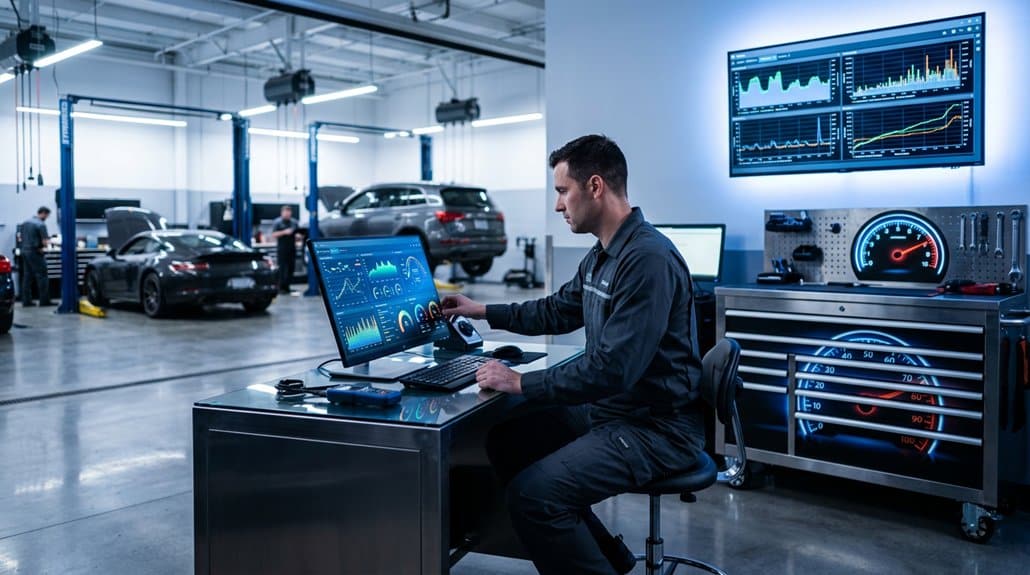
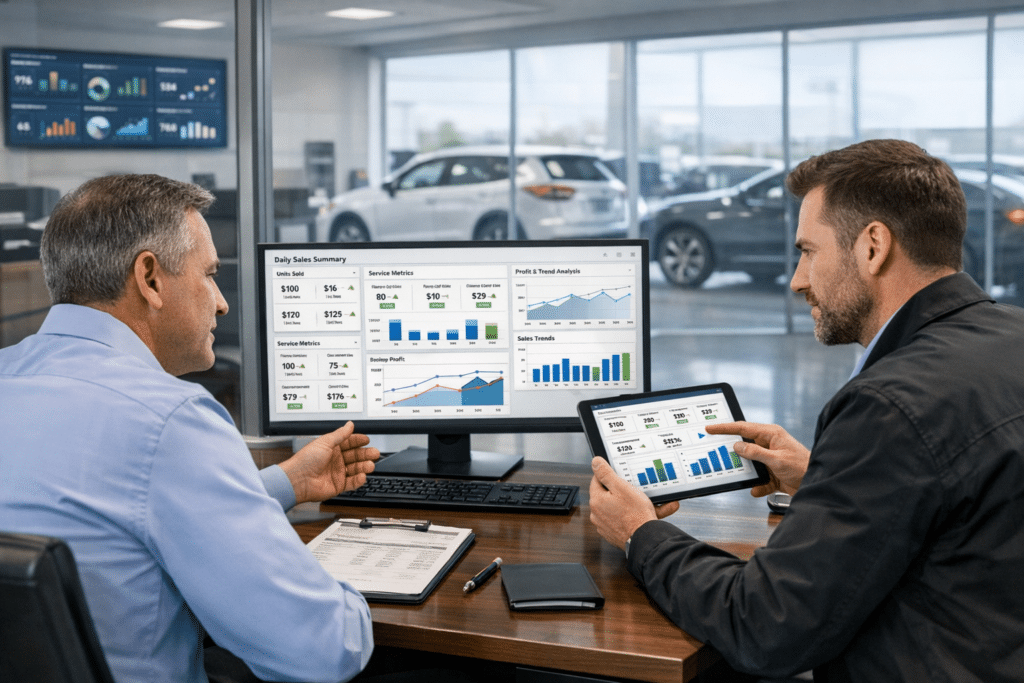
In today’s fast-paced service environment, real-time KPI monitoring serves as an invaluable tool for service managers endeavoring to make informed decisions. By leveraging data visualization, you can track technician efficiency metrics such as labor hours billed instantly, offering precise insights into productivity levels. Monitoring Work-In-Progress cycle times helps identify delays, therefore optimizing workflow and increasing throughput. With automated analysis, you gain transparency and accountability, essential for improving engagement and retention. Real-time data empowers you to compare performance benchmarks across your team, enabling targeted feedback and coaching. This analytical approach allows proactive decision-making on staffing and process improvements, ensuring not only enhanced service quality but also reduced rework rates. Ultimately, you can refine operations and boost profitability through data-driven strategies.
Delivering Superior Service: Boosting Customer Satisfaction
You’re equipped with automated technician performance tracking, giving you the tools to enhance service delivery through precise monitoring of KPIs like labor hours and technician efficiency. By leveraging real-time data, you can streamline technician efficiency, reduce job completion times, and boost customer satisfaction through effective resource allocation. This approach not only minimizes manual data entry errors but also builds trust and fosters a culture of excellence, thereby increasing customer loyalty and retention.
Enhancing Service Delivery
Automated technician performance tracking is revolutionizing service delivery by providing real-time insights into labor metrics. This technology allows you to monitor labor hours billed per technician, identifying workflow improvements to meet stringent service standards. By analyzing efficiencies and rework rates, you can swiftly pinpoint underperforming technicians, proactively addressing issues before they affect customer feedback. Data-driven insights enable better technician scheduling based on skill sets, minimizing service delays and enhancing customer satisfaction.
Consistent data monitoring not only maintains service standards but also establishes clear performance benchmarks. Recognizing top-performing technicians fosters a culture of excellence, directly translating to superior service delivery. This systematic approach reduces comeback rates, ensuring satisfaction and loyalty. Embrace this strategic advantage to deliver exceptional service continually.
Streamlining Technician Efficiency
Harnessing automated tracking systems revolutionizes workflow management by precisely monitoring technician efficiency and productivity. Workflow optimization through automation minimizes manual errors and reduces unnecessary downtime, which culminates in faster service completion and heightened customer satisfaction. By continuously evaluating labor hours billed, you can achieve reliable performance benchmarking, ensuring technicians meet efficiency standards.
Utilizing the data from automated metrics allows for pinpointing underperforming technicians, enabling you to implement targeted training programs. This not only elevates service quality but also refines your scheduling efficiency. By matching technicians with suitable skill sets, you’re ensuring seamless customer service fulfillment. Continuous KPI tracking helps you proactively address potential service delays, enhancing customer communication and fostering increased trust and loyalty.
| Benefit | Contribution |
|---|---|
| Workflow Optimization | Reduces errors, minimizes downtime |
| Performance Benchmarking | Improves productivity, aligns labor hours |
| Targeted Training | Elevates service quality, refines scheduling |
Leveraging Real-Time Data
Building on the efficiencies achieved through workflow optimization, leveraging real-time data tracking of technician performance pushes service delivery to a new level. With enhanced Data Accessibility, you can continuously monitor key performance indicators such as labor hours billed and technician efficiency. This enables you to generate significant Performance Insights, improving service quality and boosting customer satisfaction. Real-time tracking uncovers inefficiencies, optimizing workflows for quicker job completions and opening new revenue opportunities. Accurate data enhances operational transparency and payroll accuracy, aiding in technician retention and motivation. Automated metrics identify underperforming technicians, allowing for targeted coaching. Finally, proactive job status updates reduce customer anxiety about service timelines, ensuring a superior customer experience and fostering loyalty.
Maximizing Dealership Revenue With Accurate Data
You can harness automated technician performance tracking to make informed, data-driven decisions that maximize your dealership’s revenue. By analyzing detailed metrics on technician productivity and efficiency, you’ll uncover hidden revenue opportunities, optimize scheduling, and reduce service delays. With accurate, real-time data, you’re equipped to enhance inventory management and proactively address performance gaps, ultimately boosting profitability.
Enhancing Data-Driven Decisions
Although many dealerships endeavor to boost their revenue, success hinges on the capacity to utilize accurate data effectively. Automated technician performance tracking offers real-time insights into labor hours billed, efficiency, and comeback rates. This technology sharpens data accountability and performance visibility, enabling you to make informed, data-driven decisions. By analyzing key performance indicators like labor hours per technician and upsell ratios, you can pinpoint improvement areas, enhancing productivity and profitability.
Incorporating automated metrics streamlines scheduling and resource allocation, maximizing technician use and minimizing downtime. This precision not only enhances service revenue but also fosters a culture of accountability among technicians, which drives service quality and customer satisfaction. Consequently, you’re well-positioned to retain loyal clientele and boost overall dealership revenue.
Unlocking Revenue Opportunities
Real-time performance tracking is a formidable tool in accessing revenue opportunities within dealerships. Utilizing precise revenue analysis and performance benchmarks helps you measure key performance indicators like labor hours billed per technician. This data-driven approach optimizes labor utilization, leading to potential increases in revenue. Implementing automated metrics reveals underperforming technicians and highlights improvement areas. Managing work-in-progress statuses can release tens of thousands in cash flow. Enhance your workshop’s efficiency by prioritizing high-demand services, thereby improving throughput and maximizing repair order revenue. Daily monitoring of technician KPIs empowers you to address inefficiencies proactively, informing staffing decisions that enhance profitability. Stay competitive by making timely adjustments based on historical data analysis, ensuring higher customer satisfaction and retention rates.
Boosting Technician Accountability and Performance
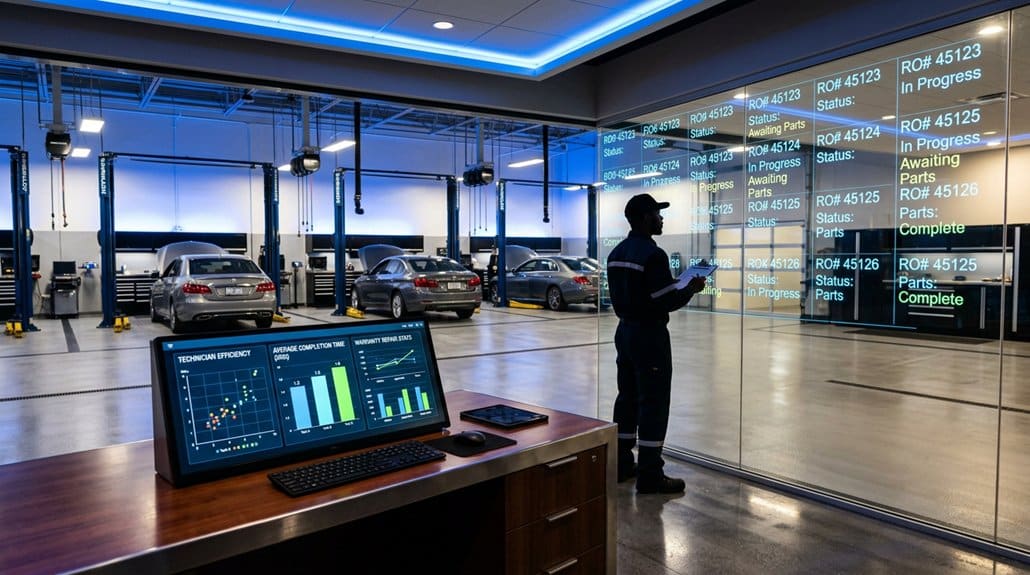
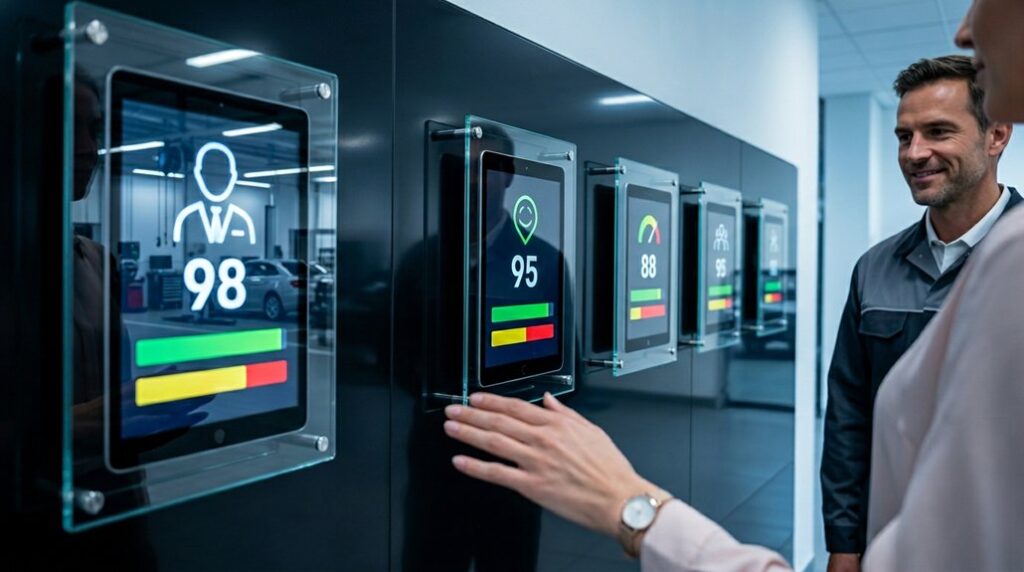
Automating technician performance tracking revolutionizes how dealerships manage and enhance accountability and performance within their service departments. By fostering performance transparency, you’ll gain real-time insights into metrics like labor hours billed and technician efficiency. This system enables you to pinpoint underperformers and improve productivity, establishing an accountability culture that elevates service quality and customer satisfaction. Continuous data monitoring allows for setting clear performance benchmarks, while tracking KPIs such as comeback rates and upsell ratios highlights individual successes and areas needing improvement. With instant feedback, technicians can engage more actively, enhancing morale. Data-driven performance reviews streamline staffing decisions and resource allocation, ensuring informed management and efficient department operation. Automated tracking not only boosts output but also elevates service excellence.
How Automation Enhances Technician Retention and Satisfaction
When dealerships leverage automated performance tracking, they reveal a powerful tool for enhancing technician retention and satisfaction. With real-time insights, you can pinpoint skill gaps and implement precise training for improved job engagement. Here’s how automation boosts technician retention and satisfaction:
- Performance Feedback and Engagement: Automated tracking of KPIs holds technicians accountable, promoting responsibility and improving job enthusiasm.
- Reduced Administrative Burden: Automation minimizes the time spent on documentation and scheduling, allowing technicians to focus more on core tasks, leading to higher job satisfaction.
- Recognition and Motivation: Timely acknowledgment of top performers through automated systems elevates morale and notably strengthens workplace culture, lowering attrition rates.
Data-driven insights also guarantee transparency in performance reviews, building trust and fostering long-term technician retention.
Easily Implement and Scale Automated Systems
Implementing automated systems in dealerships revolutionizes how technician performance is tracked and scaled. With setup simplicity, these systems allow you to integrate performance tracking swiftly, requiring minimal time—often just days—to achieve operational readiness. This efficiency is critical when you’re looking to seamlessly monitor key performance indicators (KPIs) such as labor hours billed and technician efficiency in real-time.
Scalable solutions guarantee the system grows with your business, adapting effortlessly to your evolving needs. Low monthly subscriptions replace burdensome long-term contracts, offering flexibility. Automating technician metrics enhances data accuracy through real-time logging, minimizing errors and improving resource allocation. By pinpointing underperformance, automated tracking facilitates targeted coaching, reducing turnover and boosting overall productivity. The outcomes? Improved workflow management and heightened customer satisfaction.
Frequently Asked Questions
What Should You Never Reveal to the Dealer When Negotiating?
Never disclose your maximum budget, trade-in values, financing plans, urgency, or competitive offers. Understanding dealer psychology boosts your negotiation tactics by preventing them from exploiting financial weaknesses, ensuring a more favorable deal driven by strategic insights.
What Is the Highest Paid Position at a Car Dealership?
The highest paid position at a car dealership is the General Manager, whose dealer compensation can exceed $150,000 annually. This role’s highest salary reflects their pivotal role in overall dealership success, driving profit through strategic decisions.
What Makes a Good Automotive Service Manager?
A good automotive service manager coincidentally balances effective leadership and seamless team communication. You anticipate needs, connect dots, and make data-driven decisions that optimize technician efficiency, enhance customer satisfaction, and guarantee smooth, profitable operations within the dealership service department.
What Are the Key Performance Indicators (KPIS) for an Automotive Dealership?
You’ll need to focus on KPIs like technician efficiency, service quality, labor hours billed per technician, WIP cycle times, upsell ratio, and comeback rate. These metrics provide data-driven insights into your dealership’s productivity and potential areas for improvement.
Conclusion
By embracing automated technician performance tracking, you’re not just streamlining operations—you’re supercharging them. It’s the keystone that bridges efficient technician management with heightened customer satisfaction, driving your dealership’s revenue skyward. Imagine real-time insights at your fingertips, making every decision data-backed and impactful. Increased accountability, enhanced retention, and seamless scalability spell long-term success. Let automation be the catalyst for transformation in your dealership, because in this age, staying still means falling behind.