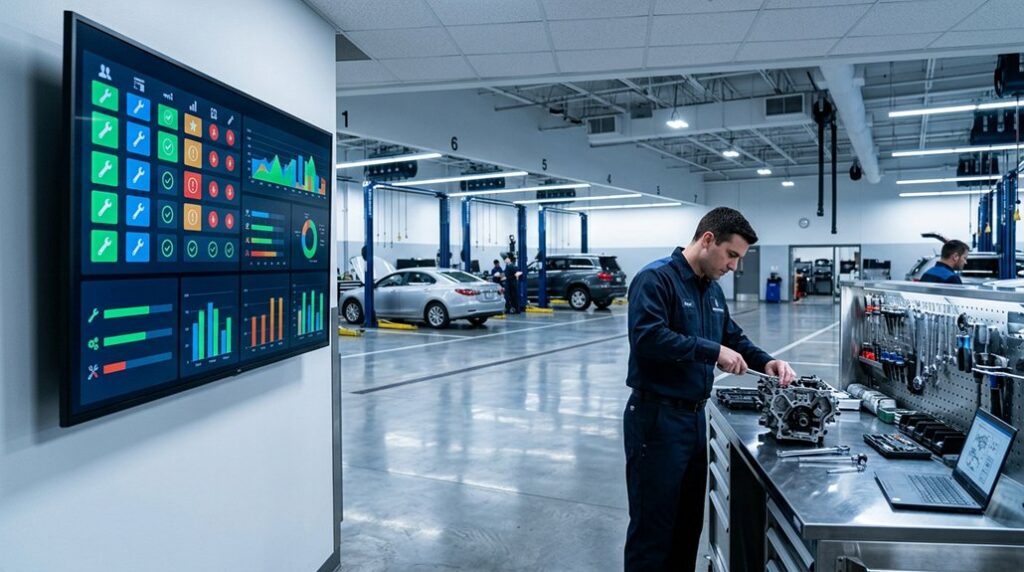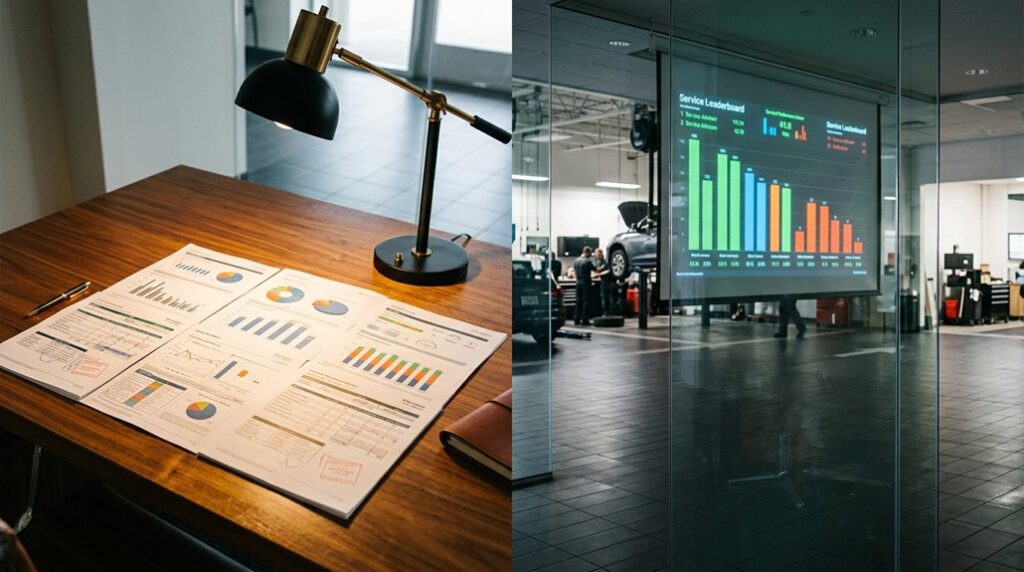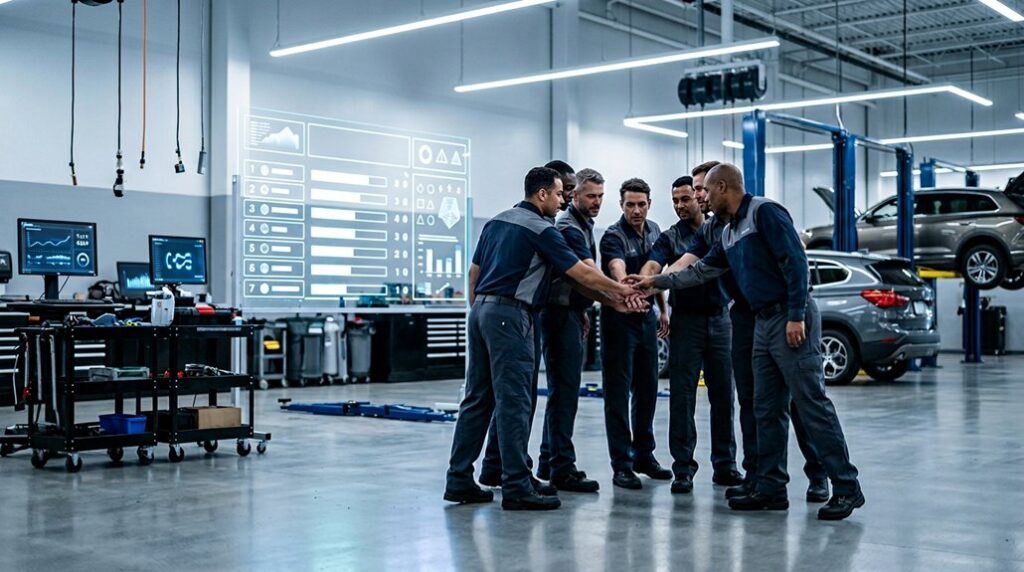
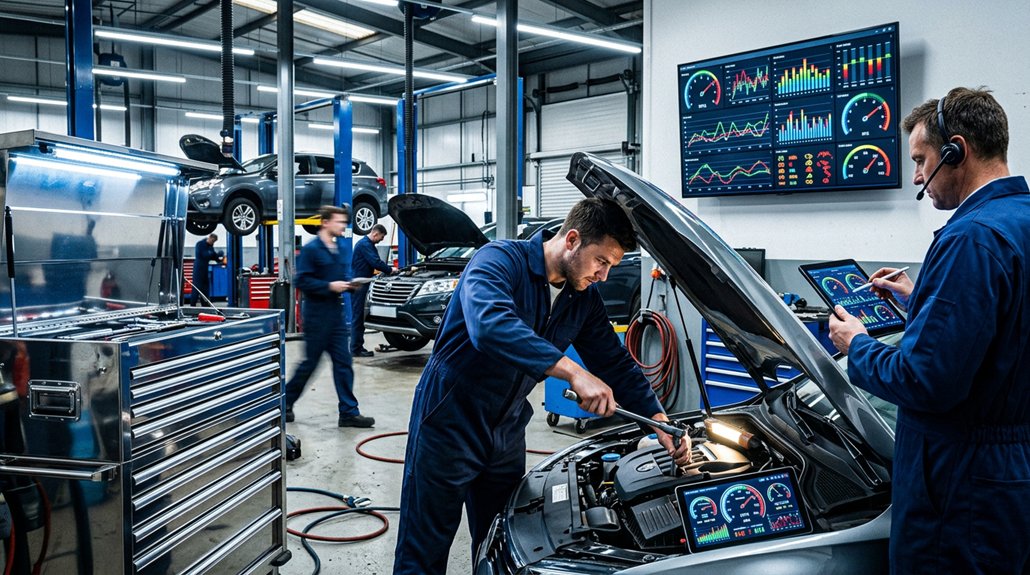
You need real-time performance visibility because static reports deliver outdated data, stalling proactive management and delaying issue resolution. Live data provides instant insights, boosting technician productivity by aligning efforts with current dealership goals and enabling rapid workflow adjustments. With accurate, timely metrics, decisions are made faster, reducing service delays and enhancing customer satisfaction. By leveraging real-time feedback, you cultivate continuous improvement, empowering technicians to refine skills and optimize efficiency. Explore how this transformation benefits your operations.
Key Takeaways
- Real-time insights enable proactive adjustments, improving technician productivity and service efficiency.
- Live data fosters a culture of continuous improvement and accountability among technicians.
- Immediate performance feedback enhances decision-making and aligns efforts with dealership goals.
- Access to dynamic metrics reduces service delays by optimizing resource utilization and workflow.
- Real-time visibility supports skill development through targeted coaching and performance tracking.
The Challenges Faced by Technicians With Static Reports
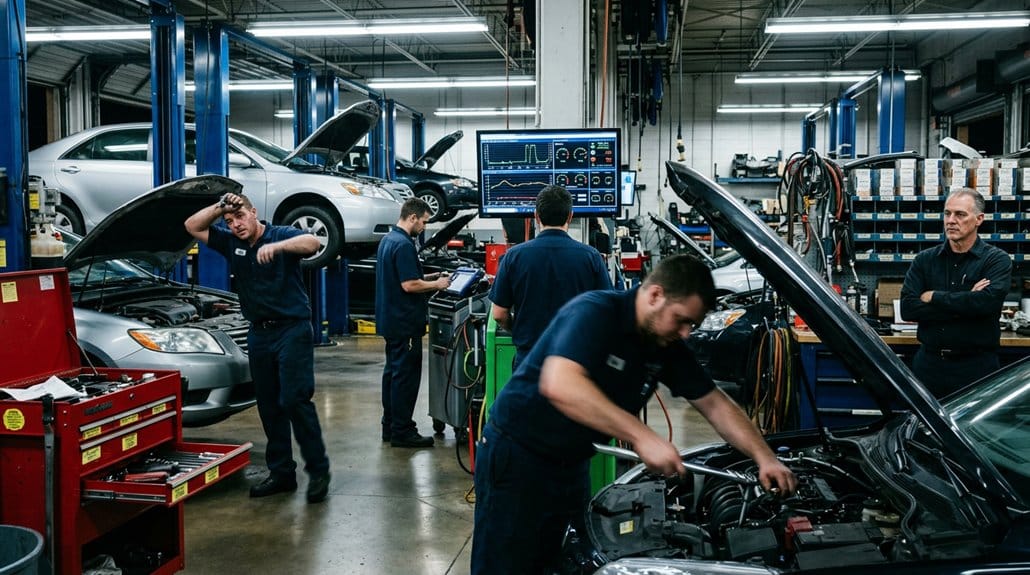
When technicians rely on static reports, they face significant challenges, as these reports often present outdated performance metrics that don’t reflect real-time conditions. This misalignment between technician training and reporting frequency can lead to missed improvement opportunities. You frequently encounter data accuracy issues, causing a disconnect between your actual productivity and the measurement benchmarks provided. Goal alignment becomes difficult when monthly or quarterly static reports fail to offer precise insight, hindering your ability to adjust work habits and achieve performance targets.
Moreover, lacking immediate feedback mechanisms limits engagement strategies, reducing motivation for healthy competition and continuous improvement efforts. Without real-time visibility, you might feel disengaged, distanced from your contributions to dealership profitability. Dynamic, live data is essential for effective performance assessment and engagement.
The Limitations of Traditional Reporting
You’ve likely noticed that traditional reporting primarily highlights lagging indicators, revealing issues only after they’ve impacted profitability. Without real-time data, these reports lack the operational context necessary for immediate corrective actions, leaving you struggling to respond quickly to performance declines. Additionally, the reliance on static reports limits data insights, preventing you from understanding root causes like pricing errors and workflow inefficiencies, ultimately hindering effective decision-making.
Delayed Problem Identification
While traditional reporting systems remain prevalent in dealerships, they often face significant challenges due to their reliance on lagging indicators, hindering effective performance monitoring and issue identification. This delay in highlighting problems affects profitability and overall business health. Here’s why:
- Preemptive action is impeded: Without preventative measures stemming from real-time data, your ability to forecast performance accurately is compromised.
- Escalation of issues: Delays lead to escalating repair times, diminishing customer satisfaction.
- Data fog hinders clarity: Static reports can obscure the true performance of technicians, complicating root cause analysis.
- Reactive management: Lagging data fosters a reactive stance rather than proactive management, preventing timely adjustments that could boost technician productivity and service quality.
Operational Context Missing
| Problem | Impact | Need |
|---|---|---|
| Declining ELR | Reduced profitability | Immediate corrective actions |
| Spreadsheet overload | Incomplete performance view | Enhanced data visibility |
| Inconsistent data | “Data fog” | Precise operational context |
Understanding real-time data is essential to proactively managing your dealership’s profitability.
Limited Data Insight
Traditional reporting systems in dealerships often fall short due to their reliance on lagging indicators, which display data only after profitability has already taken a hit. This approach skews data accuracy and leaves management in the dark. Here are the pitfalls you might encounter:
- Lack of real-time insights: Static reports can’t address critical issues like low Effective Labor Rate, impacting your bottom line.
- Spreadsheet overload: Manual data entry introduces errors, confusing technicians and management alike.
- Disconnected systems: Dealer Management Systems often miss root causes, failing to interpret technician feedback effectively.
- Slow decision-making: As reports lag, so does your ability to adapt to fluctuating productivity and technician needs.
Transitioning to live performance metrics empowers you with timely, accurate data.
How Live Data Solves Technician Challenges
You’re leveraging real-time performance insights to boost your technicians’ productivity and accountability. These metrics offer the precision needed for instant workflow adjustments, minimizing downtime and optimizing efficiency. By continuously tracking key data, you can rapidly address operational challenges, ensuring your team consistently reaches performance targets and enhances dealership profitability.
Real-Time Performance Insights
As dealerships integrate live performance visibility into their operations, technicians benefit from instantly tracking critical metrics like efficiency, hours sold, and effective labor rate, fostering a culture of real-time accountability. Access to live data enhances:
- Performance Benchmarks: Technicians surpass targets through transparent feedback loops, using real-time data to refine their techniques.
- Reduced Downtime: Identifying workflow gaps quickly, enabling efficient resource allocation and minimizing idle time.
- Competition and Motivation: Instant insights promote a friendly competitive atmosphere, driving productivity and elevating overall performance.
- Professional Development: Continuous performance data helps pinpoint training needs, enhancing skills and operational efficiency.
Leveraging live data empowers you and your team to analyze trends and act proactively, keeping profits on track while minimizing risks.
Instant Workflow Adjustments
While leveraging live performance visibility tools, you gain a crucial advantage in addressing technician challenges through instant workflow adjustments. This technology empowers you to track efficiency and effectiveness immediately, reducing downtime considerably. By integrating with Dealer Management Systems (DMS), live leaderboards facilitate timely performance tracking, providing current metrics that highlight issues and areas needing improvement. Furthermore, real-time tracking of hours worked versus billed pinpoints discrepancies, fostering accountability. This encourages technicians to optimize work processes in real-time. Access to live performance metrics not only promotes healthy competition among technicians but also motivates them to improve productivity. With instant data visibility, service managers can make quick decisions like redistributing workload, ultimately enhancing operational flow and customer service response times.
Enhancing Technician Productivity With Real-Time Insights
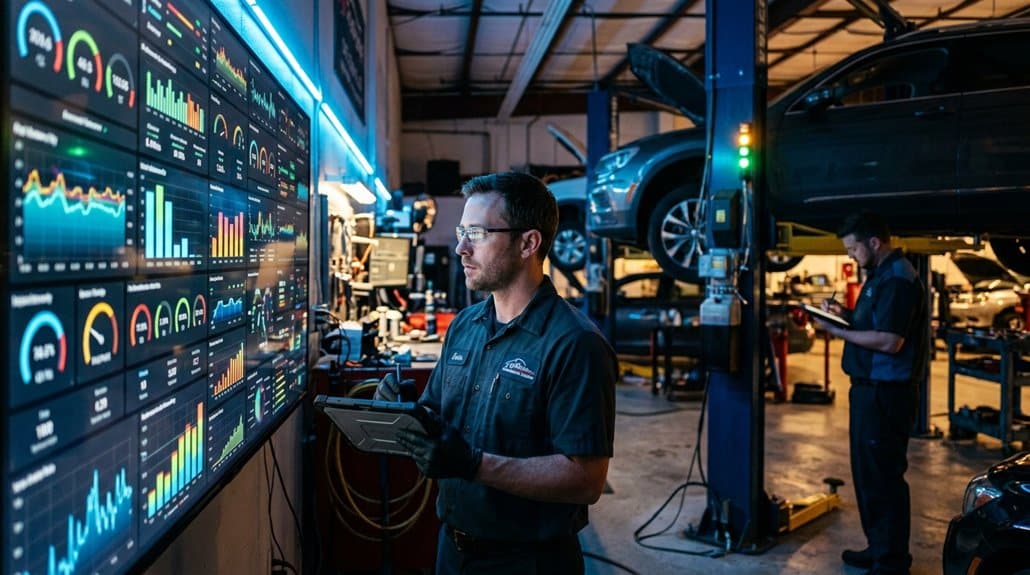
Having immediate access to real-time performance metrics is a game-changer for dealership technicians. By utilizing these insights, you can bridge productivity gaps and enhance service efficiency. Here’s how:
- Performance Benchmarking: Compare your hours billed and efficiency ratios to peers, helping you consistently improve and align with dealership objectives.
- Dynamic Goal Setting: Adjust personal productivity goals based on live data, driving both individual and team engagement.
- KPI Monitoring: Track key metrics like labor rate and task completion time, allowing you to refine workflows for increased accountability.
- Resource Optimization: Access tools and parts quickly, reducing service delays and boosting throughput.
Leverage real-time insights to align your processes with customer needs, improving both service quality and profitability.
Solving Technician Issues Swiftly With Instant Data
You’re empowered to swiftly solve technician issues by leveraging instant data for real-time problem identification. With integration into your dealership’s DMS, technicians can track productivity metrics and address workflow inefficiencies immediately, reducing downtime and increasing overall efficiency. Instant access to performance indicators allows technicians to proactively correct issues, directly enhancing both profitability and customer satisfaction.
Real-Time Problem Identification
Real-time performance visibility has transformed the way technicians identify and solve problems, enabling swift resolution through instant access to data. It not only facilitates bottleneck analysis but also promotes adaptive strategies by giving you immediate insights into potential workflow hindrances. Here’s how real-time problem identification works:
- Instant Bottleneck Analysis: Identify and address operational bottlenecks as they arise, reducing downtime and boosting productivity.
- Adaptive Work Strategies: Adjust approaches on-the-fly based on live performance metrics, ensuring ongoing efficiency.
- Real-Time Discrepancy Checks: Quickly spot and rectify discrepancies between hours billed and hours worked, increasing profitability.
- Continuous Improvement: Foster a culture of skill enhancement by promptly identifying training needs or procedural gaps.
These insights help maintain a proactive and competitive dealership environment.
Enhanced Workflow Efficiency
With access to live performance visibility, dealerships can greatly enhance workflow efficiency by swiftly pinpointing and resolving technician issues. Workflow automation drives efficiency by leveraging real-time insights, minimizing downtime, and ensuring timely service. Visual performance data on productivity and job assignments aids technicians in adapting methods for improved outcomes. Immediate access to performance metrics means you can address inefficiencies as they arise.
| Key Factors | Benefits |
|---|---|
| Real-Time Productivity Data | Swift issue resolution |
| Clocked vs. Billed Hours | Enhanced efficiency |
| Tools & Parts Availability | Reduced wait times |
Real-time insights into tools and parts availability accelerate decision-making, fostering continuous improvement. Monitoring performance metrics cultivates a proactive culture where technicians adapt quickly. Overall, it’s about enhancing service through informed, immediate action.
Cultivating Continuous Improvement Cultures
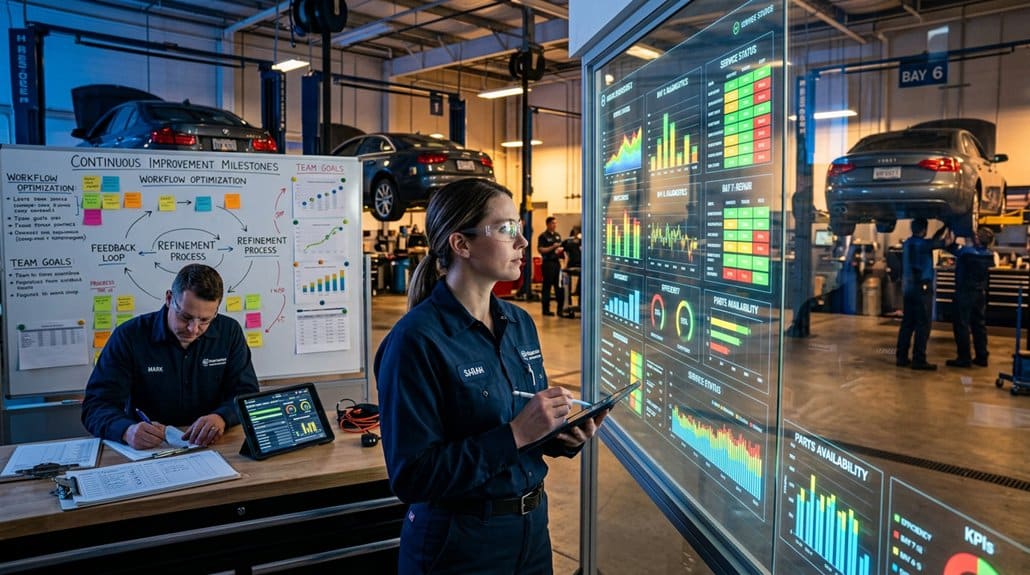
Embracing a culture of continuous improvement within dealerships can greatly enhance technician performance and operational efficiency. Implementing live performance visibility provides real-time feedback mechanisms, allowing technicians to immediately identify gaps and take action. This environment supports learning and encourages technicians to continually seek training opportunities to align with industry demands.
Here’s how you can make it work:
- Real-Time Metrics: Access live scorecards to track productivity, which boosts morale through recognition and healthy competition.
- Immediate Adjustments: Enable technicians to adjust actions based on instant data, enhancing productivity.
- Skill Development: Facilitate continuous learning through embedded performance metrics inspiring skill enhancement.
- Feedback Loops: Foster a culture where real-time feedback instills accountability and motivates technicians toward self-improvement.
These strategies create a dynamic environment that continually pushes boundaries.
Enhance Teamwork With Shared Insights
Live performance visibility revolutionizes cooperation among dealership technicians by presenting shared insights that drive teamwork. When technicians access real-time data, they’re empowered to make swift, informed decisions, adapting workflows to boost productivity. This dynamic shift supports a collaborative environment where insights from real-time leaderboards enable technicians to benchmark performance against peers. It fosters healthy competition and continuous team-wide improvement. Through instant feedback on key performance indicators, such as efficiency and hours billed, technicians gain accountability and motivation to reach their targets. Additionally, shared insights pinpoint areas needing additional training or support, encouraging teamwork and collective growth. As visibility into team performance enhances, communication strengthens, leading to more effective problem-solving and a more cohesive, engaged work environment.
Minimizing Downtime Through Efficient Workflows
When you implement efficient workflows in a dealership setting, downtimes can be minimized considerably. Clear job assignments combined with live performance visibility enhance efficient task management, reducing technician confusion. Accessing real-time data on tools and parts guarantees proactive service enhancement, decreasing unnecessary waits.
Here’s how you can enhance workflow efficiency:
- Utilize Clear Job Assignments: Assign tasks distinctly with real-time visibility to streamline processes and minimize downtime.
- Leverage Real-Time Data: Use instant access to parts and tools data, enabling quicker responses to workflow needs.
- Identify and Address Bottlenecks: Monitor performance in real-time to boost technician utilization and tackle inefficiencies immediately.
- Foster Accountability: Integrate live performance dashboards, creating a culture of responsibility and incentivizing timely task completion.
These strategies guarantee peak technician productivity and reduce service delays.
Help Technicians Grow With Real-Time Feedback
While real-time feedback transforms the way technicians enhance their skills, it does so by providing instant insights that enable immediate performance adjustments. Feedback mechanisms allow you to track key performance benchmarks such as hours billed and efficiency more effectively. This visibility not only boosts productivity but also minimizes downtime. By accessing live data, you’ll be able to foster a competitive environment, motivating continuous improvement based on current standings. Real-time metrics facilitate targeted coaching, allowing managers to offer immediate guidance tailored to your performance trends. Moreover, utilizing performance dashboards lets you understand the direct impact of your work on dealership profitability, reinforcing your essential role in driving service department success and customer satisfaction. Instantly identifying improvement areas turns feedback into actionable growth.
How to Implement and Optimize Real-Time Data Solutions
Real-time feedback enriches technician development by offering immediate actionable insights; now, incorporating real-time data solutions elevates this by embedding these insights within daily operations. To implement and optimize these systems, consider these key steps:
Real-time feedback and data solutions integrate insights into daily operations, enhancing technician development through immediate actionable insights.
- Data Integration Strategies: Connect your dealership’s DMS with live leaderboards to instantly access technician metrics like efficiency and billable hours. Seamless integration reduces data fog, leading to more informed decisions.
- Dashboard Customization Techniques: Use customizable dashboards for setting and adjusting performance goals tailored to real-time data, driving technician accountability and motivation.
- Continuous KPI Monitoring: Instantly spotlight skill-enhancing areas, boosting productivity through immediate visibility of key performance indicators.
- Feedback Loop Integration: Embed real-time feedback loops to foster continuous improvement, quickly implementing strategies for better outcomes.
Frequently Asked Questions
What Advantage Do Dealership Technicians Have Over Most Independent Technicians?
You’ve got an edge with structured training programs and access to top-tier diagnostic tools, ensuring continuous improvement and superior problem-solving capabilities, which many independent technicians may find challenging to replicate in their isolated work setups.
What Is the Key Dealership Financial Report Specifically for Parts and Service Departmental Performance Analysis?
The key dealership financial report for parts and service performance analysis is the Average Repair Order (RO) Value. It’s a critical financial metric and performance indicator, measuring service advisors’ efficiency in upselling services and parts.
How to Run a Service Department?
To run a service department, prioritize service efficiency: 82% of businesses improve customer satisfaction by reducing wait times. Implement efficient workflows, train staff effectively, and enhance communication to streamline operations and maximize both performance and client happiness.
Conclusion
By switching from static reports to live performance visibility, you’re empowering technicians to tackle issues head-on with real-time data. Imagine a technician identifying a recurring engine fault through instant alerts, promptly resolving it, and saving future downtime. This real-time insight enhances collaboration and boosts productivity by fostering data-driven decisions. Implement these tools to guarantee your team isn’t just reacting to problems but proactively optimizing performance, ultimately leading to greater efficiency and growth in your dealership operations.