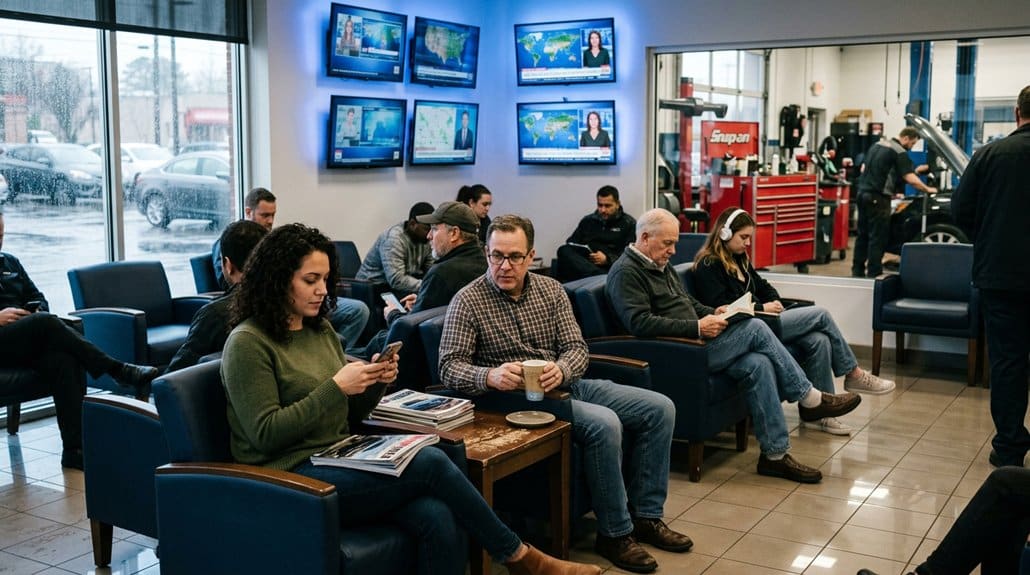
You need a waiting room that calms customers and sells services, not a loop of cable-news stress that spikes anxiety and undermines trust. People want comfortable seating, fast Wi‑Fi, charging points, family‑friendly programming and clear, educational content that explains services and shows before‑and‑after results. Low‑cost upgrades and targeted, non‑polarizing ads keep attention and drive relevant upsells. Measure shorter perceived waits and higher loyalty to prove ROI — keep going and you’ll find a practical 30/60/90 plan.
Key Takeaways
- Cable news often shows divisive headlines that increase customer anxiety and reduce trust during service waits.
- Family-unfriendly or loud programming distracts and alienates customers, harming the dealership experience.
- Educational, service-explaining content builds trust and helps customers make informed decisions about repairs and upsells.
- Interactive, targeted displays and tailored ads convert attention into revenue without interrupting calm.
- Comfortable seating, fast Wi‑Fi, and quiet work zones paired with calming content shorten perceived wait times and boost loyalty.
Why Cable News Fails in Auto Waiting Rooms
Anyone who’s sat in an auto service waiting room knows cable news often makes the experience worse: over half of customers already feel anxious or uncomfortable at the dealer, and divisive headlines or competitor ads amplify that stress and erode brand trust. You’ll find cable news drawbacks are practical: polarizing stories heighten customer discomfort, interrupting calm and increasing perceived wait times. Traditional channels rarely offer the family-friendly, informative programming customers now prefer, so they miss a chance to reduce anxiety by up to a third. Worse, competitor ads on those feeds undercut loyalty when you’re trying to reinforce your brand. If you care about retention and satisfaction, relying on cable news is a liability; controlled, relevant content is the smarter choice.
What Customers Want in a Waiting Room
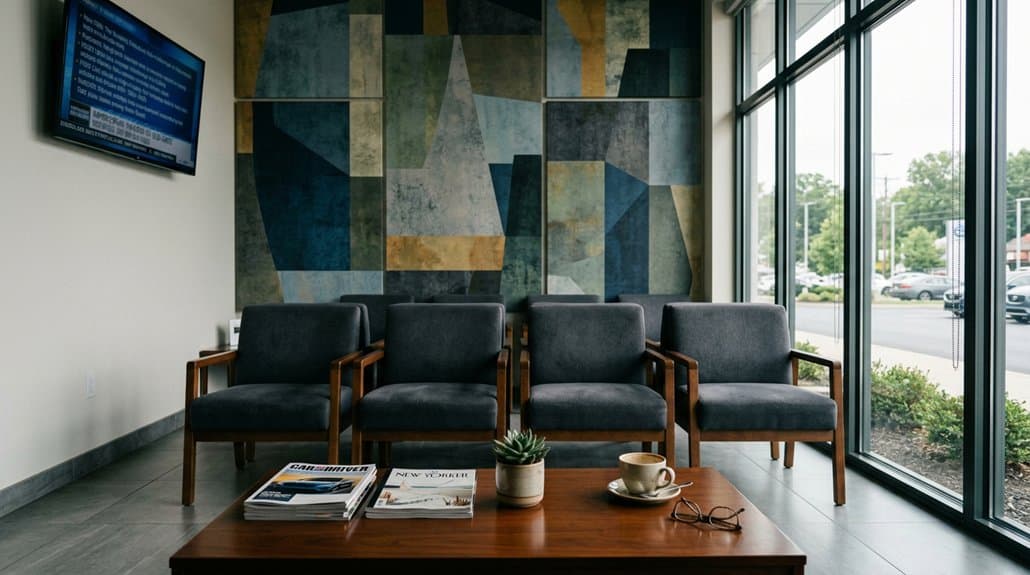
What do customers actually want while they wait? You want a waiting room that feels intentional: comfortable seating is nonnegotiable, plus access to fast guest Wi-Fi, charging points, and dedicated workspaces so you can stay productive. Complimentary drinks and snacks soothe frustration, and family-friendly entertainment eases perceived wait times. Interactive displays offer targeted information without yelling headlines, letting you control what you see.
| Priority | Practical feature |
|---|---|
| Comfort | Comfortable seating, clear sightlines |
| Connectivity | Fast guest Wi‑Fi, charging points |
| Productivity | Dedicated workspaces, quiet zones |
| Convenience | Snacks/drinks, interactive displays |
Deliver these essentials and you’ll reduce anxiety, increase satisfaction, and make time in the chair feel purposeful rather than wasted.
Waiting-Room Content That Educates and Sells
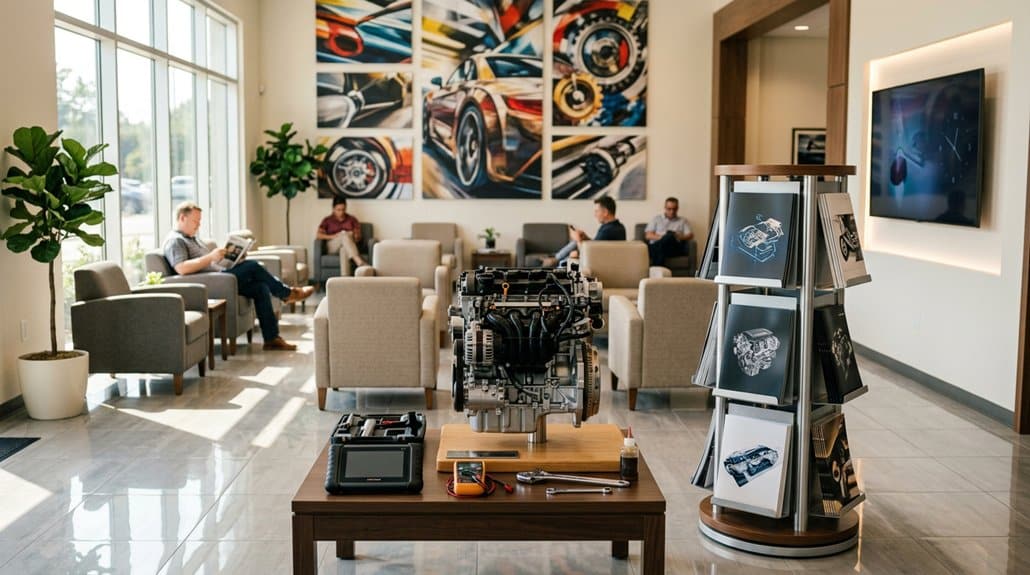
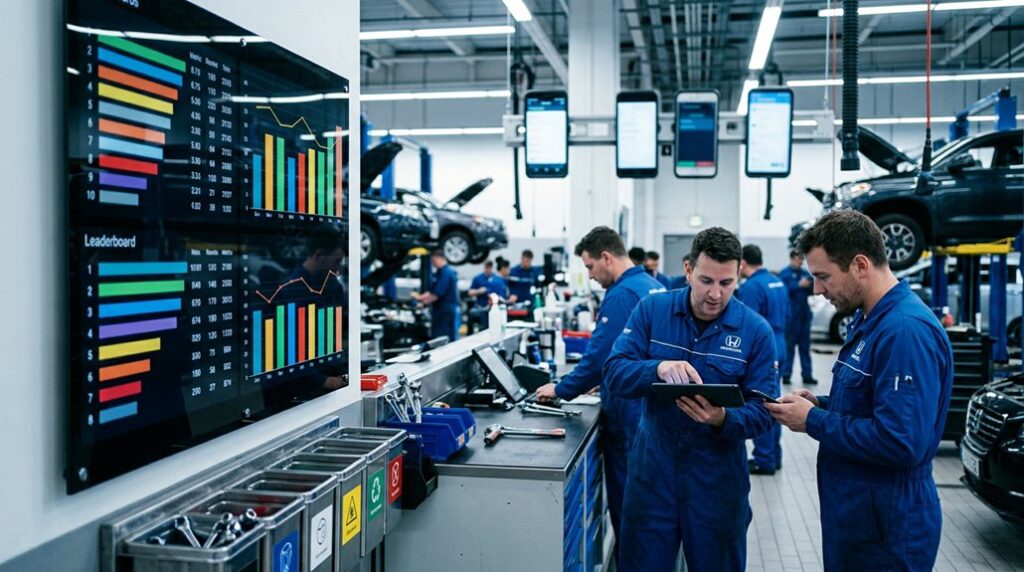
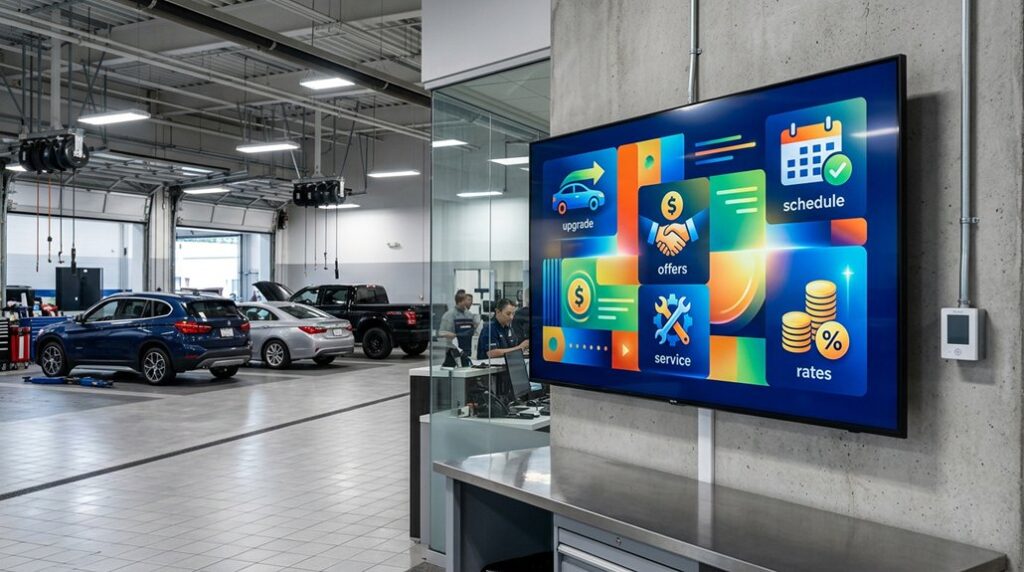
When customers wait, you should treat that time as a sales and education opportunity. Use engaging programming that explains services simply—what a brake job includes, why fluid changes matter, how inspections prevent bigger bills. You’ll build trust when content educates rather than just entertains. Pair short explainers with visual storytelling: testimonials, before-and-after images, and clear graphics that demonstrate results and quality. That combination shortens perceived wait times, reduces anxiety, and positions cross-sells as logical next steps. Tailor ads to relevant upsells so customers see value instead of pressure. Replace generic cable news with family-friendly, informative loops that respect your brand and convert attention into informed decisions and measurable revenue gains.
Low-Cost Waiting-Room Upgrades (30/60/90‑Day Plan)
Start with a focused 30/60/90-day plan that prioritizes high-impact, low-cost changes you can implement quickly to improve comfort, reduce perceived wait times, and boost perceived value. In 30 days, swap worn chairs for comfortable seating, add visible charging stations, refresh magazines, install family-friendly TV programming, and offer complimentary coffee to address immediate customer needs. By 60 days, add dedicated workspaces with fast Wi-Fi and clear signage promoting amenities; these moves target the half of customers who want productivity options. By 90 days, refine layout based on informal feedback, upgrade snack variety, and optimize entertainment schedules to further cut perceived wait times. These staged steps are inexpensive, measurable, and will noticeably elevate satisfaction without heavy capital outlay.
Measure Impact: KPIs and Quick Tests to Prove ROI
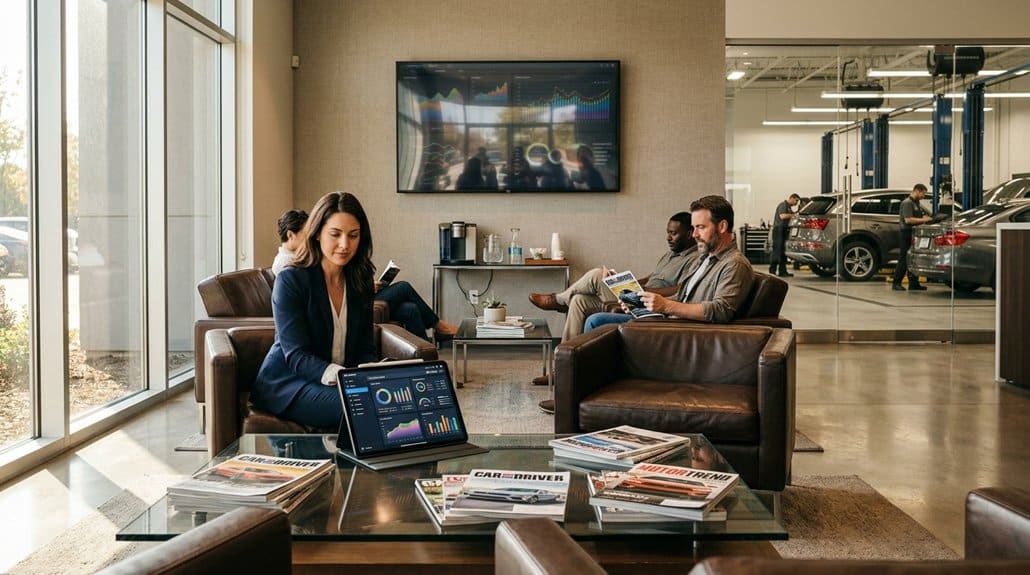
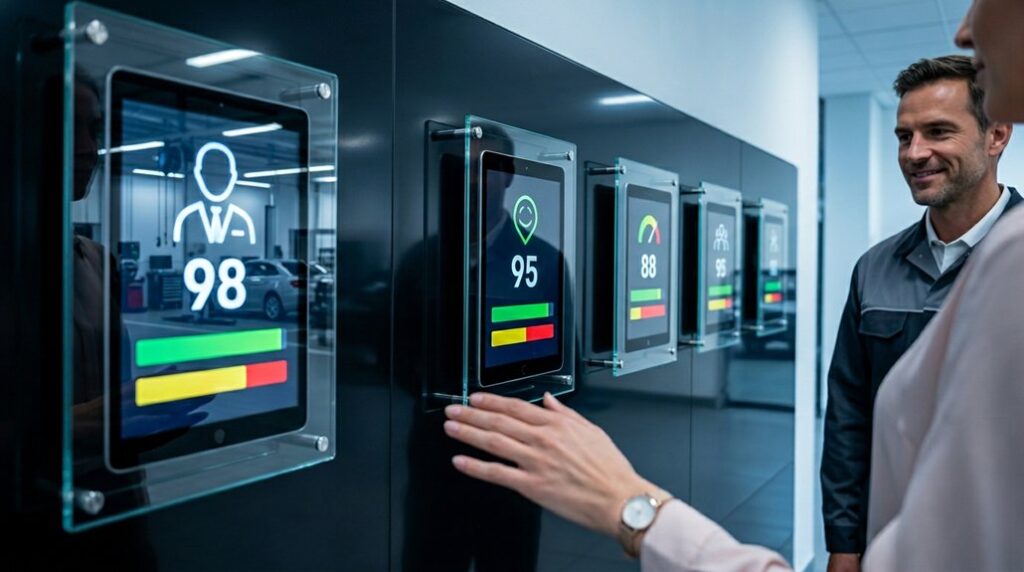
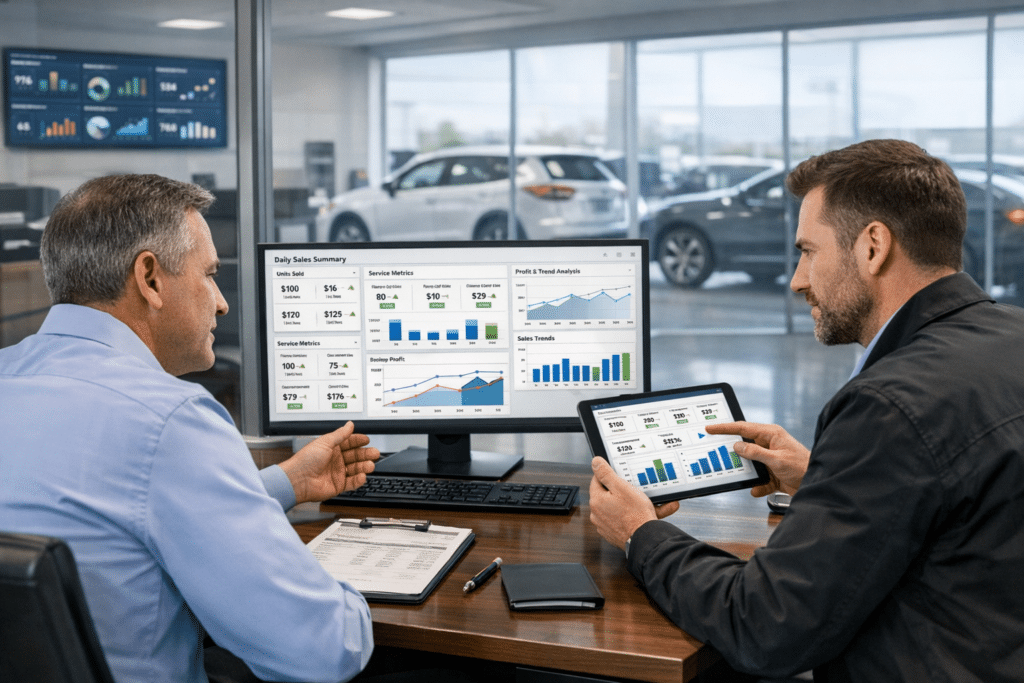
Those 30/60/90 upgrades will improve comfort and perceived value, but you’ll need hard metrics to prove they pay off. You’ll track customer engagement and satisfaction metrics to quantify impact: shorter perceived waits, higher loyalty, and more sales from targeted signage. Run quick A/B tests and before/after surveys to capture shifts.
Those 30/60/90 upgrades boost comfort and perceived value—measure engagement, run quick A/B tests, and track KPIs to prove ROI.
- Measure dwell time and repeat visits to link content to behavior.
- Capture satisfaction metrics with brief post-visit surveys.
- Use digital-signage click-throughs or promo redemptions to attribute revenue.
- Run short pilots (2–4 weeks) to validate changes before wider rollout.
Be ruthless about sample size and baseline comparisons; clear KPIs turn anecdote into ROI, justifying further investment.
Frequently Asked Questions
What Are the 3 C’s of Mechanics?
The 3 C’s of mechanics are competence, communication, and customer care. You’ll get expert repairs, clear service transparency and honest explanations, and a respectful experience that builds customer trust and encourages long‑term loyalty.
What Is the Biggest Challenge in Selling Cars Today?
The biggest challenge is online shopping driving price transparency and shifting customer expectations, so you’ve got to differentiate through service, experience, and loyalty strategies while maintaining margins amid fierce competition and eroding new‑car profitability.
Why Do Customers Just Want to Walk in for Car Service Instead of Making an Appointment?
You want walk in convenience because you value instant service for urgent issues and flexible timing; you don’t want scheduling hassles, you expect efficiency, and a welcoming shop lets you fix problems quickly without prior appointments.
How Do Service Customers Increasingly Prefer to Communicate With Dealerships?
You’ve heard that time is money: you increasingly prefer digital communication—texts, email, social media, chatbots—because customer expectations demand speed, convenience and documentation, and dealerships must adapt to stay efficient and trustworthy.
Conclusion
You’ve seen why cable news doesn’t cut it; your customers want relevance, not reruns. Start small—educate, reassure, upsell subtly—then watch behavior change. Measure clicks, service additions, and return visits; test one idea at a time. Do the upgrades now, not later, because every unanswered need is lost revenue. Act deliberately, track results, and you’ll turn waiting time into profit—if you move before your competitors do.